


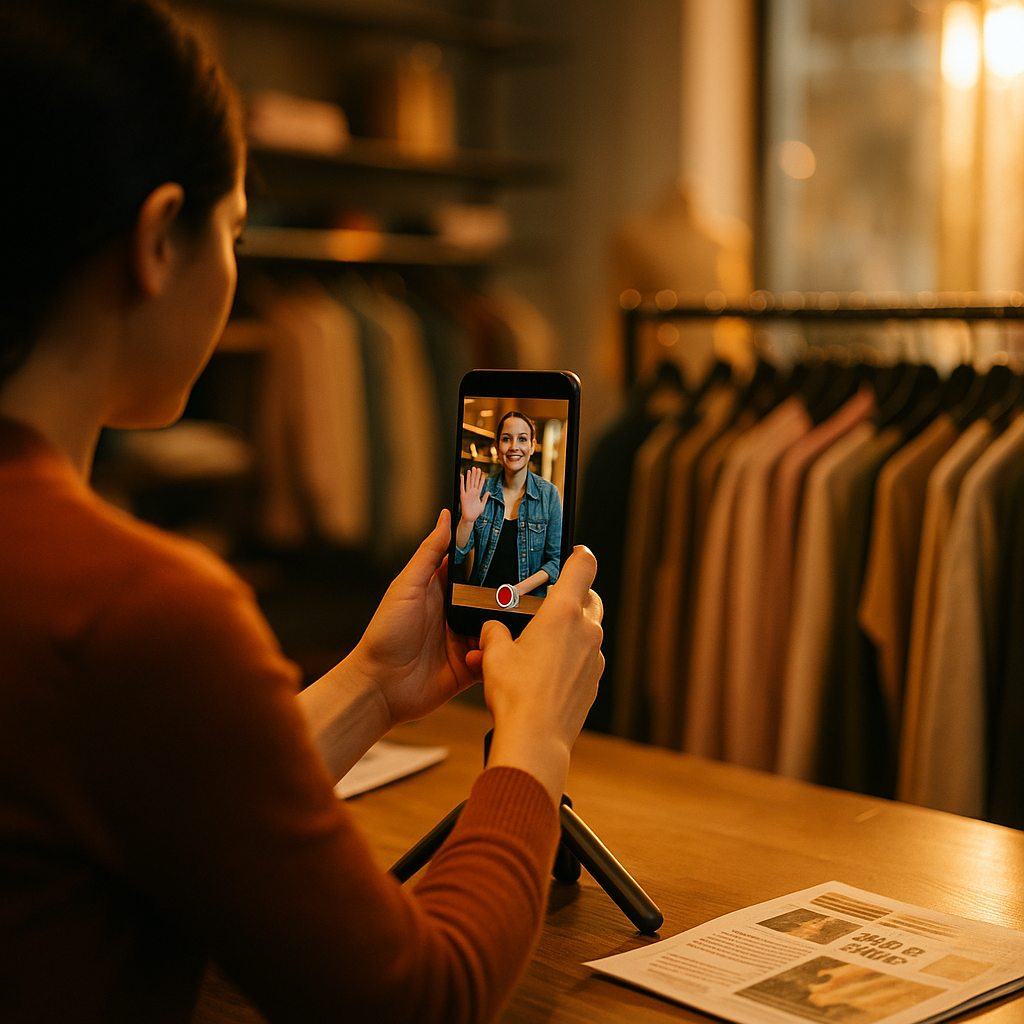
In 2025, many retailers are rethinking how they tell product stories as attention shifts from paper to screens. This case study shows a Retailers Successful Transition from Print to Social Video, tracking the strategy, creative system, measurement, and operational change behind the results. If you still rely on catalogs and flyers, the real question is not whether to move, but how to win while you do.
Why print to social video became a retail priority
For years, the retailer in this case study (a mid-market home and lifestyle brand with 70+ stores and a growing ecommerce channel) depended on seasonal print: a quarterly catalog, weekly inserts, and in-store signage. Those assets were polished and consistent, but they carried three growing problems in 2025:
- Rising production and distribution pressure: Print cycles locked the team into long lead times and limited testing. Cost per iteration was high, so weak creatives stayed in market too long.
- Fragmented customer attention: The brand’s audience discovered products on mobile-first feeds, and wanted demonstrations, comparisons, and “how it looks in real life” proof—formats print struggled to deliver.
- Measurement gaps: While print can be effective, attribution was coarse. The team could estimate lift using promo codes and geo tests, but they couldn’t quickly connect a specific message to a specific outcome.
The business goal was clear: maintain brand consistency while shifting incremental budget from print to social video that could be launched faster, tested weekly, and measured end-to-end. The leadership team set a simple operating rule: if a message can be communicated better in motion, it belongs in video. Print would remain for high-intent moments (in-store, packaging, limited direct mail) but stop carrying the whole acquisition burden.
Baseline audit and goals for social video strategy
The retailer started with a four-week audit to prevent a common mistake: “making videos” without a plan to distribute, learn, and scale. The audit covered customer journey, creative inventory, channel performance, and internal workflows.
What they measured before changing anything:
- Print performance proxies: redemption rates by offer, store traffic lift by region, and ecommerce sessions during drop windows.
- Social and site benchmarks: click-through rates, view-through rates on existing short clips, add-to-cart rate by landing page, and new vs. returning buyer mix.
- Content mapping: every print page was tagged by intent (inspiration, newness, comparison, promotion, gifting, care/how-to).
Goals were defined in business terms, not vanity metrics:
- Acquire incremental new customers while protecting gross margin (no blanket discounting).
- Shorten time-to-launch for campaigns from weeks to days.
- Increase product understanding for top categories to reduce returns and customer service inquiries.
They also wrote down what success would look like operationally: a repeatable video pipeline, consistent brand voice, and weekly reporting that merchandising and store teams could use. This alignment mattered because social video touches multiple functions—brand, performance marketing, ecommerce, creative, and store operations.
Creative system: turning catalogs into short-form video content
Instead of treating social video as a blank canvas, the retailer used the catalog as structured raw material. Each print spread already contained a “story unit”: a collection, a room setup, or a seasonal theme. The team translated these into modular video formats designed for feeds.
They standardized six repeatable video templates:
- “3 reasons” product explainers (15–25 seconds): one hero product, three benefits, one proof point.
- Before/after styling (10–15 seconds): fast transformation, clear captioning.
- UGC-led try-on or placement (15–30 seconds): real homes, real lighting, simple callouts.
- Comparison clips (20–30 seconds): “Which size fits your space?” or “Material A vs. B”.
- How-to care and setup (20–40 seconds): reduces friction, supports retention.
- Drop announcements (6–10 seconds): new arrivals, limited colorways, store events.
Production choices prioritized speed and trust: The team moved away from overly polished studio-only work and added more handheld and in-context demonstrations. They introduced a “proof checklist” for any claim (durability, stain resistance, comfort, sustainability). If a claim couldn’t be shown or credibly substantiated, it was reworded or removed. This protected brand integrity and reduced compliance risk.
To answer the question, “Do we need influencers?” they used a tiered approach:
- Employee creators for authenticity and product knowledge, especially for how-to and comparison.
- Customer UGC sourced via post-purchase emails and a simple permission workflow.
- Selective creators for category launches, with clear briefs focused on demonstration rather than scripted praise.
The result was a content library that could be refreshed weekly. Crucially, each video mapped to a landing page built for the same intent (inspiration pages for styling; comparison pages for decision-making; product pages for direct response). This reduced drop-off after the click, a common leak in social funnels.
Channel plan and paid social video rollout
The retailer did not “post everywhere.” They launched in two phases to protect budget and learning quality.
Phase 1: Controlled pilot (8 weeks)
- Platforms: a short-form video-first mix where the audience already engaged with home and lifestyle content.
- Campaign structure: top-of-funnel video view and engagement to seed audiences, plus conversion campaigns optimized to add-to-cart and purchase.
- Budget guardrails: a fixed test budget with weekly reallocation to winning creatives and categories.
Phase 2: Scale (12 weeks)
- Creative diversification: expand winners into variants (new hooks, new first frames, different proof, different offers).
- Retargeting built on intent: video viewers got education or comparison; product page visitors got objections handled; cart abandoners got reassurance (delivery times, returns, fit guidance).
- Store integration: localized clips featuring store staff and “available near you” messaging for regions with higher in-store conversion.
They solved the “print audience” concern directly: older customers still valued print, but they also watched video on mobile and connected TV. The retailer used clear captions, slower pacing for certain segments, and straightforward product framing. Accessibility wasn’t an add-on; it improved comprehension across the board.
To keep brand consistency, the creative director defined non-negotiables: logo use, color palette, tone, and claim language. Everything else—hooks, pacing, talent, and angles—was open to testing. That balance let performance improve without diluting identity.
Measurement and attribution using video marketing analytics
The team treated measurement as part of the creative process, not a reporting afterthought. In 2025, privacy changes and platform signal loss can distort results if you rely on one dashboard. They adopted a blended measurement approach.
Core metrics by funnel stage:
- Attention and comprehension: 3-second and 6-second view rates, average watch time, and saves/shares for inspiration content.
- Consideration: click-through rate to intent-matched pages, product detail page engagement, and email/SMS sign-ups.
- Conversion quality: conversion rate, average order value, contribution margin, and refund/return rate by creative theme.
Attribution method: They used platform reporting for directional insight, but made decisions from a weekly scorecard combining ecommerce analytics, incrementality tests (geo and holdout where feasible), and merchandising signals (sell-through, stockouts, and customer service themes). This answered a practical question stakeholders always ask: “Is the video driving profitable demand, or just capturing existing intent?”
What they learned quickly:
- First-frame clarity beat cleverness: Videos that showed the product in use within the first second consistently outperformed logo-first intros.
- Objection-handling reduced returns: When videos included sizing, material close-ups, or “what to expect,” return rate dropped for those SKUs compared with similar items promoted without clarity.
- Evergreen education scaled best: How-to and comparison clips created durable performance and could be refreshed with minor updates.
They also created a “creative truth” doc—short, evidence-backed statements (for example, “close-up material shots increase watch time for upholstery”). This institutional memory reduced re-learning and improved onboarding for new team members and partners.
Operational change: building a content production workflow that scales
The biggest shift was not creative; it was how work moved through the organization. Print teams were used to long calendars and a small number of high-stakes drops. Social video demanded weekly iteration.
They implemented a simple operating model:
- Weekly content stand-up: merchandising, paid media, creative, and ecommerce reviewed last week’s winners/losers and approved the next batch.
- Two-tier production: a small “always-on” crew for quick-turn videos and a quarterly tentpole shoot for higher production value assets.
- Asset management: a searchable library tagged by product, category, claim, hook, and funnel stage.
- Compliance and claims review: one documented checkpoint for regulated or potentially sensitive claims, with supporting evidence stored alongside the asset.
They retrained print talent instead of replacing it. Copywriters became hook and caption specialists. Designers owned template systems and motion standards. Merchandisers learned to write “proof inputs” (materials, dimensions, use cases) that made videos more credible. This internal expertise strengthened EEAT: the content reflected real product knowledge, not generic trends.
Finally, they created feedback loops from customer service and store staff. If customers repeatedly asked about a feature, the next week’s video backlog included an explainer. This made social video a practical service channel, not just advertising.
FAQs
How do you decide what print content to convert into social video first?
Start with high-volume categories and high-return items. Convert pages that already answer questions (materials, sizing, setup) because video can demonstrate those details faster. Then prioritize seasonal themes that drive discovery and can support multiple SKUs per shoot.
What video length works best for retailers in 2025?
Most retail wins come from 6–15 seconds for awareness and 15–40 seconds for education, comparisons, and objection handling. Pick length based on intent: fast for discovery, longer when shoppers need clarity to buy confidently.
Do we need a big studio budget to replace catalogs?
No. A repeatable template system, strong product lighting, clear captions, and credible demonstrations matter more than high-end sets. Use a two-tier approach: lightweight weekly production plus occasional tentpole shoots for brand moments.
How can we maintain brand consistency across lots of short videos?
Define non-negotiables (tone, colors, typography rules, claim language, logo usage) and allow experimentation in hooks, pacing, and talent. A shared creative playbook and an asset library with examples keep output consistent without slowing iteration.
How do we measure success if attribution is messy?
Use blended measurement: platform metrics for creative signals, ecommerce analytics for on-site behavior and profit, and incrementality tests where possible. Track return rate and customer service themes by promoted SKU to validate that videos improve understanding, not just clicks.
What should replace the printed catalog experience for loyal customers?
Create a shoppable “lookbook” landing page supported by short videos, collections, and styling guides. Offer an email or SMS drop that mirrors catalog chapters (new arrivals, rooms, gifting) so loyal customers get the same structure with richer demonstrations.
By 2025, retailers can no longer treat print as the default storytelling engine. This case study showed that moving from catalog-led campaigns to social video works when you build templates, tie every video to shopper intent, and measure profit, not hype. Keep print for targeted moments, but let video handle discovery and education. The payoff comes from speed, clarity, and repeatable execution.
Top Influencer Marketing Agencies
The leading agencies shaping influencer marketing in 2026
Agencies ranked by campaign performance, client diversity, platform expertise, proven ROI, industry recognition, and client satisfaction. Assessed through verified case studies, reviews, and industry consultations.
Moburst

-
2

The Shelf
Boutique Beauty & Lifestyle Influencer AgencyA data-driven boutique agency specializing exclusively in beauty, wellness, and lifestyle influencer campaigns on Instagram and TikTok. Best for brands already focused on the beauty/personal care space that need curated, aesthetic-driven content.Clients: Pepsi, The Honest Company, Hims, Elf Cosmetics, Pure LeafVisit The Shelf → -
3

Audiencly
Niche Gaming & Esports Influencer AgencyA specialized agency focused exclusively on gaming and esports creators on YouTube, Twitch, and TikTok. Ideal if your campaign is 100% gaming-focused — from game launches to hardware and esports events.Clients: Epic Games, NordVPN, Ubisoft, Wargaming, Tencent GamesVisit Audiencly → -
4

Viral Nation
Global Influencer Marketing & Talent AgencyA dual talent management and marketing agency with proprietary brand safety tools and a global creator network spanning nano-influencers to celebrities across all major platforms.Clients: Meta, Activision Blizzard, Energizer, Aston Martin, WalmartVisit Viral Nation → -
5

The Influencer Marketing Factory
TikTok, Instagram & YouTube CampaignsA full-service agency with strong TikTok expertise, offering end-to-end campaign management from influencer discovery through performance reporting with a focus on platform-native content.Clients: Google, Snapchat, Universal Music, Bumble, YelpVisit TIMF → -
6

NeoReach
Enterprise Analytics & Influencer CampaignsAn enterprise-focused agency combining managed campaigns with a powerful self-service data platform for influencer search, audience analytics, and attribution modeling.Clients: Amazon, Airbnb, Netflix, Honda, The New York TimesVisit NeoReach → -
7

Ubiquitous
Creator-First Marketing PlatformA tech-driven platform combining self-service tools with managed campaign options, emphasizing speed and scalability for brands managing multiple influencer relationships.Clients: Lyft, Disney, Target, American Eagle, NetflixVisit Ubiquitous → -
8

Obviously
Scalable Enterprise Influencer CampaignsA tech-enabled agency built for high-volume campaigns, coordinating hundreds of creators simultaneously with end-to-end logistics, content rights management, and product seeding.Clients: Google, Ulta Beauty, Converse, AmazonVisit Obviously →