


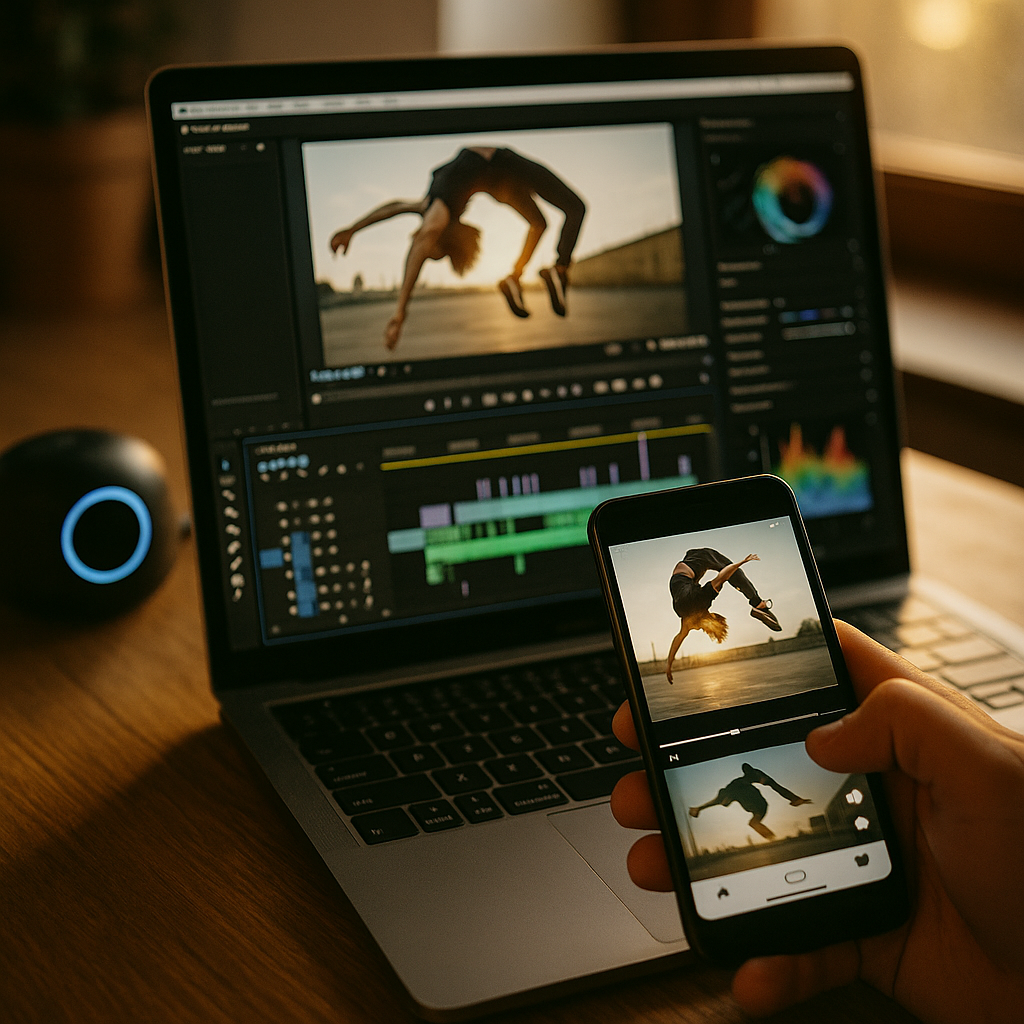
In 2026, attention is won or lost in the first seconds of a scroll. Using AI to Analyze the Kinetic Energy and Retention of Video Hooks helps marketers move beyond instinct and measure what actually stops thumbs, sparks curiosity, and sustains watch time. The real advantage is not just spotting strong hooks, but understanding why some openings keep viewers watching longer.
Why video hook retention matters in AI video analytics
Video platforms reward content that earns immediate attention and keeps it. That makes the opening seconds of any video disproportionately important. A hook is the first visual, verbal, emotional, or narrative signal that persuades someone not to swipe away. Retention is the measurable outcome: how many viewers stay, for how long, and where they drop off.
AI video analytics gives teams a more precise way to evaluate those early moments. Instead of relying on opinions such as “this intro feels stronger,” AI can compare thousands of videos and identify patterns tied to actual watch behavior. It can process frame-level motion, text overlays, speech pace, facial expressions, scene changes, sound intensity, and even semantic content.
For creators, brands, and performance marketers, this matters because small gains in early retention often lead to larger gains downstream. A stronger first three seconds can improve average view duration, click-through rate, ad efficiency, and conversion quality. AI helps isolate which hook elements are working across audience segments and which ones trigger fast exits.
To keep the analysis useful and aligned with EEAT, marketers should pair model outputs with human review. AI can detect patterns at scale, but experts still need to interpret context, brand suitability, and audience intent. The best workflows combine machine speed with editorial judgment.
How kinetic energy affects short-form video performance
Kinetic energy in video is not literal physics. In content analysis, it refers to the perceived intensity of movement and momentum in the opening seconds. It includes camera motion, cut frequency, subject movement, animation, visual contrast, gesture speed, and audio shifts that create a sense of action.
High kinetic energy often performs well on fast-scrolling platforms because motion naturally captures attention. But more motion is not always better. If the first seconds feel chaotic, misleading, or disconnected from the core message, viewers may leave just as quickly as they arrived. The goal is purposeful energy, not noise.
AI can quantify kinetic energy by analyzing signals such as:
- Frame-to-frame movement and optical flow
- Shot length and cut cadence
- On-screen text density and timing
- Speaker tempo and vocal emphasis
- Object entry, exit, and direction changes
- Brightness, color contrast, and visual novelty
When these signals are mapped against retention curves, marketers can identify the energy range that fits a specific audience. A gaming audience may respond well to quick transitions and aggressive visual rhythm. A B2B software audience may prefer calmer pacing with a bold claim, clear pain point, and a fast product reveal.
This is where expertise matters. AI might show that videos with a higher motion score produce better three-second hold rates, but a strategist should still ask whether that motion supports the promise of the content. Helpful content does not simply attract attention. It fulfills the expectation created by the hook.
Using retention analysis to identify high-performing video hooks
Retention analysis turns hook evaluation into a measurable discipline. Rather than asking whether a hook is “good,” the better question is: at which timestamp does audience interest rise, stabilize, or decline, and what happened on screen at that moment?
AI tools can align engagement data with creative events. For example, a system may detect that retention improves when a strong emotional statement appears in the first second, but drops when logos dominate the opening frame. It may show that viewers stay longer when the video begins with a problem statement before moving into product context.
A practical retention workflow typically follows these steps:
- Collect video-level and audience-level data. Include view duration, hold rate, replay rate, drop-off points, and conversion events if available.
- Tag hook components. Label elements such as question-based openings, bold claims, motion-heavy intros, captions, creator face, product reveal, social proof, and surprise visuals.
- Run pattern analysis. Use AI to cluster videos by creative traits and compare them with retention outcomes.
- Test variants. Change one variable at a time, such as text-on-screen, pacing, or opening line.
- Validate with human review. Confirm that statistical winners also match brand quality, compliance needs, and user expectations.
One of the most valuable uses of AI is detecting non-obvious patterns. A team may assume the strongest hooks are loud and fast, only to find that their best-performing content uses a calm but highly specific promise. Another team may discover that the first spoken sentence matters more than the first visual cut. These insights are difficult to see consistently without automation.
Marketers should also segment retention by audience type. New viewers often need instant context and clarity. Returning followers may respond better to continuity, inside references, or a recognizable creator style. AI models are especially useful when comparing retention patterns across channels, geographies, languages, and campaign objectives.
Best practices for machine learning video metrics and testing
Machine learning video metrics are only as good as the inputs and testing framework behind them. If you want insights you can trust, start with clean data, clear hypotheses, and consistent naming conventions.
First, define the business outcome. Are you optimizing for three-second hold rate, average watch duration, completed views, clicks, installs, or purchases? A hook that drives cheap attention may not drive qualified engagement. AI should be trained or configured around the metric that matters most to the business.
Second, standardize your metadata. Each creative should include tags for format, duration, opening style, creator presence, emotion, use case, audience segment, and offer type. This structure gives the model enough context to separate signal from coincidence.
Third, test under comparable conditions. If one hook ran only during a promotional spike and another ran to a colder audience, their retention numbers may not be directly comparable. Control for spend level, placement, audience quality, and distribution timing where possible.
Useful metrics for hook analysis include:
- Thumb-stop rate: How often the opening earns an initial pause
- Three-second retention: A key early indicator of hook effectiveness
- Five- and ten-second retention: Signals whether curiosity survives beyond the opening
- Average watch time: A broader measure of sustained interest
- Drop-off timestamp clusters: Exact moments where viewers leave
- Replay rate: A sign of intrigue, confusion, or strong value
- Conversion-assisted view behavior: Whether retained viewers actually take action
To align with EEAT, document your methodology. Explain how videos were labeled, what data sources were used, how success was defined, and where human oversight was applied. This transparency increases internal trust and makes the insights more actionable for stakeholders.
Predictive content optimization for stronger hook creative
Predictive content optimization allows teams to improve hooks before spending media budget. Instead of waiting for performance data after launch, AI models can estimate how likely a hook is to hold attention based on traits learned from historical winners and losers.
These systems can score drafts on likely retention strength, kinetic intensity, clarity of value proposition, emotional pull, and visual novelty. Some tools can also generate recommendations such as shortening the opening sentence, moving the product closer to frame one, reducing text density, or swapping a generic intro for a direct audience pain point.
That does not mean creative becomes automated or formulaic. In fact, the best use of predictive systems is to remove weak patterns so human teams can focus on better storytelling. AI can tell you that an opening is overloaded, slow to reveal relevance, or visually repetitive. A skilled strategist or editor then decides how to improve it without flattening the brand voice.
High-performing hook structures often include one or more of the following:
- A specific promise delivered immediately
- An unexpected visual that still matches the topic
- A sharp problem statement the audience recognizes
- Visible proof, such as a result, transformation, or demonstration
- Fast context for who the video is for
- Open-loop storytelling that creates a reason to keep watching
Predictive optimization is especially helpful for teams producing content at scale. It helps prioritize which versions deserve testing, which edits need revision, and which creative patterns should be retired. Over time, the model becomes more valuable as it learns from each campaign’s outcomes.
Common mistakes in audience retention modeling and how to avoid them
Audience retention modeling can produce misleading conclusions if the process is too narrow. One common mistake is treating retention as the only success metric. A sensational hook may keep viewers for five seconds, yet attract the wrong audience or damage trust. Watch time must be considered alongside relevance, sentiment, and conversion quality.
Another mistake is ignoring platform context. A hook that works on one short-form feed may underperform on another because user expectations differ. Sound-on behavior, caption reliance, creator familiarity, and pacing norms vary by platform. AI models should be trained on platform-specific data whenever possible.
Teams also fail when they overfit to past winners. If a model keeps recommending the same opening pattern because it worked before, creative output can become repetitive. Novelty matters. Build exploration into your testing plan so the system continues learning from new approaches.
Watch for these additional risks:
- Biased training data: If past campaigns targeted a narrow audience, the model may not generalize well
- Poor labeling: Inconsistent tags lead to weak conclusions
- Confusing correlation with causation: A strong hook may coincide with, but not cause, higher retention
- Neglecting qualitative review: Comments, sentiment, and creator feedback often reveal why viewers stayed or left
- Privacy and governance gaps: Use compliant data practices and avoid unnecessary personal data collection
The solution is disciplined experimentation. Use AI to narrow the field, then validate findings with controlled tests, expert review, and a clear understanding of audience intent. The most reliable teams do not chase isolated metrics. They build a repeatable creative learning system.
FAQs about AI video hook analysis
What does AI measure in a video hook?
AI can measure motion intensity, cut speed, speech pace, sentiment, text timing, object presence, scene changes, facial expressions, audio peaks, and semantic cues. It then compares those signals with retention and conversion data to identify which traits are associated with stronger performance.
What is a good retention benchmark for a video hook?
There is no universal benchmark because results vary by platform, audience, length, and objective. The better approach is to compare hook variants within the same channel and campaign conditions. Focus on relative lift in three-second hold rate, drop-off delay, and downstream actions.
Can AI predict whether a hook will go viral?
No tool can guarantee virality. AI can estimate the likelihood of stronger early retention and identify traits shared by past winners, but distribution dynamics, audience mood, creator credibility, and timing still influence reach. Use predictions as guidance, not certainty.
How many videos do you need to train a useful model?
It depends on the complexity of the model and the consistency of your metadata. Even smaller datasets can be useful for pattern detection if labeling is strong and testing is disciplined. Larger libraries improve reliability, especially when comparing multiple audiences and platforms.
Should brands optimize hooks for watch time or conversions?
They should optimize for both, but not in isolation. A hook that maximizes watch time without attracting qualified viewers may hurt business results. The best hooks create immediate relevance, keep attention, and lead naturally toward the desired action.
Is high kinetic energy always better?
No. High kinetic energy can improve thumb-stop behavior, but too much motion or intensity may reduce clarity and trust. The best level depends on audience expectations, message complexity, and platform norms. AI helps identify the energy range that performs best for your content type.
How often should hook insights be refreshed?
Frequently. Audience behavior and platform patterns change quickly in 2026. Review your winning and losing hook traits on a regular cadence, especially after major shifts in creative strategy, distribution mix, or audience targeting.
AI gives marketers a practical way to measure what makes video hooks work instead of guessing. By analyzing kinetic energy, mapping retention drop-offs, and testing creative patterns systematically, teams can build stronger openings that earn attention and keep it. The clearest takeaway is simple: use AI to guide decisions, but let expert judgment shape hooks that are relevant, credible, and worth watching.
Top Influencer Marketing Agencies
The leading agencies shaping influencer marketing in 2026
Agencies ranked by campaign performance, client diversity, platform expertise, proven ROI, industry recognition, and client satisfaction. Assessed through verified case studies, reviews, and industry consultations.
Moburst

-
2

The Shelf
Boutique Beauty & Lifestyle Influencer AgencyA data-driven boutique agency specializing exclusively in beauty, wellness, and lifestyle influencer campaigns on Instagram and TikTok. Best for brands already focused on the beauty/personal care space that need curated, aesthetic-driven content.Clients: Pepsi, The Honest Company, Hims, Elf Cosmetics, Pure LeafVisit The Shelf → -
3

Audiencly
Niche Gaming & Esports Influencer AgencyA specialized agency focused exclusively on gaming and esports creators on YouTube, Twitch, and TikTok. Ideal if your campaign is 100% gaming-focused — from game launches to hardware and esports events.Clients: Epic Games, NordVPN, Ubisoft, Wargaming, Tencent GamesVisit Audiencly → -
4

Viral Nation
Global Influencer Marketing & Talent AgencyA dual talent management and marketing agency with proprietary brand safety tools and a global creator network spanning nano-influencers to celebrities across all major platforms.Clients: Meta, Activision Blizzard, Energizer, Aston Martin, WalmartVisit Viral Nation → -
5

The Influencer Marketing Factory
TikTok, Instagram & YouTube CampaignsA full-service agency with strong TikTok expertise, offering end-to-end campaign management from influencer discovery through performance reporting with a focus on platform-native content.Clients: Google, Snapchat, Universal Music, Bumble, YelpVisit TIMF → -
6

NeoReach
Enterprise Analytics & Influencer CampaignsAn enterprise-focused agency combining managed campaigns with a powerful self-service data platform for influencer search, audience analytics, and attribution modeling.Clients: Amazon, Airbnb, Netflix, Honda, The New York TimesVisit NeoReach → -
7

Ubiquitous
Creator-First Marketing PlatformA tech-driven platform combining self-service tools with managed campaign options, emphasizing speed and scalability for brands managing multiple influencer relationships.Clients: Lyft, Disney, Target, American Eagle, NetflixVisit Ubiquitous → -
8

Obviously
Scalable Enterprise Influencer CampaignsA tech-enabled agency built for high-volume campaigns, coordinating hundreds of creators simultaneously with end-to-end logistics, content rights management, and product seeding.Clients: Google, Ulta Beauty, Converse, AmazonVisit Obviously →