


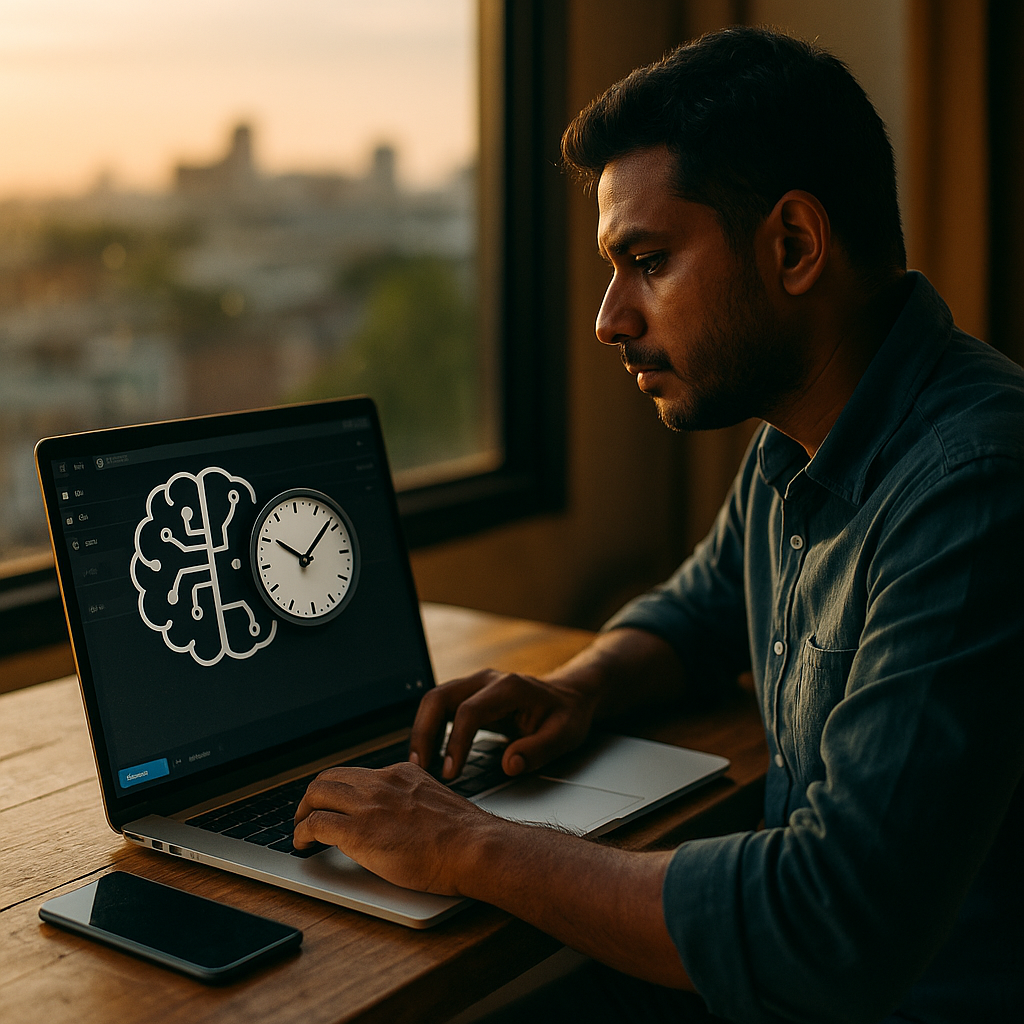
For freelance platforms, marketplaces, and distributed teams, using AI to optimize email send times for the global gig economy is now a practical way to improve opens, clicks, and conversions without increasing volume. When workers, clients, and recruiters live across time zones and work irregular hours, timing becomes strategy. The brands that master it gain attention first, but how do they do it?
Why AI email send time optimization matters in the global gig economy
The global gig economy runs on fragmented schedules. A courier in São Paulo, a designer in Berlin, a developer in Bengaluru, and a client in New York rarely share the same workday rhythm. Traditional email scheduling, such as sending every campaign at 9 a.m. local time, ignores the reality of freelance and platform-based work. In 2026, that approach leaves performance on the table.
AI email send time optimization solves a specific problem: it predicts when each recipient is most likely to engage. Instead of batch-sending one message to everyone at once, AI analyzes behavior patterns and delivers emails at an individualized time. For gig platforms, staffing apps, creator marketplaces, payment services, and B2B tools serving independent workers, this can increase visibility without increasing pressure on subscribers.
That matters because email often drives the highest-intent actions in gig-focused businesses:
- Job application starts and completions
- Shift acceptance
- Proposal submissions
- Profile completion
- KYC and onboarding verification
- Wallet activation and payout engagement
- Retention, upsell, and reactivation
If a message about a high-value project arrives while a freelancer is asleep, commuting, or deep in client work, the opportunity may expire before they even see it. AI reduces that gap. It also helps avoid over-emailing users at ineffective times, which supports trust and long-term list health.
From an EEAT perspective, timing optimization should never be framed as a magic switch. It works best when it is tied to a clear objective, clean data, audience segmentation, and responsible testing. Businesses that treat send-time AI as one component of a broader lifecycle strategy typically see the strongest results.
How predictive send time uses machine learning for email marketing
Machine learning for email marketing is not just about content generation. One of its most valuable uses is prediction. AI systems can review historical recipient behavior, identify recurring engagement windows, and estimate the best delivery moment for future messages.
Typical inputs include:
- Open and click timestamps
- Device type and operating system
- Local time zone and geographic region
- Day-of-week engagement patterns
- Response lag after delivery
- Campaign type, such as onboarding, transactional, or promotional
- App or site activity correlated with email interaction
The model then scores likely engagement windows for each user or for micro-segments when individual data is sparse. In practice, this means a freelancer who usually opens marketplace alerts at 7:30 p.m. local time can receive opportunity emails then, while a client who checks invoices at 6:45 a.m. receives payment reminders earlier.
For the gig economy, this matters because work behavior often breaks standard office assumptions. Many independent workers engage during evenings, between assignments, or after client calls. Some users are highly active only on weekends. Others respond quickly to urgent job alerts but ignore general newsletters. AI can detect those differences and adapt.
There is also a meaningful distinction between engagement optimization and business outcome optimization. A send time that maximizes opens may not maximize job bids, bookings, or completed onboarding. The strongest programs train models against downstream outcomes, not vanity metrics alone. For example, if your goal is marketplace liquidity, optimize for accepted jobs or completed transactions, not just email opens.
Marketers should also understand model limitations. New subscribers may not have enough behavioral history. Major life or work changes can alter routines quickly. Public holidays, local events, and inbox algorithm changes can reduce predictability. AI can improve timing decisions, but it should remain under human oversight and business context.
Best practices for email personalization across time zones
Email personalization across time zones goes beyond adding a first name to a subject line. For global gig audiences, timing is one of the most valuable forms of personalization because it respects how and when people actually work.
To make send-time optimization effective, start with a strong operational foundation:
- Normalize time-zone data. Do not rely only on country fields. Use recent app activity, login location, or user-declared working region when available.
- Separate campaign types. A message about urgent job availability should not use the same timing logic as a monthly product update.
- Create engagement cohorts. Group users by behavior such as early risers, evening responders, weekend actives, or low-frequency openers.
- Use local quiet hours. Even if AI predicts a likely open at 1 a.m., apply business rules to avoid intrusive delivery except for critical transactional communications.
- Account for platform-side urgency. Time-sensitive shifts or bids may justify narrower send windows and fallback channels like push or SMS.
Global scheduling becomes more complex when users travel or work across borders. Many gig workers move between locations, use VPNs, or keep odd hours based on client geography rather than personal location. That is why the best systems do not treat time zone as the only variable. They combine local-time assumptions with direct engagement behavior.
Another best practice is to align timing with message intent. Consider these examples:
- Onboarding emails: Send shortly after signup during the user’s active period to encourage profile completion.
- Job alerts: Prioritize immediacy, but still use AI to hit the most responsive window within the opportunity lifespan.
- Payout or invoice reminders: Time around known admin behaviors, often mornings or end-of-day review periods.
- Education and retention emails: Use longer-term engagement patterns and less urgent windows.
This is also where trust becomes part of performance. Users in the gig economy often face high cognitive load, fragmented schedules, and constant notifications. Respectful timing can improve not only campaign metrics but also brand perception. When email arrives when it is useful, subscribers are more likely to see the sender as relevant rather than disruptive.
Building a data-driven email strategy for freelancers and platforms
A data-driven email strategy for freelancers and the platforms that serve them should connect send time to the full user journey. Email timing alone will not fix poor segmentation, weak copy, or irrelevant offers. But when integrated into lifecycle marketing, it becomes a compounding advantage.
Start by mapping your highest-value email moments. For a gig marketplace, these may include:
- New user activation
- First job application or booking
- First completed project
- Drop-off after profile creation
- Inactivity after payout setup
- Client-side repeat hiring behavior
Then assign metrics that reflect business value. Instead of asking only, “Did they open the email?” ask:
- Did the freelancer complete onboarding within 24 hours?
- Did the recipient accept the shift or submit a proposal?
- Did the client post another role or release payment?
- Did retention improve over 30 or 60 days?
Once these goals are clear, feed the model with the right signals. Many businesses already have useful first-party data from app sessions, project activity, support interactions, and billing events. The next step is governance. Use clear consent practices, disclose how behavioral data supports personalization, and honor user preferences. Helpful content and ethical marketing both depend on transparency.
For smaller teams, implementation does not need to be overly complex. You can begin with rule-based send windows by region and engagement history, then add AI as volume and data maturity grow. A phased rollout often looks like this:
- Phase 1: Segment by geography and historical open time.
- Phase 2: Add behavior-based cohorts and campaign-specific timing.
- Phase 3: Use predictive models at the user level.
- Phase 4: Optimize for conversion events and coordinate with push, SMS, and in-app messaging.
This measured approach supports EEAT because it is grounded in operational realism, not hype. It reflects how experienced teams actually improve lifecycle performance: by building systems that are explainable, testable, and aligned with user benefit.
How to measure send time optimization with email engagement analytics
Email engagement analytics should show whether AI-driven timing improves outcomes in a meaningful way. Many teams make the mistake of turning on send-time optimization and assuming better timing automatically means better ROI. The right measurement plan proves it.
Use controlled testing wherever possible. Compare AI-optimized send times against a stable control group that receives emails at a fixed local-time schedule. Measure not only top-of-funnel engagement but also revenue and retention effects.
Key metrics include:
- Open rate
- Click-through rate
- Click-to-open rate
- Conversion rate
- Time to conversion
- Unsubscribe and complaint rate
- Reactivation rate for dormant users
- Revenue or transaction value per email sent
For gig businesses, custom operational metrics are often even more useful:
- Shift fill rate after email delivery
- Bid response speed
- Job match acceptance rate
- Payout completion or wallet activation
- Client repeat booking frequency
Watch for false positives. A higher open rate can happen because AI simply moved delivery to a more visible time, but if conversions stay flat, the business gain may be limited. Likewise, if click rate increases but unsubscribes also rise, users may feel over-targeted. Good optimization improves relevance and outcomes together.
Another common question is how long to test. In most cases, allow enough time to capture weekday and weekend differences and to include multiple campaign cycles. For businesses with international audiences, sample size should also be reviewed by region. A send-time model that performs well in North America may not behave the same way in Southeast Asia, Latin America, or MENA markets.
Finally, revisit the model regularly. Inbox behavior changes. So do work patterns. In 2026, remote and hybrid business practices continue to influence when freelancers and clients process email. Continuous learning, not one-time setup, is what keeps send-time optimization effective.
Common mistakes in AI-powered marketing automation for gig workers
AI-powered marketing automation can improve timing dramatically, but several mistakes reduce its value. Avoiding them can save both budget and subscriber trust.
1. Optimizing for opens only.
Opens are useful directional signals, but they are not enough. Focus on downstream actions tied to business goals.
2. Ignoring message urgency.
Some gig opportunities expire quickly. If the algorithm waits too long for an ideal send window, the opportunity may be gone. Build rules that balance urgency and predicted engagement.
3. Treating all recipients the same.
Clients, freelancers, recruiters, and inactive users should not be timed identically. Their behaviors and motivations differ.
4. Using poor-quality data.
Outdated time zones, incomplete behavioral logs, or merged identities can distort predictions. Clean first-party data is essential.
5. Over-automating without review.
Human oversight still matters. Marketing, product, and operations teams should review outcomes, user feedback, and anomalies regularly.
6. Forgetting preference controls.
Give users options for frequency, content type, and in some cases preferred contact windows. This is good user experience and supports compliance.
7. Failing to coordinate channels.
Email should work with push notifications, SMS, WhatsApp where appropriate, and in-app messages. For urgent labor marketplaces, channel orchestration often matters more than any single send-time model.
The strongest programs combine automation with judgment. They use AI to process complexity at scale, then apply business rules to protect user experience and campaign relevance. That balance is especially important in the gig economy, where trust, timing, and transparency influence every conversion.
FAQs about AI email send time optimization
What is AI email send time optimization?
It is the use of machine learning or predictive models to determine when each subscriber is most likely to engage with an email. Instead of sending to everyone at the same time, the system personalizes delivery timing.
Why is send time especially important in the gig economy?
Gig workers and clients often operate across multiple time zones and irregular schedules. Personalized timing helps messages arrive when users are available, which can improve applications, bookings, responses, and retention.
Does AI send-time optimization help transactional emails too?
It can, but only when timing is flexible. Critical transactional emails such as security alerts, receipts, or urgent verification messages should usually be sent immediately. Less urgent transactional reminders may benefit from timing optimization.
How much data do you need for predictive send time?
It depends on the platform, but more behavioral history usually improves accuracy. If user-level data is limited, start with cohort-based timing using geography, campaign type, and broader engagement patterns.
Can send-time optimization improve click-through and conversions, not just opens?
Yes, when the email is relevant and the model is trained or evaluated against downstream actions. Timing helps visibility, but copy, offer quality, and segmentation still matter.
How often should send-time models be updated?
Regularly. User habits change with workload, seasonality, region, and platform behavior. Ongoing retraining and periodic testing help maintain performance.
What are the privacy considerations?
Use first-party behavioral data responsibly, explain personalization practices clearly, and follow applicable privacy and consent rules. Ethical data use is part of long-term performance.
What if my audience travels frequently or works across several time zones?
Use recent activity data rather than static location alone. The best models combine time-zone signals with actual engagement history to reflect changing work patterns.
AI-driven send-time optimization gives gig economy businesses a practical edge by matching email delivery to real human behavior across regions, roles, and work patterns. The core takeaway is simple: do not send every message at the same time. Use clean data, test against business outcomes, respect user preferences, and let AI improve timing where it genuinely increases relevance and action.
Top Influencer Marketing Agencies
The leading agencies shaping influencer marketing in 2026
Agencies ranked by campaign performance, client diversity, platform expertise, proven ROI, industry recognition, and client satisfaction. Assessed through verified case studies, reviews, and industry consultations.
Moburst

-
2

The Shelf
Boutique Beauty & Lifestyle Influencer AgencyA data-driven boutique agency specializing exclusively in beauty, wellness, and lifestyle influencer campaigns on Instagram and TikTok. Best for brands already focused on the beauty/personal care space that need curated, aesthetic-driven content.Clients: Pepsi, The Honest Company, Hims, Elf Cosmetics, Pure LeafVisit The Shelf → -
3

Audiencly
Niche Gaming & Esports Influencer AgencyA specialized agency focused exclusively on gaming and esports creators on YouTube, Twitch, and TikTok. Ideal if your campaign is 100% gaming-focused — from game launches to hardware and esports events.Clients: Epic Games, NordVPN, Ubisoft, Wargaming, Tencent GamesVisit Audiencly → -
4

Viral Nation
Global Influencer Marketing & Talent AgencyA dual talent management and marketing agency with proprietary brand safety tools and a global creator network spanning nano-influencers to celebrities across all major platforms.Clients: Meta, Activision Blizzard, Energizer, Aston Martin, WalmartVisit Viral Nation → -
5

The Influencer Marketing Factory
TikTok, Instagram & YouTube CampaignsA full-service agency with strong TikTok expertise, offering end-to-end campaign management from influencer discovery through performance reporting with a focus on platform-native content.Clients: Google, Snapchat, Universal Music, Bumble, YelpVisit TIMF → -
6

NeoReach
Enterprise Analytics & Influencer CampaignsAn enterprise-focused agency combining managed campaigns with a powerful self-service data platform for influencer search, audience analytics, and attribution modeling.Clients: Amazon, Airbnb, Netflix, Honda, The New York TimesVisit NeoReach → -
7

Ubiquitous
Creator-First Marketing PlatformA tech-driven platform combining self-service tools with managed campaign options, emphasizing speed and scalability for brands managing multiple influencer relationships.Clients: Lyft, Disney, Target, American Eagle, NetflixVisit Ubiquitous → -
8

Obviously
Scalable Enterprise Influencer CampaignsA tech-enabled agency built for high-volume campaigns, coordinating hundreds of creators simultaneously with end-to-end logistics, content rights management, and product seeding.Clients: Google, Ulta Beauty, Converse, AmazonVisit Obviously →