


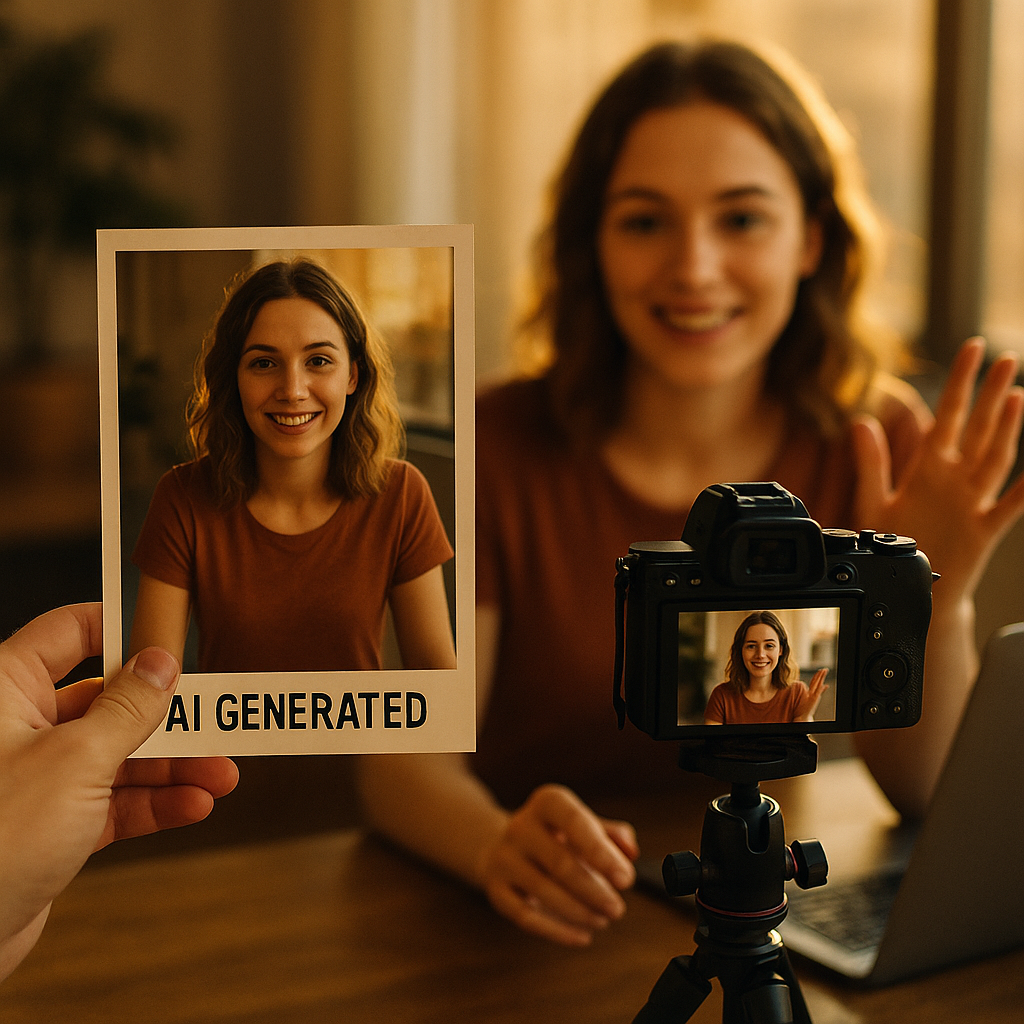
Brands, creators, platforms, and regulators are tightening expectations around AI generated influencer likeness disclosure rules. In 2026, using a synthetic face, voice, or avatar that resembles a real person can trigger legal, advertising, and consumer-protection duties. If your campaign team treats disclosure as optional, risk rises fast. So what exactly must marketers, agencies, and creators disclose now?
What AI likeness disclosure requirements mean in 2026
AI-generated influencer likeness refers to synthetic content that imitates, recreates, or materially resembles a real influencer’s face, voice, body, style, or recognizable persona. It can appear in videos, livestreams, audio ads, static images, social posts, virtual try-ons, and branded chat experiences. The key issue is not only whether the content is fake, but whether consumers could reasonably believe a real person participated, approved, or endorsed the message.
In 2026, disclosure rules are becoming more specific across advertising, consumer protection, publicity rights, and platform policy. The most important practical principle is simple: if an AI-generated likeness could mislead someone about identity, endorsement, sponsorship, or authenticity, you should disclose it clearly and early.
That includes situations where:
- A creator’s digital twin appears in sponsored content.
- A cloned voice reads an ad or product recommendation.
- An avatar is designed to closely resemble a known influencer.
- Old footage is modified to create a new endorsement.
- A virtual influencer is presented in a way that suggests a real human is posting live.
Disclosure is only one part of compliance. Brands also need valid rights and permissions. A disclosure does not cure unauthorized use of someone’s likeness, and consent alone does not replace advertising transparency. Both are required when applicable.
From an EEAT perspective, this topic requires legal caution. Rules vary by jurisdiction, platform, and campaign format. Marketers should treat published guidance from regulators, platform terms, talent agreements, and right-of-publicity laws as the core sources for decision-making. Internal policy should be documented, reviewed by counsel, and updated often because this area is changing quickly.
Why synthetic influencer transparency matters for brands and creators
Disclosure is not just about avoiding penalties. It directly affects trust, campaign performance, and brand safety. Audiences are increasingly able to spot AI content, but they still react negatively when they feel tricked. If a consumer believes a real influencer personally used a product when the endorsement was generated or simulated, that gap can become a deceptive advertising issue.
For brands, the risks include:
- Regulatory scrutiny for misleading endorsement practices.
- Platform enforcement, including ad rejection or reduced distribution.
- Claims involving false endorsement or right of publicity.
- Contract disputes with talent, agencies, or licensors.
- Reputation damage if audiences interpret synthetic content as manipulation.
For influencers and creators, the stakes are equally high. Their likeness is an economic asset. Unauthorized cloning can dilute value, confuse followers, and create harmful associations with products or opinions they never supported. Even where a creator consents, they need clear contract language defining scope, territory, duration, modification rights, revocation rights, approval steps, and permitted training or reuse.
Transparency also supports stronger results. When brands explain that an avatar, cloned voice, or digital twin is AI-generated, they can still produce compelling campaigns. In many cases, disclosure improves audience confidence because it shows the brand is not trying to pass synthetic material off as organic human expression. Honest framing helps preserve the persuasive power of creator marketing without crossing into deception.
A useful internal test is this: if a viewer saw the content only once, with sound off, would they understand whether the person is real, whether the endorsement is sponsored, and whether AI was used to create or alter the likeness? If the answer is no, the disclosure likely needs work.
Core digital endorsement compliance duties you should follow
While specific legal requirements differ, several baseline duties apply across most campaigns. These practices align with current regulatory direction and platform expectations in 2026.
- Disclose AI use clearly and conspicuously. The disclosure should be easy to notice, easy to understand, and placed close to the claim or likeness. Avoid burying it in a long caption, a profile bio, or terms and conditions.
- Disclose material sponsorship connections. If the content is an ad, paid partnership, gifted collaboration, affiliate placement, or otherwise incentivized, that sponsorship disclosure still applies. AI disclosure does not replace ad disclosure.
- Obtain written permission for any recognizable likeness. If the content uses or imitates a real person’s face, voice, or persona, confirm you have contractual rights. This is especially important for deceased personalities, archived content, and creator replicas.
- Avoid implied personal experience claims. Do not let AI content suggest a real creator personally used or independently recommended a product unless that statement is true and adequately substantiated.
- Maintain records. Keep evidence of licenses, creator approvals, prompt logs where relevant, final assets, disclosure language, media placements, and review history.
- Review local laws and sector rules. Health, finance, politics, children’s advertising, and regulated products require extra scrutiny.
For practical implementation, use layered disclosure. For example, a short on-screen label such as AI-generated likeness or synthetic voice recreation can appear in the content itself, while a fuller caption explains whose likeness was used, whether the post is sponsored, and whether the creator approved the use. On audio-only placements, the disclosure should be spoken at an understandable speed and volume.
Marketers often ask whether subtle wording is enough. Usually, no. Vague phrases like enhanced with technology do not communicate what matters to the audience. A better disclosure identifies the use of AI and its role in the representation. Clarity beats creativity here.
How virtual influencer advertising rules apply on social platforms
Platform rules increasingly matter because they shape what gets published, labeled, boosted, or removed. Social networks, video platforms, and creator marketplaces have expanded policies around manipulated media, impersonation, political content, and misleading synthetic content. Even when a law is unsettled, platform policy may still prohibit the ad.
In practice, brands should expect these platform-level expectations:
- Content that realistically depicts a person through AI may require visible labeling.
- Ads that use synthetic endorsements may face additional review.
- Impersonation, parody, and fan content may be treated differently from paid campaigns.
- Political, electoral, and issue-based ads often have stricter synthetic media rules.
- Creator marketplace tools may require confirmation that endorsements are authentic and authorized.
Each platform expresses these standards differently, so campaign managers should build a pre-launch checklist per channel. A disclosure that works in a long-form YouTube description may fail on a short-form video app if it is not visible on screen. Similarly, a podcast ad may require a spoken disclosure because listeners never see the show notes.
Brands should also consider cross-border publication. A single campaign can reach consumers in multiple territories, each with different rules on consumer deception, biometric data, publicity rights, and platform liability. If your media buy or influencer campaign is global, the safest approach is to harmonize around the strictest disclosure standard that still fits the platform format.
One common misconception is that a virtual influencer never triggers likeness issues because the character is fictional. That is only true if the character does not materially resemble a real person and is not presented in a misleading way. Once a virtual persona is based on, trained on, or styled after an identifiable individual, disclosure and rights analysis become more complex.
Best practices for AI content labeling for brands and agencies
Strong compliance starts before production. The best programs treat AI disclosure as a workflow issue, not just a caption-writing task at the end. That means legal, creative, talent, media, and social teams all need defined responsibilities.
Use this operational framework:
- Map the asset type. Is it fully synthetic, partially edited, voice-cloned, or a digital twin licensed from a real creator?
- Identify the risk of audience confusion. Would a typical viewer think a real influencer appeared, spoke, endorsed, or used the product?
- Confirm rights. Check talent contracts, union terms if relevant, agency paperwork, music and footage rights, and any approval conditions.
- Draft disclosure language by channel. Prepare on-screen, spoken, and caption formats. Keep wording plain.
- Review claims. Remove any unsupported implication that a creator personally tested, prefers, or independently recommends the product if that did not happen.
- Archive evidence. Save licenses, scripts, edits, approvals, and final versions for auditability.
Here are examples of clearer disclosure language:
- Video ad: AI-generated likeness used with creator permission. Paid partnership.
- Podcast ad: This message uses an AI-generated voice recreation of [creator name], used with permission, as part of a paid promotion.
- Social caption: Ad. This post includes an AI-generated version of [creator name] created for this campaign with authorization.
- Virtual influencer profile: Virtual character. AI-assisted content. Brand-operated account.
Disclosure should match the user experience. If the likeness appears immediately, the label should appear immediately. If a livestream uses a synthetic host, viewers joining midstream should still encounter disclosure. If a chatbot adopts a creator-like personality, the interface should state that users are interacting with an AI persona rather than the real individual.
Training matters too. Social teams need examples of compliant and noncompliant posts. Creator managers need playbooks for negotiating digital twin clauses. Customer support needs approved responses in case users ask whether a piece of content is real. These details support EEAT because they show the brand has a reliable process grounded in expertise rather than guesswork.
Managing right of publicity and AI likeness risks
Many disclosure discussions overlook a critical point: transparency does not equal permission. If a campaign uses a recognizable person’s identity without authorization, you may still face legal exposure even when the content is labeled as AI-generated. Right of publicity laws, unfair competition claims, false endorsement claims, and contract breaches can all arise.
To reduce risk, agreements with influencers and talent should address:
- Whether AI replicas are allowed at all.
- Which modalities are covered: face, voice, body, gestures, catchphrases, or style.
- Where the replica may appear: organic social, paid social, retail media, TV, audio, events, or in-app experiences.
- How long the license lasts and whether retraining or future reuse is permitted.
- Whether the creator has approval rights over scripts, edits, and contexts.
- Whether sublicensing to partners or affiliates is allowed.
- How takedowns, corrections, and post-campaign deletion will work.
Special caution is warranted for deceased celebrities, minors, political figures, and highly realistic voice clones. Brands should avoid assuming that public familiarity makes reuse acceptable. It does not. A recognizable persona may be protected even when the content is transformative or stylized.
Another frequent issue is dataset contamination. If a model or creative process was trained on unauthorized material associated with a creator, that can create downstream disputes even if the final asset is not a perfect clone. Procurement and vendor due diligence therefore matter. Ask AI vendors where training data came from, what warranties they provide, how they handle opt-outs, and whether they indemnify customers.
The safest takeaway is operational: disclose clearly, secure rights early, verify claims, and document every step. In 2026, those four habits are becoming the baseline for compliant AI-influencer marketing.
FAQs about AI generated influencer disclosure
Do brands always have to disclose AI-generated influencer content?
If the content could reasonably mislead people about whether a real person appeared, spoke, or endorsed a product, disclosure is strongly advisable and often required by advertising or platform rules. If the post is also sponsored, sponsorship disclosure is separately required.
Is an #ad tag enough when using a synthetic likeness?
No. An ad disclosure tells users there is a commercial relationship. It does not tell them the influencer likeness, voice, or appearance was generated or materially altered by AI. In many cases, you need both disclosures.
What if the influencer gave permission?
Permission solves only part of the issue. You may still need to disclose AI use so consumers are not misled. Consent and transparency serve different legal and ethical purposes.
Do these rules apply to virtual influencers that are not based on real people?
Often yes, especially if the account could cause confusion about whether a human is behind it or if the content is sponsored. If the virtual character resembles a real person, additional likeness and publicity-rights issues may apply.
How should disclosure appear in short-form video?
Use a visible on-screen label near the beginning and keep it readable. If the video includes spoken endorsement messaging, consider reinforcing it in the caption. The disclosure should not be hidden after a click or buried among hashtags.
Can a brand use an AI clone of an influencer’s voice for retargeting ads?
Only with explicit contractual authorization and clear disclosure where required. Retargeting increases frequency and scale, so brands should define usage limits, approved scripts, and campaign duration in writing before launch.
Are there higher risks in healthcare, finance, or political ads?
Yes. Regulated sectors and political communications typically face stricter scrutiny for deceptive claims and synthetic media. Legal review should be mandatory before publication.
What records should companies keep?
Keep contracts, approvals, scripts, media plans, final assets, disclosure language, vendor terms, and evidence of rights clearance. Good records help if a platform, regulator, or creator later questions the campaign.
Understanding new disclosure rules for AI-generated influencer likeness comes down to one principle: do not let synthetic content create false impressions about identity, endorsement, or authenticity. In 2026, brands should pair clear labeling with written permissions, accurate ad disclosures, and strong internal review. Transparent campaigns protect trust, reduce legal risk, and let AI creativity work without misleading the audience.
Top Influencer Marketing Agencies
The leading agencies shaping influencer marketing in 2026
Agencies ranked by campaign performance, client diversity, platform expertise, proven ROI, industry recognition, and client satisfaction. Assessed through verified case studies, reviews, and industry consultations.
Moburst

-
2

The Shelf
Boutique Beauty & Lifestyle Influencer AgencyA data-driven boutique agency specializing exclusively in beauty, wellness, and lifestyle influencer campaigns on Instagram and TikTok. Best for brands already focused on the beauty/personal care space that need curated, aesthetic-driven content.Clients: Pepsi, The Honest Company, Hims, Elf Cosmetics, Pure LeafVisit The Shelf → -
3

Audiencly
Niche Gaming & Esports Influencer AgencyA specialized agency focused exclusively on gaming and esports creators on YouTube, Twitch, and TikTok. Ideal if your campaign is 100% gaming-focused — from game launches to hardware and esports events.Clients: Epic Games, NordVPN, Ubisoft, Wargaming, Tencent GamesVisit Audiencly → -
4

Viral Nation
Global Influencer Marketing & Talent AgencyA dual talent management and marketing agency with proprietary brand safety tools and a global creator network spanning nano-influencers to celebrities across all major platforms.Clients: Meta, Activision Blizzard, Energizer, Aston Martin, WalmartVisit Viral Nation → -
5

The Influencer Marketing Factory
TikTok, Instagram & YouTube CampaignsA full-service agency with strong TikTok expertise, offering end-to-end campaign management from influencer discovery through performance reporting with a focus on platform-native content.Clients: Google, Snapchat, Universal Music, Bumble, YelpVisit TIMF → -
6

NeoReach
Enterprise Analytics & Influencer CampaignsAn enterprise-focused agency combining managed campaigns with a powerful self-service data platform for influencer search, audience analytics, and attribution modeling.Clients: Amazon, Airbnb, Netflix, Honda, The New York TimesVisit NeoReach → -
7

Ubiquitous
Creator-First Marketing PlatformA tech-driven platform combining self-service tools with managed campaign options, emphasizing speed and scalability for brands managing multiple influencer relationships.Clients: Lyft, Disney, Target, American Eagle, NetflixVisit Ubiquitous → -
8

Obviously
Scalable Enterprise Influencer CampaignsA tech-enabled agency built for high-volume campaigns, coordinating hundreds of creators simultaneously with end-to-end logistics, content rights management, and product seeding.Clients: Google, Ulta Beauty, Converse, AmazonVisit Obviously →