


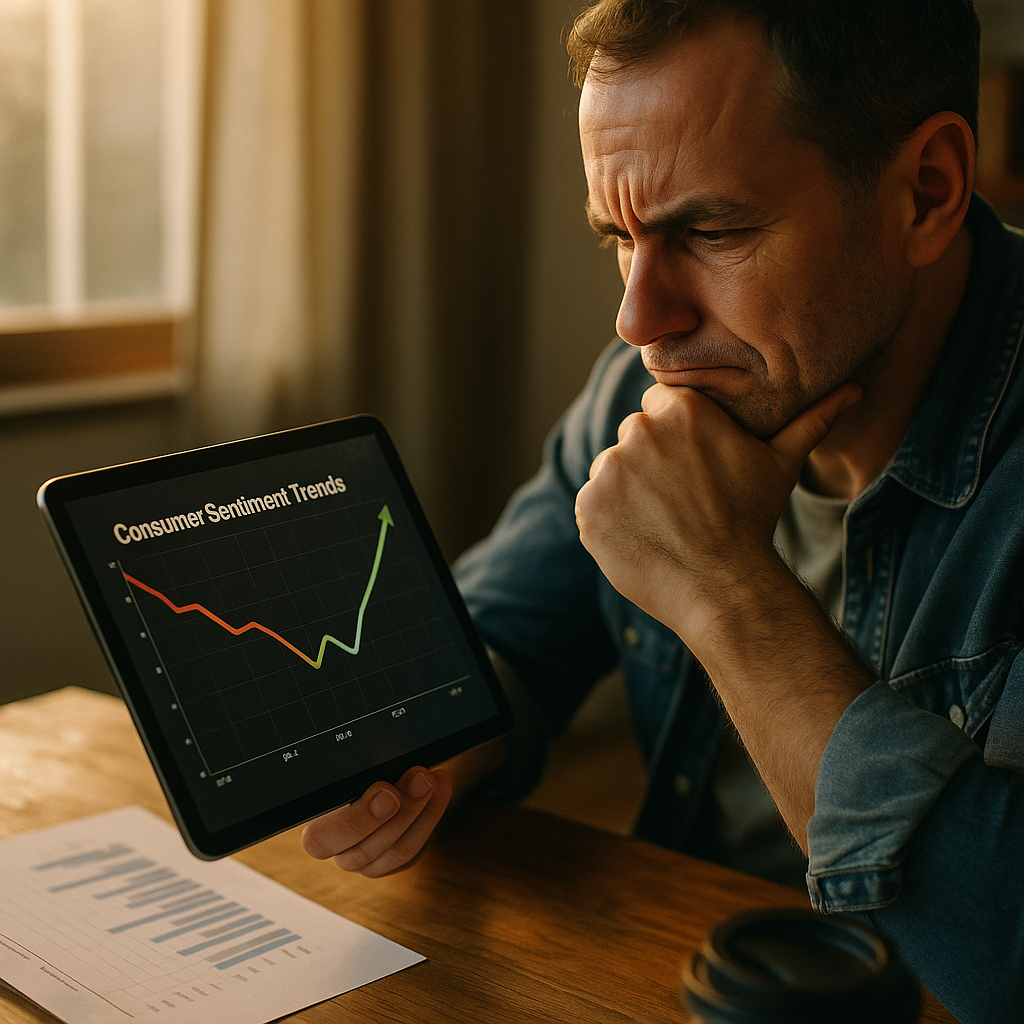
Skeptical optimism in 2027 consumer sentiment is emerging as a defining force in how people plan, spend, and evaluate brands. Consumers are not broadly pessimistic, yet they are no longer willing to trust promises without proof. They want value, transparency, and flexibility before they commit. For businesses, this shift creates both pressure and opportunity. What exactly is driving this mindset?
Consumer sentiment trends shaping skeptical optimism
As of 2026, many signals point to a more measured consumer outlook heading into 2027. Households in many markets have adjusted to several years of inflation pressure, changing interest rates, higher service costs, and persistent uncertainty around employment, housing, and technology. That adjustment has not produced pure fear. Instead, it has created a more selective and analytical customer.
This is the core of skeptical optimism: consumers still believe progress is possible, but they expect brands, employers, institutions, and retailers to earn their confidence. They are willing to spend, upgrade, subscribe, and explore new products. However, they ask tougher questions first:
- Is this purchase genuinely worth the price?
- Will this brand deliver what it promises?
- Can I cancel, return, or switch easily?
- Is this product durable, ethical, and useful?
- Does this company understand my financial reality?
Recent consumer research across major markets shows resilience in spending intentions, but also heightened price sensitivity and lower tolerance for weak customer experiences. People are not disengaging from the market. They are becoming more deliberate within it. That distinction matters.
For brands, skeptical optimism means demand still exists, but trust has become a more active part of conversion. Marketing alone cannot create lasting loyalty if the product, service, support, or pricing structure disappoints. In practical terms, consumers are moving from passive acceptance to active verification.
This shift also explains why small indicators now carry more weight. Clear shipping details, honest product pages, transparent fees, third-party reviews, and responsive support can shape buying decisions as much as top-line branding. Consumers do not expect perfection. They expect evidence.
Economic outlook and spending behavior in 2027
The expected economic outlook for 2027 helps explain why skepticism and optimism are rising together rather than canceling each other out. Consumers have learned to live with volatility. Instead of waiting for ideal conditions, they are building coping strategies into everyday spending behavior.
That means many buyers are still participating in travel, wellness, home improvement, digital subscriptions, and premium categories, but they are doing so with tighter internal rules. They compare more, delay more, and abandon carts faster when something feels misaligned.
Several patterns are likely to define spending behavior:
- Intentional splurging: Consumers will cut back in one area to justify spending in another that feels meaningful.
- Value stacking: Buyers will look for quality, convenience, loyalty rewards, and flexible payment terms together rather than separately.
- Shorter loyalty windows: A brand may win the next purchase, but not automatically the one after that.
- Greater scrutiny of recurring costs: Subscription fatigue will continue, pushing companies to prove ongoing relevance.
- Preference for optionality: Consumers will favor brands that offer choice in payment, delivery, bundles, and returns.
This does not mean every category will weaken. In fact, skeptical optimism can support growth for brands that reduce uncertainty. Businesses that communicate total value clearly often outperform those that compete only on discounting. Consumers may accept premium pricing if they believe the product saves time, reduces risk, or lasts longer.
Another important implication is that affordability now includes psychological affordability. A purchase must feel safe, not just possible. If hidden fees, vague claims, or poor reviews increase perceived risk, many consumers will walk away even if they technically can afford the product.
Executives planning for 2027 should therefore treat economic messaging carefully. Overstating affordability can appear tone-deaf. Ignoring price pressure can erode relevance. The stronger approach is to acknowledge consumer caution while showing exactly how the offer delivers practical value.
Brand trust and transparency in consumer decisions
Trust is the central filter through which skeptical optimism operates. Consumers are open to persuasion, but they no longer respond well to polished claims unsupported by proof. This makes brand trust and transparency a commercial issue, not just a reputational one.
Brands that perform well in this environment tend to do a few things consistently. They explain pricing in plain language. They avoid exaggerated messaging. They make reviews visible. They provide realistic delivery estimates. They resolve complaints without forcing customers through unnecessary friction. Each action lowers doubt.
Helpful content is especially important here. Under Google’s EEAT framework, content should demonstrate experience, expertise, authoritativeness, and trustworthiness. For this topic, that means businesses should publish content grounded in real consumer needs, current market observations, and clear explanations rather than generic trend language.
Strong EEAT-aligned content often includes:
- Experience: Insights from direct customer interactions, service teams, retail feedback, and product usage patterns.
- Expertise: Analysis from economists, market researchers, category specialists, and senior operators who understand buyer behavior.
- Authoritativeness: Consistent alignment with reputable data sources, well-structured guidance, and clear editorial standards.
- Trustworthiness: Accurate claims, transparent limitations, easy-to-verify details, and no misleading urgency tactics.
Consumers increasingly reward these qualities. When a company answers difficult questions before the customer asks, it signals confidence. When it acknowledges trade-offs honestly, it appears more credible. When it explains why a product costs more, it gives the buyer a framework for comparison.
This applies across channels. Product pages, FAQ pages, social content, email flows, retail signage, and customer support scripts should all tell the same truth. Mixed signals create friction, and friction intensifies skepticism. By contrast, consistency builds emotional and commercial reassurance.
In 2027, trust will likely be less about broad brand image and more about repeated proof across micro-moments. A fast refund, a useful explainer, a simple cancellation path, or a well-managed stock update can have outsized impact on conversion and retention.
Digital shopping behavior and value-conscious consumers
The rise of skeptical optimism is especially visible in digital shopping behavior. Online consumers now move quickly between research, comparison, social validation, and checkout. They can discover a brand in seconds, but they can also find reasons not to buy just as fast.
This creates a sharper standard for digital experiences. A value-conscious consumer does not just want a lower price. They want confidence that the digital journey respects their time and intelligence. That means websites and apps must reduce uncertainty at every stage.
Key expectations include:
- Clear product specifications and honest visuals
- Upfront shipping costs and delivery windows
- Visible return and refund policies
- Verified reviews and meaningful ratings summaries
- Fast page loads and intuitive mobile navigation
- Simple checkout with multiple payment options
Consumers also increasingly blend emotional and rational signals. They may discover products through creators or social platforms, but the final decision often depends on practical validation. If the social story is compelling but the product page is thin, conversions suffer. If the ad promises ease but checkout is confusing, skepticism wins.
This is why digital teams should map the full confidence journey, not just the funnel. Ask where doubt appears. Is it on pricing? Product quality? Security? Customer support? Return risk? Once identified, these points can be addressed directly through design, messaging, and service improvements.
Brands should also pay attention to the language consumers use in reviews and support tickets. Phrases like not worth it, different from the ad, hard to cancel, or couldn’t tell what was included reveal the specific trust gaps behind abandoned purchases and low repeat rates.
For value-conscious consumers, convenience remains powerful, but only when paired with clarity. A seamless experience can justify a purchase. A confusing one can make even a competitive offer feel risky.
Personal finance priorities and selective loyalty
Another major driver of skeptical optimism is the shift in personal finance priorities. Consumers are becoming more disciplined in how they allocate discretionary spending. That discipline is not necessarily a sign of retreat. Often, it reflects stronger financial self-awareness.
Many households are redefining what counts as essential, worthwhile, or excessive. This leads to more selective loyalty. People may stay loyal to a few brands that consistently deliver confidence, while rotating through alternatives in categories where differentiation feels weak.
Selective loyalty has several consequences:
- Brands must re-earn attention: Past satisfaction is helpful, but it no longer guarantees future purchases.
- Retention depends on relevance: Ongoing communication should reflect changing consumer priorities, not just promotional calendars.
- Rewards programs need substance: Points alone are less persuasive when consumers want flexibility, savings, or exclusive utility.
- Customer service becomes a loyalty driver: Efficient, respectful support can preserve relationships even after mistakes.
Consumers are also thinking more holistically about trade-offs. A shopper may buy fewer items but choose better quality. Another may prioritize experiences over physical goods. Another may stay in the market while reducing impulse purchases. In each case, optimism remains present, but filtered through caution.
For businesses, the lesson is clear: do not mistake hesitation for lost interest. A delayed purchase may simply mean the customer needs more proof. Better comparison tools, stronger education, transparent pricing, and smarter post-purchase communication can all help move uncertain buyers toward action.
It is also wise to avoid binary labels such as frugal or premium. Today’s consumer can be both. Someone may trade down in everyday household items while spending more on health, convenience, travel, or products with stronger durability. Segmenting by mindset and motivation will be more useful than segmenting only by income or age.
Business strategy for 2027 consumer confidence
Companies preparing for 2027 should treat skeptical optimism as a strategic design brief. The goal is not to eliminate doubt entirely. It is to meet doubt with useful proof. That requires alignment across product, pricing, operations, marketing, and customer care.
A strong strategy should include the following actions:
- Audit friction honestly. Identify where consumers hesitate, complain, or exit. Use behavioral data, service logs, reviews, and on-site analytics to find trust barriers.
- Clarify value propositions. Explain what makes the offer worth the money in direct language. Avoid inflated claims that trigger skepticism.
- Strengthen proof points. Feature verified reviews, product demonstrations, transparent guarantees, and useful comparisons.
- Improve flexibility. Offer options in payment, fulfillment, support, and returns where possible.
- Unify messaging. Ensure ads, product pages, support articles, and customer service all set the same expectations.
- Invest in retention through trust. Post-purchase communication should reassure, educate, and solve problems quickly.
Leaders should also revise how they measure success. In a skeptical-optimistic market, conversion rates matter, but so do indicators of confidence: return rates, cancellation reasons, review sentiment, time to resolution, and repeat purchase intervals. These metrics reveal whether the business is building durable trust or simply winning short-term transactions.
Importantly, this environment favors operational honesty. If stock is limited, say so clearly. If delivery will take longer, explain why. If a product is best for a specific use case rather than everyone, state that openly. These choices may narrow some audiences, but they improve fit and reduce backlash.
The brands that will stand out in 2027 are not the loudest. They are the clearest, most reliable, and most responsive. Skeptical consumers are still open to optimism, but they want it grounded in reality. Businesses that respect that mindset can earn stronger loyalty than those still selling certainty without evidence.
FAQs about skeptical optimism in 2027 consumer sentiment
What does skeptical optimism mean in consumer sentiment?
It describes a mindset in which consumers remain open to spending and future progress, but approach purchases with more caution, research, and demand for proof. They are not withdrawing from the market. They are becoming more selective.
Why is skeptical optimism rising ahead of 2027?
Consumers have adapted to prolonged uncertainty around prices, borrowing costs, digital trust, and economic stability. This has encouraged practical optimism rather than blind confidence. People still want convenience, quality, and enjoyment, but they want lower risk.
How does skeptical optimism affect brand loyalty?
It makes loyalty more conditional. Brands must continually prove value, reliability, and relevance. A strong past experience helps, but customers are more willing to switch if another option offers better transparency, service, or flexibility.
What do consumers want most from brands in this environment?
They want clear pricing, honest messaging, quality products, good customer support, easy returns, and evidence that a purchase is worth the money. In short, they want fewer surprises and more confidence.
How should businesses respond to skeptical optimism?
Businesses should reduce friction, communicate value clearly, strengthen trust signals, and make the customer experience more transparent. They should also align marketing promises with actual operational delivery.
Is skeptical optimism good or bad for companies?
It can be positive for companies that deliver real value. While it raises the bar for trust and execution, it also creates opportunity for brands that are transparent, customer-focused, and operationally reliable.
Does skeptical optimism mean consumers will spend less in 2027?
Not necessarily. Many will continue spending, but more selectively. They are likely to prioritize purchases that feel meaningful, durable, flexible, or clearly valuable while cutting back on offers that feel vague or overpriced.
Skeptical optimism will shape 2027 consumer sentiment by blending willingness to spend with a stronger demand for proof, value, and transparency. Consumers are not stepping away from brands; they are raising their standards. Companies that answer doubt with clarity, consistency, and useful experiences will be better positioned to earn trust, convert interest, and build loyalty in a more selective market.
Top Influencer Marketing Agencies
The leading agencies shaping influencer marketing in 2026
Agencies ranked by campaign performance, client diversity, platform expertise, proven ROI, industry recognition, and client satisfaction. Assessed through verified case studies, reviews, and industry consultations.
Moburst

-
2

The Shelf
Boutique Beauty & Lifestyle Influencer AgencyA data-driven boutique agency specializing exclusively in beauty, wellness, and lifestyle influencer campaigns on Instagram and TikTok. Best for brands already focused on the beauty/personal care space that need curated, aesthetic-driven content.Clients: Pepsi, The Honest Company, Hims, Elf Cosmetics, Pure LeafVisit The Shelf → -
3

Audiencly
Niche Gaming & Esports Influencer AgencyA specialized agency focused exclusively on gaming and esports creators on YouTube, Twitch, and TikTok. Ideal if your campaign is 100% gaming-focused — from game launches to hardware and esports events.Clients: Epic Games, NordVPN, Ubisoft, Wargaming, Tencent GamesVisit Audiencly → -
4

Viral Nation
Global Influencer Marketing & Talent AgencyA dual talent management and marketing agency with proprietary brand safety tools and a global creator network spanning nano-influencers to celebrities across all major platforms.Clients: Meta, Activision Blizzard, Energizer, Aston Martin, WalmartVisit Viral Nation → -
5

The Influencer Marketing Factory
TikTok, Instagram & YouTube CampaignsA full-service agency with strong TikTok expertise, offering end-to-end campaign management from influencer discovery through performance reporting with a focus on platform-native content.Clients: Google, Snapchat, Universal Music, Bumble, YelpVisit TIMF → -
6

NeoReach
Enterprise Analytics & Influencer CampaignsAn enterprise-focused agency combining managed campaigns with a powerful self-service data platform for influencer search, audience analytics, and attribution modeling.Clients: Amazon, Airbnb, Netflix, Honda, The New York TimesVisit NeoReach → -
7

Ubiquitous
Creator-First Marketing PlatformA tech-driven platform combining self-service tools with managed campaign options, emphasizing speed and scalability for brands managing multiple influencer relationships.Clients: Lyft, Disney, Target, American Eagle, NetflixVisit Ubiquitous → -
8

Obviously
Scalable Enterprise Influencer CampaignsA tech-enabled agency built for high-volume campaigns, coordinating hundreds of creators simultaneously with end-to-end logistics, content rights management, and product seeding.Clients: Google, Ulta Beauty, Converse, AmazonVisit Obviously →