


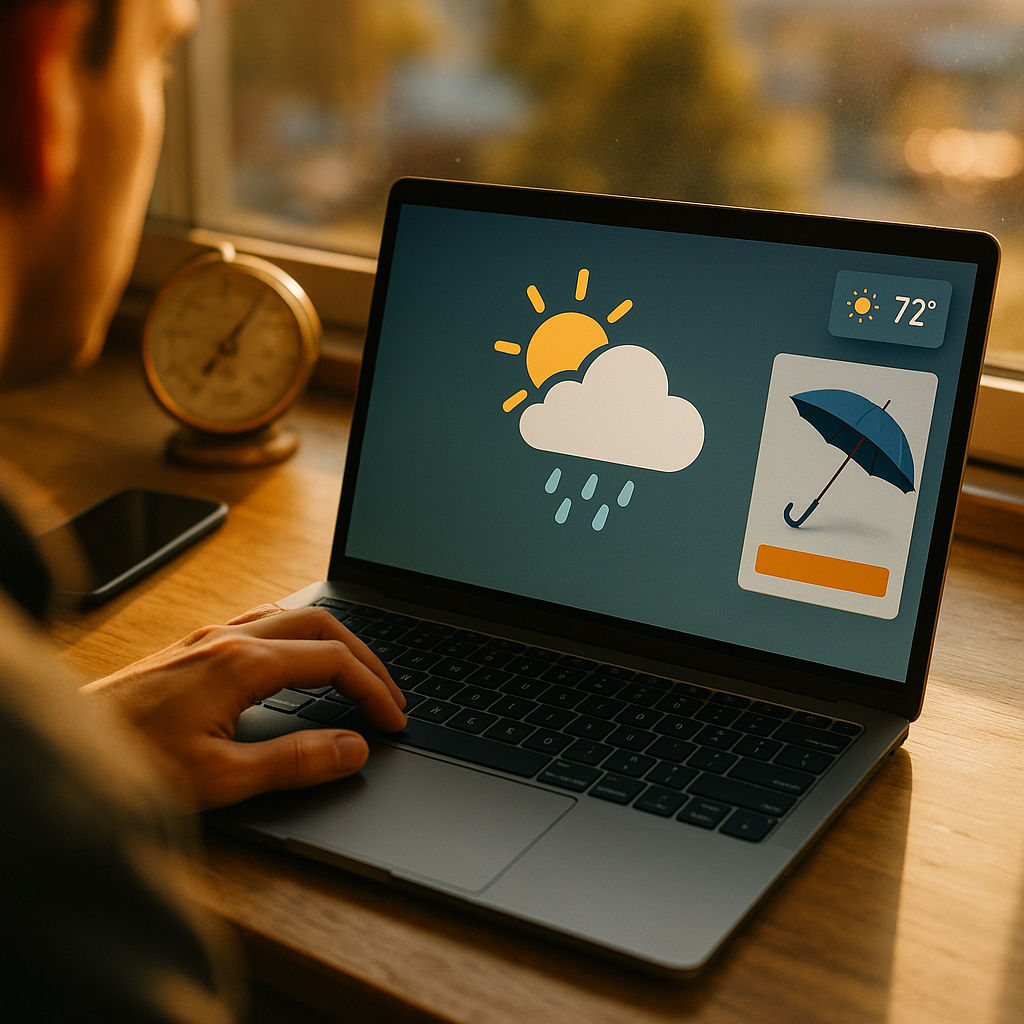
Using AI to personalize dynamic creative based on live weather data gives marketers a practical way to make ads more timely, relevant, and persuasive. In 2026, audiences expect messages that match their context, not generic promotions. Weather is one of the clearest real-world signals available. When brands respond intelligently to it, campaigns become more useful, more efficient, and more memorable.
Why weather-based advertising matters in 2026
Weather-based advertising is the practice of changing messaging, visuals, offers, or calls to action according to current or forecasted conditions in a user’s location. That can mean promoting iced drinks during a heatwave, waterproof gear before rain, or indoor entertainment when storms disrupt weekend plans.
The idea is not new, but AI has changed what is possible. Instead of building a few manual variants and hoping they fit broad segments, brands can now generate and deliver dynamic creative at scale. AI systems can evaluate live weather feeds, audience signals, inventory status, location, time of day, and campaign goals in milliseconds. The result is more relevant creative without the operational bottleneck that used to slow execution.
This matters because weather influences intent. A sudden temperature drop can change retail demand. Humidity can affect beauty routines. Snow can alter mobility, shopping windows, and food delivery behavior. When creative reflects those shifts, it feels less like an interruption and more like assistance.
For marketers, the business case is straightforward:
- Higher relevance: People are more likely to engage with messages that match what they are experiencing now.
- Better media efficiency: Budget shifts toward creative variants that fit current conditions.
- Faster optimization: AI can identify which combinations of weather, audience, and creative drive the strongest outcomes.
- Improved customer experience: Ads feel more useful when they solve an immediate need.
That does not mean every brand should tie every campaign to weather. The tactic works best when there is a clear link between conditions and customer behavior. Apparel, travel, food and beverage, retail, automotive, home services, healthcare, and entertainment often see strong fit. A B2B software brand may use weather less directly, but even then it can support localized messaging or event promotion.
How dynamic creative optimization works with AI and live weather data
Dynamic creative optimization, or DCO, uses structured templates and modular assets to assemble ad variations in real time. AI strengthens this process by predicting which version is most likely to perform for a given impression.
A typical workflow includes several components:
- Weather inputs: APIs provide live and forecast data such as temperature, precipitation, wind, UV index, pollen, or severe weather alerts.
- Audience and context signals: Location, device, time of day, app behavior, search intent, loyalty status, and previous engagement can be layered in.
- Creative asset library: Headlines, backgrounds, product shots, CTAs, colors, pricing, and offers are tagged so the system knows when to use them.
- Decision engine: AI models evaluate which creative combination best fits the current conditions and campaign objective.
- Measurement loop: Performance data feeds back into the model so it can refine future delivery.
Here is a simple example. A quick-service restaurant wants to promote drinks. If the temperature exceeds a defined threshold, the system serves creative focused on iced beverages with cooling visuals and a nearby store CTA. If heavy rain starts, the same campaign can switch to delivery messaging and comfort-food imagery. If evening temperatures drop, it can move to hot drinks and dessert bundles.
The strongest implementations do not rely on weather alone. They combine weather with business logic. For example, there is little value in advertising umbrellas in an area where stores are out of stock. AI can account for that by integrating inventory availability and suppressing irrelevant offers.
To align with EEAT best practices, marketers should also be transparent internally about how decisions are made. Teams need documented trigger rules, approved claims, brand safety controls, and validation procedures. AI should support expert marketing judgment, not replace it blindly.
Building a strong AI marketing personalization strategy
AI marketing personalization works best when the strategy starts with customer behavior rather than technology. Before connecting APIs or designing templates, define where weather genuinely changes need, urgency, or preference.
Ask these planning questions:
- Which products or services are weather-sensitive?
- What conditions influence demand most: heat, cold, rain, wind, air quality, or forecast shifts?
- What action should the user take in each condition?
- Which creative elements need to change: message, product, image, CTA, offer, or landing page?
- What guardrails are needed to avoid insensitive or inappropriate messaging during severe conditions?
Once the use case is clear, build a trigger matrix. This should map each weather condition to a specific creative response. Keep it practical. For a skincare brand, high UV may trigger sunscreen messaging, while cold and dry conditions trigger moisturizer content. For a grocery delivery app, rain may increase soup, snacks, and convenience-led copy.
Next, structure creative assets for flexibility. AI cannot personalize effectively if all assets are locked into static designs. Use modular creative components that can be swapped without breaking visual quality. This often includes:
- Headline variations tailored to conditions and intent
- Localized backgrounds that reflect season or weather mood
- Product sets linked to relevant conditions
- Offer logic that changes by urgency, availability, or margin goals
- CTA variants such as “Order Delivery,” “Find Nearby Store,” or “Book Now”
Do not overlook landing pages. If an ad references rainy-day essentials, the post-click experience should continue that logic. Message match improves trust and conversion rates.
Finally, involve subject matter experts. Creative strategists should shape messaging. Data teams should validate signal quality. Legal and compliance teams should review claims and location use. Media buyers should define bidding and pacing rules. This cross-functional process is part of creating reliable, helpful content and customer experiences.
Best practices for real-time ad personalization without losing brand control
Real-time ad personalization can increase performance, but only if execution remains disciplined. The most common failure is not technical. It is strategic overreach. Brands collect dozens of signals, generate too many variants, and end up with noisy testing and inconsistent messaging.
Use these best practices to stay effective:
- Start with high-impact triggers: Focus on a small set of weather conditions that clearly affect demand.
- Limit creative complexity: Build enough variants to cover real scenarios, not every possible forecast nuance.
- Set confidence thresholds: Require enough data before the system scales a new combination.
- Use forecast plus current conditions: Forecast data helps with anticipation, while live data improves immediate relevance.
- Define exclusion rules: Pause or adjust ads during severe weather events when promotional messaging may feel tone-deaf.
- Review outputs regularly: Human oversight is essential for brand consistency and contextual accuracy.
It is also important to protect privacy. Weather-based personalization usually relies on general location data, but teams still need strong data governance. Use only the data necessary to deliver the experience, respect platform policies, and explain data practices clearly in your privacy documentation.
Another smart move is to build tiered personalization. Not every impression requires full one-to-one variation. In many campaigns, city-level weather plus a few audience signals is enough. This reduces operational risk while still delivering meaningful relevance.
From a measurement perspective, avoid judging success on click-through rate alone. Weather-triggered creative often influences store visits, delivery orders, booking intent, and incremental revenue. Choose KPIs that reflect the actual business objective.
Measuring predictive advertising performance and proving ROI
Predictive advertising uses AI to forecast which message or offer is most likely to work before the impression is served. In weather-driven campaigns, this means looking beyond reactive triggers and identifying patterns over time.
For example, AI may learn that a retail brand performs best not during rain itself, but in the six hours before a forecasted storm, when shoppers are still mobile and more likely to stock up. A travel app may find that sudden cold snaps increase searches for warm destinations, while prolonged cloudy conditions lift engagement with weekend getaway offers.
To prove ROI, use a testing framework that separates signal from assumption:
- Establish a baseline: Compare weather-personalized creative against standard, non-personalized creative.
- Test one major variable at a time: If everything changes at once, you will not know whether weather, offer, or audience drove the lift.
- Measure incrementality: Look for added conversions, revenue, or efficiency beyond what would have happened anyway.
- Segment results: Performance can vary by region, product category, channel, and weather severity.
- Evaluate lag effects: Some weather-triggered behavior appears hours or days later, especially in travel or higher-consideration purchases.
Useful metrics often include:
- Conversion rate
- Return on ad spend
- Cost per acquisition
- Average order value
- Store visits or location-based actions
- Engagement rate on personalized variants
- Creative fatigue rate
Strong reporting should also answer executive questions directly: Which conditions drove the best outcomes? Which products benefited most? Which channels responded best? Did personalization improve margin, not just sales volume? When you connect campaign data to business impact, weather-based AI moves from experimental tactic to scalable capability.
Common contextual advertising challenges and how to solve them
Contextual advertising based on weather sounds straightforward, but practical issues can limit results if teams are not prepared. The good news is that most problems are solvable with better planning and governance.
Challenge 1: Signal accuracy. Weather can vary significantly even within the same metro area. Use reliable API providers and match location precision to campaign needs. For local store offers, tighter geo logic matters more.
Challenge 2: Creative mismatch. Sometimes the trigger works, but the ad still feels generic. Solve this by designing condition-specific visuals and copy, not just swapping a headline.
Challenge 3: Operational overload. Teams often create too many permutations. Prioritize top-performing weather scenarios and automate what is repeatable.
Challenge 4: Brand risk during extreme events. Severe storms, wildfire conditions, or heat emergencies require sensitivity. Build suppression rules and crisis review processes in advance.
Challenge 5: Weak attribution. If reporting cannot isolate weather-driven impact, stakeholders will lose confidence. Use holdout groups, region-based testing, and clear KPI definitions.
Challenge 6: Siloed execution. Media, creative, data, and analytics teams may work separately. Shared dashboards, documented triggers, and regular reviews keep the program aligned.
The biggest strategic lesson is simple: helpful personalization wins. If weather-based creative makes the decision easier, faster, or more relevant for the customer, it adds value. If it feels gimmicky, it will not last. AI is powerful, but the standard remains the same: serve the user’s immediate need with accuracy and good judgment.
FAQs about live weather data marketing
What is live weather data marketing?
Live weather data marketing uses current or forecasted weather conditions to influence ad creative, offers, audience targeting, or campaign timing. AI helps automate these decisions so brands can respond quickly and at scale.
Which industries benefit most from weather-based dynamic creative?
Retail, apparel, food and beverage, grocery delivery, travel, automotive, home services, beauty, healthcare, and entertainment often see the clearest gains because weather directly affects consumer demand and timing.
Do you need AI to run weather-triggered campaigns?
No, but AI makes the process far more effective. Manual rule-based setups can work for simple campaigns, while AI improves prediction, creative selection, scaling, and optimization across larger datasets.
What weather signals are most useful?
Temperature, precipitation, snow, wind, humidity, UV index, air quality, pollen, and severe weather alerts are common inputs. The best signal depends on how weather influences your product category and customer behavior.
How can brands avoid insensitive messaging during extreme weather?
Create exclusion rules, crisis escalation procedures, and human review checkpoints. Ads should be paused or adapted when severe weather turns from a convenience signal into a public safety concern.
How many creative variants should a brand build?
Start with a manageable set tied to the most commercially relevant weather scenarios. It is better to have fewer high-quality, well-mapped variants than dozens of weak or redundant combinations.
What is the difference between weather targeting and weather personalization?
Weather targeting decides when or where to show ads based on conditions. Weather personalization changes the actual content of the ad, such as the product, image, copy, or CTA, to match those conditions.
How do you measure success?
Use metrics connected to business goals, such as conversion rate, ROAS, CPA, average order value, store visits, or incremental revenue. Compare personalized weather-driven creative against a non-personalized control.
Is weather-based personalization privacy-safe?
It can be, if implemented responsibly. Use only the minimum location and contextual data needed, follow platform rules, maintain clear privacy disclosures, and avoid collecting unnecessary personal information.
Can small teams use this approach?
Yes. A small team can start with a limited set of weather triggers, a few modular templates, and one or two channels. The key is proving value with a focused pilot before expanding complexity.
Using AI to personalize dynamic creative based on live weather data works best when it serves a real customer need, not just a clever campaign idea. Brands that connect weather signals to intent, creative quality, and measurement can improve relevance and efficiency at once. In 2026, the winning approach is clear: use AI thoughtfully, keep humans in control, and personalize with purpose.
Top Influencer Marketing Agencies
The leading agencies shaping influencer marketing in 2026
Agencies ranked by campaign performance, client diversity, platform expertise, proven ROI, industry recognition, and client satisfaction. Assessed through verified case studies, reviews, and industry consultations.
Moburst

-
2

The Shelf
Boutique Beauty & Lifestyle Influencer AgencyA data-driven boutique agency specializing exclusively in beauty, wellness, and lifestyle influencer campaigns on Instagram and TikTok. Best for brands already focused on the beauty/personal care space that need curated, aesthetic-driven content.Clients: Pepsi, The Honest Company, Hims, Elf Cosmetics, Pure LeafVisit The Shelf → -
3

Audiencly
Niche Gaming & Esports Influencer AgencyA specialized agency focused exclusively on gaming and esports creators on YouTube, Twitch, and TikTok. Ideal if your campaign is 100% gaming-focused — from game launches to hardware and esports events.Clients: Epic Games, NordVPN, Ubisoft, Wargaming, Tencent GamesVisit Audiencly → -
4

Viral Nation
Global Influencer Marketing & Talent AgencyA dual talent management and marketing agency with proprietary brand safety tools and a global creator network spanning nano-influencers to celebrities across all major platforms.Clients: Meta, Activision Blizzard, Energizer, Aston Martin, WalmartVisit Viral Nation → -
5

The Influencer Marketing Factory
TikTok, Instagram & YouTube CampaignsA full-service agency with strong TikTok expertise, offering end-to-end campaign management from influencer discovery through performance reporting with a focus on platform-native content.Clients: Google, Snapchat, Universal Music, Bumble, YelpVisit TIMF → -
6

NeoReach
Enterprise Analytics & Influencer CampaignsAn enterprise-focused agency combining managed campaigns with a powerful self-service data platform for influencer search, audience analytics, and attribution modeling.Clients: Amazon, Airbnb, Netflix, Honda, The New York TimesVisit NeoReach → -
7

Ubiquitous
Creator-First Marketing PlatformA tech-driven platform combining self-service tools with managed campaign options, emphasizing speed and scalability for brands managing multiple influencer relationships.Clients: Lyft, Disney, Target, American Eagle, NetflixVisit Ubiquitous → -
8

Obviously
Scalable Enterprise Influencer CampaignsA tech-enabled agency built for high-volume campaigns, coordinating hundreds of creators simultaneously with end-to-end logistics, content rights management, and product seeding.Clients: Google, Ulta Beauty, Converse, AmazonVisit Obviously →