


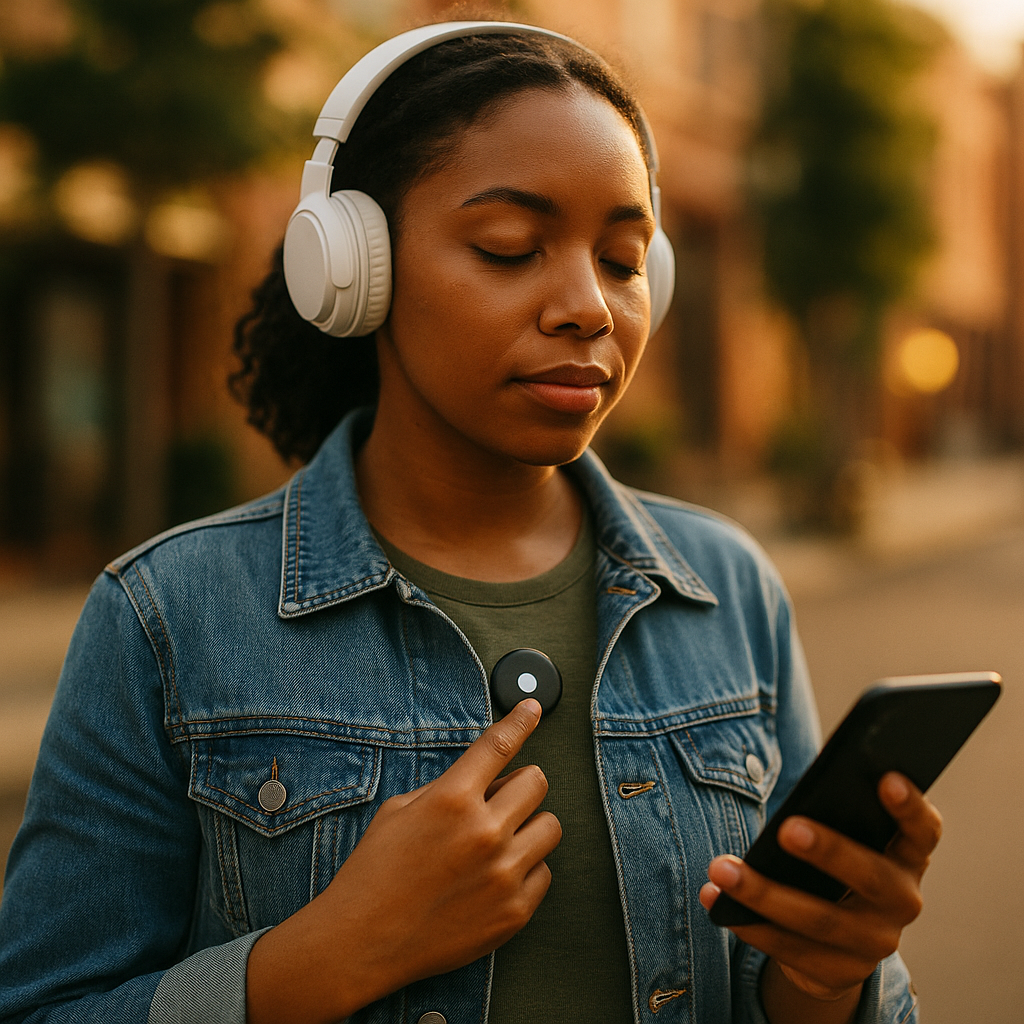
Wearable smart pins are changing how brands reach people in moments when screens are absent, attention is divided, and speed matters. Audio first marketing gives marketers a way to deliver useful, timely, and permission-based interactions through voice, sound, and conversational cues. The opportunity is real, but success depends on strategy, privacy, and experience design. Here is the playbook.
Why wearable marketing matters for smart pin adoption
Emerging wearable smart pins sit in a distinct category between earbuds, smartwatches, and AI assistants. They are lightweight, always available, and designed for quick interactions in real-world contexts such as commuting, shopping, traveling, working, or exercising. That changes the marketing environment. Instead of competing for taps and swipes, brands compete for attention measured in seconds and delivered through ears, microphones, and subtle prompts.
For marketers, this format creates both promise and pressure. Promise, because audio can feel personal and immediate. Pressure, because intrusive messaging is rejected faster when a device is worn on the body and often listens for context. Helpful content wins. Generic interruptions fail.
In 2026, the best approach is not to treat smart pins as a tiny smartphone. It is to design for:
- Context: what the user is doing right now
- Intent: why they might want assistance in this moment
- Permission: whether they have explicitly opted in
- Brevity: how fast the message can create value
- Utility: whether the interaction helps, not distracts
That is where EEAT becomes practical. Experience matters because wearable campaigns must be tested in real settings, not just presented in slides. Expertise matters because audio UX, privacy compliance, and behavioral design all influence outcomes. Authoritativeness comes from clear positioning and reliable execution. Trust matters most of all, because users will only accept smart pin interactions from brands that respect their time and data.
Building an audio marketing strategy for frictionless user moments
An effective audio marketing strategy for smart pins starts with one question: what is the shortest useful interaction your brand can own? Do not begin with campaign formats. Begin with user moments. If your brand cannot help someone faster or better through audio, it should not speak.
A practical framework is to map moments into three buckets:
- Reactive moments: the user asks for help, information, or a recommendation.
- Predictive moments: the device detects a likely need based on time, location, or behavior and asks permission to assist.
- Triggered moments: a known event creates value, such as an order update, schedule change, loyalty reminder, or in-store prompt.
Each bucket supports different brand goals. Reactive moments are strongest for conversion and service. Predictive moments are useful for engagement, discovery, and retention if they are carefully limited. Triggered moments work well for loyalty, support, and operational communication.
To make this actionable, define your smart pin use cases in a simple matrix:
- User need: what problem is solved?
- Audio response: what does the brand say or ask?
- Success metric: what outcome proves value?
- Permission rule: what consent is needed?
- Fallback path: what happens if audio is ignored?
For example, a retailer could deliver a concise, opt-in audio update when a click-and-collect order is ready and the user is nearby. A travel brand could offer a voice summary of gate changes. A fitness brand could give a quick spoken coaching prompt based on a planned session. The pattern is the same: the user gains immediate benefit without needing to look at a screen.
That discipline also improves measurement. Instead of vague awareness goals, you can tie smart pin efforts to micro-conversions such as accepted prompts, completed tasks, redeemed offers, reduced support friction, or improved repeat usage.
Voice UX design principles for audio commerce and branded interactions
Voice UX design is where many wearable campaigns succeed or collapse. Audio on smart pins is intimate, ephemeral, and often consumed while the user is moving. Long scripts, unclear prompts, and brand-heavy intros waste the moment. Strong voice UX reduces cognitive load and gives the user control.
Use these principles when designing branded audio interactions:
- Lead with value: say the useful part first. Do not open with a slogan.
- Keep prompts short: one idea, one action, one outcome.
- Confirm only when needed: too many confirmations create friction.
- Design for noisy environments: account for commuting, walking, traffic, and public spaces.
- Offer silent fallback: send a companion card or notification if audio is missed.
- Respect emotional tone: service updates, offers, and reminders should sound distinct.
Audio commerce on smart pins should be especially careful with complexity. Asking a user to browse five options by voice is usually inefficient. Instead, smart pin experiences should narrow choice. Present one recommended option, then allow the user to hear more or move the interaction to another device if needed.
For instance, rather than saying, We have several promotions available today, a stronger prompt is, Your usual order is available for pickup in ten minutes. Want me to reserve it? This is clear, contextual, and easy to answer.
Brand voice also matters. The best smart pin experiences sound human, calm, and purposeful. They avoid overproduction and synthetic enthusiasm. If your audience is global, localize for speech patterns and listening expectations, not just literal translation. Spoken language needs natural rhythm and concise syntax. Test with real listeners in real environments.
When you script interactions, build multiple variants for:
- First-time users
- Frequent users
- High-noise conditions
- Low-confidence recognition cases
- Accessibility needs
This is where experienced teams create advantage. Audio that feels simple is usually the result of careful iteration, not luck.
Privacy and consent in wearable advertising and always-on experiences
Privacy is not a compliance footnote in wearable advertising. It is the product. Smart pins raise immediate questions because they may use microphones, contextual signals, location, and personal routines. If users feel watched or interrupted, trust disappears. If they understand the benefit and control the exchange, adoption grows.
The playbook is straightforward:
- Ask for explicit opt-in before sending branded audio prompts.
- Explain the value clearly in plain language.
- Limit collection to the data needed for the specific experience.
- Provide easy controls to pause, mute, customize, or revoke permissions.
- Separate service communications from promotional messages whenever possible.
Marketers should also work closely with legal, product, and analytics teams to define what contextual targeting means in practice. A useful internal standard is this: if you cannot explain to a user in one sentence why a prompt appeared, the targeting logic is too opaque.
Trust is strengthened by visible safeguards. Give users a history of recent prompts. Let them choose categories they want, such as delivery updates, loyalty benefits, commute alerts, or wellness reminders. Allow frequency limits. Make quiet hours easy to set. These are not minor UX details. They directly affect retention and brand perception.
EEAT aligns well here. Trustworthiness comes from transparent permissions and respectful defaults. Expertise shows up in privacy-by-design workflows. Experience is proven when teams know which prompts are useful in the field and which feel invasive. Authoritativeness grows when a brand consistently acts in the user’s interest.
Measurement and attribution for conversational marketing on smart pins
One of the biggest follow-up questions marketers ask is simple: how do you measure conversational marketing on devices with limited screens? The answer is to stop relying on traditional display metrics and build a layered measurement model around action, response quality, and downstream lift.
Start with the metrics closest to the experience:
- Opt-in rate: who agrees to receive branded audio experiences?
- Listen-through rate: how often is the prompt heard to completion?
- Response rate: how often does the user reply or take the suggested action?
- Task completion rate: did the user finish the intended journey?
- Dismissal or mute rate: where does annoyance appear?
Then connect these to business outcomes:
- Conversion lift for orders, bookings, or subscriptions
- Retention improvement among opted-in users
- Support deflection if audio reduces service contacts
- Loyalty engagement through repeat interactions and redemptions
- Time-to-action compared with mobile app or email channels
Attribution should reflect the multi-device reality of wearable interactions. A smart pin prompt may trigger an action completed later on a phone, laptop, in-store kiosk, or physical location. Build event schemas that connect the initiating audio moment to the eventual result. Without that linkage, wearable performance will be undervalued.
Qualitative insights matter too. Review transcripts where permitted, user feedback, abandonment points, and phrase-level misunderstandings. Smart pin campaigns often fail for very fixable reasons: unclear calls to action, poor timing, repeated prompts, or speech recognition errors. Combining quantitative and qualitative analysis gives a fuller picture.
A good launch process includes:
- Small pilot with one use case
- Control group for incremental lift
- Prompt timing tests
- Script variation tests
- Frequency cap experiments
This keeps experimentation disciplined and prevents overgeneralizing from novelty-driven early results.
Go-to-market tactics for wearable technology campaigns that scale
Once the foundation is ready, brands need a go-to-market plan for wearable technology campaigns that can scale without damaging trust. The safest path is to begin with service and utility, then layer in commercial messaging only after users show clear acceptance.
A practical rollout sequence looks like this:
- Start with high-value service alerts such as delivery, scheduling, reservations, or travel updates.
- Add loyalty experiences like personalized reminders, point balances, or exclusive access prompts.
- Introduce commerce moments with narrow, relevant recommendations.
- Expand to partner ecosystems only if the user can control categories and frequency.
Cross-functional coordination is critical. Marketing cannot build this alone. Product teams shape permissions and UX. Data teams define context rules and attribution. Customer support informs pain points. Legal reviews consent flows. Brand teams ensure the voice feels consistent and credible.
Creative planning should reflect the special nature of audio-first moments. Build a prompt library with approved message structures, tonal guidance, and escalation paths. Define what should never be sent through a smart pin. Sensitive billing issues, dense legal updates, and complex product comparisons usually belong elsewhere.
Marketers should also prepare channel orchestration rules. Not every message belongs in audio. Some interactions should begin on the smart pin and continue on another device. Others should skip audio entirely if the context is poor. For example:
- Use audio for urgent, simple, context-aware updates.
- Use mobile push for medium-complexity actions that need a visual confirmation.
- Use email or in-app for details, documentation, or longer consideration.
Finally, train your organization to evaluate success beyond novelty. Smart pins may generate headlines, but sustainable results come from repeat usefulness. If people keep the experience enabled and act on prompts over time, the strategy is working. If usage drops after curiosity fades, the value exchange is weak.
The strongest brands in this category will not be the loudest. They will be the ones that become reliably helpful in small moments, again and again.
FAQs on smart pin marketing and audio-first engagement
What is audio-first marketing for wearable smart pins?
It is a marketing approach that prioritizes voice, sound, and spoken interactions over screen-based creative. On smart pins, this means delivering timely, permission-based prompts, service updates, recommendations, and conversational actions through audio.
Why are smart pins different from smartwatches or earbuds for marketers?
Smart pins are designed for fast, low-friction access and often rely on ambient context. They are less about visual browsing and more about lightweight assistance. That makes brevity, relevance, and trust more important than traditional ad formats.
Which industries can benefit most from audio-first smart pin campaigns?
Retail, travel, food delivery, fitness, healthcare support, events, and loyalty-driven brands are strong candidates. Any brand that can solve a quick real-world need through audio may benefit.
How do you avoid making smart pin marketing feel intrusive?
Use explicit opt-in, strict frequency caps, clear value propositions, and contextual relevance. Start with utility, not promotions. Give users easy controls to mute, customize, or stop messages at any time.
What are the most important metrics for wearable audio campaigns?
Track opt-ins, listen-through rates, response rates, task completion, mute rates, and downstream business outcomes such as conversion lift, retention, and reduced support demand. Incrementality testing is essential.
Can audio-first marketing support direct commerce?
Yes, but it works best for narrow decisions and repeat behaviors. Audio is effective when it shortens a path the user already understands, such as reordering, reserving, confirming, or redeeming.
How should brands test smart pin experiences before scaling?
Begin with a pilot around one use case, one audience segment, and one measurable outcome. Test script length, timing, context triggers, and fallback paths. Use both quantitative results and real-world feedback before expanding.
The playbook for smart pins is simple: earn permission, solve a real moment, and keep audio brief, clear, and useful. Brands that treat wearable interactions as service-led experiences, not miniature ads, will build trust and stronger performance. In 2026, audio-first success belongs to teams that design for context, measure rigorously, and respect user control at every step.
Top Influencer Marketing Agencies
The leading agencies shaping influencer marketing in 2026
Agencies ranked by campaign performance, client diversity, platform expertise, proven ROI, industry recognition, and client satisfaction. Assessed through verified case studies, reviews, and industry consultations.
Moburst

-
2

The Shelf
Boutique Beauty & Lifestyle Influencer AgencyA data-driven boutique agency specializing exclusively in beauty, wellness, and lifestyle influencer campaigns on Instagram and TikTok. Best for brands already focused on the beauty/personal care space that need curated, aesthetic-driven content.Clients: Pepsi, The Honest Company, Hims, Elf Cosmetics, Pure LeafVisit The Shelf → -
3

Audiencly
Niche Gaming & Esports Influencer AgencyA specialized agency focused exclusively on gaming and esports creators on YouTube, Twitch, and TikTok. Ideal if your campaign is 100% gaming-focused — from game launches to hardware and esports events.Clients: Epic Games, NordVPN, Ubisoft, Wargaming, Tencent GamesVisit Audiencly → -
4

Viral Nation
Global Influencer Marketing & Talent AgencyA dual talent management and marketing agency with proprietary brand safety tools and a global creator network spanning nano-influencers to celebrities across all major platforms.Clients: Meta, Activision Blizzard, Energizer, Aston Martin, WalmartVisit Viral Nation → -
5

The Influencer Marketing Factory
TikTok, Instagram & YouTube CampaignsA full-service agency with strong TikTok expertise, offering end-to-end campaign management from influencer discovery through performance reporting with a focus on platform-native content.Clients: Google, Snapchat, Universal Music, Bumble, YelpVisit TIMF → -
6

NeoReach
Enterprise Analytics & Influencer CampaignsAn enterprise-focused agency combining managed campaigns with a powerful self-service data platform for influencer search, audience analytics, and attribution modeling.Clients: Amazon, Airbnb, Netflix, Honda, The New York TimesVisit NeoReach → -
7

Ubiquitous
Creator-First Marketing PlatformA tech-driven platform combining self-service tools with managed campaign options, emphasizing speed and scalability for brands managing multiple influencer relationships.Clients: Lyft, Disney, Target, American Eagle, NetflixVisit Ubiquitous → -
8

Obviously
Scalable Enterprise Influencer CampaignsA tech-enabled agency built for high-volume campaigns, coordinating hundreds of creators simultaneously with end-to-end logistics, content rights management, and product seeding.Clients: Google, Ulta Beauty, Converse, AmazonVisit Obviously →