


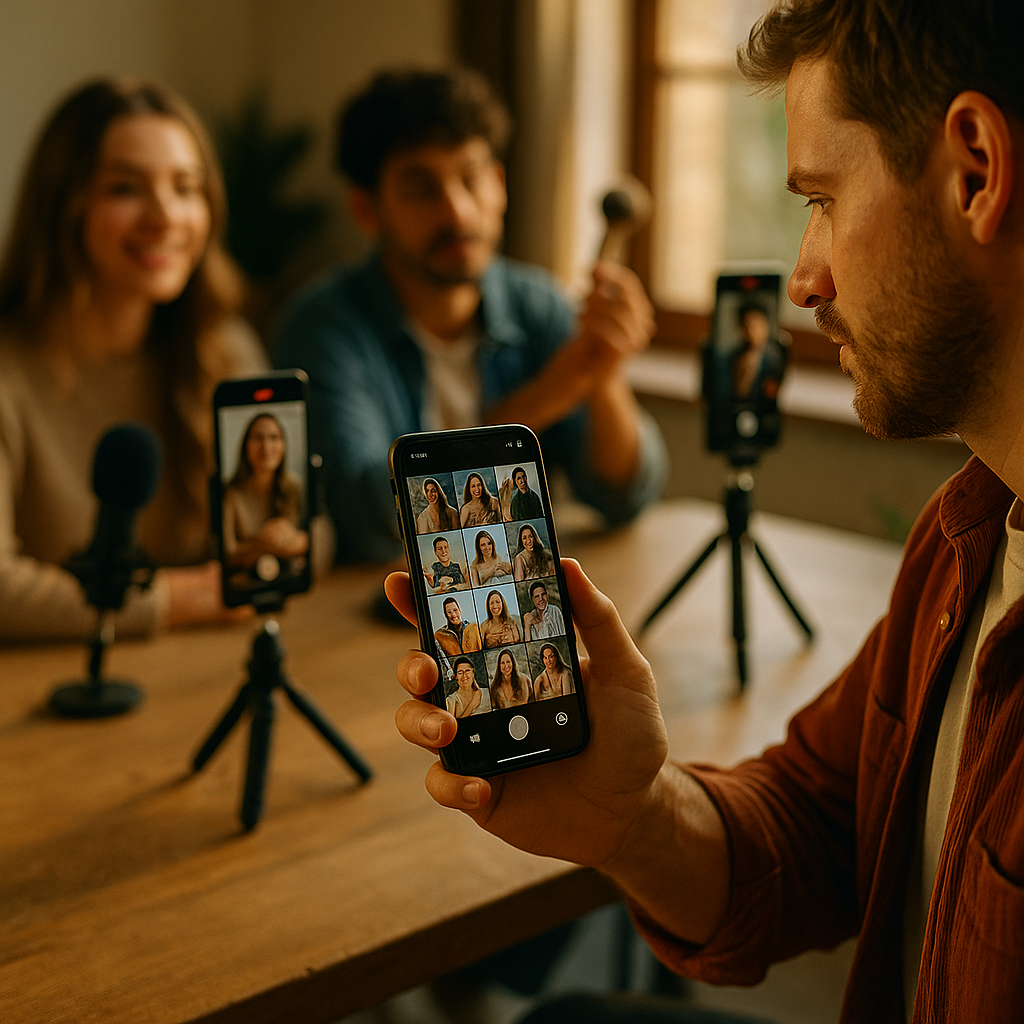
Brands in 2026 no longer need celebrity budgets to create outsized visibility. Micro influencer syndicates let marketers bundle trusted niche creators, negotiate smarter, and buy reach in bulk without sacrificing authenticity. Done well, this model delivers efficient distribution, faster testing, and measurable conversions across platforms. The real advantage, however, comes from structure, compliance, and disciplined execution.
What Are Creator Collective Campaigns and Why They Work
A micro influencer syndicate is a coordinated group of small-to-mid-sized creators activated under one campaign framework. Instead of hiring one large influencer with broad but often diluted attention, a brand works with many creators who each have tighter audience trust. The result is broader cumulative exposure paired with stronger engagement quality.
This approach works because micro creators usually sit closer to their communities. Their followers often view recommendations as useful guidance rather than mass advertising. When multiple creators in adjacent niches publish aligned messages, the campaign gains frequency, social proof, and repeat visibility across audience clusters.
In practice, syndicates can be built in several ways:
- Agency-managed syndicates: A partner sources, vets, briefs, and manages creators under one umbrella.
- Platform-led syndicates: Influencer platforms aggregate creators and simplify contracts, workflows, and reporting.
- Brand-built syndicates: In-house teams recruit creators directly and create repeatable frameworks for scale.
The core value is not only access to more creators. It is operational leverage. You reduce sourcing time, standardize content requirements, and create a repeatable buying system. For performance marketers, that matters because reach alone is not the goal. You need cost-controlled reach that can also generate clicks, installs, leads, or sales.
To align with EEAT principles, campaigns should be grounded in demonstrable experience and transparent methodology. That means using creators with relevant subject-matter fit, documenting selection criteria, and clearly disclosing sponsorships. Helpful content from creators should reflect genuine product use where possible, not generic scripts that weaken trust.
How Bulk Reach Buying Improves Influencer Media Efficiency
Buying reach in bulk means negotiating creator inventory as a portfolio instead of one post at a time. This changes the economics. Brands can secure lower effective rates, reserve publishing windows, test multiple audience segments at once, and build a more predictable media model.
There are three common ways to structure bulk buying:
- Fixed-package buys: A set number of creators, posts, videos, and stories for one campaign fee.
- Guaranteed output agreements: Pricing tied to deliverables, usage rights, and content volume across a network.
- Performance-weighted buys: Base compensation plus incentives for clicks, conversions, app installs, or qualified leads.
The advantage of bulk deals is not simply lower CPM. It is better planning. You can map creator activity to product launches, promotional periods, or always-on acquisition efforts. Bulk buying also improves your test environment. Instead of betting heavily on one creator, you spread budget across formats, verticals, and audience profiles, which usually produces cleaner learnings.
Still, low pricing should never outrank quality. If a syndicate inflates delivery with low-relevance creators, weak audience alignment, or suspicious engagement patterns, your apparent efficiency collapses. Smart buyers evaluate:
- Audience-location fit
- Engagement authenticity
- Historical branded-content performance
- Content quality and brand safety
- Usage rights and whitelisting terms
- Disclosure compliance by platform and region
Bulk buying is strongest when your team treats creators like a media channel and a creative channel at the same time. The media side demands pricing discipline and attribution. The creative side requires relevance, nuance, and room for creator voice.
Building an Influencer Procurement Strategy for Syndicates
An effective influencer procurement strategy starts before outreach. You need clear business goals, acceptable economics, and a creator-selection framework that can scale. Without these, bulk buying becomes bulk waste.
Start with campaign intent. Are you trying to drive awareness, generate UGC, improve conversion rates, support retail sell-through, or enter a new category? Each goal changes the creator profile, content format, and contract terms you need. For example, if your priority is conversion, creators with demonstrated action-driving content may outperform larger creators with higher passive views.
Next, define your operating metrics:
- Upper-funnel: Reach, impressions, view-through rate, ad recall proxies, branded search lift
- Mid-funnel: Saves, shares, profile visits, landing-page visits, email signups
- Lower-funnel: Promo code usage, attributed sales, installs, cost per acquisition, repeat purchases
Then build your selection rubric. Useful filters include niche relevance, average watch time, comment quality, prior sponsor fit, audience overlap, posting consistency, and creator professionalism. Professionalism matters more than many teams admit. Creators who respond quickly, follow briefs, and handle revisions well lower campaign risk.
Procurement should also account for legal and operational realities:
- Clear statements of work
- Exclusivity clauses where necessary
- Approval timelines and revision limits
- Usage rights for paid amplification
- Disclosure language and compliance requirements
- Cancellation and make-good terms
If you plan to scale syndicates over time, create tiered creator pools. Keep a tested roster of high performers, an experimental bench for new formats and niches, and a standby group for seasonal campaigns. This gives you continuity without creative stagnation.
Audience Overlap Analysis Prevents Wasted Bulk Reach
One of the biggest risks in syndicate buying is duplication. You may think you are buying 2 million impressions across 40 creators, but if those audiences heavily overlap, unique reach could be far lower. Audience overlap analysis turns a blunt volume purchase into a more efficient media investment.
Look beyond raw follower counts. Two beauty creators with similar demographics may deliver nearly identical viewers. By contrast, one beauty creator, one skincare professional, one lifestyle parent creator, and one wellness creator may collectively expose your product to adjacent but distinct communities. That mix often improves unique reach while keeping message consistency intact.
Useful ways to reduce overlap include:
- Segmenting creators by sub-niche, geography, age bracket, or purchase intent
- Balancing platform mix across short-form video, stories, live streams, and community posts
- Using phased publishing schedules instead of dropping every asset at once
- Refreshing creative angles for each audience cluster
Overlap analysis also helps with frequency planning. Some repetition is useful. Too little, and the campaign disappears in the feed. Too much, and the audience tunes out. Brands should estimate ideal frequency by objective. Awareness efforts may tolerate broader exposure with lighter calls to action, while conversion pushes benefit from tighter sequencing, stronger offers, and retargeting support.
To strengthen EEAT, maintain documentation of how creators were chosen and how overlap was assessed. If you publish or report on campaign outcomes, explain your methodology in plain language. Decision-makers trust recommendations more when the process is visible and reasonable.
Influencer Attribution Models That Connect Reach to Revenue
Many brands fail with syndicates not because the creators underperform, but because measurement is weak. Influencer attribution models should reflect the real customer journey. A creator may trigger discovery, another may reinforce trust, and your paid media may close the sale. If you credit only the last click, you will undervalue the syndicate.
Use a layered measurement approach:
- Direct attribution: Unique links, promo codes, affiliate tracking, app install tracking, and post-click conversions.
- Assisted attribution: View-through lift, branded search increases, site traffic spikes, and retargeting audience growth.
- Incrementality signals: Geography tests, holdout groups, or pre/post comparisons tied to campaign timing.
For mature programs, content should be tagged by creator, platform, format, audience segment, and message angle. This allows you to identify what actually drives outcomes. Often the best-performing creator is not the one with the largest audience. It is the one whose content style, trust level, and audience intent align most closely with your offer.
Do not ignore content after the initial post. High-performing creator assets can be repurposed for paid social, landing pages, product detail pages, and email campaigns if your contract allows it. In many cases, the value of a syndicate is amplified through paid usage rights. That turns influencer content from a one-time placement into a flexible creative library.
Good measurement also answers the follow-up questions stakeholders will ask:
- Which creators drove efficient traffic?
- Which formats produced qualified conversions?
- Did frequency improve outcomes or create fatigue?
- How did the syndicate compare with paid social benchmarks?
- Which creators should be renewed for an always-on roster?
If your reporting cannot answer these questions, your campaign may still be visible, but it is not yet operationally scalable.
Brand Safety and FTC Compliance in Scaled Creator Networks
As syndicates grow, so do compliance and reputation risks. Brand safety and FTC compliance are not side tasks. They are foundational controls. In 2026, regulators, platforms, and consumers expect clear disclosure, truthful claims, and responsible targeting.
Every creator in the syndicate should receive plain-language guidance on:
- Required ad disclosures
- Restricted or regulated product claims
- Approved messaging boundaries
- Visual or verbal brand safety restrictions
- Deadlines for approvals and edits
For sensitive sectors such as health, finance, supplements, or products marketed to minors, compliance should involve legal review before activation. That is especially important when creators use personal testimony. A creator saying a product “worked for me” may still create risk if the claim implies typical results or crosses into regulated language.
Brand safety should also include a creator vetting process. Review recent posts, comment sections, audience authenticity indicators, controversy history, and alignment with your values. One poor fit can damage a high-performing campaign. A strong syndicate manager maintains a documented escalation process for late posts, disclosure failures, or problematic content.
Finally, preserve creator authenticity. Over-controlled scripts often produce safe but ineffective content. The goal is governed flexibility: clear guardrails, creator-specific angles, and a review process that protects the brand without flattening the creator’s voice.
FAQs About Micro Influencer Syndicates and Buying Reach in Bulk
What is the ideal size of a micro influencer syndicate?
It depends on your objective, but many brands start with 10 to 30 creators for a test. That is enough to compare performance across niches and formats without creating unnecessary complexity.
Are micro influencer syndicates better than one macro influencer?
Often, yes for efficiency and testing. A syndicate usually gives you broader creative variation, stronger community trust, and lower concentration risk. A macro influencer can still help when you need fast mass awareness or strong cultural signaling.
How do brands price bulk creator deals?
Pricing usually combines deliverables, creator tier, platform, usage rights, exclusivity, and performance expectations. Bulk deals often reduce the effective rate, but the best negotiations also protect quality, timelines, and compliance.
How can I tell if a creator’s audience is real?
Look for engagement consistency, comment relevance, suspicious follower spikes, geographic mismatches, and weak story or video performance relative to follower count. Third-party verification tools can help, but manual review is still important.
What platforms work best for syndicate campaigns?
Short-form video platforms, creator-led community channels, and visual social platforms remain strong because they support scalable discovery. The best platform depends on where your audience already pays attention and how your product is typically researched.
Should creator content be repurposed into ads?
Yes, if your contracts include paid usage rights. Repurposing top-performing content can improve return on investment and extend the value of creator assets across paid social, landing pages, and remarketing campaigns.
How long should a syndicate campaign run?
For learning, four to eight weeks is common. For always-on growth, many brands maintain a rolling roster, replacing weak performers and scaling proven creators over time.
What is the biggest mistake in buying reach in bulk?
Focusing on total volume without checking audience quality, overlap, or attribution. Cheap reach that does not influence the right people is not efficient.
Micro influencer syndicates offer a practical way to scale trust-based distribution without paying premium celebrity rates. The model works when brands buy reach in bulk with discipline: clear goals, strong vetting, overlap control, fair contracts, and reliable attribution. Treat creators as both media partners and creative partners, and your campaigns will deliver reach that is not only larger, but more useful.
Top Influencer Marketing Agencies
The leading agencies shaping influencer marketing in 2026
Agencies ranked by campaign performance, client diversity, platform expertise, proven ROI, industry recognition, and client satisfaction. Assessed through verified case studies, reviews, and industry consultations.
Moburst

-
2

The Shelf
Boutique Beauty & Lifestyle Influencer AgencyA data-driven boutique agency specializing exclusively in beauty, wellness, and lifestyle influencer campaigns on Instagram and TikTok. Best for brands already focused on the beauty/personal care space that need curated, aesthetic-driven content.Clients: Pepsi, The Honest Company, Hims, Elf Cosmetics, Pure LeafVisit The Shelf → -
3

Audiencly
Niche Gaming & Esports Influencer AgencyA specialized agency focused exclusively on gaming and esports creators on YouTube, Twitch, and TikTok. Ideal if your campaign is 100% gaming-focused — from game launches to hardware and esports events.Clients: Epic Games, NordVPN, Ubisoft, Wargaming, Tencent GamesVisit Audiencly → -
4

Viral Nation
Global Influencer Marketing & Talent AgencyA dual talent management and marketing agency with proprietary brand safety tools and a global creator network spanning nano-influencers to celebrities across all major platforms.Clients: Meta, Activision Blizzard, Energizer, Aston Martin, WalmartVisit Viral Nation → -
5

The Influencer Marketing Factory
TikTok, Instagram & YouTube CampaignsA full-service agency with strong TikTok expertise, offering end-to-end campaign management from influencer discovery through performance reporting with a focus on platform-native content.Clients: Google, Snapchat, Universal Music, Bumble, YelpVisit TIMF → -
6

NeoReach
Enterprise Analytics & Influencer CampaignsAn enterprise-focused agency combining managed campaigns with a powerful self-service data platform for influencer search, audience analytics, and attribution modeling.Clients: Amazon, Airbnb, Netflix, Honda, The New York TimesVisit NeoReach → -
7

Ubiquitous
Creator-First Marketing PlatformA tech-driven platform combining self-service tools with managed campaign options, emphasizing speed and scalability for brands managing multiple influencer relationships.Clients: Lyft, Disney, Target, American Eagle, NetflixVisit Ubiquitous → -
8

Obviously
Scalable Enterprise Influencer CampaignsA tech-enabled agency built for high-volume campaigns, coordinating hundreds of creators simultaneously with end-to-end logistics, content rights management, and product seeding.Clients: Google, Ulta Beauty, Converse, AmazonVisit Obviously →