


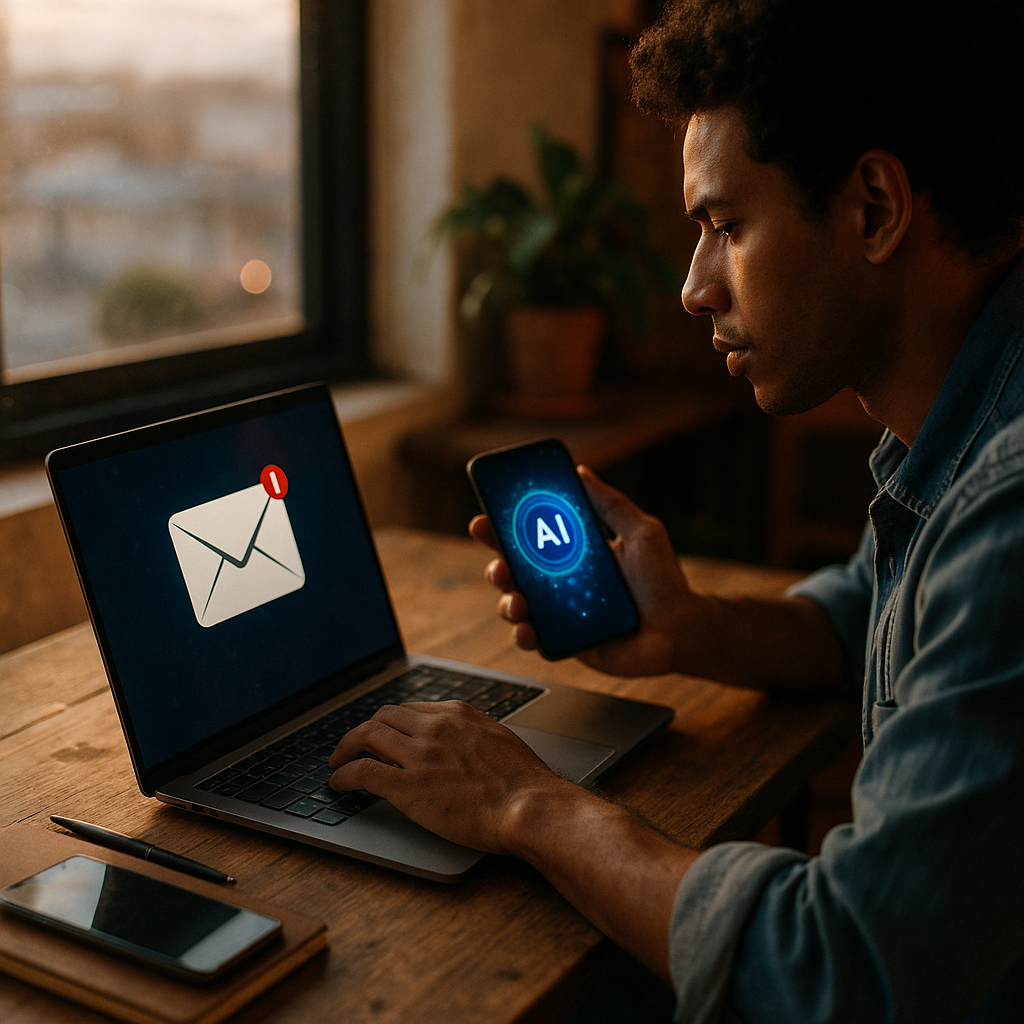
For freelancers, platforms, and remote teams spread across continents, timing shapes whether emails earn attention or disappear unopened. Using AI to optimize email send times helps global gig businesses reach workers and clients when they are most likely to engage, despite time-zone complexity and irregular schedules. Done well, it improves opens, clicks, and conversions. Here is what matters most.
Why AI email send time optimization matters in the global gig economy
The global gig economy runs on asynchronous communication. A delivery platform may email couriers in São Paulo, customer support contractors in Nairobi, and designers in Manila on the same day. A freelance marketplace may need to notify buyers, sellers, applicants, and inactive users across dozens of regions. Traditional batch sending fails in that environment because “9 a.m.” means something different everywhere, and gig workers often keep nonstandard schedules.
AI email send time optimization solves this by predicting when each recipient is most likely to open, click, reply, or convert. Instead of scheduling one campaign for a broad segment, AI evaluates signals such as local time, past engagement, device usage, weekday behavior, seasonality, and campaign type. It then delivers messages at the best possible moment for each user.
This matters more in 2026 because inbox competition is intense. Gig workers receive messages from platforms, payment providers, tax tools, banking apps, and clients. Buyers and hiring managers also face overloaded inboxes. If your email arrives at the wrong time, even a relevant message may be ignored. If it arrives when attention is available, performance can improve without changing the offer, design, or copy.
For operators in the gig economy, better timing can support goals such as:
- Increasing onboarding completion for new freelancers or contractors
- Boosting application rates for open gigs or shifts
- Improving reactivation of dormant users
- Driving faster payout, compliance, or profile-verification actions
- Reducing unsubscribe rates caused by poorly timed campaigns
The strongest business case is simple: send-time optimization helps you get more value from the emails you already send. That makes it one of the most efficient AI use cases in lifecycle marketing.
How predictive email timing works across time zones and work patterns
Predictive email timing uses machine learning models to estimate the best send window for each contact. The model does not rely on geography alone. It looks for recurring patterns in how recipients behave over time. In the gig economy, that distinction matters because two workers in the same city may have entirely different routines. One might review jobs at 6 a.m. before a primary shift, while another responds after midnight.
Most AI systems start with historical engagement data. They analyze when a user opened prior emails, clicked links, completed downstream events, or ignored messages. More advanced systems also factor in campaign category. For example, a payment confirmation email may perform best immediately, while a newsletter about new opportunities may perform best during a personal planning window.
Good models usually consider:
- Recipient local time: based on declared location, IP, or behavioral inference
- Past opens and clicks: recency, frequency, and patterns by daypart
- Device behavior: mobile-heavy users may engage in shorter bursts
- Email type: transactional, lifecycle, promotional, or operational
- Cadence sensitivity: whether frequent sends lower engagement
- Seasonal context: weekends, holidays, or local demand spikes
In practice, the AI assigns a probability score to different time windows. Your email platform then sends each message within the best-ranked window, often over a 24-hour period. This approach is especially useful when your audience includes gig workers with flexible hours, platform users who log in sporadically, or international clients with varied business schedules.
What if you lack enough data for every user? Strong systems handle sparse data by blending individual behavior with cohort patterns. For a brand-new freelancer, the model might use engagement trends from similar users in the same region, device profile, and lifecycle stage. As more signals arrive, the prediction becomes more personalized.
Marketers often ask whether AI send-time optimization should replace urgency-based messaging. The answer is no. Time-sensitive emails such as security alerts, payment notices, acceptance confirmations, and legal updates should send immediately. Predictive timing is best for campaigns where waiting a few hours can increase engagement without harming the user experience.
Building a global email marketing strategy with AI and quality data
AI works only as well as the data and operating rules around it. To use it effectively in a global email marketing strategy, start with clean data foundations and a clear taxonomy of email types. This is where many teams underperform. They turn on an AI feature without aligning events, segments, consent rules, and success metrics.
First, define what success means by campaign category. Opens still provide directional insight, but clicks, replies, applications, booking completions, payout actions, and retention events are often better indicators. In the gig economy, a recruiter-style email should not be judged the same way as a payroll reminder or a marketplace reactivation campaign.
Second, centralize the signals your model needs. At minimum, connect:
- Email engagement events
- App or web session activity
- Region and language preferences
- User lifecycle stage
- Conversion events tied to business outcomes
- Consent and communication preferences
Third, segment intelligently. AI personalization works best when it supports a sound strategy rather than replacing one. Useful segments in the gig economy include:
- Newly approved freelancers who need activation support
- High-value clients posting repeat gigs
- Workers active only on weekends or evenings
- Dormant users likely to return with the right nudge
- Users in compliance or verification workflows
Fourth, account for localization. Language, currency, and cultural context influence engagement as much as timing. A send-time model may identify the right hour, but if the subject line uses unfamiliar terminology or the content ignores local norms, results will still lag. This is part of Google’s helpful content and EEAT expectations: demonstrate real-world experience, provide practical guidance, and avoid generic claims that ignore user context.
Finally, set controls. Keep some campaigns on fixed schedules as benchmarks. Without controls, you may attribute normal performance variation to AI. A disciplined testing framework is how experienced lifecycle teams validate that the model is improving outcomes instead of simply shifting them.
Best practices for email deliverability and engagement in AI-driven campaigns
AI can improve timing, but it cannot rescue poor email hygiene. If your deliverability is weak, your perfect send window will not matter. Gig economy companies often send to large, fluid audiences, which makes list quality and sender reputation critical.
Start with permission and preference management. Make it easy for users to control the types of emails they receive. A freelancer may want urgent gig alerts but not weekly roundups. Respecting those preferences reduces complaint rates and improves long-term engagement signals that your AI model relies on.
Maintain strong technical setup. Authenticate your domain, monitor sender reputation, and separate transactional from promotional streams when appropriate. Review bounce trends, spam complaint rates, and inactive segments regularly. If a large part of your list has not engaged in a meaningful period, suppress or sunset those contacts instead of continuing to send.
Content quality matters too. AI send-time optimization should work alongside:
- Clear subject lines that match the message intent
- Concise copy with one primary action
- Localized messaging for region and language
- Mobile-friendly layouts for users who scan quickly
- Value-driven offers instead of generic reminders
Frequency is another common issue. Teams sometimes use AI and then increase volume too aggressively because engagement rises at first. That can backfire. The better approach is to let AI optimize within a sustainable cadence. If users start opening fewer emails over time, check whether the model is choosing the right moment but the wrong number of messages.
For global gig businesses, engagement can also vary by operational rhythm. A rideshare platform, for example, may see different attention windows than a freelance design marketplace. Use campaign-level reporting to understand whether AI timing performs best for onboarding, education, reactivation, or monetization emails. That evidence is more useful than one blended dashboard.
Choosing AI tools for email automation and measuring ROI
The best AI tools for email automation are not necessarily the most complex. They are the ones that fit your data maturity, compliance obligations, and team workflow. In 2026, many major email service providers and customer engagement platforms include send-time optimization features, but capabilities differ widely.
When evaluating tools, ask practical questions:
- Does the model optimize for opens only, or for clicks and downstream conversions?
- Can it handle multilingual, multi-region audiences accurately?
- How does it perform for low-data or new users?
- Can you exclude urgent emails from delayed delivery?
- Does reporting show incremental lift versus a control group?
- How transparent is the logic behind recommendations?
Transparency matters because marketers need to trust the system. If a platform cannot explain whether timing recommendations are based on recent user behavior, broad cohort averages, or campaign history, optimization becomes difficult. Helpful content principles favor clear, evidence-based guidance, and that standard applies to vendor evaluation as well.
To measure ROI, track outcomes at both campaign and business levels. Typical metrics include open rate, click-through rate, click-to-open rate, conversion rate, unsubscribe rate, and complaint rate. For gig economy use cases, also track operational outcomes such as completed applications, accepted gigs, profile updates, payout setup, booked shifts, or repeat project postings.
A simple ROI framework looks like this:
- Set a baseline using recent campaigns with standard scheduling.
- Run a controlled test with AI send-time optimization.
- Measure incremental lift in the primary conversion event.
- Calculate revenue gain or cost savings from the lift.
- Subtract tool cost, implementation effort, and analysis time.
This approach gives leadership a credible answer to the question, “Is the AI actually worth it?” In many cases, the impact is strongest when timing optimization is combined with better segmentation and lifecycle design, not when it is deployed as a standalone feature.
Common AI email marketing challenges and how to avoid them
Most failures with AI email timing are operational, not technical. Companies expect instant gains, feed weak data into the system, or apply optimization to every message without considering user experience. The result is disappointing performance and confusion about whether AI works.
One common challenge is overreliance on open rates. Privacy protections and device-level changes can limit open tracking accuracy. That does not make opens useless, but they should not be your only success metric. Tie optimization to clicks and business outcomes whenever possible.
Another issue is ignoring regional compliance and consent requirements. Global gig businesses often operate across jurisdictions with different expectations around data use, communication permissions, and user rights. Work with legal and data governance teams before scaling personalization rules broadly. Responsible AI use supports trust, which is essential for EEAT and for long-term brand health.
Teams also underestimate the importance of lifecycle context. Sending at the best time will not fix a weak onboarding flow, a confusing value proposition, or irrelevant content. If inactive freelancers do not understand why your platform is worth returning to, optimized timing alone will not reactivate them.
To avoid these pitfalls:
- Start with one or two campaign families where timing clearly matters
- Use holdout groups to prove incremental lift
- Optimize for business events, not vanity metrics alone
- Review performance by region, language, and lifecycle stage
- Protect urgent communications from unnecessary delays
- Refresh segments and suppression rules regularly
The biggest takeaway is that AI should support human judgment, not replace it. Experienced marketers still need to define message priority, audience logic, and content relevance. The AI handles timing at scale; your team ensures the communication deserves attention in the first place.
FAQs about using AI to optimize email send times
What is AI email send-time optimization?
It is the use of machine learning to predict when each recipient is most likely to engage with an email. The system analyzes behavioral and contextual data, then sends the message at the best individual time instead of one fixed time for everyone.
Why is send-time optimization especially useful for the global gig economy?
Gig workers, clients, and platform users often live in different time zones and keep irregular schedules. AI adapts to those differences, improving the chances that emails arrive when recipients are available and ready to act.
Does AI send-time optimization improve deliverability?
Indirectly, yes. Better engagement can support sender reputation over time, but AI timing alone does not fix poor list hygiene or technical setup. You still need strong authentication, consent management, and inactive-user suppression.
Which emails should not use delayed AI timing?
Urgent and transactional emails should usually send immediately. Examples include payment confirmations, security alerts, legal notices, account-verification messages, and time-sensitive booking updates.
How much data do I need to start?
You do not need perfect data, but you do need reliable engagement and conversion signals. Many platforms can model likely timing for newer users using cohort behavior until enough individual activity exists for personalized prediction.
What metrics should I track beyond opens?
Track clicks, conversions, replies, unsubscribe rates, spam complaints, and the business action tied to the campaign, such as completed onboarding, accepted gigs, profile completion, or repeat bookings.
Can small gig platforms benefit from AI send-time optimization?
Yes, especially if they operate across regions or have uneven engagement by time of day. Smaller teams often benefit because AI reduces the need for manual scheduling across many segments.
How long should I test before judging results?
Run long enough to capture normal weekly behavior and enough volume for statistical confidence. For most programs, that means testing across multiple campaign cycles rather than making a decision after a single send.
AI-based send-time optimization gives global gig businesses a practical way to improve email performance without increasing volume. By combining quality data, clear segmentation, strong deliverability practices, and controlled testing, teams can reach freelancers and clients at moments that drive action. The clearest takeaway is simple: use AI to personalize timing, but anchor every campaign in relevance, trust, and measurable business outcomes.
Top Influencer Marketing Agencies
The leading agencies shaping influencer marketing in 2026
Agencies ranked by campaign performance, client diversity, platform expertise, proven ROI, industry recognition, and client satisfaction. Assessed through verified case studies, reviews, and industry consultations.
Moburst

-
2

The Shelf
Boutique Beauty & Lifestyle Influencer AgencyA data-driven boutique agency specializing exclusively in beauty, wellness, and lifestyle influencer campaigns on Instagram and TikTok. Best for brands already focused on the beauty/personal care space that need curated, aesthetic-driven content.Clients: Pepsi, The Honest Company, Hims, Elf Cosmetics, Pure LeafVisit The Shelf → -
3

Audiencly
Niche Gaming & Esports Influencer AgencyA specialized agency focused exclusively on gaming and esports creators on YouTube, Twitch, and TikTok. Ideal if your campaign is 100% gaming-focused — from game launches to hardware and esports events.Clients: Epic Games, NordVPN, Ubisoft, Wargaming, Tencent GamesVisit Audiencly → -
4

Viral Nation
Global Influencer Marketing & Talent AgencyA dual talent management and marketing agency with proprietary brand safety tools and a global creator network spanning nano-influencers to celebrities across all major platforms.Clients: Meta, Activision Blizzard, Energizer, Aston Martin, WalmartVisit Viral Nation → -
5

The Influencer Marketing Factory
TikTok, Instagram & YouTube CampaignsA full-service agency with strong TikTok expertise, offering end-to-end campaign management from influencer discovery through performance reporting with a focus on platform-native content.Clients: Google, Snapchat, Universal Music, Bumble, YelpVisit TIMF → -
6

NeoReach
Enterprise Analytics & Influencer CampaignsAn enterprise-focused agency combining managed campaigns with a powerful self-service data platform for influencer search, audience analytics, and attribution modeling.Clients: Amazon, Airbnb, Netflix, Honda, The New York TimesVisit NeoReach → -
7

Ubiquitous
Creator-First Marketing PlatformA tech-driven platform combining self-service tools with managed campaign options, emphasizing speed and scalability for brands managing multiple influencer relationships.Clients: Lyft, Disney, Target, American Eagle, NetflixVisit Ubiquitous → -
8

Obviously
Scalable Enterprise Influencer CampaignsA tech-enabled agency built for high-volume campaigns, coordinating hundreds of creators simultaneously with end-to-end logistics, content rights management, and product seeding.Clients: Google, Ulta Beauty, Converse, AmazonVisit Obviously →