


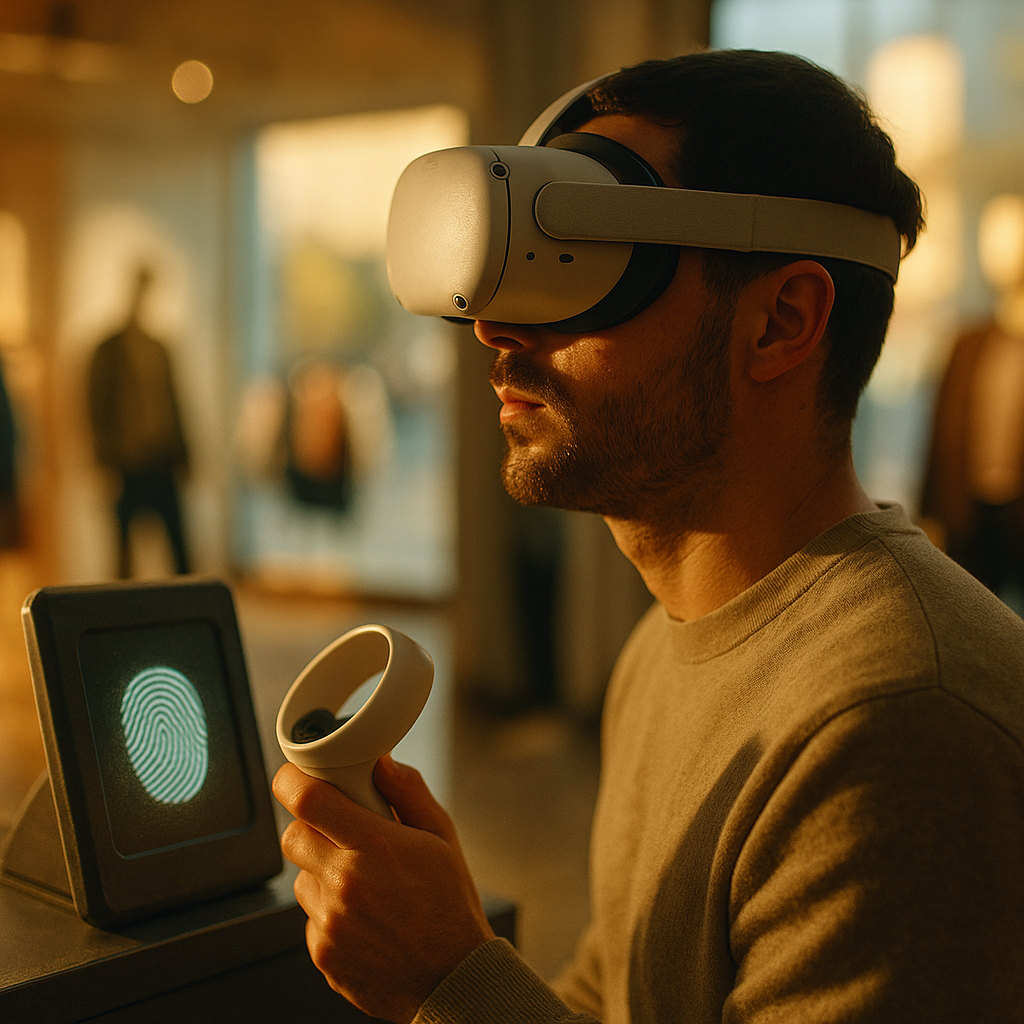
Virtual reality retail is moving fast, and biometric data privacy in virtual reality shopping hubs has become a pressing concern for brands, platforms, and shoppers alike. Eye tracking, voiceprints, gait analysis, and emotional signals can personalize experiences, but they also raise legal, ethical, and security risks. Understanding how this data is collected and governed is now essential before adoption accelerates further.
Why biometric data privacy matters in immersive retail
Virtual reality shopping hubs promise a richer version of e-commerce. Instead of scrolling through flat product pages, shoppers can walk through digital storefronts, inspect items in 3D, interact with virtual assistants, and complete purchases inside immersive environments. To make those experiences feel seamless, platforms often rely on biometric inputs such as eye movement, facial geometry, hand tracking, body motion, voice patterns, and even inferred emotional responses.
That convenience comes with a serious tradeoff. Biometric data is not like an email address or a shipping preference. It is deeply personal, difficult to change, and often persistent across devices and sessions. If compromised, it can create lasting privacy and identity risks. In a VR shopping setting, the concern extends beyond direct identifiers. Systems can infer sensitive traits from movement patterns, reaction times, pupil dilation, and behavioral cues. That means companies may be collecting more than shoppers realize.
For retailers, this issue is not only about compliance. It is about trust. Consumers are more likely to engage with immersive commerce when they understand what is being collected, why it is needed, and how they remain in control. Brands that treat biometric privacy as a product feature, not just a legal obligation, will be better positioned in 2026 and beyond.
Biometric data collection in VR shopping hubs: what platforms really gather
Many users assume VR shopping platforms only process what is necessary to render the experience. In reality, the data ecosystem can be much broader. A modern virtual retail environment may collect several categories of information at once:
- Physiological identifiers: face scans, iris patterns, fingerprints, voiceprints, and in some systems heart rate or respiration data from connected wearables.
- Behavioral biometrics: gait, head movement, hand motion, posture, reaction speed, gesture habits, and navigation style.
- Derived or inferred data: emotional state, attention level, purchase intent, stress signals, or likely product preferences based on eye tracking and engagement patterns.
- Contextual data: device IDs, session times, room mapping, location signals, transaction history, and linked account information.
These data points can power useful features. Eye tracking can improve rendering and reduce motion strain. Hand tracking can make product interaction feel natural. Voice recognition can speed up search and customer support. Yet the same functions can become privacy liabilities when collection is excessive or retention periods are vague.
The most important question for shoppers and brands is simple: Is the system collecting only what is required for the user-facing experience, or is it gathering data for profiling, advertising, or resale? In immersive retail, the line can blur quickly. A platform might claim it tracks gaze to improve interface performance while also using that same signal to determine which products trigger the strongest reactions.
This is why privacy notices in VR need to be specific. General statements about “improving services” are no longer enough. Helpful disclosure should identify each biometric category, the purpose of collection, whether data is stored or processed in real time, who receives it, and how long it remains accessible.
Consumer consent and transparency for virtual reality privacy compliance
Consent is one of the most misunderstood parts of biometric governance. In virtual reality shopping hubs, users often accept platform terms during headset setup, then enter retail spaces run by third parties with separate practices. That layered environment creates a risk that no single notice truly explains the whole data flow.
Strong virtual reality privacy compliance starts with informed, granular consent. Companies should not bundle all biometric processing into one broad acceptance prompt. Instead, they should separate essential functions from optional ones. For example, a user may agree to hand tracking for navigation but decline emotional analysis for product recommendations.
Effective consent in VR should include:
- Just-in-time prompts before a new biometric feature activates
- Plain-language explanations instead of legal jargon
- Clear toggles for essential versus nonessential data uses
- Easy withdrawal mechanisms without degrading core shopping access
- Visible indicators when sensors such as eye tracking or voice capture are active
Transparency also requires addressing downstream use. If a retailer shares biometric-derived insights with analytics vendors, ad networks, payment processors, or fraud-prevention tools, users should know. If avatars are linked to real identities, that should be stated clearly. If movement data contributes to algorithm training, companies should explain whether data is anonymized, pseudonymized, or retained in identifiable form.
From an EEAT perspective, the most credible companies show their work. They publish privacy documentation that reflects actual system design, not generic templates. They offer contact points for privacy questions. They conduct risk assessments and summarize key safeguards in user-friendly language. These practices help readers evaluate expertise and trustworthiness because they show operational maturity, not marketing spin.
Data security and biometric governance in immersive commerce
Even with consent, biometric collection in VR shopping hubs can fail if security is weak. Because biometric markers cannot be reset like passwords, the protection standard must be higher. A retailer entering immersive commerce should treat security architecture as a business-critical investment.
Core biometric governance in immersive commerce should include data minimization first. The safest biometric data is the data you never store. Where possible, companies should process signals locally on the device or convert them into temporary tokens that support functionality without preserving raw biometric records. If retention is necessary, organizations should define a narrow purpose and a short schedule for deletion.
Security controls should typically include:
- Encryption in transit and at rest for all biometric and derived data
- Role-based access controls with strict internal permissions
- Segregation of biometric systems from general marketing databases
- Third-party vendor reviews covering storage, processing, and onward sharing
- Incident response plans tailored specifically to biometric compromise
- Routine audits and red-team testing for headset, app, and backend vulnerabilities
Retailers also need governance beyond cybersecurity. Teams should establish internal rules on what biometric insights may be used for. For example, should inferred stress or hesitation ever influence pricing, credit offers, or persuasion tactics? Many organizations now recognize that a practice can be legally arguable yet still damaging to brand trust. Ethical review should sit alongside legal review.
A practical governance model assigns accountability across product, legal, security, privacy, and customer experience leaders. This cross-functional approach is especially important in VR because immersive systems combine hardware, software, commerce, and behavioral analytics. Without clear ownership, privacy gaps appear between teams.
Regulatory trends shaping facial recognition and eye-tracking privacy
By 2026, the legal landscape for immersive biometric systems is more active and less forgiving. While requirements vary by jurisdiction, regulators increasingly focus on whether companies collect biometric data lawfully, provide meaningful notice, obtain valid consent where required, secure data adequately, and avoid unfair or deceptive use.
Facial recognition and eye-tracking privacy are drawing particular attention because these technologies can reveal identity, attention, and intent at a very granular level. In a virtual shopping hub, eye tracking can expose what a person notices, avoids, compares, or lingers on. Facial analysis can move beyond authentication into emotion inference or demographic estimation, which creates additional risk.
Brands should expect scrutiny in several areas:
- Necessity and proportionality: Is biometric collection genuinely required for the feature offered?
- Purpose limitation: Is data used only for the stated reason?
- Sensitive inference: Does the platform derive health, emotional, or other protected characteristics?
- Children and teens: Are younger users exposed to tracking without age-appropriate safeguards?
- Cross-border processing: Is data transferred internationally under valid protections?
Retailers cannot rely on a “technology platform” defense if they actively shape the shopping experience or benefit from the analytics. If a brand operates a virtual store, commissions engagement dashboards, or customizes offers based on biometric signals, regulators may view it as a responsible party rather than a passive participant.
The safest path is to adopt a high standard across markets instead of designing to the weakest rule. Conduct privacy impact assessments before launch. Map all biometric data flows. Vet every vendor. Provide rights mechanisms for access, deletion, objection, and appeal where applicable. These actions help organizations respond not only to current law but also to future changes.
Best practices for ethical VR retail and consumer trust
Building trust in immersive shopping requires more than legal compliance. It requires thoughtful product design. Companies that want sustainable adoption should develop ethical VR retail practices that respect user autonomy and reduce surprise.
Start with privacy by design. Ask whether each biometric feature delivers a real benefit to the user or mainly serves internal optimization. If the answer is mostly internal, reconsider it. The strongest immersive experiences do not depend on maximal surveillance. They depend on relevant utility, user comfort, and predictable controls.
Next, create layered choices. Let shoppers browse anonymously when feasible. Offer guest modes with limited tracking. Allow users to disable nonessential sensors inside the retail environment rather than forcing them to change global device settings. Make privacy settings easy to find and understand from within the headset interface.
Trust also improves when companies explain value exchange honestly. If eye tracking improves sizing recommendations or reduces motion fatigue, say so. If voiceprints support fraud prevention during payment, explain the retention period and alternatives. Users are more likely to opt in when they can see a direct and fair benefit.
Brands should also avoid manipulative personalization. In immersive spaces, subtle environmental changes can have a stronger effect than standard web design. If biometric signals are used to intensify urgency, exploit emotional states, or nudge vulnerable users, the commercial upside may be short-lived and the reputational cost severe.
Finally, organizations should make accountability visible. Publish a concise biometric privacy statement. Offer support channels for complaints or requests. Train staff who handle privacy inquiries. Review vendor contracts regularly. These practical steps signal experience and operational trustworthiness, both central to EEAT and to customer confidence.
FAQs about biometric privacy in virtual reality shopping
What counts as biometric data in a VR shopping hub?
Biometric data includes identifiers and measurable body-based signals such as face scans, voiceprints, eye movement, hand geometry, gait, and motion patterns. In VR, even behavioral data can become biometric when it uniquely identifies or profiles a person.
Is eye-tracking data really sensitive?
Yes. Eye-tracking data can reveal attention, preferences, cognitive patterns, and potential emotional responses. In a retail context, it can show what products attract or repel a shopper, making it both commercially valuable and privacy sensitive.
Can retailers use biometric data for advertising in virtual reality?
They may try, but they should proceed carefully. Using biometric or biometric-derived insights for targeted advertising can trigger legal and ethical concerns, especially if consent is unclear or the profiling is intrusive. Clear disclosure and user control are essential.
How can shoppers protect their privacy in VR commerce?
Review privacy settings before entering shopping environments, disable nonessential sensors when possible, avoid linking more accounts than necessary, read in-experience notices, and choose platforms that offer clear controls, deletion options, and transparent data practices.
Do anonymized biometric datasets eliminate risk?
Not entirely. Biometric and behavioral patterns can sometimes be reidentified, especially when combined with device, account, or transaction data. Companies should not treat anonymization as a complete solution if other linked signals remain available.
What should brands do before launching a VR shopping experience?
They should conduct a privacy impact assessment, inventory all biometric and derived data, evaluate necessity, draft clear consent flows, limit retention, secure vendor contracts, implement strong technical safeguards, and prepare user rights and incident response processes.
Are biometric privacy concerns likely to slow VR retail growth?
They may slow careless implementations, but they can strengthen the market overall. Companies that build transparent, privacy-respecting experiences are more likely to earn trust and long-term adoption than those that treat biometric collection as an unchecked data opportunity.
Biometric privacy in VR shopping hubs is now a core business issue, not a niche compliance topic. Retailers, platforms, and technology partners must limit collection, explain use clearly, secure every data flow, and give users meaningful control. The clearest takeaway for 2026 is simple: immersive commerce will grow fastest where privacy is designed in from the start.
Top Influencer Marketing Agencies
The leading agencies shaping influencer marketing in 2026
Agencies ranked by campaign performance, client diversity, platform expertise, proven ROI, industry recognition, and client satisfaction. Assessed through verified case studies, reviews, and industry consultations.
Moburst

-
2

The Shelf
Boutique Beauty & Lifestyle Influencer AgencyA data-driven boutique agency specializing exclusively in beauty, wellness, and lifestyle influencer campaigns on Instagram and TikTok. Best for brands already focused on the beauty/personal care space that need curated, aesthetic-driven content.Clients: Pepsi, The Honest Company, Hims, Elf Cosmetics, Pure LeafVisit The Shelf → -
3

Audiencly
Niche Gaming & Esports Influencer AgencyA specialized agency focused exclusively on gaming and esports creators on YouTube, Twitch, and TikTok. Ideal if your campaign is 100% gaming-focused — from game launches to hardware and esports events.Clients: Epic Games, NordVPN, Ubisoft, Wargaming, Tencent GamesVisit Audiencly → -
4

Viral Nation
Global Influencer Marketing & Talent AgencyA dual talent management and marketing agency with proprietary brand safety tools and a global creator network spanning nano-influencers to celebrities across all major platforms.Clients: Meta, Activision Blizzard, Energizer, Aston Martin, WalmartVisit Viral Nation → -
5

The Influencer Marketing Factory
TikTok, Instagram & YouTube CampaignsA full-service agency with strong TikTok expertise, offering end-to-end campaign management from influencer discovery through performance reporting with a focus on platform-native content.Clients: Google, Snapchat, Universal Music, Bumble, YelpVisit TIMF → -
6

NeoReach
Enterprise Analytics & Influencer CampaignsAn enterprise-focused agency combining managed campaigns with a powerful self-service data platform for influencer search, audience analytics, and attribution modeling.Clients: Amazon, Airbnb, Netflix, Honda, The New York TimesVisit NeoReach → -
7

Ubiquitous
Creator-First Marketing PlatformA tech-driven platform combining self-service tools with managed campaign options, emphasizing speed and scalability for brands managing multiple influencer relationships.Clients: Lyft, Disney, Target, American Eagle, NetflixVisit Ubiquitous → -
8

Obviously
Scalable Enterprise Influencer CampaignsA tech-enabled agency built for high-volume campaigns, coordinating hundreds of creators simultaneously with end-to-end logistics, content rights management, and product seeding.Clients: Google, Ulta Beauty, Converse, AmazonVisit Obviously →