


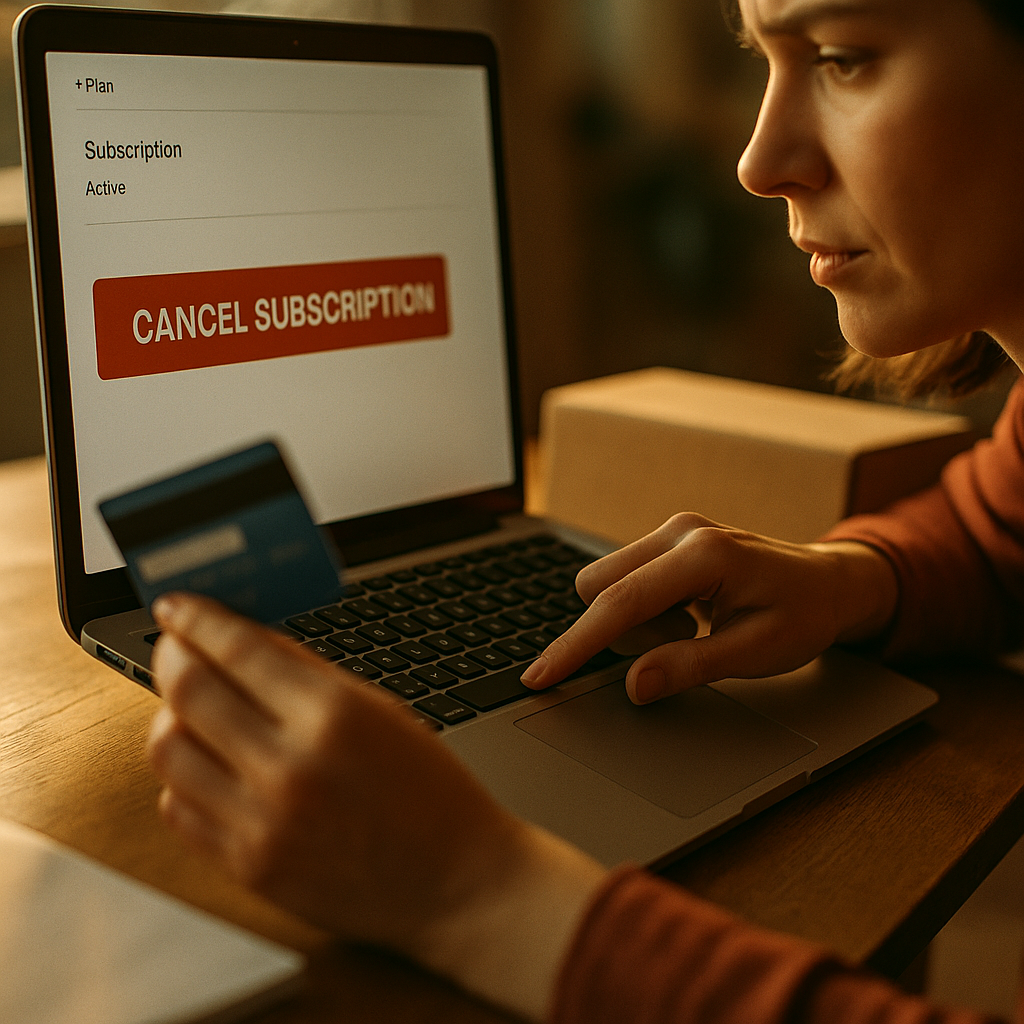
Subscription fatigue has moved from a personal annoyance to a real market force in 2026. Consumers now question every recurring charge, compare total lifetime costs, and look for products they can own outright. From software to entertainment to household goods, the one-time purchase is regaining credibility. Why are buyers changing course, and what does that mean for brands?
What Subscription Fatigue Means for Consumer Spending
Subscription fatigue describes the mental, financial, and practical strain consumers feel when too many products and services demand recurring payments. At first, subscriptions looked efficient. They lowered upfront costs, promised convenience, and gave users instant access. Over time, however, many buyers discovered a different reality: stacked monthly charges, forgotten renewals, rising prices, and limited control over what they had supposedly paid for.
In 2026, this fatigue is visible across multiple categories. Streaming users rotate services rather than maintaining all of them. Software buyers compare monthly plans against perpetual licenses. Fitness, meal kits, beauty boxes, cloud storage, gaming passes, and even car features have all contributed to a wider sense that recurring billing has spread too far.
The shift is not only emotional. It is economic. When households face tighter budgeting, recurring charges stand out because they repeat automatically. A single monthly fee may appear small, but ten of them create a meaningful drag on disposable income. Buyers increasingly audit their bank statements and ask a direct question: Do I still get enough value from this every month?
That question has changed how people define value:
- Predictability matters more. Buyers want fewer surprise renewals and easier cancellation.
- Ownership feels safer. Paying once often feels more transparent than indefinite billing.
- Flexibility wins. Consumers prefer to buy when needed rather than commit by default.
- Total cost matters. People increasingly compare annual and multi-year subscription spend with one-time alternatives.
For businesses, this does not mean subscriptions are disappearing. It means the old assumption that recurring revenue is always more attractive to users is no longer reliable. Consumers are becoming more selective, and brands that ignore that shift risk higher churn, lower trust, and weaker retention.
Why One-Time Purchase Products Are Regaining Appeal
The return of one-time purchase products is not nostalgia. It is a rational response to how people now evaluate convenience, cost, and control. Buyers are embracing one-time purchases when they believe the product can deliver long-term utility without locking them into ongoing payment.
Several forces are driving this revival. First, people have become skilled at spotting “subscription creep,” where a product once sold outright is restructured into a recurring plan. Second, users increasingly resent paying indefinitely for tools they use only occasionally. Third, ownership carries psychological value. A one-time purchase gives customers a clear sense of completion: they paid, they received the product, and they decide how long to use it.
This shift is especially strong in categories where the product does not require constant updates or continuous delivery. Consumers are more willing to subscribe when a brand is providing an ongoing service, such as live support, cloud infrastructure, or fresh consumables. They are less willing when the recurring fee feels disconnected from real ongoing value.
Examples of categories where one-time buys are recovering include:
- Productivity software with offline or stable core functionality
- Creative tools for freelancers who do not need enterprise-scale features
- Home fitness equipment that works without premium app lock-ins
- Smart devices with core functions available at purchase
- Educational products like standalone courses, templates, and digital downloads
Importantly, consumers are not rejecting all recurring payments. They are rejecting weak value propositions. A one-time buy now signals honesty when it aligns with the real nature of the product. If maintenance is minimal, customers want pricing that reflects that reality.
Consumer Trust and Transparent Pricing in 2026
Transparent pricing has become a competitive advantage in 2026. Buyers no longer judge a product only by features. They judge it by how clearly the brand explains costs, renewal terms, limitations, and long-term value. Subscription fatigue has made trust a pricing issue as much as a branding issue.
Consumers are especially skeptical of practices that obscure the real cost of ownership. These include automatic renewals that are hard to cancel, low introductory offers followed by steep increases, and essential features placed behind multiple paid tiers. When users feel trapped, they do not simply cancel. They tell others, leave negative reviews, and avoid the brand in future purchases.
Helpful content and strong product pages should answer the questions users already have:
- What do I get with the initial payment?
- What, if anything, requires an ongoing fee?
- Can I use the product fully without subscribing?
- What happens if I stop paying?
- How does the total cost compare over one or two years?
Brands that follow EEAT principles handle these questions directly. They show experience by explaining how real customers use the product. They demonstrate expertise by breaking down the pricing model clearly. They build authoritativeness with strong documentation, support content, and policy clarity. They earn trust by avoiding misleading design patterns.
This matters for SEO as well as conversion. Search engines favor helpful, user-first content that genuinely answers intent. If a user searches for pricing comparisons, ownership benefits, cancellation terms, or alternatives to subscription models, thin sales copy will not satisfy them. Detailed, honest content performs better because it reflects real user needs.
For many brands, the fastest trust win is simple: present both the subscription and one-time options plainly, and explain which customer each model suits best.
Subscription Business Model Challenges Brands Can No Longer Ignore
The subscription business model still offers clear advantages, including predictable revenue and opportunities for long-term engagement. But in 2026, its weaknesses are harder to hide. Businesses that rely on recurring billing without continuous value creation are encountering tougher customer acquisition, lower retention quality, and more price resistance.
One major challenge is churn disguised as trial volume. A company may attract many signups through low-friction subscription offers, only to lose users quickly when the value does not justify the charge. This creates expensive acquisition loops and overstates the health of the business.
Another problem is feature inflation. To defend recurring fees, some brands overload products with features users neither need nor understand. This often increases complexity and support costs without improving satisfaction. Many customers would prefer a simpler version they can buy once.
There is also the issue of customer resentment. Recurring pricing works best when the service truly continues: new content, active maintenance, fulfillment, hosting, support, or replenishment. It performs poorly when customers feel they are renting access to something that should already be theirs.
Brands should ask several hard questions:
- Does the product deliver ongoing value every billing cycle?
- Would a one-time option better match actual usage patterns?
- Are customers subscribing because they want to, or because there is no fair alternative?
- Is retention driven by satisfaction or by friction in the cancellation process?
The answers often reveal whether recurring billing is strengthening the brand or quietly weakening it. Companies that respond early can redesign offers before the market forces them to.
Hybrid Pricing Models and Alternatives to Subscription Services
For many companies, the smartest response is not to abandon subscriptions completely but to introduce alternatives to subscription services. Hybrid pricing models acknowledge that customers have different usage patterns, budgets, and preferences. They also reduce the all-or-nothing tension that fuels subscription fatigue.
Common hybrid approaches include:
- One-time purchase plus optional premium support for users who need help, updates, or consulting
- Lifetime access tiers that exchange higher upfront cost for long-term ownership
- Pay-as-you-go usage pricing for irregular or seasonal customers
- Core ownership with optional cloud features for products that work locally but offer advanced connected services
- Bundle models where customers choose a limited set of services instead of an open-ended subscription stack
These models work because they align price with behavior. Heavy users may still prefer subscriptions. Occasional users often prefer one-time or usage-based options. When brands provide both, they reduce decision friction and improve perceived fairness.
There is another benefit: stronger positioning. In crowded markets, a one-time or hybrid pricing option can become a differentiator. Consumers actively search for “buy once” alternatives when they are dissatisfied with subscription-heavy categories. If your product genuinely supports that model, you can capture intent that competitors miss.
To implement a hybrid structure well, brands should:
- Map customer segments by frequency of use and value expectations
- Define which features require ongoing operational costs
- Protect the usefulness of the one-time option so it does not feel crippled
- Communicate upgrade paths clearly without pressure tactics
- Track retention quality rather than just recurring revenue totals
Customers do not mind paying. They mind paying repeatedly for value that feels static, restricted, or vague. Hybrid pricing solves that problem by giving them more control.
How Brands Can Respond to Changing Buyer Behavior
The best response to changing buyer behavior is not a cosmetic pricing change. It is a broader shift toward customer-first design, clearer communication, and product-market fit. Brands that want to earn trust in 2026 should treat pricing as part of the user experience.
Start with customer research. Look at support tickets, cancellation reasons, user interviews, and review data. Patterns usually emerge quickly. Customers may say the subscription is too expensive, but the deeper issue is often weaker: they do not use the product often enough, they do not understand the recurring benefits, or they feel forced into a plan that does not match how they buy.
Next, rebuild pricing pages and educational content around real decision criteria. Explain ownership, updates, access limits, refunds, cancellation rules, and the total cost over time. Use plain language. If a one-time buy exists, make it easy to find. If a subscription is the better fit, explain why with specifics, not slogans.
Brands should also invest in post-purchase trust signals:
- Simple account management with visible billing controls
- Proactive renewal reminders before charges occur
- Accessible support for pricing and account questions
- Clear product roadmaps showing how recurring fees fund ongoing improvement
- Honest comparison tables between one-time, hybrid, and subscription plans
From an EEAT standpoint, brands should publish content that reflects direct product knowledge and user outcomes. Case studies, detailed product explanations, expert commentary, policy transparency, and realistic use cases all strengthen credibility. The goal is not to persuade everyone into one model. It is to help each user choose the right one.
The brands that win this cycle will not be those that cling most aggressively to recurring revenue. They will be the ones that respect consumer attention, consumer budgets, and consumer autonomy.
FAQs about Subscription Fatigue and One-Time Purchases
What is subscription fatigue?
Subscription fatigue is the frustration consumers feel when too many services require recurring payments. It usually stems from rising monthly costs, forgotten renewals, weak ongoing value, and the difficulty of managing multiple subscriptions.
Why are one-time purchases becoming popular again?
They offer cost clarity, a stronger sense of ownership, and freedom from recurring charges. Many consumers now compare total long-term subscription costs with a single upfront payment and decide ownership is the better value.
Are subscriptions still effective for businesses?
Yes, when they match a product that genuinely provides continuous value. Subscriptions work well for active services, replenishment, hosting, support, and evolving content. They work poorly when recurring billing feels disconnected from real ongoing benefits.
What industries are most affected by subscription fatigue?
Software, streaming, fitness, gaming, digital education, beauty boxes, and smart devices have all seen stronger consumer scrutiny. Any sector that layered recurring fees onto products with limited ongoing value is vulnerable.
What is a hybrid pricing model?
A hybrid pricing model combines one-time purchases with optional recurring services or usage-based charges. It gives customers more flexibility and allows businesses to charge recurring fees only where continuous value exists.
How can brands reduce subscription fatigue?
They can offer transparent pricing, fair cancellation policies, optional one-time plans, clearer feature breakdowns, and proactive billing communication. The key is to align pricing with actual customer use and value.
Does subscription fatigue affect SEO content strategy?
Yes. Users actively search for terms like “buy once,” “lifetime access,” “cancel anytime,” and “subscription alternatives.” Brands that create helpful, trustworthy content around these concerns can attract higher-intent traffic and build credibility.
Subscription fatigue is reshaping how consumers judge value, trust, and ownership in 2026. The return of the one-time buy does not signal the end of recurring revenue, but it does demand better pricing discipline. Brands that align payment models with real customer needs, explain costs clearly, and offer fair alternatives will earn stronger loyalty and more sustainable growth.
Top Influencer Marketing Agencies
The leading agencies shaping influencer marketing in 2026
Agencies ranked by campaign performance, client diversity, platform expertise, proven ROI, industry recognition, and client satisfaction. Assessed through verified case studies, reviews, and industry consultations.
Moburst

-
2

The Shelf
Boutique Beauty & Lifestyle Influencer AgencyA data-driven boutique agency specializing exclusively in beauty, wellness, and lifestyle influencer campaigns on Instagram and TikTok. Best for brands already focused on the beauty/personal care space that need curated, aesthetic-driven content.Clients: Pepsi, The Honest Company, Hims, Elf Cosmetics, Pure LeafVisit The Shelf → -
3

Audiencly
Niche Gaming & Esports Influencer AgencyA specialized agency focused exclusively on gaming and esports creators on YouTube, Twitch, and TikTok. Ideal if your campaign is 100% gaming-focused — from game launches to hardware and esports events.Clients: Epic Games, NordVPN, Ubisoft, Wargaming, Tencent GamesVisit Audiencly → -
4

Viral Nation
Global Influencer Marketing & Talent AgencyA dual talent management and marketing agency with proprietary brand safety tools and a global creator network spanning nano-influencers to celebrities across all major platforms.Clients: Meta, Activision Blizzard, Energizer, Aston Martin, WalmartVisit Viral Nation → -
5

The Influencer Marketing Factory
TikTok, Instagram & YouTube CampaignsA full-service agency with strong TikTok expertise, offering end-to-end campaign management from influencer discovery through performance reporting with a focus on platform-native content.Clients: Google, Snapchat, Universal Music, Bumble, YelpVisit TIMF → -
6

NeoReach
Enterprise Analytics & Influencer CampaignsAn enterprise-focused agency combining managed campaigns with a powerful self-service data platform for influencer search, audience analytics, and attribution modeling.Clients: Amazon, Airbnb, Netflix, Honda, The New York TimesVisit NeoReach → -
7

Ubiquitous
Creator-First Marketing PlatformA tech-driven platform combining self-service tools with managed campaign options, emphasizing speed and scalability for brands managing multiple influencer relationships.Clients: Lyft, Disney, Target, American Eagle, NetflixVisit Ubiquitous → -
8

Obviously
Scalable Enterprise Influencer CampaignsA tech-enabled agency built for high-volume campaigns, coordinating hundreds of creators simultaneously with end-to-end logistics, content rights management, and product seeding.Clients: Google, Ulta Beauty, Converse, AmazonVisit Obviously →