


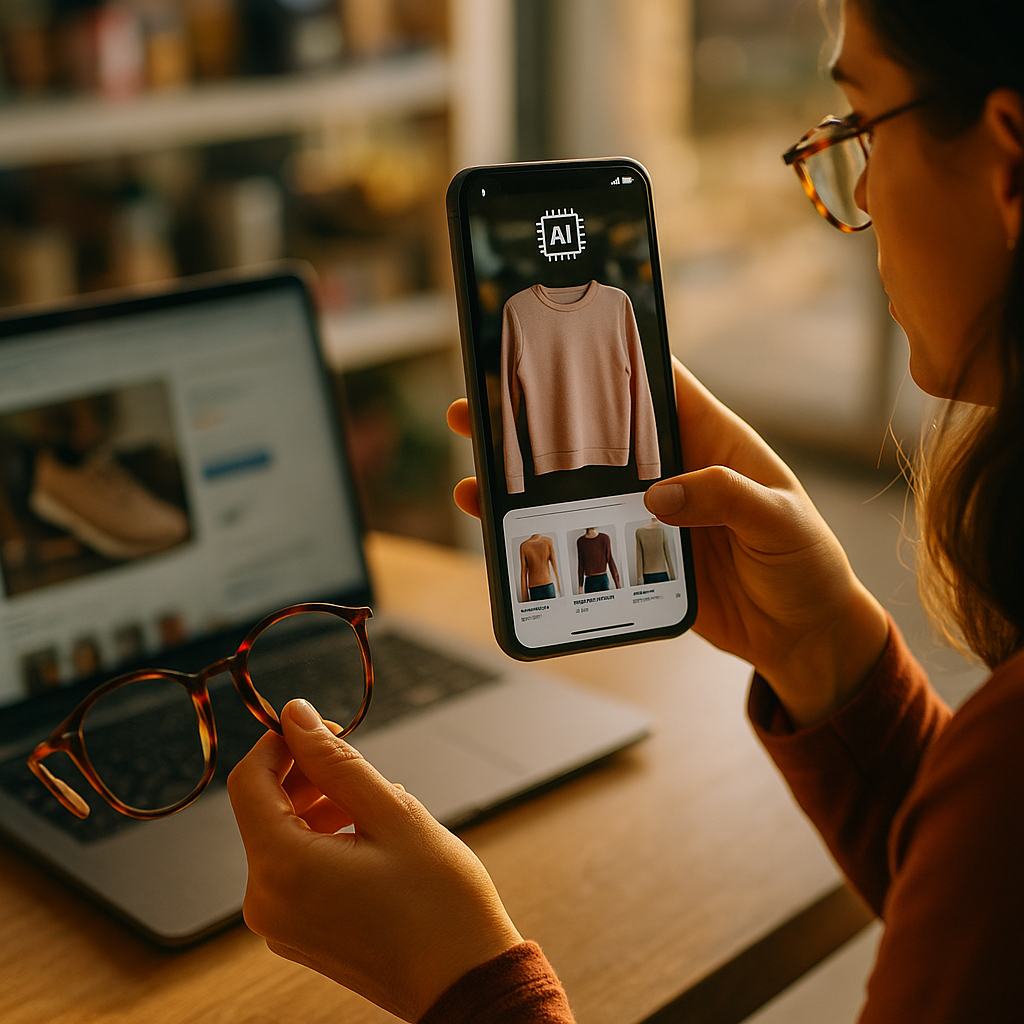
AI Powered Visual Search Optimization for Modern Agent Led Ecommerce is reshaping how shoppers discover products in 2026. Instead of typing vague keywords, buyers now use images, screenshots, and live camera input while AI agents interpret intent and recommend products instantly. Brands that optimize for this behavior gain stronger visibility, better conversion paths, and a decisive competitive edge. What does winning look like?
Visual search ecommerce strategy in an agent-led buying journey
Visual search has evolved from a novelty into a core discovery channel. In agent-led ecommerce, AI assistants do more than return image matches. They identify product attributes, compare options, interpret user preferences, and narrow recommendations based on context such as style, budget, availability, delivery speed, and even complementary items. That means optimization must go beyond traditional product SEO.
A strong visual search ecommerce strategy starts with understanding how modern shoppers behave. A customer may upload a photo of a chair from social media, ask an AI shopping agent to find similar products under a certain price, and expect immediate answers. Another may use a camera to scan sneakers in a store and ask for alternative colors, better prices, or in-stock sizes online. In both cases, the agent is interpreting visual signals and commercial intent at the same time.
For ecommerce teams, this changes the optimization target. You are no longer optimizing only for search engines or marketplaces. You are optimizing for machine interpretation across multiple interfaces. Product feeds, imagery, metadata, structured information, and inventory freshness must all work together. If any layer is incomplete, the agent may misclassify the product or choose a competitor with cleaner data.
To align with Google’s helpful content and EEAT standards, brands should build pages and assets that clearly demonstrate expertise and trustworthiness. That includes accurate product details, transparent pricing, visible policies, authentic reviews, and helpful comparison information. AI agents increasingly look for signals that a result is reliable, current, and likely to satisfy the shopper.
In practical terms, this means every product should be understandable to both humans and machines. Clear categories, precise variant logic, complete specs, and consistent naming conventions matter. If your catalog uses vague titles, low-quality images, or missing attributes, visual search performance will suffer.
Image SEO for ecommerce products that AI agents can understand
Image SEO for ecommerce now requires richer preparation than simply compressing files and adding alt text. AI systems examine shape, color, texture, logos, dimensions, patterns, and contextual clues. They also compare your product imagery against user-submitted images, marketplace listings, and social content. The better your image set, the easier it is for AI to match and recommend your items.
Start with high-resolution source images that preserve real product details. Include multiple angles, close-ups, scale references, and true-to-life color representation. If you sell apparel, show full-body images, detail shots of fabric and stitching, and flat lays. If you sell home goods, include in-room context plus isolated packshots. Visual search systems perform better when they can detect both the product itself and its usage environment.
Alt text still matters, but it should be written for clarity, not stuffing. Describe the item in natural language with meaningful attributes. File names should also be descriptive. A title like womens-white-leather-low-top-sneaker-side-view.jpg is far more useful than a random camera code.
To improve machine readability, maintain consistency across your product detail page, image metadata, and feed data. If the page calls a product “ivory” but the feed says “white” and the image appears cream under poor lighting, agents may reduce confidence in the match. Consistency increases confidence and therefore visibility.
Use this checklist for stronger image optimization:
- Primary product image: clean background, centered product, accurate color
- Secondary images: alternate angles, zoomed details, lifestyle context
- Variant coverage: each color, size type, or finish should have unique visuals
- Descriptive metadata: alt text, file names, captions where appropriate
- Fast delivery: compressed images without visible quality loss
- Consistency: same product naming and attributes across all assets
Brands often ask whether AI-generated imagery helps or hurts. It can help for supplementary assets, but primary product representation should remain faithful to the actual item. If generated images exaggerate appearance or omit important details, return rates and trust issues can rise. Helpful content in 2026 must reflect reality, especially when an AI agent is making recommendations on the user’s behalf.
Structured data for visual search and product entity recognition
Structured data for visual search gives search systems and AI agents a clear framework for understanding your catalog. Visual recognition may identify the item in an image, but structured product data helps the system confirm what it is, what it costs, whether it is available, and how it compares with other options.
Product pages should present complete, current, and standardized information. Essential attributes often include brand, color, material, dimensions, style, model number, GTIN where available, price, sale price, stock status, shipping details, ratings, and return information. These details support entity recognition and improve eligibility for enriched shopping experiences.
Well-organized product entities are especially important in agent-led ecommerce. An AI assistant may filter options based on criteria the shopper never explicitly typed. For example, a user snaps a photo of a lamp and says, “Find something similar, but shorter, under my budget, and available this week.” If your structured product data includes height, price, and shipping speed, your item has a better chance of being selected.
Catalog hygiene is just as important as markup. Duplicate listings, conflicting attributes, inconsistent variant handling, and stale availability can weaken trust signals. If your site says a product is in stock but the feed is outdated, an AI agent may choose another merchant with fresher data. In a world where agents optimize for convenience and certainty, data freshness becomes a ranking factor in practice.
Teams should audit these areas regularly:
- Attribute completeness: fill every relevant field, not just required ones
- Schema accuracy: align visible content with structured content
- Feed synchronization: keep site, merchant feeds, and marketplaces aligned
- Variant logic: separate color and size correctly without confusion
- Availability updates: refresh inventory and pricing frequently
EEAT also benefits here. Accurate product entities, clear business policies, and transparent merchant information reinforce trust. If an AI system can verify who you are, what you sell, and whether shoppers have had positive experiences with you, it is more likely to surface your products confidently.
AI shopping agents and product discovery optimization
AI shopping agents are becoming the new interface layer between consumers and ecommerce sites. Some are built into search engines, some live in marketplaces, some operate inside messaging apps, and others are integrated into browsers or mobile operating systems. Their role is to reduce friction. They interpret requests, compare options, and move users closer to purchase with fewer steps.
To optimize for product discovery in this environment, brands should think beyond rankings and focus on selection readiness. Ask a simple question: when an agent evaluates my product against ten similar items, what signals help it choose mine?
The strongest signals usually include:
- Clear relevance: the product visually and semantically matches the request
- Complete attributes: the agent can filter confidently
- Competitive offer: pricing, promotions, shipping, and returns are attractive
- Credibility: ratings, reviews, seller reputation, and policy transparency are strong
- Availability: inventory is live and fulfillment expectations are reliable
Content also matters. Helpful product descriptions should answer likely questions that shoppers or agents may ask. What material is it made from? Who is it best for? How does sizing run? Is assembly required? Does the finish lean warm or cool? These details improve decision support and reduce ambiguity.
Modern ecommerce teams should also create category-level and comparison content that helps AI systems understand relationships between products. For example, a page explaining the difference between performance running shoes and lifestyle sneakers can support broader relevance signals. A buying guide on sofa fabrics can help an agent connect user preferences to product categories before it surfaces specific SKUs.
Trust is non-negotiable. If product claims are exaggerated, ratings are manipulated, or reviews lack authenticity, the long-term cost is high. Agent-driven systems increasingly reward consistent customer satisfaction and penalize misleading experiences. Helpful content is not just a ranking strategy. It is a conversion and retention strategy.
Conversion rate optimization for visual search traffic
Conversion rate optimization for visual search traffic requires a different mindset because users often enter the funnel with a concrete visual goal rather than a broad informational query. They are looking for this exact item, something close to this look, or a better version of what they just saw. Your landing experience should support that intention immediately.
First, match the visual promise. If the user clicked from an image-based result, the landing page should prominently display the same or highly similar image. Do not force them to hunt for the matching variant. Highlight color, size, finish, and visual details above the fold. If the arriving user searched via image, visual continuity reduces hesitation.
Second, provide guided alternatives. Many visual search journeys are approximate by nature. If the exact item is unavailable or too expensive, show similar products by style, silhouette, color family, material, or use case. This is where internal visual similarity models and strong merchandising rules can directly increase revenue.
Third, remove uncertainty. Include fit notes, dimensions, care instructions, delivery estimates, return windows, and authentic user photos. AI-driven product discovery often accelerates the top of the funnel, but uncertainty still kills conversion. The page must close the gap between attraction and confidence.
Fourth, optimize mobile performance. A large share of visual search interactions starts on mobile devices through camera input, screenshots, and social app browsing. Slow image rendering, sticky overlays, and cluttered product pages damage both user experience and agent evaluation signals. Fast, clean mobile pages are essential.
Smart CRO tactics for visual search include:
- Variant preselection based on the source image or query context
- Visual recommendation modules that show similar items, not just generic bestsellers
- User-generated content to validate real-world appearance
- Size and specification tools that reduce purchase risk
- Clear CTAs supported by shipping and returns reassurance
Measurement should go beyond sessions and last-click revenue. Track image-driven engagement, assisted conversions, variant interactions, similarity recommendation clicks, return rates from visually discovered purchases, and customer satisfaction. The goal is not just more traffic. It is better-fit traffic that converts cleanly.
Visual commerce analytics and governance for long-term growth
Visual commerce analytics helps brands identify what is working, where matching quality breaks down, and how agent-led discovery affects revenue. In 2026, optimization is continuous because shopper behavior, AI interfaces, and catalog complexity change quickly.
Start by separating visual search traffic and agent-influenced sessions from other acquisition sources where possible. Analyze product-level performance to find which categories perform best with image-led discovery. Often, highly visual products such as fashion, furniture, beauty, accessories, and home decor show strong gains, but performance depends on data quality and image clarity.
Look for these patterns:
- High impressions, low clicks: your images may not be compelling or your matches may be weak
- High clicks, low conversion: the landing page may not reflect the visual intent
- High conversion, high returns: product imagery or descriptions may overpromise
- Strong discovery in some categories only: attribute depth or image coverage may be uneven
Governance matters as much as analytics. Assign ownership across SEO, merchandising, product data, creative, and engineering teams. Visual search optimization fails when it sits in a silo. Creative teams control image quality. Merchandisers shape attributes. SEO teams align discoverability. Engineers manage feed health and performance. Customer experience teams surface the friction points that hurt trust.
A practical operating model includes monthly audits for image quality, feed accuracy, schema integrity, top-query match rates, mobile performance, and out-of-stock exposure. It also includes clear standards for launching new products. Every new SKU should meet visual readiness requirements before going live.
Brands that treat visual search as infrastructure, not a campaign, tend to win. As agents become more active in purchase decisions, the brands with cleaner data, stronger imagery, and better trust signals will earn more recommendations and more conversions.
FAQs about visual search SEO and agent-led ecommerce
What is AI-powered visual search in ecommerce?
It is the use of AI to identify products and shopper intent from images, screenshots, or live camera input. In ecommerce, it helps users find exact or similar products without relying only on typed keywords.
Why does visual search matter more in 2026?
Because AI shopping agents are now handling more product discovery and comparison tasks. They rely on visual signals, structured product data, and trust indicators to recommend products quickly and accurately.
How do I optimize product images for visual search?
Use high-quality images, multiple angles, accurate colors, descriptive file names, useful alt text, and full variant coverage. Keep imagery consistent with on-page copy and product feed data.
Does structured data improve visual search performance?
Yes. Structured data helps AI systems confirm what a product is, its attributes, price, stock status, and other commercial details. It supports better entity recognition and selection by shopping agents.
What industries benefit most from visual search optimization?
Fashion, beauty, furniture, home decor, accessories, consumer electronics, and any category where appearance strongly influences purchase decisions typically benefit the most.
How can I measure success from visual search traffic?
Track impressions, click-through rates, conversions, assisted revenue, variant interactions, time to purchase, return rates, and customer satisfaction for image-led sessions and agent-influenced journeys.
Can AI-generated images be used for ecommerce SEO?
They can support supplemental content, but primary product images should accurately represent the item being sold. If visuals are misleading, trust, conversion quality, and return rates will suffer.
What are the biggest mistakes brands make?
Common problems include poor image quality, missing product attributes, inconsistent naming, outdated availability, weak mobile experiences, and product pages that do not answer practical buyer questions.
The takeaway is clear: success in agent-led ecommerce depends on making products easy for AI to see, understand, trust, and recommend. Brands that combine strong imagery, complete structured data, helpful product content, and rigorous measurement will outperform competitors. Visual search optimization is no longer optional in 2026. It is a core capability for discovery, conversion, and sustained ecommerce growth.
Top Influencer Marketing Agencies
The leading agencies shaping influencer marketing in 2026
Agencies ranked by campaign performance, client diversity, platform expertise, proven ROI, industry recognition, and client satisfaction. Assessed through verified case studies, reviews, and industry consultations.
Moburst

-
2

The Shelf
Boutique Beauty & Lifestyle Influencer AgencyA data-driven boutique agency specializing exclusively in beauty, wellness, and lifestyle influencer campaigns on Instagram and TikTok. Best for brands already focused on the beauty/personal care space that need curated, aesthetic-driven content.Clients: Pepsi, The Honest Company, Hims, Elf Cosmetics, Pure LeafVisit The Shelf → -
3

Audiencly
Niche Gaming & Esports Influencer AgencyA specialized agency focused exclusively on gaming and esports creators on YouTube, Twitch, and TikTok. Ideal if your campaign is 100% gaming-focused — from game launches to hardware and esports events.Clients: Epic Games, NordVPN, Ubisoft, Wargaming, Tencent GamesVisit Audiencly → -
4

Viral Nation
Global Influencer Marketing & Talent AgencyA dual talent management and marketing agency with proprietary brand safety tools and a global creator network spanning nano-influencers to celebrities across all major platforms.Clients: Meta, Activision Blizzard, Energizer, Aston Martin, WalmartVisit Viral Nation → -
5

The Influencer Marketing Factory
TikTok, Instagram & YouTube CampaignsA full-service agency with strong TikTok expertise, offering end-to-end campaign management from influencer discovery through performance reporting with a focus on platform-native content.Clients: Google, Snapchat, Universal Music, Bumble, YelpVisit TIMF → -
6

NeoReach
Enterprise Analytics & Influencer CampaignsAn enterprise-focused agency combining managed campaigns with a powerful self-service data platform for influencer search, audience analytics, and attribution modeling.Clients: Amazon, Airbnb, Netflix, Honda, The New York TimesVisit NeoReach → -
7

Ubiquitous
Creator-First Marketing PlatformA tech-driven platform combining self-service tools with managed campaign options, emphasizing speed and scalability for brands managing multiple influencer relationships.Clients: Lyft, Disney, Target, American Eagle, NetflixVisit Ubiquitous → -
8

Obviously
Scalable Enterprise Influencer CampaignsA tech-enabled agency built for high-volume campaigns, coordinating hundreds of creators simultaneously with end-to-end logistics, content rights management, and product seeding.Clients: Google, Ulta Beauty, Converse, AmazonVisit Obviously →