


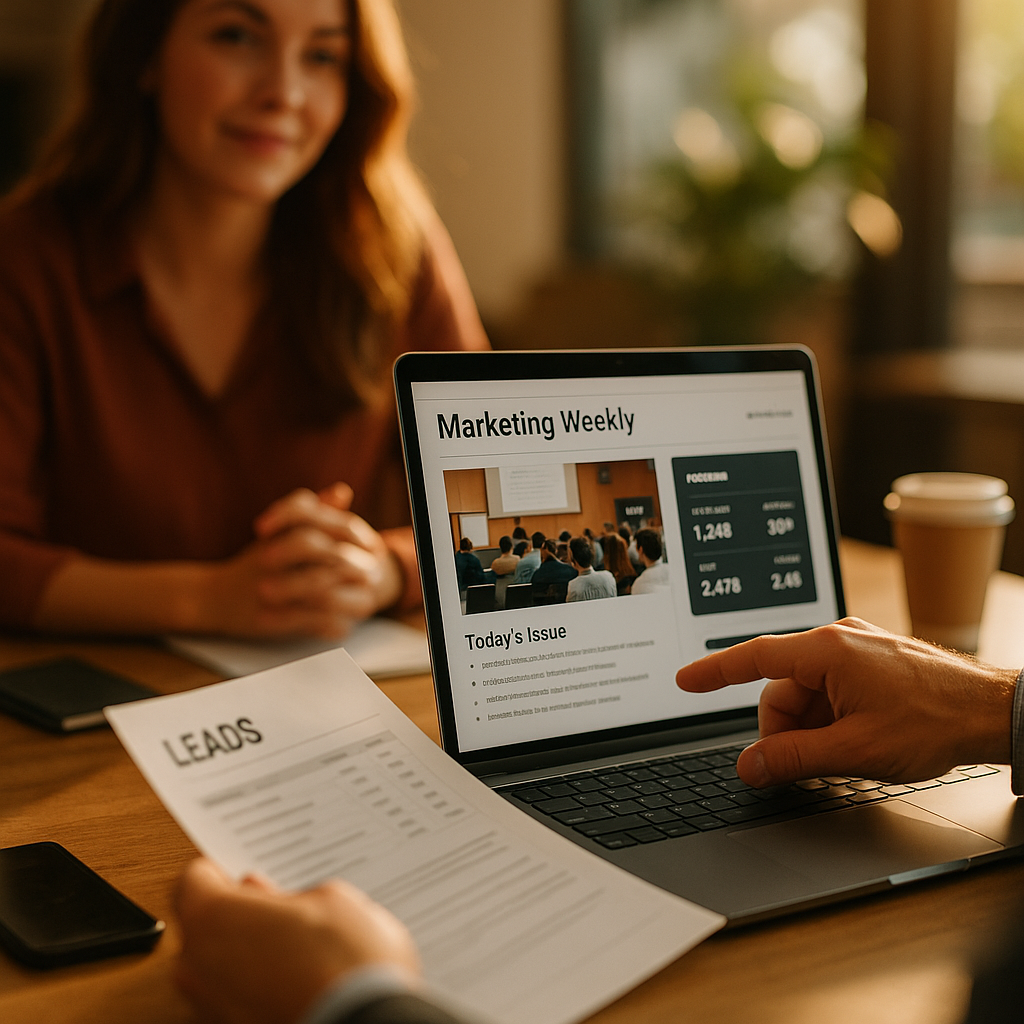
Sponsoring niche industry newsletters for B2B leads is one of the most efficient ways to reach decision-makers who already trust a curated source of information. Unlike broad paid media, newsletter sponsorships offer context, credibility, and intent. When chosen and measured correctly, they can generate qualified pipeline faster than many colder channels. Here is the playbook that separates experiments from results.
B2B newsletter sponsorships: why niche audiences outperform broad reach
In 2026, many B2B teams are rebalancing budget away from crowded social feeds and toward owned-audience media. That shift makes sense. A niche newsletter usually serves a clearly defined professional community: CFOs at SaaS firms, RevOps leaders, compliance officers, supply chain executives, or technical buyers in a narrow vertical. The audience is smaller, but relevance is much higher.
That relevance matters because B2B purchases are rarely impulsive. Buyers need repeated exposure, category education, and confidence that a vendor understands their industry. A respected newsletter helps provide all three. Readers open it by choice, often on a set schedule, and they engage in a professional mindset. Your message appears beside editorial they trust, which can increase attention and lower resistance.
From an EEAT perspective, this channel rewards expertise and audience fit. If your offer genuinely helps the readership solve a pressing business problem, a sponsorship can perform exceptionally well. If the message is generic or the audience is wrong, performance drops quickly. That is why newsletter sponsorships are not just about buying impressions. They are about borrowing trust from a publisher that has earned it over time.
Benefits that make niche sponsorships attractive for B2B demand generation include:
- High intent environment: Readers are consuming business content, not scrolling casually.
- Clear audience definition: Many publishers know subscriber roles, company sizes, and industry segments.
- Less wasted spend: You pay to reach a concentrated pool of potential buyers rather than a broad audience with weak relevance.
- Faster message testing: Creative, offers, and positioning can be iterated issue by issue.
- Brand credibility: Association with a trusted source can improve perceived authority.
That said, the best results come when sponsorships are treated as a system, not a one-off placement. Audience vetting, offer design, tracking, and post-click conversion all determine whether the channel produces actual leads instead of vanity metrics.
Newsletter advertising strategy: how to choose the right publications
The first step is building a shortlist of newsletters that match your ideal customer profile. Do not start with list size. Start with buyer alignment. Ask which publications your target accounts actually read and discuss internally. A newsletter with 12,000 highly relevant subscribers can outperform one with 250,000 mixed readers.
When evaluating a publication, look at these factors:
- Audience composition: Request details on job titles, seniority, industries, company size, and geography. Ask what percentage of the audience matches your target market.
- Acquisition quality: Find out how subscribers joined. Organic and content-driven growth is usually stronger than heavily incentivized list building.
- Engagement consistency: Ask for average open rate, click rate, and recent performance trends. One unusually strong send tells you little.
- Editorial fit: Read several recent issues. Does your solution naturally connect to the topics covered?
- Ad inventory and placement: A top placement in a concise issue may beat a lower placement in a long edition.
- Traffic quality: Ask whether they can share benchmark conversion patterns from similar sponsors, if available.
Go further than the media kit. Subscribe yourself. Read at least four issues. Study tone, pacing, ad density, and the type of calls to action that appear. If the publication feels overstuffed with promotions, reader trust may be weaker. If the editorial is sharp and the sponsorships feel selective, your message has a better chance.
You should also assess whether the publisher can support your goals beyond a single ad. Some newsletters offer dedicated sends, editorial partnerships, webinars, podcast mentions, or website placements. A multi-touch package can work well for complex B2B sales where the first click rarely becomes a meeting immediately.
One practical filter is this: if you cannot clearly explain why this audience should care about your offer right now, remove that publication from the list.
Lead generation campaigns: build offers that convert qualified buyers
A common mistake in newsletter sponsorships is sending clicks to a generic homepage or a product page that assumes too much awareness. Newsletter readers may be relevant, but relevance alone does not create conversion. Your offer must match both the audience’s maturity and the problem they are trying to solve.
For most B2B lead generation campaigns, the strongest offers sit in the middle of the funnel. They are useful enough to earn a click but specific enough to qualify interest. Effective examples include:
- Industry benchmark reports tailored to the newsletter’s niche
- ROI calculators connected to a measurable pain point
- Case studies featuring similar companies or roles
- Live demos framed around a use case, not a generic product tour
- Executive briefings on regulatory or market changes
- Templates or checklists that solve an immediate workflow problem
Message match is critical. If you sponsor a cybersecurity newsletter for healthcare IT leaders, your ad should speak directly to healthcare-specific compliance, risk, or staffing issues. Broad claims such as “transform your operations” usually underperform because they lack relevance and credibility.
Use plain language and a single promise. Readers scan quickly. They should understand in seconds:
- Who the offer is for
- What problem it addresses
- What they get after clicking
- Why it is worth their time now
Landing pages deserve as much attention as the ad itself. Keep the page visually aligned with the newsletter creative so the transition feels consistent. Restate the offer clearly above the fold. Remove unnecessary navigation. If you use a form, ask only for the fields your sales process truly needs. Long forms can improve lead quality in some cases, but they can also suppress volume so much that learning slows. Test deliberately.
Also decide what counts as a lead before launch. For some teams, a content download is enough. For others, success means booked meetings with accounts above a revenue threshold. That definition affects the kind of offer you build and how you judge channel performance.
Email sponsorship ROI: tracking, attribution, and real performance metrics
If you cannot measure beyond clicks, you cannot scale with confidence. Email sponsorship ROI depends on disciplined tracking and realistic attribution. Because B2B buying journeys involve multiple touches, newsletter sponsorships often influence pipeline even when they are not the final conversion point.
Start with clean campaign architecture:
- Use unique UTM parameters for every publication, issue, placement, and creative variation.
- Create dedicated landing pages when possible to isolate performance.
- Sync CRM and marketing automation so leads are tagged at source and followed through pipeline stages.
- Track post-click events such as form completion, demo requests, qualified meetings, opportunities, and revenue.
Do not optimize on open rate alone. You are the sponsor, not the publisher, and opens can be directionally useful but not sufficient. Focus on metrics that reflect business impact:
- Click-through rate: Shows whether your message and offer resonate.
- Landing page conversion rate: Reveals whether the post-click experience is working.
- Cost per lead: Useful, but only as an early indicator.
- Cost per marketing qualified lead: Better for filtering noise.
- Cost per sales accepted lead or meeting: Closer to actual sales value.
- Pipeline generated and revenue influenced: Best indicators of channel viability over time.
Attribution should reflect reality. In many B2B programs, newsletter sponsorships assist demand creation and account warming rather than capture all last-click conversions. Review both first-touch and multi-touch reports. If a newsletter consistently introduces in-market accounts that later convert through branded search, direct traffic, or outbound follow-up, it may be more valuable than last-click numbers suggest.
Ask publishers for transparency too. Confirm send dates, actual delivered volume, placement screenshots, and any issue-level anomalies. If performance is weak, compare creative, offer, placement, and audience before assuming the publication failed. Small changes can materially improve outcomes.
Account-based marketing channels: integrating newsletters into your pipeline plan
Niche newsletters work even better when they support a broader account-based marketing approach. Instead of treating each sponsorship as an isolated lead source, use it to create familiarity inside target accounts and strengthen coordinated outreach.
Here is a practical way to integrate the channel:
- Prioritize target segments: Select newsletters read by the functions you need to influence, such as finance, operations, legal, or IT.
- Align messaging by persona: Adapt the same core offer to the concerns of each stakeholder group.
- Sequence follow-up: After a sponsorship runs, increase outreach to engaged accounts through sales development, retargeting, and personalized email.
- Use content intelligence: Monitor which publications and themes produce the best response and feed that back into campaign planning.
- Expand winning combinations: If one newsletter performs, test adjacent formats from the same publisher or neighboring publications in the niche.
Newsletter sponsorships can also support category creation and thought leadership. If your company is introducing a new approach, repeated exposure in a trusted niche media environment helps educate the market. In that case, immediate lead volume may not tell the whole story. Watch for rising branded search, direct traffic from target companies, improved outbound response rates, and greater conversion on later-stage offers.
Sales alignment matters. Share campaign schedules and creative with the sales team before launch. Let them know which audiences will see which messages. When engagement from target accounts appears in the CRM, sales can respond with informed context instead of generic outreach.
Many teams underperform because marketing buys the placement, but no coordinated follow-up happens after prospects engage. Pipeline usually grows when sponsorships are linked to account lists, persona messaging, and sales action.
B2B media buying: negotiation, testing, and scaling what works
Strong B2B media buying is not about squeezing the lowest rate from publishers. It is about buying the right inventory, structuring tests correctly, and scaling only after evidence appears. Begin with a test budget across several carefully chosen newsletters rather than overcommitting to one publisher too early.
A sensible test plan includes:
- Three to five publications with distinct but relevant audience profiles
- Two or more creative angles focused on different pain points
- One consistent conversion goal so comparisons stay fair
- A defined test window long enough to reduce random variance
During negotiations, ask about:
- Ad placement options and whether exclusivity is available
- Frequency discounts for multi-issue commitments
- Bonus inventory such as website banners or social mentions
- Creative guidance based on what has historically worked with their audience
- Make-goods if delivery falls meaningfully short
Once data comes in, resist the urge to judge too quickly on one metric. A publication may have a modest click-through rate but excellent downstream conversion quality. Another may drive a flood of cheap leads that never progress. Compare full-funnel outcomes.
When you find a winner, scale methodically. Increase frequency before expanding too widely, but monitor for audience fatigue. Refresh copy and offers regularly. Consider custom editorial partnerships only after standard sponsorships prove there is real audience-product fit. Native integrations can perform very well, but only when the underlying message already resonates.
Finally, document lessons in a repeatable playbook: audience traits, best-performing headlines, strongest offers, cost benchmarks, and sales feedback. That turns scattered campaign knowledge into an asset your team can use every quarter.
FAQs
What is a niche industry newsletter in B2B marketing?
A niche industry newsletter is an email publication focused on a specific professional audience, such as HR leaders in healthcare or procurement managers in manufacturing. It typically has a smaller but more targeted subscriber base than broad business media, which often makes it more valuable for B2B lead generation.
How much should a company budget for newsletter sponsorships?
Budgets vary based on audience size, exclusivity, and placement. In practice, the right budget is the one that allows enough volume to test multiple publications, offers, and creatives without drawing conclusions too early. Plan for creative production, landing page optimization, and tracking setup in addition to media costs.
Are newsletter sponsorships better than LinkedIn ads for B2B leads?
They serve different roles. LinkedIn offers scalable targeting and fast iteration, while newsletter sponsorships provide trusted context and concentrated relevance. Many B2B teams see the best results when they use both, with newsletters creating warm awareness and LinkedIn helping with retargeting and follow-up.
What kind of offer works best in a newsletter sponsorship?
Offers that solve a specific problem for the newsletter’s audience usually perform best. Examples include benchmark reports, practical templates, case studies, ROI tools, and tightly framed demo invitations. Generic awareness messages tend to produce weaker conversion quality.
How can I tell if a newsletter’s audience is real and engaged?
Ask how subscribers were acquired, review engagement trends over several sends, subscribe yourself, and examine the editorial quality. You can also request audience breakdowns by role and industry. Publications with organic growth, strong editorial standards, and stable engagement are generally safer bets.
How long does it take to see results from newsletter sponsorships?
You may see clicks and leads immediately, but pipeline impact often takes longer because B2B buying cycles involve research, internal discussion, and multiple touches. Measure early indicators quickly, then evaluate qualified pipeline and revenue over a longer period aligned to your sales cycle.
Should I send traffic to a homepage or a dedicated landing page?
A dedicated landing page is usually better. It preserves message match, makes tracking easier, and increases the chance of conversion by focusing on one offer. Homepages often contain too many paths and too little context for newsletter-driven traffic.
Can small B2B companies use this channel effectively?
Yes. Smaller companies often benefit because niche newsletters let them appear in front of high-value buyers without competing everywhere at once. Success depends on sharp targeting, a strong offer, and disciplined measurement, not on enterprise-level spend alone.
Sponsoring niche industry newsletters works when you treat it as a precision channel, not a branding gamble. Choose publications by audience fit, craft offers that solve real problems, track performance through pipeline, and coordinate follow-up with sales. In 2026, the winning teams are not buying the biggest lists. They are buying trusted attention from the right readers and converting it with discipline.
Top Influencer Marketing Agencies
The leading agencies shaping influencer marketing in 2026
Agencies ranked by campaign performance, client diversity, platform expertise, proven ROI, industry recognition, and client satisfaction. Assessed through verified case studies, reviews, and industry consultations.
Moburst

-
2

The Shelf
Boutique Beauty & Lifestyle Influencer AgencyA data-driven boutique agency specializing exclusively in beauty, wellness, and lifestyle influencer campaigns on Instagram and TikTok. Best for brands already focused on the beauty/personal care space that need curated, aesthetic-driven content.Clients: Pepsi, The Honest Company, Hims, Elf Cosmetics, Pure LeafVisit The Shelf → -
3

Audiencly
Niche Gaming & Esports Influencer AgencyA specialized agency focused exclusively on gaming and esports creators on YouTube, Twitch, and TikTok. Ideal if your campaign is 100% gaming-focused — from game launches to hardware and esports events.Clients: Epic Games, NordVPN, Ubisoft, Wargaming, Tencent GamesVisit Audiencly → -
4

Viral Nation
Global Influencer Marketing & Talent AgencyA dual talent management and marketing agency with proprietary brand safety tools and a global creator network spanning nano-influencers to celebrities across all major platforms.Clients: Meta, Activision Blizzard, Energizer, Aston Martin, WalmartVisit Viral Nation → -
5

The Influencer Marketing Factory
TikTok, Instagram & YouTube CampaignsA full-service agency with strong TikTok expertise, offering end-to-end campaign management from influencer discovery through performance reporting with a focus on platform-native content.Clients: Google, Snapchat, Universal Music, Bumble, YelpVisit TIMF → -
6

NeoReach
Enterprise Analytics & Influencer CampaignsAn enterprise-focused agency combining managed campaigns with a powerful self-service data platform for influencer search, audience analytics, and attribution modeling.Clients: Amazon, Airbnb, Netflix, Honda, The New York TimesVisit NeoReach → -
7

Ubiquitous
Creator-First Marketing PlatformA tech-driven platform combining self-service tools with managed campaign options, emphasizing speed and scalability for brands managing multiple influencer relationships.Clients: Lyft, Disney, Target, American Eagle, NetflixVisit Ubiquitous → -
8

Obviously
Scalable Enterprise Influencer CampaignsA tech-enabled agency built for high-volume campaigns, coordinating hundreds of creators simultaneously with end-to-end logistics, content rights management, and product seeding.Clients: Google, Ulta Beauty, Converse, AmazonVisit Obviously →