


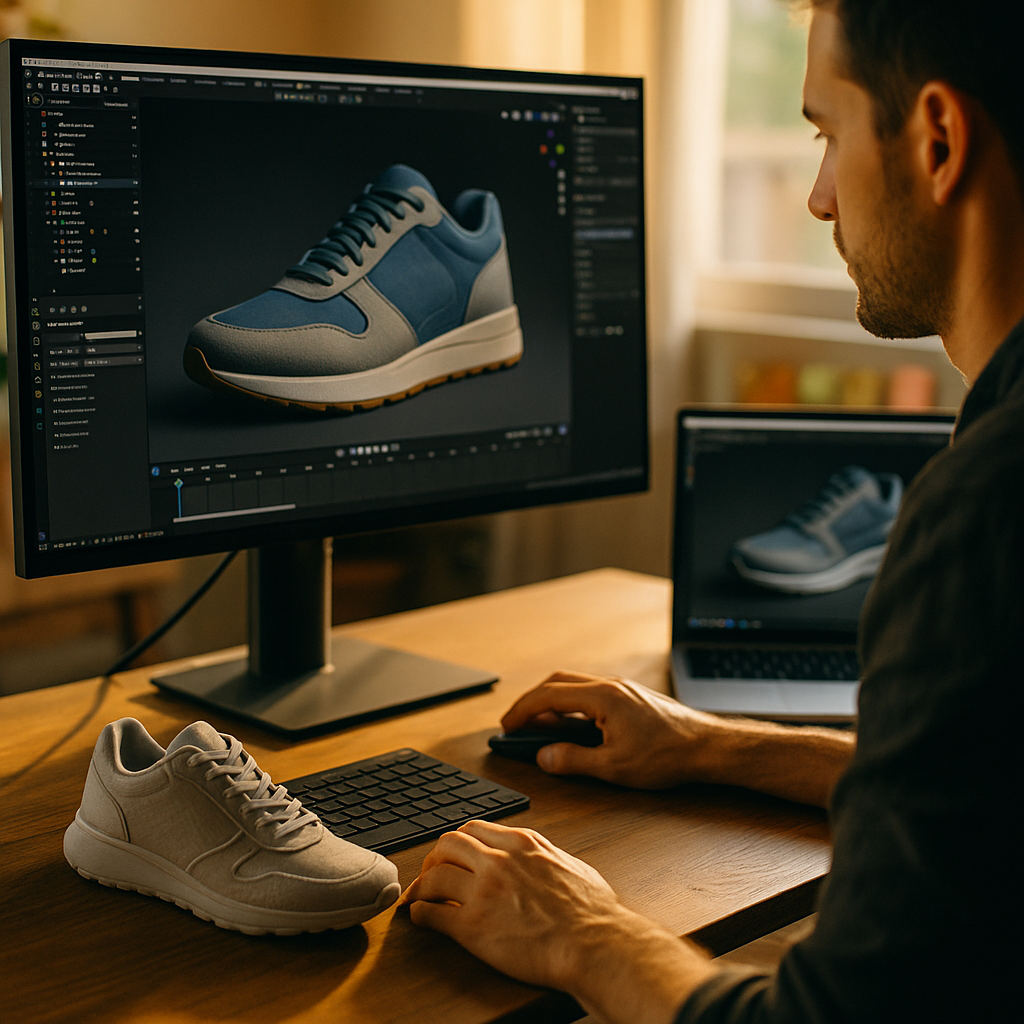
Using Generative AI to Design Interactive 3D Product Demos at Scale is changing how brands explain complex products, shorten sales cycles, and improve digital self-service. Instead of building every demo by hand, teams can automate modeling, variations, copy, and interaction design while keeping quality high. The result is faster production, stronger personalization, and a better buyer experience—but what does success actually require?
Why generative AI for 3D product demos matters
Interactive product experiences are no longer optional for many industries. Buyers expect to rotate, inspect, configure, and understand products before they speak to sales. This is especially true in ecommerce, SaaS hardware, manufacturing, medical devices, consumer electronics, automotive, and B2B equipment categories where static images leave too many questions unanswered.
Generative AI helps teams meet that expectation without multiplying production costs. Traditional 3D demo creation often depends on specialized artists, manual scripting, version-by-version updates, and long review cycles. That model works for a few flagship products, but it breaks when a company needs hundreds or thousands of product variants, localized demos, or rapid updates after design changes.
With the right workflow, generative AI can assist with:
- Creating or refining 3D assets from CAD files, scans, photos, and technical references
- Generating textures, materials, lighting presets, and environment backgrounds
- Producing annotations, product copy, voiceover scripts, subtitles, and multilingual labels
- Suggesting interactive hotspots, guided walkthroughs, and storytelling sequences
- Automating variant generation for colors, accessories, configurations, and bundles
- Personalizing demo pathways by audience, industry, use case, or funnel stage
The practical value is straightforward: faster time to publish, lower content bottlenecks, and more consistent product education across channels. But AI should not replace product accuracy, compliance review, or user-centered design. In 2026, the strongest teams use AI as a production multiplier, not as an unchecked content machine.
That distinction matters for trust. If a 3D demo misrepresents dimensions, features, compatibility, or performance, it creates downstream problems in conversion, returns, support, and brand credibility. Helpful content in this area must reflect real product knowledge, strong governance, and a clear validation process.
Building a scalable 3D content pipeline with AI automation
Scaling interactive demos starts with infrastructure, not visuals. Many companies fail because they jump into flashy outputs before they standardize source files, naming conventions, metadata, and approval workflows. A scalable pipeline begins by treating every product as structured data.
A strong system typically includes:
- Source-of-truth inputs: CAD files, PLM data, product information management records, engineering diagrams, spec sheets, and approved brand assets
- Asset normalization: geometry cleanup, polygon reduction, texture optimization, file-format conversion, and material mapping for real-time rendering
- Prompt and template frameworks: reusable instructions that tell AI how to create labels, hotspots, scenes, interactions, and localized copy consistently
- Review layers: product, legal, UX, accessibility, and brand checks before publishing
- Publishing connections: CMS, ecommerce platforms, sales enablement tools, product pages, retail kiosks, and customer support portals
The role of generative AI in this pipeline is to accelerate repetitive tasks. For example, if a company launches 200 SKU variants that share core geometry, AI can help generate variant-specific scenes, usage examples, labels, and onboarding sequences far faster than a manual team. Likewise, when new features are released, AI-assisted updates can refresh content across all demos without rebuilding each one from scratch.
However, the best workflows still rely on expert oversight. Product marketers verify messaging, 3D specialists validate model fidelity and performance, engineers confirm technical accuracy, and UX designers test clarity. This human review is central to EEAT because it demonstrates experience and expertise rather than publishing unverified AI output.
Another key factor is performance. Interactive 3D experiences can fail if they load slowly or overwhelm mobile devices. AI can generate assets quickly, but teams still need strict optimization targets for polygon count, texture size, animation complexity, and script weight. A beautiful demo that takes too long to load loses users before it informs them.
Using AI personalization in product visualization
One of the biggest advantages of AI-driven 3D demos is personalization. Different audiences ask different questions. A procurement lead may want dimensions, durability, and integration details. A field technician may care about installation and maintenance. A consumer may want color options, setup simplicity, and lifestyle fit. One static experience cannot answer all of those efficiently.
AI personalization in product visualization allows brands to adapt the same demo framework to each audience segment. That can mean changing the order of scenes, highlighting different hotspots, rewriting explanatory copy, or triggering a role-specific guided tour. Instead of forcing users to hunt for relevant details, the experience surfaces what matters most first.
Useful personalization strategies include:
- Industry-based views: show sector-specific use cases, compliance notes, or workflow integration points
- Role-based storytelling: tailor content for buyers, operators, technicians, IT leaders, or end users
- Lifecycle-specific guidance: product discovery, onboarding, training, support, and upsell education
- Geographic localization: translate labels, units, regional standards, and narrated guidance
- Behavior-triggered adaptation: adjust demo depth based on what users rotate, click, revisit, or compare
To make this work at scale, companies need structured metadata attached to every component and content block. AI performs better when it can pull from clear product taxonomies, approved claims, and modular information sets. Without this, personalization becomes inconsistent and risky.
There is also a measurement angle. Personalized demos should not exist only to look innovative. They should improve meaningful outcomes such as qualified engagement, conversion rate, demo completion, sales velocity, self-serve success, lower support demand, and reduced return rates. If a personalization layer adds complexity but not clarity, it should be revised or removed.
Improving customer experience with interactive 3D product demos
The strongest interactive demos do more than showcase appearance. They reduce uncertainty. That means they should answer the questions users would otherwise ask in live chat, email, product support, or a sales call. In practice, this shifts 3D demos from being a visual asset to becoming a high-value customer experience tool.
Generative AI helps teams enrich that experience with guided education. For example, it can draft concise hotspot descriptions, create plain-language feature explanations, generate alternative reading levels, or produce multilingual voice guidance. These capabilities are especially useful for complex products where technical terminology creates friction.
To improve customer experience, focus on these design principles:
- Start with user intent. Users want to understand fit, function, setup, compatibility, and value. Build interactions around those questions.
- Keep controls intuitive. Rotation, zoom, exploded views, and configuration tools should feel obvious on desktop and mobile.
- Show cause and effect. If a user changes a material, accessory, or feature set, the demo should update instantly and clearly.
- Layer information. Begin with essentials, then let users drill into specs, animations, maintenance steps, or contextual guidance.
- Support accessibility. Provide text alternatives, clear labels, keyboard support where possible, strong contrast, and readable narration.
Many teams ask whether AI-generated demos can feel too generic. They can, if brands over-automate. The fix is not to avoid AI; it is to define creative constraints. Use approved visual systems, branded interaction patterns, consistent terminology, and product-specific review standards. AI should accelerate production inside a controlled design system, not invent the system from scratch each time.
Another common concern is trust. If users suspect that a demo exaggerates features or shows non-existent functions, confidence drops. Helpful experiences make it clear when visuals are illustrative, when configurations are optional, and when details depend on regional availability or product package. Transparency supports conversions more than overstatement ever will.
Best practices for generative design workflows and governance
Generative design workflows need governance from the beginning. This is where many organizations separate experimental success from enterprise-scale reliability. If the goal is to publish interactive 3D product demos across a large catalog, teams need standards for quality, legal risk, intellectual property, and change management.
Best practices include:
- Use approved training and reference inputs. Avoid unclear asset rights or unverified external references.
- Document every transformation step. Teams should know what AI generated, what humans edited, and what was approved for release.
- Require subject-matter expert review. Engineering, product, and compliance stakeholders should validate critical details.
- Set confidence thresholds. High-risk content such as safety instructions, technical tolerances, or regulated claims should never publish without direct expert sign-off.
- Create fallback experiences. If a device cannot handle full 3D, provide lightweight alternatives such as annotated stills or guided video.
- Monitor drift. As products evolve, prompts, templates, and reusable assets must be updated to avoid outdated explanations.
Governance also improves consistency across markets and teams. When global organizations operate with separate regional content teams, AI can unify production standards while still allowing localization. The key is to establish a central framework for terminology, interaction logic, and publishing rules.
From an EEAT standpoint, readers and buyers benefit when companies are explicit about process quality. A trustworthy organization can explain how its demos are created, reviewed, tested, and updated. That openness signals authority and reduces concern around AI-generated inaccuracies.
Security should not be overlooked either. Product files can contain sensitive design data, pre-release features, or proprietary engineering details. Any AI workflow used for 3D demo generation must comply with company data handling policies, vendor security standards, access controls, and audit requirements.
Measuring ROI from scalable 3D commerce experiences
Executives usually support AI initiatives when the business case is clear. For interactive 3D demos, ROI should be measured across production efficiency and commercial impact. Looking at only one side gives an incomplete picture.
On the efficiency side, track:
- Time to produce and publish a new demo
- Cost per product variant or localized version
- Number of manual production hours saved
- Reuse rate of assets, templates, and interaction modules
- Update speed after product or packaging changes
On the commercial side, track:
- Engagement rate with 3D demos versus static pages
- Completion rate of guided product walkthroughs
- Lift in conversion rate, quote requests, or add-to-cart behavior
- Reduction in pre-sales questions and support tickets
- Shorter sales cycles for complex products
- Lower return rates caused by expectation mismatch
For the cleanest measurement, compare similar product pages or sales flows with and without interactive demos. Then isolate where AI actually creates value. Did it reduce production cost? Did personalized pathways drive better completion? Did loading speed affect outcomes on mobile? These questions help teams invest in the right improvements rather than assuming all AI-generated experiences perform equally well.
It is also wise to include qualitative feedback. Sales teams can report whether demos improve call quality. Support teams can identify whether customers arrive with better understanding. Users can flag confusion points directly inside the experience. Those insights often reveal improvement opportunities that analytics alone miss.
In 2026, the companies seeing the best returns are not simply generating more 3D content. They are building systems that connect accurate product data, AI-assisted production, strong UX, and measurable business goals. Scale is valuable only when it preserves clarity, trust, and performance.
FAQs about generative AI and interactive 3D product demos
What does generative AI actually do in a 3D product demo workflow?
It can assist with asset creation, texture generation, scene setup, annotation writing, multilingual copy, voice scripts, interaction suggestions, and variant production. It speeds up repetitive work, but human experts should still review technical accuracy and brand consistency.
Can generative AI create 3D models from photos or CAD files?
Yes, in many cases it can help convert or refine outputs from photos, scans, and CAD data. However, quality depends on source material, product complexity, and required accuracy. For products with strict dimensional or compliance requirements, expert validation remains essential.
Are AI-generated 3D demos reliable enough for enterprise use?
They can be, if the organization uses strong governance. Enterprise reliability depends on approved data sources, review workflows, optimization standards, legal checks, and ongoing maintenance. AI alone is not the safeguard; the operating model is.
How do interactive 3D product demos improve conversions?
They reduce uncertainty by showing features, scale, configuration options, and use cases more clearly than static visuals. When users understand what they are buying, they are more likely to move forward and less likely to churn or return the product later.
What industries benefit most from scalable 3D demos?
Industries with configurable, technical, or visually important products often benefit most. Examples include electronics, furniture, automotive, manufacturing, medical devices, industrial equipment, home improvement, and B2B hardware.
Do 3D demos need to be personalized?
Not always, but personalization can significantly improve relevance. If different audiences care about different specifications, use cases, or workflows, AI-driven personalization helps surface the right information faster.
What are the biggest risks when using AI for product demos?
The main risks are inaccurate visuals, misleading claims, weak mobile performance, inconsistent branding, unclear asset rights, and poor accessibility. These risks can be reduced through expert review, controlled templates, and continuous testing.
How should teams start if they want to scale this capability?
Begin with a pilot focused on a product line that has clear business value and reusable source data. Standardize inputs, define review rules, optimize for performance, measure outcomes, and then expand the workflow across more categories.
Generative AI gives brands a practical way to create interactive 3D product demos faster, personalize them intelligently, and scale across large catalogs without losing control. The winning approach combines automation with expert review, optimized performance, and clear measurement. If you want better demos, do not chase volume alone. Build a trusted system that turns product complexity into customer clarity.
Top Influencer Marketing Agencies
The leading agencies shaping influencer marketing in 2026
Agencies ranked by campaign performance, client diversity, platform expertise, proven ROI, industry recognition, and client satisfaction. Assessed through verified case studies, reviews, and industry consultations.
Moburst

-
2

The Shelf
Boutique Beauty & Lifestyle Influencer AgencyA data-driven boutique agency specializing exclusively in beauty, wellness, and lifestyle influencer campaigns on Instagram and TikTok. Best for brands already focused on the beauty/personal care space that need curated, aesthetic-driven content.Clients: Pepsi, The Honest Company, Hims, Elf Cosmetics, Pure LeafVisit The Shelf → -
3

Audiencly
Niche Gaming & Esports Influencer AgencyA specialized agency focused exclusively on gaming and esports creators on YouTube, Twitch, and TikTok. Ideal if your campaign is 100% gaming-focused — from game launches to hardware and esports events.Clients: Epic Games, NordVPN, Ubisoft, Wargaming, Tencent GamesVisit Audiencly → -
4

Viral Nation
Global Influencer Marketing & Talent AgencyA dual talent management and marketing agency with proprietary brand safety tools and a global creator network spanning nano-influencers to celebrities across all major platforms.Clients: Meta, Activision Blizzard, Energizer, Aston Martin, WalmartVisit Viral Nation → -
5

The Influencer Marketing Factory
TikTok, Instagram & YouTube CampaignsA full-service agency with strong TikTok expertise, offering end-to-end campaign management from influencer discovery through performance reporting with a focus on platform-native content.Clients: Google, Snapchat, Universal Music, Bumble, YelpVisit TIMF → -
6

NeoReach
Enterprise Analytics & Influencer CampaignsAn enterprise-focused agency combining managed campaigns with a powerful self-service data platform for influencer search, audience analytics, and attribution modeling.Clients: Amazon, Airbnb, Netflix, Honda, The New York TimesVisit NeoReach → -
7

Ubiquitous
Creator-First Marketing PlatformA tech-driven platform combining self-service tools with managed campaign options, emphasizing speed and scalability for brands managing multiple influencer relationships.Clients: Lyft, Disney, Target, American Eagle, NetflixVisit Ubiquitous → -
8

Obviously
Scalable Enterprise Influencer CampaignsA tech-enabled agency built for high-volume campaigns, coordinating hundreds of creators simultaneously with end-to-end logistics, content rights management, and product seeding.Clients: Google, Ulta Beauty, Converse, AmazonVisit Obviously →