


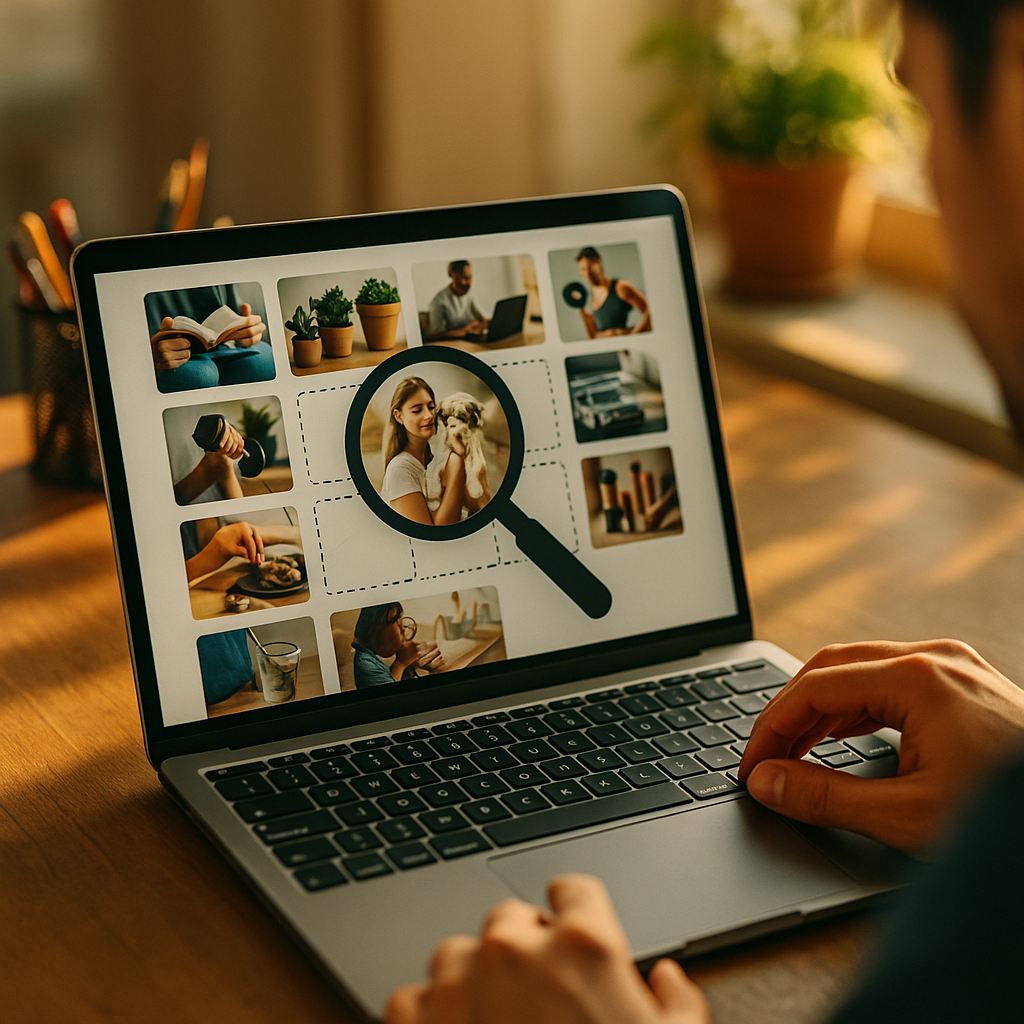
Marketers in 2026 can no longer rely on broad awareness alone. Transitioning From Mass Reach to Hyper Niche Intent Based Targeting is now essential for brands that want efficient growth, stronger conversion rates, and better customer experiences. Audiences expect relevance at every touchpoint, and platforms reward it. The real opportunity starts when you understand why intent changes everything.
Why intent based targeting is replacing mass reach
Mass reach once made sense when media channels were limited and audience measurement was blunt. Brands bought scale, repeated the message, and hoped enough people would respond. That approach is far less effective now. Consumers move across search, social, marketplaces, communities, apps, and email with clear expectations. They want offers, content, and timing that match their immediate needs.
Intent based targeting focuses on what a user is trying to accomplish right now. Instead of asking, “How many people can we reach?” strong marketers ask, “Which signals show a buyer is ready to act, compare, subscribe, or purchase?” This shift improves efficiency because budget follows probability, not vanity metrics.
Intent can appear in many forms:
- Search queries with commercial or problem-solving language
- Repeated visits to product or pricing pages
- Content consumption around a narrow use case
- Email clicks tied to category-specific interests
- App events such as trial activation, feature usage, or cart abandonment
- Community discussions that reveal urgency, objections, or buying criteria
This change also aligns with how modern platforms optimize delivery. Ad systems increasingly reward relevant creative, strong landing page experiences, and conversion quality. Broad campaigns still have a role at the top of the funnel, but they should support a more precise strategy built around audience intent and business outcomes.
From an EEAT perspective, this approach is more helpful to users. It respects context, reduces irrelevant interruptions, and connects people with information or products they actually need. That creates trust, and trust compounds across every channel.
How hyper niche marketing improves performance and relevance
Hyper niche marketing narrows focus beyond standard audience segments. It moves from “small business owners” to “independent dental practices with two locations looking to increase appointment bookings from mobile search.” That level of clarity changes everything: messaging becomes sharper, creative becomes more believable, and conversion paths become easier to design.
Many teams worry that narrowing the audience will reduce opportunity. In practice, it often improves return on investment. A tightly defined niche tends to have clearer pain points, predictable buying triggers, and fewer message variations. That means faster testing cycles and stronger learning.
Hyper niche targeting strengthens performance in several ways:
- Higher relevance: Messaging reflects the audience’s exact problem, language, and timing
- Lower waste: Budget avoids users who may recognize the brand but have no immediate need
- Better conversion rates: Offers and landing pages map closely to user intent
- Stronger retention: Customers acquired through need-state relevance are often a better fit
- Faster insights: Narrow audiences reveal what resonates without broad-market noise
This does not mean brands should create hundreds of random micro-campaigns. The best programs identify valuable niches where customer lifetime value, buying urgency, and message differentiation align. A niche is only useful when it supports profitable growth and can be reached consistently through owned and paid channels.
A practical example: a software company selling project management tools may struggle with generic campaigns aimed at all knowledge workers. It often performs better by targeting architecture firms managing client approvals, where the pain point, workflow, and proof points are more concrete. Intent-based execution then layers on signals such as feature comparison searches, case study downloads, or pricing-page revisits.
Building an audience segmentation strategy around real signals
An effective audience segmentation strategy starts with evidence, not assumptions. Too many teams segment by age, job title, or broad interests alone. Those inputs may help with planning, but they rarely predict readiness to convert. Strong segmentation combines three dimensions: who the user is, what they need, and how strongly current behavior indicates intent.
Use a structured process:
- Define the business goal. Identify whether you want leads, qualified demos, first purchases, repeat orders, app subscriptions, or retained users.
- Map high-value customer groups. Review CRM, analytics, support tickets, search query reports, and sales feedback to find profitable audience clusters.
- Identify intent signals. Separate low-intent curiosity from mid-intent evaluation and high-intent action behaviors.
- Create segment logic. Build audience groups based on problem type, urgency, product fit, and readiness stage.
- Align message and offer. Each segment should receive content that answers its likely questions and objections.
- Set measurement rules. Decide which metrics define success for each segment, including conversion rate, acquisition cost, lead quality, retention, and revenue.
Include first-party data wherever possible. In 2026, durable targeting depends on consented, trustworthy data sources such as website behavior, email engagement, CRM history, app events, customer surveys, and purchase patterns. These assets are more reliable than platform-only approximations and help maintain compliance with evolving privacy expectations.
Also validate segments with human insight. Sales teams, customer success managers, and support agents often know which objections block conversion and which use cases produce loyal customers. That lived experience strengthens EEAT because it grounds marketing decisions in direct knowledge rather than abstract demographic theory.
Using buyer intent data without sacrificing trust or accuracy
Buyer intent data is powerful, but only when marketers use it carefully. Not every signal means the same thing. A single blog view is not equivalent to a pricing-page revisit, and a comparison search may indicate evaluation, not purchase commitment. Smart teams score intent by signal strength, recency, and context.
Useful buyer intent sources include:
- On-site behavior such as pricing visits, return sessions, and form starts
- Search terms tied to problem awareness, solutions, alternatives, and branded comparisons
- Email engagement around product-specific topics
- Product usage events for free trial or freemium models
- Marketplace interactions and review-site activity
- Direct responses from surveys, chat, demos, and sales conversations
The key is to translate these signals into action. For example, a user reading educational content may need a guide, calculator, or comparison page. A user who revisits pricing may need proof, urgency, or a live conversation. A current customer exploring advanced features may need onboarding support or an expansion offer.
Accuracy matters as much as personalization. If you overstate what you know or deliver messages that feel intrusive, performance drops and trust erodes. Use transparent data practices, clear consent language, and messaging that feels helpful rather than predictive in a creepy way. Relevance should feel earned.
EEAT principles matter here too. Helpful content should demonstrate experience with customer problems, expertise in the category, authority through credible proof, and trustworthiness through honest claims. If your ad promises precision but your landing page is generic, the user notices immediately. Intent targeting only works when the entire experience is consistent.
Creating a personalized content strategy for high-intent niches
A successful personalized content strategy connects segment intent to the right format, message, and next step. Personalization is not just using a company name in an email or dynamically inserting a city on a landing page. Real personalization answers the exact question behind the click.
Start by mapping content to the intent journey:
- Early intent: explain the problem, define options, and educate without pressure
- Mid intent: show comparisons, use cases, calculators, demos, and implementation details
- High intent: highlight proof, pricing clarity, customer outcomes, guarantees, and friction-free conversion paths
Then customize creative and destination experiences for each hyper niche. A strong program usually includes:
- Ad copy that mirrors the exact problem or use case
- Landing pages built for one audience and one action
- Case studies from similar customers
- FAQs that answer likely objections before they become drop-off points
- Email or retargeting sequences based on the previous interaction
This is where many brands win or lose. They identify the right audience but send everyone to the same page. That breaks the intent chain. If someone clicks a message about reducing onboarding time for remote sales teams, the destination should not be a generic homepage. It should show the relevant workflow, proof points, and next step.
Personalized content also improves organic visibility. Search engines increasingly reward pages that satisfy specific intent clearly and completely. A page built for a defined niche often outperforms a broad page because it provides sharper relevance, stronger topical depth, and better engagement signals.
Measuring conversion optimization when targeting gets more precise
As brands become more targeted, measurement must become more disciplined. Conversion optimization in a hyper niche strategy is not just about increasing click-through rate. It is about proving that tighter alignment between audience, message, and experience creates better business outcomes.
Track performance at several levels:
- Acquisition efficiency: cost per qualified click, lead, trial, or purchase
- Intent quality: depth of visit, repeat sessions, feature engagement, demo completion, or sales acceptance
- Conversion rate: from landing page, email sequence, sales call, or checkout flow
- Revenue quality: average order value, lifetime value, expansion, and retention
- Segment contribution: which niches produce the best blend of scale and profit
Testing should focus on the variables that matter most:
- Niche definition and inclusion criteria
- Intent signal thresholds
- Ad-to-landing page message match
- Offer structure and call to action
- Proof elements such as testimonials, case studies, and quantified outcomes
- Friction points in forms, checkout, or demo booking
A common question is whether brands should abandon broad campaigns entirely. Usually, no. Broad awareness still helps generate future demand, especially in competitive categories. The smarter approach is to rebalance budget. Use broad tactics to support category visibility, then let intent-driven niche campaigns capture demand with greater precision. This creates a more resilient funnel.
Another concern is scale. Hyper niche does not mean small forever. It means winning specific pockets first, learning fast, and expanding systematically. Once you know which problems, triggers, and messages convert best, you can replicate the model across adjacent niches without losing relevance.
FAQs about hyper niche intent based targeting
What is the main difference between mass reach and hyper niche intent based targeting?
Mass reach prioritizes visibility across a broad audience. Hyper niche intent based targeting focuses on smaller audience groups showing clear signals of interest or readiness to act. The goal shifts from maximizing exposure to maximizing relevance, conversion quality, and return on spend.
Can small brands benefit from intent based targeting more than large brands?
Yes. Smaller brands often have limited budgets, so precision matters. By focusing on high-fit niches and strong intent signals, they can compete more effectively against larger advertisers that still spend broadly.
How do I find the best niche to target first?
Start with your existing best customers. Look for patterns in profitability, retention, urgency, and buying triggers. Then confirm demand using search behavior, CRM data, sales feedback, and on-site engagement. The best initial niche usually has clear pain points and measurable commercial intent.
Does privacy regulation make this strategy harder?
It changes the execution, but it does not remove the opportunity. The strongest programs rely on consented first-party data, transparent tracking practices, and contextual relevance. Trustworthy data foundations are now part of competitive advantage.
Which channels work best for hyper niche intent based targeting?
Search is often the clearest source of explicit intent, but strong results can also come from paid social, email, SEO, app engagement, retargeting, communities, marketplaces, and sales outreach. The best mix depends on where your niche audience expresses need.
How long does it take to see results?
Brands often see early efficiency gains quickly when message relevance improves, but durable results usually come after several rounds of testing. Expect to refine segments, offers, and landing pages before performance stabilizes.
Do I need expensive technology to do this well?
No. Advanced tools help, but many teams can start with analytics, CRM data, search query insights, email behavior, and structured landing page testing. What matters most is disciplined segmentation and consistent execution.
Moving from broad exposure to precision is not a trend; it is a practical response to how people buy in 2026. Brands that define narrow audiences, interpret intent carefully, and match content to real needs earn stronger trust and better results. The clearest takeaway is simple: stop chasing everyone, and start converting the right people at the right moment.
Top Influencer Marketing Agencies
The leading agencies shaping influencer marketing in 2026
Agencies ranked by campaign performance, client diversity, platform expertise, proven ROI, industry recognition, and client satisfaction. Assessed through verified case studies, reviews, and industry consultations.
Moburst

-
2

The Shelf
Boutique Beauty & Lifestyle Influencer AgencyA data-driven boutique agency specializing exclusively in beauty, wellness, and lifestyle influencer campaigns on Instagram and TikTok. Best for brands already focused on the beauty/personal care space that need curated, aesthetic-driven content.Clients: Pepsi, The Honest Company, Hims, Elf Cosmetics, Pure LeafVisit The Shelf → -
3

Audiencly
Niche Gaming & Esports Influencer AgencyA specialized agency focused exclusively on gaming and esports creators on YouTube, Twitch, and TikTok. Ideal if your campaign is 100% gaming-focused — from game launches to hardware and esports events.Clients: Epic Games, NordVPN, Ubisoft, Wargaming, Tencent GamesVisit Audiencly → -
4

Viral Nation
Global Influencer Marketing & Talent AgencyA dual talent management and marketing agency with proprietary brand safety tools and a global creator network spanning nano-influencers to celebrities across all major platforms.Clients: Meta, Activision Blizzard, Energizer, Aston Martin, WalmartVisit Viral Nation → -
5

The Influencer Marketing Factory
TikTok, Instagram & YouTube CampaignsA full-service agency with strong TikTok expertise, offering end-to-end campaign management from influencer discovery through performance reporting with a focus on platform-native content.Clients: Google, Snapchat, Universal Music, Bumble, YelpVisit TIMF → -
6

NeoReach
Enterprise Analytics & Influencer CampaignsAn enterprise-focused agency combining managed campaigns with a powerful self-service data platform for influencer search, audience analytics, and attribution modeling.Clients: Amazon, Airbnb, Netflix, Honda, The New York TimesVisit NeoReach → -
7

Ubiquitous
Creator-First Marketing PlatformA tech-driven platform combining self-service tools with managed campaign options, emphasizing speed and scalability for brands managing multiple influencer relationships.Clients: Lyft, Disney, Target, American Eagle, NetflixVisit Ubiquitous → -
8

Obviously
Scalable Enterprise Influencer CampaignsA tech-enabled agency built for high-volume campaigns, coordinating hundreds of creators simultaneously with end-to-end logistics, content rights management, and product seeding.Clients: Google, Ulta Beauty, Converse, AmazonVisit Obviously →