


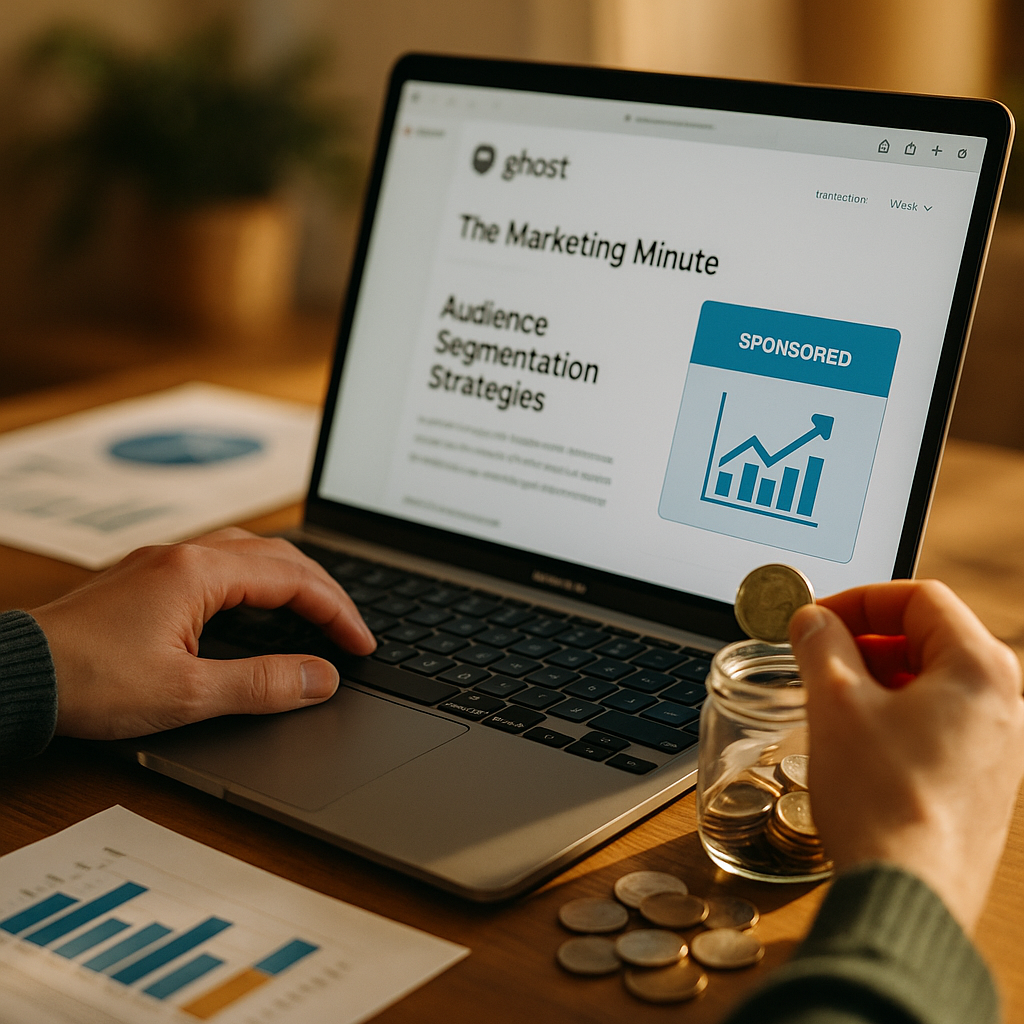
Sponsoring deep tech newsletters on niche Ghost servers can outperform broad media buys when you need precision, trust, and technical credibility. In 2026, founders, investors, developer-tool teams, and research-driven brands use these publications to reach compact but highly qualified audiences. The opportunity is real, but results depend on a disciplined playbook. Here is how to do it right.
Why niche Ghost newsletters matter for deep tech advertisers
Deep tech buyers do not behave like mass-market consumers. They read slowly, compare claims carefully, and often make decisions in groups that include technical, financial, and operational stakeholders. That makes context more important than raw reach. A narrowly focused newsletter hosted on a Ghost server can deliver exactly that context.
Ghost has become popular with independent publishers because it supports paid memberships, clean reading experiences, direct audience ownership, and flexible sponsorship placements. For advertisers, that often means a tighter relationship with the publisher and clearer access to first-party performance data. Instead of buying generic impressions, you are sponsoring attention inside a trusted editorial environment.
The best fit is usually a newsletter with a defined reader identity, such as:
- AI infrastructure engineers
- Robotics founders and operators
- Quantum computing researchers
- Semiconductor supply chain specialists
- Climate tech investors and technical buyers
- Defense tech procurement and startup audiences
That specificity matters because deep tech products are hard to explain. When a publisher already educates readers on the same technical category you sell into, your sponsorship does not need to fight for basic understanding. It can focus on differentiation, proof, and next steps.
From an EEAT perspective, this environment also supports stronger credibility. Readers are more likely to trust a sponsor when the message appears beside rigorous analysis, authored by a publisher with recognized subject expertise. Your brand benefits from that adjacent authority, but only if your offer and messaging match the publication’s standards.
How to choose a deep tech newsletter sponsorship that actually converts
Not every niche publication is worth sponsoring. Some have loyal readers but weak commercial intent. Others have inflated subscriber counts, inconsistent deliverability, or an audience too junior to influence a purchase. Before committing budget, evaluate the newsletter as if you were hiring a specialist channel partner.
Start with audience fit. Ask who the reader is, what problems they are trying to solve, and where they sit in the buying process. A machine learning ops newsletter for staff engineers may be excellent for infrastructure tools, but poor for executive-focused consulting offers. A climate tech capital markets brief may be ideal for data platforms that support diligence, but weak for developer APIs.
Then validate list quality. Ask the publisher for:
- Current subscriber count
- Average open rate over the last 8 to 12 sends
- Average click-through rate by ad placement
- Breakdown of free versus paid subscribers
- Primary geographies and job functions
- Recent sponsor categories and repeat advertisers
Repeat advertisers are one of the strongest signals. They often indicate the channel is producing pipeline, not just curiosity clicks. Also review sample issues. You want editorial depth, consistent send cadence, clean formatting, and visible reader engagement. If the writing is shallow or inconsistent, sponsorship performance usually follows.
Next, inspect technical operations. Because these publications run on Ghost, the publisher may have better control over email infrastructure, segmentation, and referral tracking than creators on more restrictive platforms. Ask what they can support: unique UTM links, dedicated sponsor sections, audience segmentation, issue-level reporting, or custom landing pages. Strong operational maturity reduces wasted spend.
Finally, define what “convert” means before the buy. In deep tech, a conversion might be a demo request, qualified meeting, trial sign-up, waitlist application, technical whitepaper download, or investor outreach. Do not judge a high-consideration category by cheap consumer benchmarks. Judge it by qualified action.
Building an effective newsletter sponsorship strategy for technical audiences
A deep tech sponsorship fails when it sounds like a generic ad pasted into a specialist publication. Technical readers reject exaggerated claims, vague value propositions, and marketing language that avoids specifics. Your strategy should respect how these audiences evaluate products.
Lead with a sharp problem statement. Instead of saying your platform “revolutionizes AI deployment,” say it reduces GPU waste, shortens model deployment time, or improves observability across inference workloads. Specificity earns attention.
Your creative should usually include five elements:
- Audience-aligned pain point: one clear issue the reader already recognizes
- Credible solution framing: what you do in practical terms, without hype
- Proof: customer result, benchmark, technical differentiator, or deployment detail
- Relevance signal: who benefits most, such as platform teams, research leads, or CTOs
- Low-friction CTA: demo, benchmark report, technical guide, or use-case page
In most deep tech newsletters, native-style sponsorship copy outperforms flashy display creative. The reason is simple: readers are already in reading mode. They respond better to concise, intelligent text that feels editorially compatible while still being clearly labeled as sponsored.
Also match the offer to the reader’s temperature. Cold audiences often respond better to a technical explainer, benchmark, architecture guide, or webinar than a direct “book a demo” CTA. Warm audiences in more commercially oriented newsletters may be ready for a meeting request. If you force a bottom-funnel ask too early, clicks may come but qualified conversion will drop.
Plan frequency, not just one-off placements. Deep tech buying cycles are long. A single insertion can create awareness, but recall and trust build through repeated exposure. Many advertisers see stronger results from a sequence: one educational sponsorship, one proof-led sponsorship, and one conversion-focused sponsorship. This simple progression mirrors how technical buyers learn.
Finally, collaborate with the publisher. The best niche Ghost operators know their audience’s language better than any outside marketer. Ask for messaging feedback, subject-line context, placement recommendations, and historical lessons from similar sponsors. That input often improves performance more than extra budget.
Measuring Ghost server advertising with realistic KPIs and attribution
Measurement is where many newsletter programs lose credibility internally. Teams either overvalue top-line clicks or undervalue the channel because it does not fit neatly into last-click attribution. Deep tech sponsorships need a measurement system that reflects their role across awareness, education, and pipeline creation.
Track performance in three layers.
First layer: delivery and engagement. Review sends delivered, open rate, click-through rate, click-to-open rate if available, and placement-specific performance. These metrics help diagnose creative and audience fit, but they do not prove business value on their own.
Second layer: landing-page behavior. Measure engaged sessions, time on page, scroll depth, repeat visits, return direct traffic, and assisted conversions. If newsletter traffic lands, reads, and returns later through brand search or direct visits, the sponsorship may be doing important work even before a form fill happens.
Third layer: pipeline impact. Track qualified leads, meetings booked, trial starts, opportunity creation, and influenced revenue. Use UTMs, self-reported attribution fields, CRM campaign mapping, and post-demo surveys. In deep tech, self-reported “How did you hear about us?” data is often more useful than marketers admit.
To make reporting cleaner, create a separate landing page or resource hub for each publication. That allows tighter message matching and easier source analysis. You can also compare publishers using a normalized scorecard that includes:
- Cost per engaged visit
- Cost per qualified lead
- Qualified lead-to-meeting rate
- Meeting-to-opportunity rate
- Average sales cycle influence
- Branded search lift after the send
Do not ignore softer qualitative signals. Sales teams may report that prospects mention the newsletter by name. Founders may notice investor replies after a sponsorship appears in a respected publication. Recruiting teams may see stronger inbound from highly technical candidates. In a category where trust compounds slowly, these signals matter.
If results are weak, diagnose before abandoning the channel. The problem may be the offer, the landing page, the publication fit, the CTA, or unrealistic timing expectations. Treat sponsorships as experiments with clear hypotheses, not as one-shot verdicts on the entire medium.
Negotiating sponsorship packages and protecting ROI
Independent newsletter publishers are often flexible, which creates opportunity for smart buyers. If you only purchase the standard rate card placement, you may leave value on the table. The goal is not simply to get a lower price. It is to structure a package that improves performance.
Begin with placement clarity. Ask where the sponsor appears in the email, how many other sponsors are included, and whether your mention is text-only or includes richer formatting. Mid-body placements in highly read issues can outperform lower-cost footer placements that nobody notices.
Then explore package elements beyond the basic insertion:
- Website archive placement on the Ghost publication
- Dedicated issue sponsorship
- Classified plus native feature bundle
- Social amplification from the publisher
- Inclusion in paid subscriber editions
- Category exclusivity for a defined period
Exclusivity can be especially valuable in deep tech. If you sponsor a niche AI infrastructure newsletter, you do not want two direct competitors in the same issue. Even limited exclusivity around your product category can protect recall and reduce confusion.
Negotiate around testing. Ask for a first-time sponsor rate, a two-send pilot, or a make-good arrangement tied to underdelivery. Some publishers will also offer segmentation opportunities, such as sends to paid members only or specific geographic cohorts. Those options can raise cost but improve efficiency.
Protect ROI by preparing the destination before the campaign launches. Your landing page should mirror the newsletter’s language, headline, and audience problem. Remove unnecessary navigation if the CTA is specific. Add proof near the top: customer names, technical outcomes, deployment speed, benchmark gains, security posture, or analyst recognition where appropriate. Deep tech readers notice the details.
Also align internal follow-up. If the CTA leads to meetings or trials, make sure sales or solutions teams know the campaign is running. Fast, technically informed follow-up often determines whether newsletter-driven interest becomes pipeline.
A practical B2B newsletter advertising playbook for testing and scaling
The most reliable way to sponsor niche Ghost newsletters is to build a repeatable operating model. That reduces guesswork and helps your team compare opportunities objectively.
Use this playbook:
- Define the audience and buying stage. Be explicit about whether you need awareness among researchers, demand among engineering managers, or executive-level validation.
- Build a target list of publishers. Include audience description, subscriber count, pricing, editorial quality, and sponsor history.
- Prioritize by fit, not vanity reach. A smaller list with sharper relevance often wins.
- Create one offer per audience. Match the CTA to reader intent, such as a benchmark guide for technical readers or a case study for buyers.
- Write custom copy for each newsletter. Reflect the publication’s language and the audience’s real concerns.
- Set measurement rules in advance. Decide what counts as success at 7, 30, and 90 days.
- Run a controlled pilot. Test two to four newsletters with similar creative and comparable landing pages.
- Review both quantitative and qualitative outcomes. Include CRM feedback, sales commentary, and account-level engagement.
- Refine the winners. Improve copy, offer, timing, and package structure before increasing spend.
- Scale with repetition and variation. Maintain frequency in top publications while testing adjacent niches.
This structured approach is useful because deep tech channels often produce asymmetric outcomes. One robotics operator newsletter may generate a handful of highly qualified meetings worth millions in potential contract value, while a larger but less focused publication drives cheap clicks and no pipeline. A disciplined process helps you recognize the difference quickly.
The key takeaway is simple: buy trust, not just traffic. Niche Ghost newsletters work when your message respects the reader, the publisher, and the technical complexity of the category. When those three align, sponsorship becomes more than an ad placement. It becomes a credible introduction.
FAQs about deep tech newsletter sponsorship
What is a niche Ghost server in newsletter publishing?
It usually refers to a publication running on Ghost, the open-source publishing platform, with its own branded site, email list, and membership setup. For advertisers, that often means tighter publisher control, direct audience ownership, and more flexible sponsorship options.
Are Ghost-hosted newsletters better than large media newsletters for deep tech brands?
Not always better, but often more precise. Large media newsletters can deliver scale, while Ghost-hosted niche publications often deliver stronger audience alignment, deeper trust, and more relevant engagement for complex technical products.
How much should a company budget for newsletter sponsorships?
Pricing varies widely based on audience quality, issue frequency, and placement. In practice, you should budget not only for the sponsorship itself, but also for custom landing pages, creative testing, measurement setup, and follow-up resources.
What KPIs matter most for deep tech newsletter advertising?
Qualified leads, meetings booked, trial starts, opportunity creation, and influenced pipeline matter most. Opens and clicks are useful diagnostics, but they should not be the final measure of success for high-consideration B2B offers.
How many newsletter placements are needed before judging performance?
Usually more than one. Because deep tech buying cycles are long and trust matters, a sequence of two to four placements often gives a fairer read than a single send. Repetition improves recall and lets you test different messages.
What kind of offer works best in technical newsletters?
Offers with clear practical value tend to work best: benchmark reports, architecture guides, use-case explainers, product walkthroughs, technical webinars, or concise case studies. A direct demo CTA can work too, but mostly when reader intent is already commercial.
How can advertisers verify newsletter quality before sponsoring?
Ask for recent performance metrics, audience breakdowns, sample issues, sponsor references, and repeat advertiser information. Review the editorial depth yourself and make sure the audience matches your actual buyer profile.
Can newsletter sponsorships support brand awareness and demand generation at the same time?
Yes. In deep tech, the same sponsorship can educate new readers, reinforce category credibility, and drive qualified action if the message, offer, and landing page are aligned.
Sponsoring niche deep tech newsletters on Ghost works best when you combine audience rigor, credible messaging, strong measurement, and repeat testing. Do not chase broad reach if your buyers live in specialist communities. Choose trusted publishers, tailor the offer to technical intent, and judge results by qualified business impact. In 2026, that disciplined approach is the real advantage.
Top Influencer Marketing Agencies
The leading agencies shaping influencer marketing in 2026
Agencies ranked by campaign performance, client diversity, platform expertise, proven ROI, industry recognition, and client satisfaction. Assessed through verified case studies, reviews, and industry consultations.
Moburst

-
2

The Shelf
Boutique Beauty & Lifestyle Influencer AgencyA data-driven boutique agency specializing exclusively in beauty, wellness, and lifestyle influencer campaigns on Instagram and TikTok. Best for brands already focused on the beauty/personal care space that need curated, aesthetic-driven content.Clients: Pepsi, The Honest Company, Hims, Elf Cosmetics, Pure LeafVisit The Shelf → -
3

Audiencly
Niche Gaming & Esports Influencer AgencyA specialized agency focused exclusively on gaming and esports creators on YouTube, Twitch, and TikTok. Ideal if your campaign is 100% gaming-focused — from game launches to hardware and esports events.Clients: Epic Games, NordVPN, Ubisoft, Wargaming, Tencent GamesVisit Audiencly → -
4

Viral Nation
Global Influencer Marketing & Talent AgencyA dual talent management and marketing agency with proprietary brand safety tools and a global creator network spanning nano-influencers to celebrities across all major platforms.Clients: Meta, Activision Blizzard, Energizer, Aston Martin, WalmartVisit Viral Nation → -
5

The Influencer Marketing Factory
TikTok, Instagram & YouTube CampaignsA full-service agency with strong TikTok expertise, offering end-to-end campaign management from influencer discovery through performance reporting with a focus on platform-native content.Clients: Google, Snapchat, Universal Music, Bumble, YelpVisit TIMF → -
6

NeoReach
Enterprise Analytics & Influencer CampaignsAn enterprise-focused agency combining managed campaigns with a powerful self-service data platform for influencer search, audience analytics, and attribution modeling.Clients: Amazon, Airbnb, Netflix, Honda, The New York TimesVisit NeoReach → -
7

Ubiquitous
Creator-First Marketing PlatformA tech-driven platform combining self-service tools with managed campaign options, emphasizing speed and scalability for brands managing multiple influencer relationships.Clients: Lyft, Disney, Target, American Eagle, NetflixVisit Ubiquitous → -
8

Obviously
Scalable Enterprise Influencer CampaignsA tech-enabled agency built for high-volume campaigns, coordinating hundreds of creators simultaneously with end-to-end logistics, content rights management, and product seeding.Clients: Google, Ulta Beauty, Converse, AmazonVisit Obviously →