


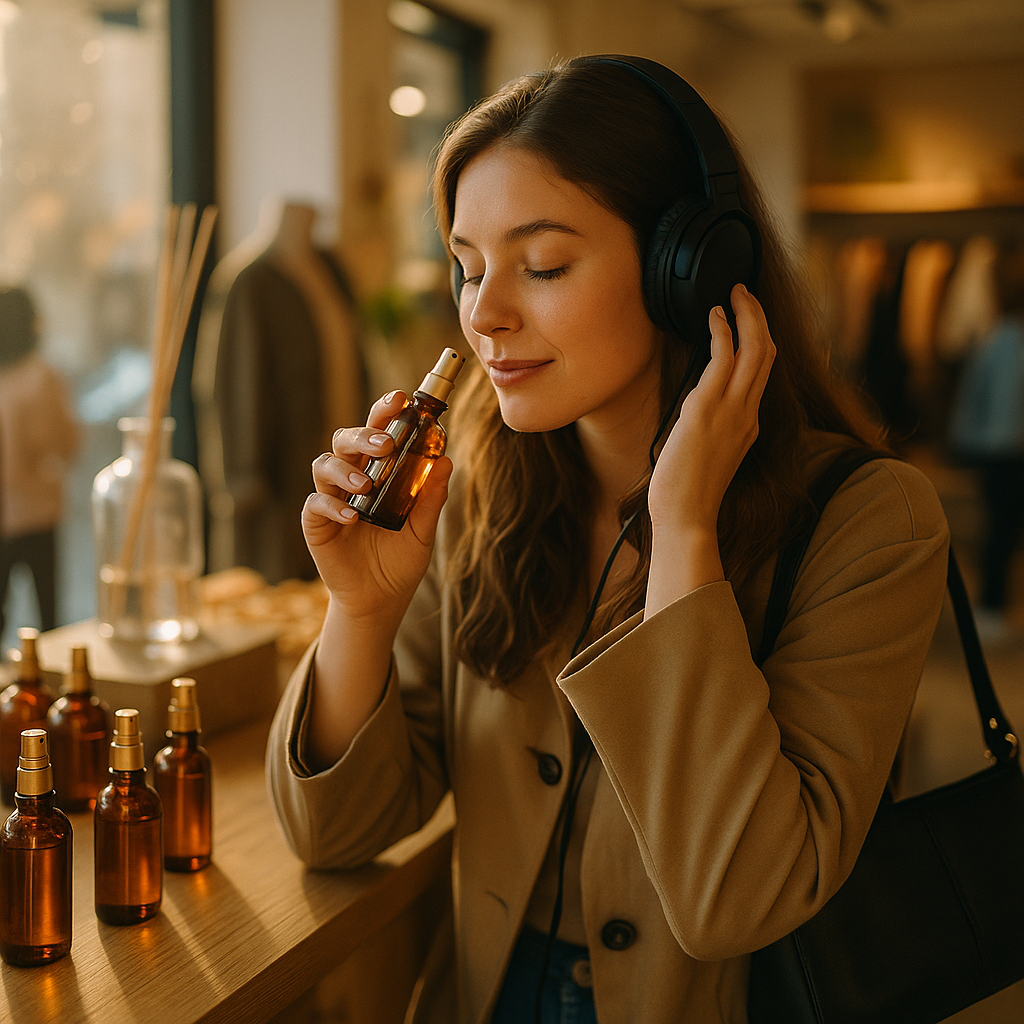
Designing immersive sensory experiences for live retail activations is no longer a novelty in 2026; it is a practical way to capture attention, deepen brand recall, and influence purchase behavior in physical spaces. When brands orchestrate sight, sound, scent, touch, and taste with purpose, they turn foot traffic into emotional engagement. What separates memorable activations from forgettable ones?
Sensory marketing strategy: Start with behavior, not spectacle
The strongest live retail activations begin with a clear business objective. Before selecting lighting effects, fragrance systems, projection mapping, or sampling stations, define what success looks like. Are you trying to increase dwell time, generate social sharing, collect first-party data, launch a new product, or drive immediate purchases? A sensory concept without a measurable goal may feel exciting, but it rarely performs consistently.
Brands that apply sensory marketing strategy effectively map each sensory cue to a customer action. For example, a premium skincare brand may use soft lighting, calm audio, and tactile testing stations to encourage product trial and trust. A performance beverage brand may use dynamic music, cool temperature zones, and bold visuals to communicate energy and speed. In each case, the sensory design reinforces the brand promise rather than distracting from it.
This is where experience and expertise matter. A successful team typically includes retail strategists, experiential designers, operations leads, data analysts, and trained brand ambassadors. Their role is to connect creative ideas to customer psychology and in-store realities. Helpful content and strong EEAT principles depend on practical insight, so it is important to emphasize what works on the ground: queue management, cleaning protocols, accessibility, staffing ratios, and realistic traffic flow often determine whether a sensory concept succeeds.
Start with these planning questions:
- Who is the target audience? Consider age, preferences, sensory sensitivities, and shopping intent.
- What is the environment? A mall kiosk, flagship store, festival pop-up, and grocery aisle all create different constraints.
- What customer action matters most? Trial, sign-up, purchase, share, or repeat visit.
- How will success be measured? Define KPIs before production begins.
When brands answer these questions early, they avoid expensive overproduction and build experiences that feel coherent, useful, and memorable.
Live retail activations: Designing multi-sensory touchpoints that feel intentional
The most effective live retail activations do not overwhelm visitors with every possible effect. They select the right combination of sensory inputs and layer them in a deliberate sequence. This creates a customer journey rather than a collection of disconnected moments.
Sight usually acts as the first trigger. Bold visual merchandising, motion graphics, product illumination, and spatial storytelling draw people in from a distance. Once customers enter the activation, sound helps control pace and mood. Upbeat music can increase energy, while directional audio can guide people toward a demo station or product zone.
Scent is especially powerful because it is closely linked to memory. A signature fragrance can improve recall when it aligns naturally with the category. For example, clean botanical notes may suit beauty, while warm baked aromas may support food sampling. However, scent must be subtle. Overuse can reduce comfort, trigger sensitivities, and shorten dwell time.
Touch often drives conversion in physical retail. Customers trust products more when they can hold, test, and compare them. Textured packaging walls, interactive displays, ingredient stations, and before-and-after surfaces can make product benefits tangible. Taste, when relevant, can be the strongest conversion tool of all, particularly in food, beverage, and wellness categories. Sampling works best when paired with concise education, so visitors understand what makes the product different.
A useful structure is to design the activation in stages:
- Attract: Use visible, high-contrast visual elements and a clear headline benefit.
- Orient: Make the next step obvious with signage and staff prompts.
- Engage: Add tactile, olfactory, audio, or taste-based interaction.
- Convert: Present a purchase option, QR code, offer, or sign-up incentive.
- Extend: Encourage social sharing, email capture, loyalty enrollment, or post-event retargeting.
This sequence ensures that sensory elements serve a customer path instead of competing for attention.
Experiential retail design: Build for emotion, accessibility, and brand trust
Strong experiential retail design balances creativity with usability. In 2026, customers expect more than visual appeal. They expect spaces to be inclusive, easy to navigate, and respectful of personal comfort. If an activation is confusing, too loud, too crowded, or inaccessible, the brand experience breaks immediately.
Accessibility should be treated as a design principle, not a checklist added late in production. That means clear paths for mobility devices, readable signage, controlled sound levels, non-slip surfaces, and sensory alternatives for those who may not want direct exposure to fragrance, flashing lights, or close-contact demos. Staff should also know how to guide visitors through the experience in more than one way.
Trust is another essential factor. Customers respond more positively when activations explain why they are collecting data, how products work, and what visitors can expect. If you are using facial recognition, motion tracking, or interactive mirrors, communicate that transparently. If food samples contain allergens, post information clearly. If product claims are highlighted, ensure they are accurate and supportable.
Design details that strengthen trust include:
- Visible hygiene practices at demo and sampling stations
- Clear staff uniforms and role identification so visitors know who can help
- Simple benefit-led messaging instead of jargon
- Evidence-backed claims for product performance
- Consent-based data capture with a clear value exchange
Emotional design matters too. The best activations create a feeling that customers can describe afterward. That feeling might be discovery, play, confidence, nostalgia, exclusivity, or relief. The emotion should reflect the brand’s real identity. If a luxury brand suddenly adopts a carnival tone, the mismatch weakens credibility. Sensory immersion works best when it amplifies an authentic brand truth.
In-store customer engagement: Train staff to deliver the experience consistently
Even the best creative concept can fail without strong execution. In-store customer engagement depends heavily on people: brand ambassadors, demonstrators, retail associates, and event leads. They translate the physical environment into human interaction, and their behavior often shapes the visitor’s final impression more than the technology or set design.
Staff training should cover far more than product features. Teams need to understand the purpose of each sensory element and how to guide customers through the activation naturally. If the scent station is meant to support product storytelling, staff should know exactly how to introduce it. If an audio cue signals the start of a demo, teams should be positioned and ready. When technology stalls or lines build up, staff must know how to adapt while keeping the experience on-brand.
Practical training areas include:
- Greeting and qualification without sounding scripted
- Product education linked to customer needs, not memorized specs
- Accessibility support for different visitor preferences
- Privacy and consent language for sign-ups and data capture
- Issue resolution for wait times, stock gaps, and technical interruptions
It also helps to give staff a concise decision framework. What should they prioritize when traffic spikes: trials, sales, sign-ups, or crowd movement? When should they shorten the demo? What is the backup plan if a sensory component fails? These operational details separate polished activations from chaotic ones.
To improve consistency, many brands now use a daily performance loop:
- Pre-opening briefing to review goals, traffic expectations, and talking points
- Midday check-in to identify bottlenecks and optimize flow
- End-of-day debrief to collect frontline insights, conversion notes, and customer feedback
This simple rhythm makes the activation smarter every day it runs and helps teams improve while the campaign is still live.
Retail activation metrics: Measure what customers do, feel, and remember
Creative teams often focus on what an activation looks like. Smart brands focus on what it delivers. Retail activation metrics should capture both commercial performance and experience quality, because sensory campaigns influence immediate action as well as longer-term memory.
Core quantitative metrics often include footfall, dwell time, interaction rate, sample-to-purchase rate, QR scans, email captures, redemption rate, average order value, and sell-through by location. If the activation is linked to a product launch, compare uplift against baseline store performance and control locations where possible.
However, numbers alone do not tell the full story. Qualitative feedback explains why certain sensory choices worked or failed. Short post-experience surveys, staff debriefs, social listening, and customer interviews can reveal whether the scent felt premium, the music felt too aggressive, or the touchpoints made product benefits easier to understand. These insights are often the most valuable part of the campaign because they improve future iterations.
A balanced measurement framework may include:
- Attention metrics: footfall, stop rate, visual attraction zones
- Engagement metrics: dwell time, interaction depth, demo completion
- Conversion metrics: purchases, lead capture, coupon redemption, repeat visits
- Brand metrics: recall, sentiment, preference, share of conversation
- Operational metrics: queue time, staff utilization, replenishment speed, technical uptime
In 2026, privacy-conscious measurement is essential. Use aggregated, consent-based methods where possible, and explain data collection clearly. This protects brand trust and keeps insights reliable. It also aligns with the broader expectation that brands should respect personal data while still creating relevant experiences.
The final step is to turn results into playbooks. Document which sensory combinations drove the best outcomes for each retail format, audience segment, and product category. Over time, this builds an internal knowledge base that reduces guesswork and improves return on investment.
Omnichannel brand experience: Extend the activation beyond the event
The strongest activations do not end when the customer walks away. An omnichannel brand experience connects the live moment to digital follow-up, retail media, loyalty programs, and post-purchase communication. This is how sensory engagement creates lasting value.
For example, a customer who tests a fragrance in-store can scan a QR code to save their preferred scent profile, receive a personalized sample reminder, and later get an email with care tips or complementary products. A shopper who engages with a wellness activation can complete a short quiz on-site, then receive tailored recommendations through SMS or app messaging. The live experience creates emotional momentum; digital channels carry it forward.
This connected approach also improves measurement. When a customer journey links event engagement to later site visits, purchases, or repeat store visits, marketers can evaluate how the activation contributes beyond same-day sales. That makes it easier to justify investment in sensory design because the campaign is no longer judged only by immediate transaction volume.
To extend the experience effectively:
- Use a simple digital bridge such as a QR code, NFC tag, or SMS keyword
- Offer real value like personalized content, exclusive offers, or saved preferences
- Keep follow-up relevant to the specific product or sensory interaction the customer experienced
- Coordinate retail and digital teams so messaging stays consistent
- Track downstream actions including product page visits, cart adds, and repeat purchases
When brands connect physical immersion with digital continuity, they transform a temporary activation into a broader relationship engine.
FAQs about immersive sensory experiences for live retail activations
What are immersive sensory experiences in retail?
They are branded environments that use multiple senses, such as sight, sound, scent, touch, and taste, to influence how customers feel, interact, and buy. The goal is to make the retail experience more memorable and persuasive than a standard display or product shelf.
Why do sensory retail activations work so well?
They work because people process physical environments emotionally as well as rationally. Sensory cues can attract attention, improve memory, increase dwell time, and make product benefits easier to understand. When aligned with the brand, they help customers form a stronger impression and move toward purchase.
Which senses should a brand prioritize first?
Start with the senses most relevant to the product and setting. Sight usually attracts initial attention, while touch often drives product confidence. Scent and sound can enhance mood and recall when used carefully. Taste is highly effective for food and beverage categories. The right mix depends on customer behavior and campaign goals.
How can brands measure the ROI of a live retail activation?
Track both commercial and experiential metrics. Useful KPIs include footfall, dwell time, interaction rate, lead capture, sample-to-purchase rate, sales uplift, average order value, and post-event brand recall. Qualitative feedback from surveys and staff debriefs helps explain performance and improve future campaigns.
How do you make sensory activations accessible?
Provide clear layouts, readable signage, manageable sound levels, and alternative participation options for visitors with sensory sensitivities. Avoid overwhelming fragrance or flashing effects, and train staff to support different needs. Accessibility should be built into the concept from the beginning.
What are the biggest mistakes brands make with live retail activations?
Common mistakes include prioritizing spectacle over strategy, using too many sensory inputs at once, neglecting staff training, creating weak traffic flow, and failing to measure outcomes properly. Another frequent issue is disconnecting the activation from digital follow-up, which limits long-term value.
How long should a sensory activation run?
That depends on the objective, location, and budget. Some formats work well as short high-impact pop-ups, while others benefit from multi-week runs that allow for optimization. If the activation requires staff learning and data analysis, a longer run often produces stronger results.
Immersive sensory retail works best when every detail supports a clear objective, a credible brand story, and an easy customer journey. In 2026, the winning activations are not the loudest or most complex; they are the most intentional. Design for emotion, accessibility, and measurement, then connect the live moment to ongoing engagement. That is how temporary experiences create durable commercial impact.
Top Influencer Marketing Agencies
The leading agencies shaping influencer marketing in 2026
Agencies ranked by campaign performance, client diversity, platform expertise, proven ROI, industry recognition, and client satisfaction. Assessed through verified case studies, reviews, and industry consultations.
Moburst

-
2

The Shelf
Boutique Beauty & Lifestyle Influencer AgencyA data-driven boutique agency specializing exclusively in beauty, wellness, and lifestyle influencer campaigns on Instagram and TikTok. Best for brands already focused on the beauty/personal care space that need curated, aesthetic-driven content.Clients: Pepsi, The Honest Company, Hims, Elf Cosmetics, Pure LeafVisit The Shelf → -
3

Audiencly
Niche Gaming & Esports Influencer AgencyA specialized agency focused exclusively on gaming and esports creators on YouTube, Twitch, and TikTok. Ideal if your campaign is 100% gaming-focused — from game launches to hardware and esports events.Clients: Epic Games, NordVPN, Ubisoft, Wargaming, Tencent GamesVisit Audiencly → -
4

Viral Nation
Global Influencer Marketing & Talent AgencyA dual talent management and marketing agency with proprietary brand safety tools and a global creator network spanning nano-influencers to celebrities across all major platforms.Clients: Meta, Activision Blizzard, Energizer, Aston Martin, WalmartVisit Viral Nation → -
5

The Influencer Marketing Factory
TikTok, Instagram & YouTube CampaignsA full-service agency with strong TikTok expertise, offering end-to-end campaign management from influencer discovery through performance reporting with a focus on platform-native content.Clients: Google, Snapchat, Universal Music, Bumble, YelpVisit TIMF → -
6

NeoReach
Enterprise Analytics & Influencer CampaignsAn enterprise-focused agency combining managed campaigns with a powerful self-service data platform for influencer search, audience analytics, and attribution modeling.Clients: Amazon, Airbnb, Netflix, Honda, The New York TimesVisit NeoReach → -
7

Ubiquitous
Creator-First Marketing PlatformA tech-driven platform combining self-service tools with managed campaign options, emphasizing speed and scalability for brands managing multiple influencer relationships.Clients: Lyft, Disney, Target, American Eagle, NetflixVisit Ubiquitous → -
8

Obviously
Scalable Enterprise Influencer CampaignsA tech-enabled agency built for high-volume campaigns, coordinating hundreds of creators simultaneously with end-to-end logistics, content rights management, and product seeding.Clients: Google, Ulta Beauty, Converse, AmazonVisit Obviously →