


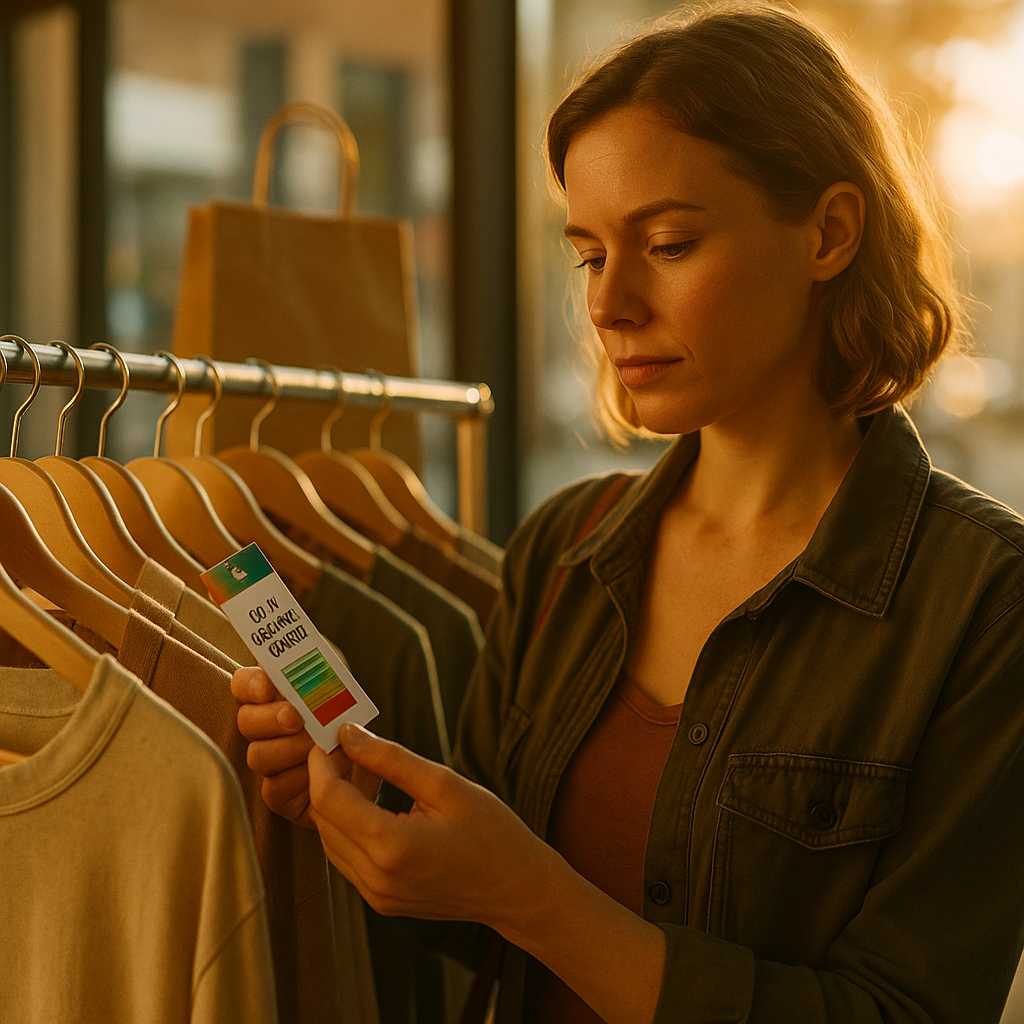
In 2026, shoppers are moving away from flash, scarcity tactics, and status signaling toward purchases that reflect values, usefulness, and identity. Meaning First Consumerism describes this shift: people want products that fit real life, solve real problems, and stand for something credible. Brands that still depend on hype may win attention briefly, but can they earn lasting trust?
What Meaning-driven purchasing means for modern buyers
Meaning-driven purchasing is not anti-brand and it is not anti-growth. It is a change in how consumers decide what deserves their money, time, and loyalty. Instead of chasing the loudest launch or the most viral drop, people increasingly evaluate whether a product aligns with their priorities: quality, transparency, durability, ethics, wellness, convenience, and personal relevance.
This shift is visible across categories. Beauty buyers look for ingredient clarity and honest claims. Fashion shoppers question waste, resale value, and labor standards. Tech customers want privacy, longevity, repairability, and practical innovation over novelty for novelty’s sake. Food and wellness audiences compare sourcing, formulation, and evidence rather than relying only on influencer excitement.
Several forces are driving this behavior:
- Economic pressure: Consumers are more selective when budgets tighten. They ask whether a purchase will improve daily life or become unused clutter.
- Information access: Reviews, creator analysis, watchdog content, and community forums expose weak claims quickly.
- Value alignment: People increasingly connect buying choices with identity, lifestyle, and social impact.
- Digital fatigue: Audiences are tired of endless launches, countdowns, and exaggerated promises.
Meaning-first buyers still want discovery and excitement, but they now demand substance behind the story. They do not reject aspiration; they reject empty aspiration. For brands, that means every promise needs proof, and every campaign needs a reason to exist beyond short-term noise.
Why hype marketing is losing influence
Hype marketing once thrived on exclusivity, artificial scarcity, celebrity amplification, and fear of missing out. Those tactics can still create spikes in attention, but their influence is weakening because consumers have become more fluent in how hype works. Many now recognize engineered urgency, paid enthusiasm, and inflated positioning the moment they see it.
The decline of hype is not simply a taste change. It is a trust issue. If a brand overstates benefits, hides tradeoffs, or creates pressure without delivering quality, backlash spreads fast. Comment sections, review platforms, and social communities preserve these experiences in public. Hype no longer disappears after launch day.
Another problem is that hype often confuses awareness with loyalty. A viral moment can generate traffic, but if the product experience is average, return rates rise, word of mouth drops, and customer acquisition becomes more expensive. In 2026, efficient growth depends less on attention alone and more on retention, repeat purchase, and advocacy.
Brands should also recognize that hype can distort internal decision-making. Teams may prioritize launch theatrics over product readiness, customer support, and long-term positioning. That creates a dangerous gap between expectation and reality. Meaning-first brands reverse the order: they build something useful, explain it clearly, and let enthusiasm grow from evidence.
This does not mean all urgency is bad. Limited editions, founder stories, partnerships, and bold creative can still work. The difference is intent and execution. If scarcity is genuine and the value is real, consumers respond. If not, they move on quickly.
How consumer trust trends are reshaping brand strategy
Consumer trust trends now influence nearly every part of go-to-market strategy. Shoppers want to know who made the product, why it was made, what it contains, how it performs, and what happens if it fails. These are not niche questions. They are central buying criteria.
That has major implications for brand leaders:
- Proof beats polish: Demonstrations, third-party testing, certifications, transparent comparisons, and clear use cases outperform vague superlatives.
- Consistency beats spectacle: Reliable service, predictable quality, and honest communication matter more than occasional viral success.
- Community beats broadcast: Two-way dialogue with customers creates stronger credibility than one-directional campaigns.
- Experience beats messaging: The product, checkout, fulfillment, onboarding, and support all shape belief in the brand.
Google’s helpful content principles align closely with this market reality. Content that shows experience, expertise, authority, and trustworthiness performs better because it answers real questions with useful specifics. For brands, that means replacing thin promotional copy with guidance that reflects how customers actually evaluate decisions.
For example, a home appliance company should not only claim energy efficiency. It should explain expected savings, maintenance needs, warranty coverage, durability expectations, and the best fit for different household types. A supplement brand should distinguish between supported benefits, general wellness positioning, ingredient sourcing, and limitations. Specificity signals confidence.
Meaning-first strategy also requires executive discipline. If a business says it values sustainability, privacy, fairness, or inclusivity, those claims must be reflected operationally. Consumers increasingly investigate whether public messaging matches business behavior. The fastest way to damage trust is to make a purpose claim that collapses under scrutiny.
Purpose-led branding that actually works
Purpose-led branding is often misunderstood. A meaningful brand does not need to solve every social issue or adopt a moral stance on every topic. It needs a clear reason for existing and a believable connection between that reason and what it sells. Purpose works when it is relevant, operational, and customer-centered.
Here is what effective purpose-led branding looks like in practice:
- It starts with the product: The offer must deliver tangible value. No mission statement can compensate for weak functionality.
- It is specific: “We care about the planet” is too broad. “We reduced packaging weight by 40% and offer refill options” is concrete.
- It accepts tradeoffs: Honest brands explain where they are improving and where challenges remain.
- It matches customer priorities: Purpose should answer why this matters in everyday use, not just in corporate messaging.
- It is repeated through action: Policies, partnerships, sourcing, service, and content should reinforce the same story.
Consumers can distinguish performative purpose from lived purpose. If a brand only references values during campaigns, skepticism rises. If values show up in product design, hiring, service, and education, meaning becomes credible. This is especially important for younger audiences, but it is no longer limited to them. Cross-generational buyers are showing stronger preference for brands that feel coherent.
Brands should also resist overcomplication. Meaning does not always come from activism. Sometimes it comes from helping families save time, enabling healthier routines, extending product life, supporting local production, or making complex tasks easier. Utility itself can be meaningful when delivered with honesty and care.
Authentic brand storytelling in the post-hype era
Authentic brand storytelling matters more when audiences are skeptical. But authenticity is not a writing style. It is the result of alignment between story, proof, and experience. In the post-hype era, the strongest stories are rooted in facts people can verify.
To create authentic brand storytelling, brands should focus on a few essentials:
- Use real customer problems: Build stories around frustrations, needs, and outcomes that buyers recognize immediately.
- Show the process: Explain how products are made, tested, sourced, or improved.
- Feature credible voices: Founders, product leads, practitioners, and actual customers can add depth when their contributions are specific and useful.
- Avoid inflated language: Replace “revolutionary” with measurable differences, practical benefits, or evidence.
- Address objections directly: Price, learning curve, maintenance, limitations, compatibility, and alternatives should be discussed honestly.
This approach improves both conversion and search performance. People search with nuanced questions: Is this worth it? How long does it last? What makes it different? Who is it best for? What are the downsides? Content that answers these questions thoroughly reflects expertise and reduces friction.
Authentic storytelling also supports better retention. When brands set realistic expectations, customers are less likely to feel misled. That lowers disappointment and strengthens post-purchase satisfaction. In practical terms, a less dramatic promise often produces a stronger lifetime relationship.
Creators and influencers still play a role, but their value now depends more on trust than reach alone. Audiences respond best when creators explain real usage, limits, and comparisons. The era of generic endorsement is fading. Expertise, context, and honesty win.
Building sustainable consumer loyalty beyond trends
Sustainable consumer loyalty grows when brands become meaningfully useful over time. That requires more than emotional connection. It requires reliability, relevance, and reinforcement at every stage of the customer journey.
Brands that want loyalty in 2026 should build around these principles:
- Design for repeat value: Make the second and third experience as strong as the first. A flashy launch cannot rescue a weak repeat experience.
- Educate customers: Help them get more from the product through onboarding, care guides, comparison tools, and support content.
- Reward trust, not just transactions: Loyalty programs should recognize advocacy, referrals, engagement, and longevity.
- Listen visibly: Show how customer feedback shapes updates, features, packaging, and policies.
- Protect the relationship: Clear returns, responsive support, fair pricing logic, and privacy respect all strengthen confidence.
One common question is whether meaning-first strategies reduce growth speed. In many cases, they improve growth quality. Hype can create rapid peaks, but meaning-first positioning often lowers churn, improves review quality, strengthens organic search visibility, and increases word-of-mouth referrals. These outcomes compound.
Another question is whether premium brands can thrive in a meaning-first economy. Absolutely. Consumers still pay more when they understand what they are paying for. Premium pricing is easier to defend when backed by craftsmanship, durability, service, exclusivity with substance, or a clearly superior experience. The issue is not price. The issue is whether the premium feels earned.
Finally, brands should measure what matters. Track retention, repeat purchase rate, review sentiment, customer support themes, branded search growth, referral rates, and content engagement with high-intent pages. These indicators reveal whether customers truly find meaning in the offer or are simply reacting to promotional pressure.
FAQs about value-based shopping and the decline of hype
What is Meaning First Consumerism?
It is a consumer behavior shift in which people prioritize value, relevance, ethics, utility, and identity alignment over status, novelty, or manufactured buzz. Buyers want products that improve life in a real and credible way.
Is hype marketing dead?
No, but it is less effective on its own. Hype can still create awareness, especially for launches and collaborations, yet it rarely sustains loyalty without product quality, proof, and trust.
Why are consumers becoming more skeptical of brands?
They have more access to reviews, creator analysis, product comparisons, and public feedback. Consumers can quickly identify exaggerated claims, weak quality, and inconsistencies between messaging and reality.
How can a brand become more meaning-first?
Start by clarifying the real problem you solve. Improve product transparency, reduce vague claims, publish useful educational content, show evidence, and ensure that operations match your stated values.
Does purpose-led branding always require a social cause?
No. Purpose can come from practical value, such as saving time, improving health routines, reducing waste, increasing accessibility, or making a difficult task easier. It must be relevant to the product and believable.
Can luxury or premium brands succeed in this environment?
Yes. Premium brands can do very well when they offer demonstrable quality, superior service, craftsmanship, durability, or meaningful exclusivity. Consumers still spend when the value feels justified.
What content helps meaning-first brands perform better in search?
Helpful content includes detailed product pages, comparisons, care guides, FAQs, usage tips, transparent policy pages, expert commentary, and honest discussions of who the product is best for and where it may not fit.
How do you measure whether a brand is moving beyond hype?
Look at repeat purchase rate, retention, review sentiment, referral volume, branded search growth, organic traffic to high-intent pages, and customer service feedback. These metrics show whether trust is deepening.
Meaning-first consumerism is not a temporary reaction. It reflects a more informed, selective, and values-aware buyer. Brands that keep chasing empty buzz will struggle to hold attention, let alone loyalty. The winners in 2026 will be those that pair clear positioning with real proof, useful products, and honest communication. In a crowded market, meaning is no longer optional. It is the new advantage.
Top Influencer Marketing Agencies
The leading agencies shaping influencer marketing in 2026
Agencies ranked by campaign performance, client diversity, platform expertise, proven ROI, industry recognition, and client satisfaction. Assessed through verified case studies, reviews, and industry consultations.
Moburst

-
2

The Shelf
Boutique Beauty & Lifestyle Influencer AgencyA data-driven boutique agency specializing exclusively in beauty, wellness, and lifestyle influencer campaigns on Instagram and TikTok. Best for brands already focused on the beauty/personal care space that need curated, aesthetic-driven content.Clients: Pepsi, The Honest Company, Hims, Elf Cosmetics, Pure LeafVisit The Shelf → -
3

Audiencly
Niche Gaming & Esports Influencer AgencyA specialized agency focused exclusively on gaming and esports creators on YouTube, Twitch, and TikTok. Ideal if your campaign is 100% gaming-focused — from game launches to hardware and esports events.Clients: Epic Games, NordVPN, Ubisoft, Wargaming, Tencent GamesVisit Audiencly → -
4

Viral Nation
Global Influencer Marketing & Talent AgencyA dual talent management and marketing agency with proprietary brand safety tools and a global creator network spanning nano-influencers to celebrities across all major platforms.Clients: Meta, Activision Blizzard, Energizer, Aston Martin, WalmartVisit Viral Nation → -
5

The Influencer Marketing Factory
TikTok, Instagram & YouTube CampaignsA full-service agency with strong TikTok expertise, offering end-to-end campaign management from influencer discovery through performance reporting with a focus on platform-native content.Clients: Google, Snapchat, Universal Music, Bumble, YelpVisit TIMF → -
6

NeoReach
Enterprise Analytics & Influencer CampaignsAn enterprise-focused agency combining managed campaigns with a powerful self-service data platform for influencer search, audience analytics, and attribution modeling.Clients: Amazon, Airbnb, Netflix, Honda, The New York TimesVisit NeoReach → -
7

Ubiquitous
Creator-First Marketing PlatformA tech-driven platform combining self-service tools with managed campaign options, emphasizing speed and scalability for brands managing multiple influencer relationships.Clients: Lyft, Disney, Target, American Eagle, NetflixVisit Ubiquitous → -
8

Obviously
Scalable Enterprise Influencer CampaignsA tech-enabled agency built for high-volume campaigns, coordinating hundreds of creators simultaneously with end-to-end logistics, content rights management, and product seeding.Clients: Google, Ulta Beauty, Converse, AmazonVisit Obviously →