


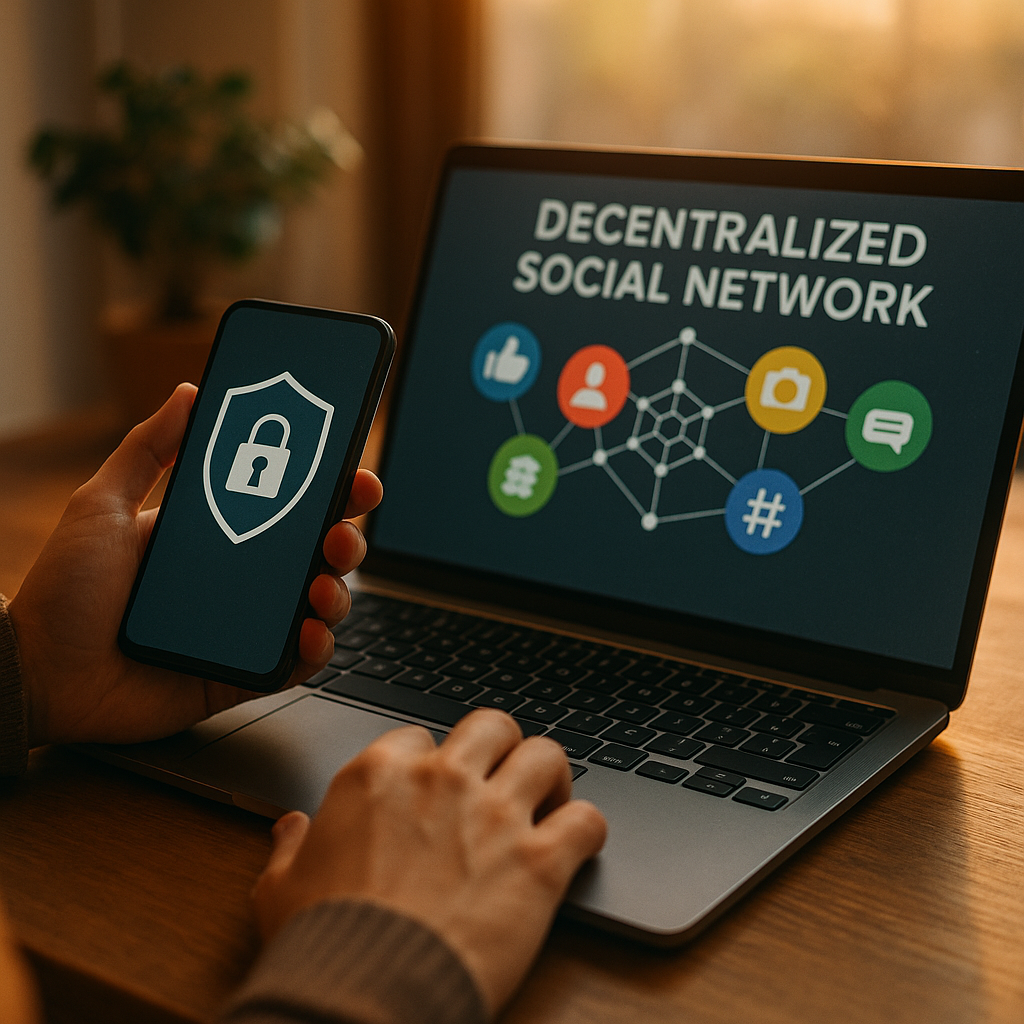
Decentralized social networks are moving from niche experiments to serious alternatives as users question how traditional platforms collect, monetize, and control personal information. In 2026, the conversation is no longer just about free speech or platform choice. It is about ownership, portability, identity, and trust. If people can finally control their data, what changes next?
Why decentralized social media is gaining momentum
For more than a decade, mainstream social platforms trained users to accept a simple exchange: free access in return for attention, behavioral tracking, and limited control over personal data. That model produced massive global communities, but it also concentrated power in the hands of a few companies. As concerns over surveillance advertising, opaque algorithms, content moderation disputes, and account lockouts intensified, users and developers began looking for alternatives.
Decentralized social media offers a different architecture. Instead of one company owning the platform, user identities, content distribution, and moderation systems can be spread across many servers, communities, or blockchain-based networks. This does not automatically solve every problem, but it changes who holds power. Users gain more options to move their identity, preserve their social graph, and choose how their content is governed.
The rise of these networks is also driven by practical shifts:
- Growing consumer privacy awareness: People now understand that personal data has economic value and social consequences.
- Regulatory pressure: Data protection and platform accountability rules have pushed the market toward more transparent systems.
- Protocol-based innovation: Open social protocols make it easier for new apps to interoperate instead of rebuilding networks from scratch.
- Creator frustration: Many creators want direct audience relationships without depending on changing recommendation algorithms.
- Resilience: Distributed networks reduce the risk that one company policy or outage can erase a user’s online presence.
Importantly, adoption is no longer limited to technologists. Journalists, developers, creators, privacy advocates, and even mainstream users are testing these environments because they promise something concrete: more control over identity, audience, and data.
How personal data sovereignty changes online identity
Personal data sovereignty means individuals have meaningful control over how their data is collected, stored, shared, monetized, and deleted. In practice, that idea goes beyond a privacy settings page. It points to a structural shift where users are not simply subjects of a platform’s policies but active owners or stewards of their digital identity.
On centralized platforms, identity is usually rented. A profile exists because the platform allows it to exist. Followers, posts, messages, and reputation are often trapped inside one company’s ecosystem. If an account is suspended, hacked, or deprioritized by algorithmic changes, a user can lose years of digital capital overnight.
By contrast, data sovereignty aims to make identity more portable and durable. Depending on the network design, users may be able to:
- Own portable credentials: Move an identity across applications built on the same protocol.
- Control access permissions: Decide which apps can read profile data, contacts, posts, or metadata.
- Choose storage models: Keep data on personal servers, trusted providers, or decentralized storage layers.
- Manage monetization rights: Determine whether content and audience data can be used for advertising, analytics, or AI training.
- Export social relationships: Retain a social graph instead of rebuilding from zero on every new app.
This matters because identity is the foundation of digital life. It shapes communication, employment visibility, reputation, and community belonging. When users have sovereignty over identity, they can switch interfaces or providers without losing everything that made those accounts valuable. That creates healthier competition among apps, since developers must win users through better experience rather than lock-in.
There is also a trust benefit. People are more likely to engage openly when they understand what happens to their data and can verify the rules. Sovereignty does not require every user to become a cryptography expert. It requires systems that make control realistic, understandable, and enforceable.
The role of Web3 social networks and open protocols
Web3 social networks are often discussed alongside decentralized social platforms, but the category is broader than crypto branding. Some decentralized networks rely heavily on blockchains for identity, ownership, and payments. Others use open protocols and federated systems without placing all social activity on-chain. The key distinction is not the buzzword. It is whether the social layer is controlled by a single company or built on shared infrastructure.
Several technical models are shaping this space in 2026:
- Federated networks: Independent servers communicate through shared standards, allowing communities to interconnect while maintaining local governance.
- Protocol-based social graphs: User identity and relationships live at the protocol layer, so multiple apps can access the same network.
- Blockchain-linked identity systems: Wallets or verifiable credentials support ownership, authentication, and digital assets.
- Decentralized storage options: Content or metadata can be distributed across networks rather than stored in a single corporate database.
Each model comes with tradeoffs. Blockchain systems can offer transparent ownership and composability, but they may face scalability, privacy, and user experience challenges. Federated systems can be more approachable and flexible, yet moderation and interoperability can become inconsistent. Open protocols create innovation at the application layer, but they still need governance structures, sustainable funding, and abuse prevention.
For users, the practical question is simple: Can I keep my identity, audience, and content relationships if I switch apps or providers? If the answer is yes, the network is moving closer to true decentralization. If the answer is no, the system may still be dependent on hidden central points of control.
This protocol-centric approach mirrors what made the internet itself powerful. Email works across providers because it is built on open standards. The web scaled because anyone could create a browser or website without asking one company for permission. Social networking is now undergoing a similar transition, with identity and relationships increasingly treated as portable infrastructure rather than platform property.
Privacy-first platforms: benefits and real-world limitations
Privacy-first platforms appeal to users who want less surveillance, more transparency, and stronger consent. Yet it is important to evaluate these systems carefully. Decentralization is not a magic label. A helpful assessment considers what is actually decentralized, what remains centralized, and what responsibilities shift to the user.
The strongest benefits are clear:
- Reduced dependence on surveillance advertising: Alternative business models can weaken incentives for excessive tracking.
- Better transparency: Open-source code, public protocols, and visible governance can improve accountability.
- Greater user choice: People can select moderation environments and app experiences that fit their needs.
- Lower switching costs: Portability makes it easier to leave one interface for another.
- Stronger creator control: Creators may connect directly with followers, subscriptions, and digital ownership tools.
However, limitations still matter:
- Complex onboarding: Wallets, keys, server choices, and protocol concepts can intimidate non-technical users.
- Moderation challenges: Distributed systems can struggle to handle harassment, misinformation, and illegal content consistently.
- Fragmented experience: Interoperability is improving, but standards are not always seamless in practice.
- Security responsibility: Users may carry more risk if they must manage credentials or recovery without a central safety net.
- Economic sustainability: Not every decentralized project has a stable long-term funding model.
Another common misconception is that decentralization automatically guarantees privacy. It does not. Some blockchain-based systems are highly transparent, which can conflict with privacy if user activity is publicly traceable. A privacy-respecting design needs selective disclosure, strong encryption where appropriate, clear data minimization, and thoughtful defaults.
Readers often ask whether decentralized social networks will replace major social platforms entirely. The more realistic answer is that the market is likely to become hybrid. Centralized platforms will remain influential, but open and decentralized systems will pressure them to improve portability, transparency, and user rights. In that sense, decentralized social networking is already shaping the broader social internet, even before complete mass adoption.
Digital identity ownership and the creator economy
Digital identity ownership has major implications for creators, entrepreneurs, and professional communities. In traditional social media, creators build audiences on rented land. A platform can change visibility rules, ad revenue shares, or account policies with little warning. That dependence makes long-term planning difficult and leaves creators vulnerable to shifts they cannot control.
Decentralized social networks offer a more durable foundation. When identity, audience connections, and content provenance can travel across apps, creators gain leverage. They no longer have to choose between staying on one platform or losing their community. This can improve monetization, trust, and negotiation power.
Key advantages for creators include:
- Audience portability: Followers and subscriber relationships can move with the creator.
- Direct monetization: Payments, memberships, tokenized access, or digital goods can happen with fewer intermediaries.
- Verifiable authenticity: On-chain or protocol-based proofs can help confirm original authorship and combat impersonation.
- More control over licensing: Creators can define how content is reused, remixed, or commercialized.
- Community-specific governance: Fans and contributors may participate more directly in platform or community decisions.
Businesses should pay attention too. Brand communities increasingly care about transparency, consent, and platform ethics. Organizations that build trust around data use will be better positioned as user expectations rise. At the same time, marketers cannot assume the same targeting methods that dominated centralized platforms will transfer cleanly into decentralized ecosystems. Permission-based engagement, community participation, and value exchange become more important when users hold the keys to identity and access.
For professionals, identity ownership can also reduce career risk. A researcher, designer, journalist, or developer with a portable reputation graph is less dependent on one company’s visibility mechanics. That shifts power from platforms toward people, which is the central promise behind data sovereignty.
What the future of user-owned data means for everyday users
User-owned data may sound abstract, but its impact is practical. It changes how people sign in, communicate, build communities, and recover from platform disruptions. The future of social networking will likely be defined by products that hide technical complexity while preserving user control.
For everyday users, the most meaningful developments to watch are:
- Simpler portable profiles: One identity usable across multiple social apps without repetitive setup.
- Human-readable permissions: Clear choices about what each app can access and for how long.
- Safer recovery systems: Better ways to restore access without sacrificing ownership.
- Interoperable messaging and social graphs: Communication that works across platforms more like email does.
- Transparent governance: Understandable moderation rules, appeals, and community controls.
If you are considering using a decentralized social network now, start with a practical checklist:
- Review identity portability: Can you move your profile and audience?
- Check data controls: Can you export your data and revoke app permissions?
- Understand moderation: Who sets the rules and how are disputes handled?
- Assess security and recovery: What happens if you lose credentials?
- Examine the business model: If the service is free, how does it sustain itself?
- Look for active development: Healthy protocols and apps show visible product improvement and governance activity.
The broader trend is clear. Social networking is becoming less about owning a destination and more about connecting through shared identity layers and open standards. The winners in 2026 and beyond will not just attract users. They will respect them as participants with rights, preferences, and data ownership.
FAQs about decentralized social networks and data sovereignty
What is a decentralized social network?
A decentralized social network is a social platform built so that control is distributed across multiple servers, protocols, or user-owned systems rather than concentrated in one company. Depending on the model, users may gain more portability, transparency, and choice over identity and moderation.
What does personal data sovereignty mean?
Personal data sovereignty means individuals have meaningful control over their digital identity and personal information. That includes deciding how data is stored, shared, monetized, exported, and deleted, rather than relying entirely on a platform’s internal policies.
Are decentralized social networks more private?
Not always. Some are designed with stronger privacy protections, while others expose certain activity more openly. True privacy depends on the network’s architecture, encryption, data minimization, and permission controls, not just the word decentralization.
Do I need crypto to use decentralized social media?
No. Some decentralized networks use blockchain wallets or token systems, but others rely on federated servers or open protocols without requiring crypto. Many new products are also simplifying onboarding so users can participate without advanced technical knowledge.
Can I make money on decentralized social platforms?
Potentially, yes. Many decentralized ecosystems support direct payments, subscriptions, memberships, digital collectibles, or community funding. The advantage is often greater creator control and fewer intermediaries, though monetization models still vary widely by platform.
What are the biggest risks?
The main risks include confusing onboarding, inconsistent moderation, credential loss, fragmented user experience, and uncertain long-term sustainability for some projects. Users should evaluate each platform’s recovery options, governance, and business model before investing heavily in it.
Will decentralized networks replace mainstream social media?
They may not fully replace mainstream platforms in the near term, but they are already influencing the market. Their biggest impact may be forcing the wider industry to adopt better portability, transparency, and user rights as competitive standards.
How can I tell if a platform truly supports user-owned data?
Look for portable identity, export tools, revocable permissions, open standards, transparent governance, and clear explanations of where data is stored. If your audience, posts, and profile disappear when you leave the app, ownership is still limited.
Decentralized social networks are reshaping the internet by shifting power from platforms to people. Their growth reflects a deeper demand for personal data sovereignty, portable identity, and transparent governance. While challenges remain, the direction is clear: users increasingly expect control, not just access. The smartest takeaway in 2026 is to choose social platforms that treat your data as yours, not theirs.
Top Influencer Marketing Agencies
The leading agencies shaping influencer marketing in 2026
Agencies ranked by campaign performance, client diversity, platform expertise, proven ROI, industry recognition, and client satisfaction. Assessed through verified case studies, reviews, and industry consultations.
Moburst

-
2

The Shelf
Boutique Beauty & Lifestyle Influencer AgencyA data-driven boutique agency specializing exclusively in beauty, wellness, and lifestyle influencer campaigns on Instagram and TikTok. Best for brands already focused on the beauty/personal care space that need curated, aesthetic-driven content.Clients: Pepsi, The Honest Company, Hims, Elf Cosmetics, Pure LeafVisit The Shelf → -
3

Audiencly
Niche Gaming & Esports Influencer AgencyA specialized agency focused exclusively on gaming and esports creators on YouTube, Twitch, and TikTok. Ideal if your campaign is 100% gaming-focused — from game launches to hardware and esports events.Clients: Epic Games, NordVPN, Ubisoft, Wargaming, Tencent GamesVisit Audiencly → -
4

Viral Nation
Global Influencer Marketing & Talent AgencyA dual talent management and marketing agency with proprietary brand safety tools and a global creator network spanning nano-influencers to celebrities across all major platforms.Clients: Meta, Activision Blizzard, Energizer, Aston Martin, WalmartVisit Viral Nation → -
5

The Influencer Marketing Factory
TikTok, Instagram & YouTube CampaignsA full-service agency with strong TikTok expertise, offering end-to-end campaign management from influencer discovery through performance reporting with a focus on platform-native content.Clients: Google, Snapchat, Universal Music, Bumble, YelpVisit TIMF → -
6

NeoReach
Enterprise Analytics & Influencer CampaignsAn enterprise-focused agency combining managed campaigns with a powerful self-service data platform for influencer search, audience analytics, and attribution modeling.Clients: Amazon, Airbnb, Netflix, Honda, The New York TimesVisit NeoReach → -
7

Ubiquitous
Creator-First Marketing PlatformA tech-driven platform combining self-service tools with managed campaign options, emphasizing speed and scalability for brands managing multiple influencer relationships.Clients: Lyft, Disney, Target, American Eagle, NetflixVisit Ubiquitous → -
8

Obviously
Scalable Enterprise Influencer CampaignsA tech-enabled agency built for high-volume campaigns, coordinating hundreds of creators simultaneously with end-to-end logistics, content rights management, and product seeding.Clients: Google, Ulta Beauty, Converse, AmazonVisit Obviously →