


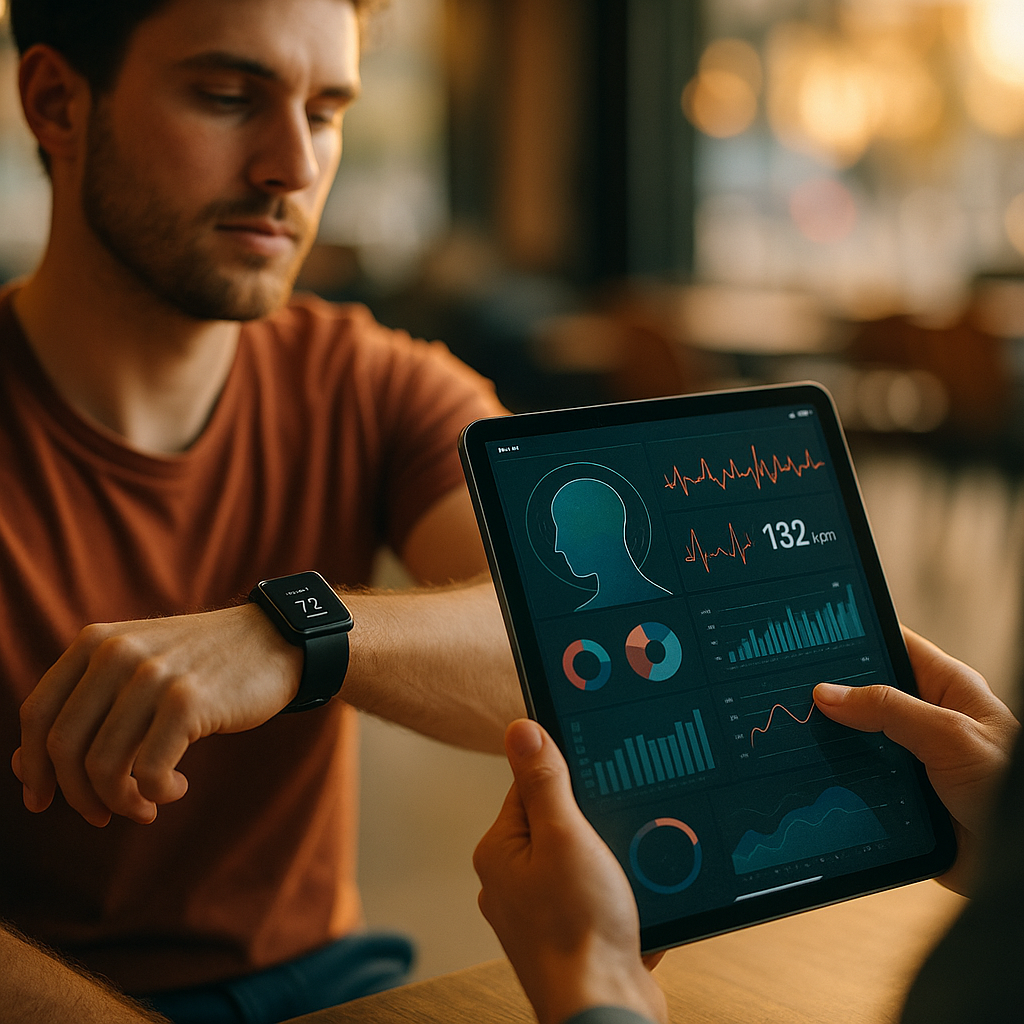
BioMetric Branding is reshaping how marketers respond to real-world human signals in 2026. Wearables now reveal context that clicks and cookies never could, from stress changes to sleep quality and workout intensity. Used responsibly, this data can improve timing, relevance, and customer experience across channels. The opportunity is powerful, but so are the risks. How can brands get it right?
Wearable marketing data: what brands can actually use
Wearable marketing data includes information generated by smartwatches, fitness bands, smart rings, connected earbuds, medical-grade consumer devices, and sensor-enabled clothing. For marketers, the value is not in collecting everything possible. It is in identifying a small set of signals that can improve relevance without crossing privacy boundaries.
The most common data categories include:
- Activity metrics: steps, movement, exercise type, workout duration, sedentary time
- Wellness signals: sleep duration, sleep stages, recovery scores, readiness scores
- Physiological indicators: heart rate, heart rate variability, skin temperature, respiration trends
- Contextual cues: time of day, location class, device state, environmental conditions
These signals become useful when they are translated into clear marketing rules. A sports apparel brand, for example, might suppress promotional messaging during sleep windows and send recovery-related content after a tough workout. A hydration brand could trigger reminders after prolonged activity in warm weather. A travel app might delay non-urgent notifications when biometric stress appears elevated.
That does not mean brands should treat raw biometric readings as deterministic truth. Consumer wearables are improving, but they still produce estimates, not perfect medical conclusions. Helpful content follows EEAT principles by being transparent about what the data means, what it does not mean, and how it is used. Marketers should work with legal, analytics, and product teams to define approved data uses before campaigns launch.
The practical question is simple: Which wearable signals improve customer experience enough to justify collection and activation? If a signal does not create a clear customer benefit, it should not be part of the strategy.
Contextual marketing with biometrics: from signal to action
Contextual marketing with biometrics works when a brand links a real-time or near-real-time condition to a helpful response. The logic sounds straightforward, but execution requires precision. There are four core layers:
- Consent and collection: the user explicitly allows access to specific data types
- Interpretation: raw inputs are converted into meaningful audience states such as active, fatigued, commuting, focused, or recovering
- Decisioning: automation rules choose the best message, timing, format, and channel
- Measurement: performance is assessed against customer value and business outcomes
Consider how this could look in practice:
- Fitness subscription: after three days of reduced activity, send a motivational push with a short workout rather than a hard-sell upgrade prompt
- Nutrition brand: after a logged run and elevated activity level, offer recovery snack suggestions and post-exercise replenishment education
- Meditation app: if wearables indicate elevated stress patterns during work hours, surface a two-minute breathing session instead of a general content recommendation
- Retail loyalty program: when a shopper finishes a long walk in a retail district, offer a nearby in-store reward if location permissions are active and frequency caps allow it
The best campaigns use biometrics to reduce friction, not amplify pressure. If the signal suggests fatigue, the message should help, not demand. If the customer appears highly active, the offer should fit that moment. Strong contextual marketing feels like timing, not surveillance.
This is where expertise matters. Teams need data science support to avoid shallow interpretations, and they need experienced marketers who understand customer psychology. A low readiness score should not trigger fear-based selling. A stress signal should not be turned into manipulative urgency. Helpful marketing improves decisions for the customer first.
Biometric personalization strategy: building trust before scale
A biometric personalization strategy should start with trust architecture, not campaign volume. Wearable data is sensitive because it can infer health, mood, routines, and vulnerability. That means the brand experience must communicate control, purpose, and restraint at every step.
To build trust, brands should follow these principles:
- Use explicit opt-in: never bundle biometric access into vague consent language
- Explain the value exchange: tell users exactly what they receive in return for sharing specific data
- Limit data scope: collect only the minimum needed for a defined use case
- Offer granular controls: let users enable activity data without sharing sleep data, for example
- Support easy withdrawal: consent should be reversible without penalty
- Separate wellness support from health claims: avoid implying diagnosis or treatment unless the service is properly regulated
Trust also depends on language. Brands should not hide behind technical wording. A simple preference center can explain: “Share workout completion to receive personalized recovery content and timing-based offers. We will not use this data for medical decisions.” That level of clarity supports both user confidence and regulatory readiness.
Another strategic issue is data retention. Marketers often focus on acquisition and forget lifecycle governance. Biometric data should have clear retention periods tied to purpose. If the campaign only needs recent activity windows, there is no reason to retain months of raw history. Minimization is not only a compliance practice. It is a brand protection strategy.
Finally, personalization should be tested against user sentiment. If opt-out rates spike, complaints rise, or engagement falls after introducing wearable-triggered campaigns, the program needs adjustment. The strongest biometric branding programs treat customer comfort as a key performance indicator, not a soft metric.
Privacy and consent in wearable advertising: compliance meets brand ethics
Privacy and consent in wearable advertising is the issue that will determine whether this marketing approach expands or stalls in 2026. Regulations vary by region, and wearable data can overlap with protected health information depending on how it is collected, processed, combined, and used. Brands cannot assume that standard ad-tech practices apply safely to biometric inputs.
At a minimum, companies should review:
- Applicable privacy laws in the markets where users live
- Platform policies for connected device ecosystems and app stores
- Vendor contracts involving customer data platforms, analytics tools, and activation partners
- Security controls for storage, transmission, and access management
- Internal approval workflows for new biometric use cases
Ethics goes further than compliance. A campaign may be technically legal and still feel invasive. For example, targeting a user with emotional messaging during periods of high stress may lift short-term conversion while damaging long-term trust. Brands should define prohibited uses, such as exploiting fatigue, anxiety, or health-related vulnerability.
A useful governance model includes a cross-functional review board with representatives from marketing, legal, product, security, and customer experience. This group can classify data sensitivity, approve acceptable use cases, and review edge cases before activation. That structure adds friction in the right place: before a damaging campaign reaches the public.
Transparency should continue after consent. Users need access to understandable notices, preference controls, and customer support pathways if they have questions. If a brand cannot explain why a message appeared, it is not ready to use biometric triggers responsibly.
Real-time customer engagement with wearables: channels, creative, and measurement
Real-time customer engagement with wearables is not limited to push notifications. The most effective programs coordinate multiple channels so the message fits both the moment and the user’s attention level. A smartwatch prompt may be useful in one context, while email, in-app messaging, SMS, or connected TV follow-up may work better in another.
Channel selection should be based on urgency and user state:
- Wearable alert: brief, timely prompts for high-relevance moments
- Mobile push: richer offers or content immediately after a qualifying event
- In-app message: educational context once the user opens the product
- Email: recap, deeper guidance, or weekly personalized summaries
- SMS: reserved for high-value, high-consent scenarios due to sensitivity and intrusiveness
Creative should adapt to user condition. A person finishing a long workout may respond to concise, supportive copy. Someone in a stress pattern may prefer a calming tone and a low-friction action. Brands should avoid overpersonalized language that reveals too much. “Refuel after today’s session” feels helpful. “Your heart rate variability dropped, so buy this now” feels invasive.
Measurement also needs to mature. Traditional metrics such as open rate, click-through rate, and conversion rate still matter, but they are incomplete. Brands should also track:
- Opt-in rate by data type
- Consent retention over time
- Notification dismiss rate
- Uninstall or mute rate after biometric-triggered campaigns
- Customer satisfaction and trust indicators
- Incremental revenue versus control groups
Experimentation is essential. Use holdout groups to prove that wearable-triggered marketing adds value beyond standard behavioral segmentation. Test frequency caps aggressively. In many cases, fewer biometric interventions produce better outcomes because they preserve novelty and trust. The goal is not maximum activation. It is maximum usefulness.
Future of biometric branding: opportunities, limits, and best practices for 2026
The future of biometric branding will be defined by selective adoption, stronger governance, and tighter integration with first-party data strategies. As third-party tracking remains constrained, brands are looking for more direct, consent-based ways to understand customer context. Wearables can help fill that gap, but only if programs are designed around user benefit.
In 2026, the strongest opportunities are likely to come from sectors where timing and physical state clearly affect customer needs:
- Fitness and wellness
- Nutrition and hydration
- Retail loyalty and location-based offers
- Travel and mobility
- Mental wellness and productivity tools
There are also clear limits. Not every brand needs biometric inputs. If the connection between wearable data and customer value is weak, the strategy will feel forced. Teams should ask three questions before investing:
- Does wearable context materially improve the experience?
- Can we explain the benefit in plain language?
- Can we operate this program safely, transparently, and measurably?
Best practices for 2026 are becoming clear:
- Start with one or two high-value use cases
- Use derived states rather than exposing raw biometric readings in marketing logic
- Apply strict consent, minimization, and retention standards
- Build human review into sensitive journeys
- Test customer comfort as seriously as conversion
- Document every use case for compliance and internal accountability
Biometric branding is not simply a new targeting tactic. It is a test of whether brands can use intimate data with discipline. Those that combine technical capability with ethical judgment will create more relevant experiences and stronger long-term loyalty.
FAQs about biometric branding and wearable-triggered marketing
What is biometric branding?
Biometric branding is the use of biometric or wearable-generated signals, such as activity, sleep, or stress-related indicators, to personalize brand interactions, timing, messaging, or offers. The goal is to make marketing more context-aware and useful.
Is wearable data considered sensitive personal data?
Often, yes. Depending on the jurisdiction and the specific data involved, wearable information may be treated as sensitive personal data or may overlap with health-related data categories. Brands should obtain explicit consent and review legal obligations carefully.
What are the best use cases for wearable-triggered contextual marketing?
The best use cases are those with a clear customer benefit, such as workout recovery recommendations, hydration reminders, stress-aware content timing, or location-based loyalty offers after verified activity. Relevance must be obvious and helpful.
How can brands avoid being creepy when using biometric data?
Use plain-language consent, minimize collection, avoid over-specific copy, respect frequency limits, and never exploit moments of stress, fatigue, or vulnerability. If a message reveals too much about what the brand knows, it is likely too invasive.
Do brands need real-time data to make biometric marketing effective?
No. Near-real-time or recent trend data is often enough. In many cases, daily summaries or event-based triggers work better than continuous monitoring because they reduce complexity and privacy risk while still improving relevance.
How should success be measured?
Measure both business impact and trust. Track incremental conversions, retention, and engagement alongside opt-in rate, consent retention, dismiss rate, and customer satisfaction. A program that lifts revenue but harms trust is not sustainable.
Which industries should be cautious with biometric branding?
All industries should be cautious, but extra care is required in healthcare-adjacent categories, financial services, insurance, and any sector where biometric data could influence high-stakes decisions or reveal sensitive conditions.
Can small brands use this strategy?
Yes, if they start narrowly. A small brand can test one consent-based use case within its app or loyalty program, validate customer value, and expand only after proving the experience is useful, compliant, and welcome.
BioMetric Branding can make marketing more relevant by aligning messages with real human context, not just digital behavior. The key takeaway is simple: wearable data should be used sparingly, transparently, and only when it creates clear customer value. Brands that pair strong consent practices with disciplined personalization will earn trust, improve engagement, and build a durable competitive advantage in 2026.
Top Influencer Marketing Agencies
The leading agencies shaping influencer marketing in 2026
Agencies ranked by campaign performance, client diversity, platform expertise, proven ROI, industry recognition, and client satisfaction. Assessed through verified case studies, reviews, and industry consultations.
Moburst

-
2

The Shelf
Boutique Beauty & Lifestyle Influencer AgencyA data-driven boutique agency specializing exclusively in beauty, wellness, and lifestyle influencer campaigns on Instagram and TikTok. Best for brands already focused on the beauty/personal care space that need curated, aesthetic-driven content.Clients: Pepsi, The Honest Company, Hims, Elf Cosmetics, Pure LeafVisit The Shelf → -
3

Audiencly
Niche Gaming & Esports Influencer AgencyA specialized agency focused exclusively on gaming and esports creators on YouTube, Twitch, and TikTok. Ideal if your campaign is 100% gaming-focused — from game launches to hardware and esports events.Clients: Epic Games, NordVPN, Ubisoft, Wargaming, Tencent GamesVisit Audiencly → -
4

Viral Nation
Global Influencer Marketing & Talent AgencyA dual talent management and marketing agency with proprietary brand safety tools and a global creator network spanning nano-influencers to celebrities across all major platforms.Clients: Meta, Activision Blizzard, Energizer, Aston Martin, WalmartVisit Viral Nation → -
5

The Influencer Marketing Factory
TikTok, Instagram & YouTube CampaignsA full-service agency with strong TikTok expertise, offering end-to-end campaign management from influencer discovery through performance reporting with a focus on platform-native content.Clients: Google, Snapchat, Universal Music, Bumble, YelpVisit TIMF → -
6

NeoReach
Enterprise Analytics & Influencer CampaignsAn enterprise-focused agency combining managed campaigns with a powerful self-service data platform for influencer search, audience analytics, and attribution modeling.Clients: Amazon, Airbnb, Netflix, Honda, The New York TimesVisit NeoReach → -
7

Ubiquitous
Creator-First Marketing PlatformA tech-driven platform combining self-service tools with managed campaign options, emphasizing speed and scalability for brands managing multiple influencer relationships.Clients: Lyft, Disney, Target, American Eagle, NetflixVisit Ubiquitous → -
8

Obviously
Scalable Enterprise Influencer CampaignsA tech-enabled agency built for high-volume campaigns, coordinating hundreds of creators simultaneously with end-to-end logistics, content rights management, and product seeding.Clients: Google, Ulta Beauty, Converse, AmazonVisit Obviously →