


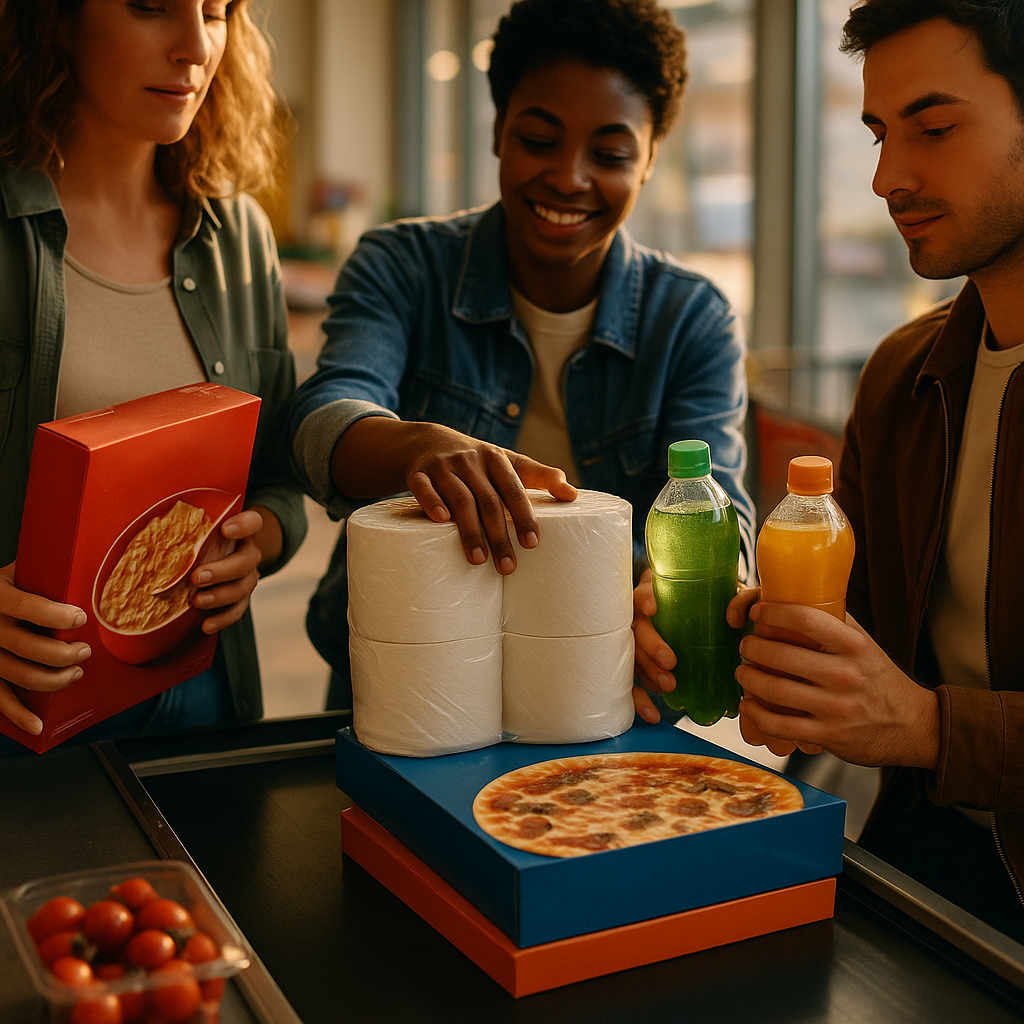
Neo collectivism trend is reshaping how people discover, evaluate, and purchase products in 2026. Consumers are no longer buying as isolated individuals; they are acting through shared identities, communities, and practical value systems. That shift helps explain the rising appeal of bundles across retail, subscriptions, digital products, and services. But what exactly makes bundled buying so compelling today?
Consumer behavior trends behind collective buying
The neo collectivism movement reflects a broad change in consumer behavior trends. Buyers increasingly make decisions through the lens of groups: households, friend circles, online communities, fandoms, workplace teams, and value-based networks. Instead of asking, “What do I want right now?” many people ask, “What works best for us?”
This shift is not purely ideological. It is practical. Inflation-sensitive households want to stretch budgets. Busy families want fewer decisions. Digital communities influence tastes at scale. And younger consumers often see identity as collaborative rather than purely individual. The result is a market where products that serve multiple needs at once gain a clear advantage.
Bundles fit this mindset because they simplify choice while signaling better value. A skincare set, a family streaming package, a meal kit plan, a software suite, or a telecom package all reduce friction. Consumers feel they are making a smarter, more complete purchase, especially when the bundle aligns with a shared lifestyle or routine.
Brands that understand this shift do more than discount products. They design offers around how people actually live:
- Household-based consumption that serves partners, children, or roommates
- Community-led discovery through creators, group chats, and social proof
- Routine-driven convenience that reduces repeat decision-making
- Value stacking where one purchase solves several problems at once
From an EEAT perspective, this trend is observable across categories because it matches how modern purchase journeys work. Buyers compare prices quickly, research through peer input, and favor options that reduce uncertainty. Bundles succeed because they answer all three needs at once.
Bundle purchasing psychology and the appeal of perceived value
To understand why bundles perform so well, it helps to look at bundle purchasing psychology. Consumers do not calculate value in a purely mathematical way. They use shortcuts. Bundles take advantage of several well-established buying triggers without necessarily feeling manipulative when executed transparently.
First, bundles create perceived savings. Even when the discount is modest, the grouped presentation makes the offer feel more economical than buying items one by one. This matters because buyers want confidence that they are not overpaying.
Second, bundles reduce decision fatigue. Too many choices create friction. A curated package helps buyers move forward with less mental effort. In categories with high complexity, such as wellness, tech, beauty, or home goods, this can be decisive.
Third, bundles increase purchase justification. Consumers can tell themselves they are not splurging on one product; they are investing in a complete solution. That framing is powerful when budgets are tight or when purchases require household agreement.
Fourth, bundled offers often create a sense of readiness. A buyer does not just get an item. They get the accessories, add-ons, or complementary tools needed to start immediately. That lowers anxiety around missing something important.
Consider how this works in practice:
- A fitness bundle feels easier than separately choosing equipment, supplements, and app access
- A back-to-school package removes the burden of building a shopping list from scratch
- A software bundle offers a more coherent workflow than assembling disconnected tools
- A travel package simplifies budgeting, planning, and coordination
The strongest bundles do not rely on vague “more for less” messaging. They show a credible use case, clear price logic, and a practical outcome. Consumers today are alert to inflated reference pricing. Trust grows when brands explain why the items belong together and what problem the bundle solves.
Social commerce strategy in the age of shared identity
The rise of neo collectivism is tightly linked to modern social commerce strategy. People increasingly buy what their communities validate. Recommendations now move through creators, niche forums, messaging apps, livestreams, and collaborative wish lists. In this environment, bundles spread quickly because they are easy to explain and share.
A single product often requires context. A bundle tells a fuller story. It can be positioned as a starter kit, a creator’s pick, a family essential, or a community favorite. This makes it more portable across social platforms where attention is limited and purchase decisions happen fast.
Brands that win in social commerce usually do three things well:
- They connect bundles to a recognizable identity. For example, “remote worker productivity set” or “sensitive skin recovery kit” speaks to a real community.
- They build proof around outcomes. User reviews, before-and-after content, and creator demonstrations reduce hesitation.
- They keep the offer transparent. Consumers want to know what is included, what they save, and why each item matters.
This trend also explains why many shoppers prefer curated sets from trusted voices. In 2026, recommendation credibility often matters as much as product features. A bundle endorsed by a community expert can outperform a larger but less coherent offer because it feels tailored, tested, and socially verified.
For marketers, the lesson is clear: bundle design should not happen in isolation from audience insight. Strong bundle performance depends on understanding how groups talk, shop, and solve problems together. The more naturally a bundle fits collective behavior, the more likely it is to convert and retain customers.
Product bundling benefits for brands and shoppers
The best analysis of product bundling benefits looks at both sides of the transaction. Consumers benefit from simplicity, value, and convenience. Brands benefit from stronger economics and clearer positioning. That mutual gain is why bundling continues to expand across industries.
For shoppers, key benefits include:
- Lower effort because selection is simplified
- Better planning when related items are grouped together
- Budget confidence through clearer total pricing
- Improved outcomes when products are designed to work together
For brands, the upside can be substantial:
- Higher average order value without relying only on aggressive discounts
- Improved inventory movement by pairing hero products with slower-moving items
- Greater customer education through curated combinations
- Stronger differentiation in crowded categories
- Potential retention gains when bundles support ongoing routines or subscriptions
However, not all bundles work. Poorly designed bundles can damage trust, especially if consumers feel they are being pushed to buy unwanted items. Effective bundling depends on relevance. Each component should contribute to a logical use case. The total price should be easy to verify. And the bundle should feel like a helpful shortcut, not a sales trick.
One useful standard is to ask whether the bundle creates a better real-world experience than separate purchases. If the answer is yes, the offer is likely to perform. If the answer is mostly “it helps us move inventory,” consumers will notice.
That distinction matters for EEAT as well. Helpful content and trustworthy commerce both depend on transparency, expertise, and user-first design. In practical terms, brands should clearly list inclusions, compare stand-alone pricing honestly, and explain who the bundle is best for.
Retail pricing strategy that makes bundles convert
A strong retail pricing strategy is essential if brands want bundle offers to drive conversions instead of confusion. Pricing is where consumer enthusiasm can either solidify or collapse. People like bundles, but only when the economics feel fair and visible.
The most effective pricing structures usually follow a few principles:
- Show clear component value. List individual item prices so buyers can see the savings.
- Keep the discount credible. Overstated markdowns can undermine trust.
- Match price tiers to real needs. Entry, core, and premium bundles help different segments self-select.
- Offer optional customization. Light flexibility can increase relevance without adding too much complexity.
- Test naming and framing. A “starter set” may outperform a “bundle” if it better reflects customer intent.
Retailers also need to think about channel context. What works on a product page may not work in-store or on a social platform. Online, customers often want comparison tools, reviews, and detailed contents. In-store, they may respond better to visual merchandising and immediate savings cues. On social, speed and clarity matter most.
Another major factor in 2026 is subscription logic. Many consumers now expect bundles to support continuity. That could mean monthly replenishment, seasonal updates, multi-user access, or loyalty perks. When brands connect a one-time bundle to an ongoing value path, they can turn a larger initial order into a lasting relationship.
Still, brands should avoid making every offer a bundle. Some consumers want control and minimalism. The best strategy is mixed architecture: individual products for precision buyers, bundles for convenience seekers, and build-your-own options for those in between.
This approach respects how different consumers define value. It also gives brands richer data on intent, price sensitivity, and preference clustering, which can inform future merchandising and campaign decisions.
Community-driven marketing and the future of bundled consumption
The next phase of this shift will be shaped by community-driven marketing. Neo collectivism is not simply about buying more items at once. It is about buying in ways that reflect shared priorities: convenience, identity, resilience, and coordinated living.
That means the future of bundles will likely become more contextual. Instead of generic combinations, consumers will see more offers designed for moments, micro-communities, and practical life stages. Examples include new parent kits, creator economy tool stacks, sustainable home starter sets, menopause wellness systems, and hybrid work essentials.
Technology will accelerate this. Better first-party data, AI-assisted merchandising, and smarter recommendation engines can help brands build bundles around actual behavior patterns rather than assumptions. But the human layer remains critical. People still want to feel understood, not merely segmented.
The strongest brands will therefore combine data with empathy. They will study how communities organize their routines, what trade-offs matter most, and what combinations reduce hassle without adding waste. They will also communicate with authority and honesty, using real product knowledge rather than generic promotional language.
For consumers, bundled buying will remain attractive as long as it serves a clear purpose. For brands, the opportunity is not just to increase basket size. It is to become more useful. In a market shaped by shared decision-making, usefulness earns trust, and trust drives growth.
FAQs about the neo collectivism trend and bundled buying
What is the neo collectivism trend?
Neo collectivism describes a modern consumer mindset where purchase decisions are increasingly shaped by groups, communities, households, and shared identities rather than purely individual preference. It shows up in collaborative shopping behaviors, social validation, multi-user products, and stronger demand for practical, group-oriented value.
Why do consumers prefer bundles?
Consumers prefer bundles because they simplify decisions, often reduce total cost, and provide a more complete solution. Bundles also feel safer because they reduce the risk of forgetting necessary add-ons or choosing incompatible items.
Are bundles always cheaper than buying separately?
No. Some bundles offer genuine savings, while others mainly provide convenience or curated selection. Smart shoppers compare the itemized value and check whether every included product is relevant to their needs.
Which industries benefit most from bundling?
Bundling works especially well in beauty, wellness, software, telecom, food and beverage, fashion, home goods, travel, education, and subscription services. Any category where products naturally complement each other can benefit.
How can brands create better bundles?
Brands should base bundles on real customer behavior, solve a specific problem, price transparently, and explain why the items belong together. The best bundles feel useful and intentional, not random or overly promotional.
Does social media increase bundle sales?
Yes. Social platforms help bundles spread because they are easy to demonstrate, recommend, and review. A bundle often tells a more complete story than a single product, which makes it well suited to creator content and community-driven discovery.
What is the risk of poor bundling?
The biggest risk is loss of trust. If consumers feel forced to buy unwanted products or cannot understand the pricing logic, conversion and loyalty can suffer. Relevance and transparency are essential.
Will bundled buying keep growing in 2026?
Yes, especially where consumers face too many choices, budget pressure, or complex product ecosystems. As collective decision-making and community influence continue to shape buying habits, well-designed bundles should remain highly effective.
Neo collectivism is changing commerce by making buying decisions more shared, practical, and value-focused. Bundles thrive in this environment because they reduce effort, support group needs, and create clearer outcomes. For brands, the lesson is simple: build bundles around real behavior, transparent pricing, and useful combinations. For consumers, the takeaway is just as clear: the best bundle is the one that solves a complete problem.
Top Influencer Marketing Agencies
The leading agencies shaping influencer marketing in 2026
Agencies ranked by campaign performance, client diversity, platform expertise, proven ROI, industry recognition, and client satisfaction. Assessed through verified case studies, reviews, and industry consultations.
Moburst

-
2

The Shelf
Boutique Beauty & Lifestyle Influencer AgencyA data-driven boutique agency specializing exclusively in beauty, wellness, and lifestyle influencer campaigns on Instagram and TikTok. Best for brands already focused on the beauty/personal care space that need curated, aesthetic-driven content.Clients: Pepsi, The Honest Company, Hims, Elf Cosmetics, Pure LeafVisit The Shelf → -
3

Audiencly
Niche Gaming & Esports Influencer AgencyA specialized agency focused exclusively on gaming and esports creators on YouTube, Twitch, and TikTok. Ideal if your campaign is 100% gaming-focused — from game launches to hardware and esports events.Clients: Epic Games, NordVPN, Ubisoft, Wargaming, Tencent GamesVisit Audiencly → -
4

Viral Nation
Global Influencer Marketing & Talent AgencyA dual talent management and marketing agency with proprietary brand safety tools and a global creator network spanning nano-influencers to celebrities across all major platforms.Clients: Meta, Activision Blizzard, Energizer, Aston Martin, WalmartVisit Viral Nation → -
5

The Influencer Marketing Factory
TikTok, Instagram & YouTube CampaignsA full-service agency with strong TikTok expertise, offering end-to-end campaign management from influencer discovery through performance reporting with a focus on platform-native content.Clients: Google, Snapchat, Universal Music, Bumble, YelpVisit TIMF → -
6

NeoReach
Enterprise Analytics & Influencer CampaignsAn enterprise-focused agency combining managed campaigns with a powerful self-service data platform for influencer search, audience analytics, and attribution modeling.Clients: Amazon, Airbnb, Netflix, Honda, The New York TimesVisit NeoReach → -
7

Ubiquitous
Creator-First Marketing PlatformA tech-driven platform combining self-service tools with managed campaign options, emphasizing speed and scalability for brands managing multiple influencer relationships.Clients: Lyft, Disney, Target, American Eagle, NetflixVisit Ubiquitous → -
8

Obviously
Scalable Enterprise Influencer CampaignsA tech-enabled agency built for high-volume campaigns, coordinating hundreds of creators simultaneously with end-to-end logistics, content rights management, and product seeding.Clients: Google, Ulta Beauty, Converse, AmazonVisit Obviously →