


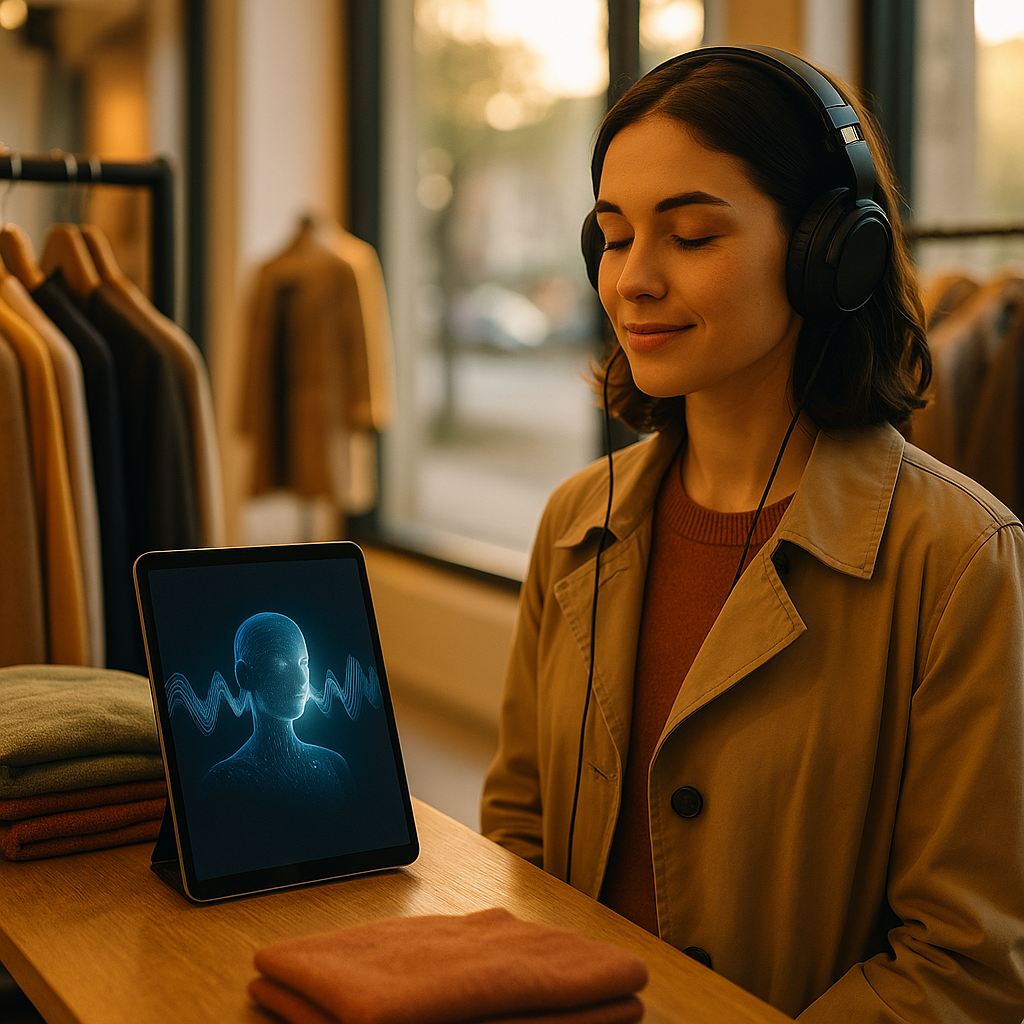
Retailers in 2026 are using AI-generated retail soundscapes to shape mood, influence dwell time, and differentiate physical spaces in ways static playlists cannot. From boutique tea shops to sneaker labs, hyper niche audio creates branded environments tailored to audience, time, and intent. Done well, it feels invisible yet memorable. So how do you build it strategically?
What Hyper Niche Audio Branding Means for Retail Sound Design
Hyper niche audio branding goes beyond background music. It combines ambient tones, genre fragments, natural textures, local references, branded sonic signatures, and context-aware transitions to create a sound environment tailored to a very specific retail concept. Instead of one generic playlist for every store, a retailer can deploy distinct audio identities for a vegan skincare boutique, a high-end cycling showroom, or a late-night gaming collectibles shop.
This approach matters because shoppers do not experience stores through visuals alone. They process sound subconsciously, and that sound influences pace, comfort, perception of quality, and even how long a space feels inviting. In practice, a well-designed soundscape can support merchandising, reduce perceived waiting time, and strengthen brand recall.
AI makes this possible at scale. Traditional sound design required long production cycles, expensive licensing, and limited variation. AI systems can now generate adaptive audio layers based on variables such as:
- Store format and square footage
- Customer demographic and shopping intent
- Time of day and daypart traffic patterns
- Weather, seasonality, and local events
- Campaign launches and featured product zones
- Desired emotional tone, from calm to energetic
For retail leaders, the key shift is strategic: audio is no longer an afterthought. It is part of experiential design. The most effective brands treat it as a measurable layer of the in-store journey, with clear goals tied to customer experience and commercial outcomes.
How AI Soundscape Generation Works in Physical Retail Environments
AI soundscape generation typically starts with a creative brief and a rules framework. A retailer or agency defines the brand attributes, audience profile, acoustic constraints, and operational requirements. The AI model then produces original or semi-original audio compositions, ambient loops, transition cues, and adaptive layers that fit those parameters.
Most enterprise-ready systems in 2026 use a combination of technologies rather than a single model. These may include generative music engines, classification tools, acoustic mapping software, occupancy sensors, and scheduling logic. Together, they allow stores to move from fixed playlists to responsive sound environments.
A simple example helps. Imagine a premium outdoor gear store. During quiet weekday mornings, the soundscape may feature sparse natural ambience, light percussion, and spacious textures that support browsing. In the afternoon, as traffic rises, the system can gradually increase rhythmic energy without jarring transitions. During a campaign for trail-running products, certain zones may receive a more kinetic, motion-oriented layer while apparel areas remain softer.
This process works best when retailers consider practical realities early:
- Speaker placement: uneven coverage can ruin even the best sound design
- Store acoustics: hard surfaces reflect sound and can create fatigue
- Zoning: entrance, fitting rooms, checkout, and feature tables may need different intensity levels
- Compliance: generated audio must meet licensing, attribution, and commercial-use standards
- Human oversight: brand teams should review outputs for fit and consistency
AI does not remove the need for creative direction. It speeds production, increases variation, and supports personalization, but the strongest results still come from experts who understand retail behavior, brand identity, and sonic coherence. That human layer is essential for EEAT-aligned quality: experience informs taste, expertise shapes strategy, authority comes from consistent execution, and trust depends on legal and operational reliability.
Benefits of Personalized In-Store Audio for Customer Experience
Personalized in-store audio can improve the retail environment in several ways when it is designed with intent rather than novelty. The biggest advantage is relevance. Generic playlists often clash with product positioning or customer expectations. Hyper niche soundscapes feel aligned with the brand, which creates a more immersive and credible atmosphere.
Retailers often focus first on emotional impact, but there are operational and commercial benefits too. Depending on the category and implementation, personalized audio can help:
- Increase dwell time in discovery-oriented spaces
- Support premium price perception through a more polished environment
- Reduce dead-air discomfort during quieter traffic periods
- Match energy to shopper flow, avoiding both lethargy and overstimulation
- Enhance campaign storytelling at launch tables or seasonal zones
- Create consistency across locations while preserving local nuance
Consider a specialty bookstore with a café and stationery corner. A single music stream often fails because each zone has different shopper behaviors. AI can support subtle differentiation: calm acoustic textures near reading areas, warmer rhythmic tones in gift sections, and slightly brighter energy around the café during peak hours. Customers may not consciously identify the system, but they will notice the space feels coherent.
There is also a brand memory effect. Distinctive sonic environments can reinforce a retailer’s identity much like scent branding or visual merchandising. When customers associate a store with a particular emotional tone, they are more likely to remember the visit and describe it as thoughtfully curated.
However, personalization should never become surveillance-heavy or intrusive. Retailers should avoid over-targeting based on sensitive data and instead rely on aggregated, contextual inputs such as store traffic, general audience patterns, and environmental conditions. Trust matters. If shoppers feel manipulated, the sound strategy backfires.
Best Practices for AI Music for Stores Without Losing Brand Trust
AI music for stores works best when retailers set clear quality controls. The technology is powerful, but retail spaces are public environments, and poor execution is immediately noticeable. To protect brand trust, teams should focus on governance, testing, and inclusivity.
Start with a sonic brand framework. Define what the brand should sound like, and what it should never sound like. This includes genre boundaries, instrumentation preferences, acceptable tempos, vocal policies, intensity ranges, and emotional descriptors. Without guardrails, AI can generate outputs that technically work but feel off-brand.
Next, test in real spaces, not just through headphones or studio monitors. Retail acoustics change everything. A soundscape that feels elegant in review can become muddy or harsh once played through ceiling speakers in a reflective store. Pilot programs should measure staff feedback, customer comfort, and practical performance during live hours.
Strong implementation usually follows these steps:
- Create a detailed brief tied to business objectives
- Build approved sonic parameters and prohibited elements
- Generate multiple soundscape options for different dayparts
- Test in one or two pilot stores with varied traffic patterns
- Gather feedback from staff, customers, and operations teams
- Refine transitions, volume curves, and zone logic
- Document licensing, usage rights, and vendor responsibilities
- Scale gradually with ongoing review
Accessibility should be part of the plan. Sound should support the environment, not dominate it. Excessive volume, high-frequency fatigue, or abrupt transitions can make spaces uncomfortable for neurodivergent shoppers, older visitors, and staff who spend full shifts in the store. Inclusive design is not optional; it is part of creating helpful, trustworthy retail experiences.
Finally, keep a human approval layer. Even the best AI models can produce repetitive motifs, awkward timbral combinations, or emotionally mismatched cues. A creative lead, sound designer, or brand experience specialist should review outputs before deployment. That combination of human judgment and machine efficiency is where the value really emerges.
Measuring Retail Atmosphere Analytics and ROI From AI Audio
Retail atmosphere analytics give decision-makers a way to evaluate whether AI audio is actually working. Without measurement, sound remains subjective, and budget conversations become difficult. The goal is not to reduce experience to one metric, but to connect audio design to observable retail outcomes.
Useful KPIs vary by format, yet most retailers can assess impact through a mix of operational, behavioral, and perception data. Common measurements include:
- Dwell time by zone
- Conversion rate during specific dayparts
- Average transaction value in campaign areas
- Queue abandonment or perceived wait-time feedback
- Customer satisfaction surveys mentioning atmosphere
- Staff sentiment on fatigue, comfort, and store energy
- Repeat visit patterns for loyalty members
A useful method is A/B testing by store cluster or time window. One group uses the standard audio setup, while another runs the AI-generated soundscape under controlled conditions. Retailers can then compare changes in behavior while accounting for variables like promotions, weather, and staffing. This is not always perfect, but it is far better than relying on intuition alone.
It is also important to separate music preference from business performance. A store manager may personally dislike a sound palette that customers actually respond to positively. For that reason, measurement should combine objective indicators with structured qualitative feedback rather than casual opinions.
When ROI is discussed, cost structure matters. AI-generated systems can lower production costs over time by reducing reliance on manually curated playlists and one-off commissioned tracks, especially for multi-location retailers that need frequent updates. But savings should not be the only story. The bigger value often lies in speed, adaptability, and the ability to align the store atmosphere with merchandising and campaign calendars almost instantly.
Future Trends in Adaptive Retail Audio and Sonic Commerce
Adaptive retail audio is moving toward deeper integration with the broader store ecosystem. In 2026, the most advanced deployments are no longer isolated music tools. They connect with lighting controls, digital signage, footfall systems, and campaign management platforms to create synchronized environmental storytelling.
Several trends are shaping the next phase of sonic commerce:
- Real-time context adaptation: soundscapes responding to occupancy, queue length, or weather conditions
- Localized brand variation: maintaining a core identity while reflecting neighborhood culture
- Product-linked audio moments: subtle sonic changes tied to launches or feature zones
- Voice-safe environments: designing sound around easier staff-customer conversation
- Sustainability-aware systems: efficient playback and simplified production workflows
- Deeper rights transparency: clearer documentation of model training, ownership, and commercial use
One likely outcome is that audio will become a formal part of retail experience design briefs from the beginning, not a late-stage add-on. Architects, visual merchandisers, operations teams, and brand strategists will increasingly collaborate on a unified sensory plan. That shift will produce better results because the soundscape will reflect how the store actually functions.
Retailers that succeed will not be the ones using AI simply because it is available. They will be the ones asking sharper questions: What emotional state should shoppers feel here? What pace supports this product category? Where does quiet matter more than stimulation? How can audio evolve without becoming distracting? Those are strategic questions, and AI is most valuable when it helps answer them with precision and scale.
FAQs About AI-Generated Retail Soundscapes
What are AI-generated retail soundscapes?
They are custom audio environments created or adapted by AI for physical stores. They can include music, ambient textures, transitions, and zone-based layers designed to match a brand, audience, and shopping context.
How are hyper niche soundscapes different from regular playlists?
Regular playlists are static and usually broad in style. Hyper niche soundscapes are tailored to a specific store concept, customer mood, time of day, and brand identity. They are often dynamic rather than fixed.
Can AI-generated audio improve retail sales?
It can support outcomes such as longer dwell time, stronger atmosphere, and better brand perception, which may contribute to conversion and basket size. Results depend on execution, category, and measurement discipline.
Is AI music for stores legally safe to use?
It can be, but retailers must verify commercial usage rights, licensing terms, and vendor policies. Legal review is important, especially when tools use mixed content sources or unclear training data documentation.
Do small retailers need expensive systems to use AI soundscapes?
No. Smaller stores can begin with a focused pilot, limited zoning, and simple daypart automation. The important step is aligning the sound with the brand and testing in the real retail environment.
Will customers notice AI-generated store audio?
Most will not identify the technology itself. They are more likely to notice how the space feels. The goal is not to impress shoppers with AI, but to create an environment that feels intentional, comfortable, and memorable.
How often should retailers update their soundscapes?
That depends on store traffic, campaign frequency, and brand strategy. Many retailers benefit from seasonal updates, campaign-based variations, and daypart adjustments, with continuous optimization based on feedback and analytics.
Should stores use the same soundscape in every location?
Usually not. A core sonic identity should stay consistent, but local adaptations often improve relevance. Store size, customer profile, neighborhood culture, and acoustic conditions all affect what works best.
AI-generated soundscapes give retailers a practical way to build more distinctive, adaptive, and measurable in-store experiences. The strongest programs combine brand strategy, human creative oversight, legal clarity, and real-world testing. Instead of filling silence with generic playlists, retailers can use audio as a precise experience tool. The takeaway is simple: start small, measure carefully, and design for the shopper, not the technology.
Top Influencer Marketing Agencies
The leading agencies shaping influencer marketing in 2026
Agencies ranked by campaign performance, client diversity, platform expertise, proven ROI, industry recognition, and client satisfaction. Assessed through verified case studies, reviews, and industry consultations.
Moburst

-
2

The Shelf
Boutique Beauty & Lifestyle Influencer AgencyA data-driven boutique agency specializing exclusively in beauty, wellness, and lifestyle influencer campaigns on Instagram and TikTok. Best for brands already focused on the beauty/personal care space that need curated, aesthetic-driven content.Clients: Pepsi, The Honest Company, Hims, Elf Cosmetics, Pure LeafVisit The Shelf → -
3

Audiencly
Niche Gaming & Esports Influencer AgencyA specialized agency focused exclusively on gaming and esports creators on YouTube, Twitch, and TikTok. Ideal if your campaign is 100% gaming-focused — from game launches to hardware and esports events.Clients: Epic Games, NordVPN, Ubisoft, Wargaming, Tencent GamesVisit Audiencly → -
4

Viral Nation
Global Influencer Marketing & Talent AgencyA dual talent management and marketing agency with proprietary brand safety tools and a global creator network spanning nano-influencers to celebrities across all major platforms.Clients: Meta, Activision Blizzard, Energizer, Aston Martin, WalmartVisit Viral Nation → -
5

The Influencer Marketing Factory
TikTok, Instagram & YouTube CampaignsA full-service agency with strong TikTok expertise, offering end-to-end campaign management from influencer discovery through performance reporting with a focus on platform-native content.Clients: Google, Snapchat, Universal Music, Bumble, YelpVisit TIMF → -
6

NeoReach
Enterprise Analytics & Influencer CampaignsAn enterprise-focused agency combining managed campaigns with a powerful self-service data platform for influencer search, audience analytics, and attribution modeling.Clients: Amazon, Airbnb, Netflix, Honda, The New York TimesVisit NeoReach → -
7

Ubiquitous
Creator-First Marketing PlatformA tech-driven platform combining self-service tools with managed campaign options, emphasizing speed and scalability for brands managing multiple influencer relationships.Clients: Lyft, Disney, Target, American Eagle, NetflixVisit Ubiquitous → -
8

Obviously
Scalable Enterprise Influencer CampaignsA tech-enabled agency built for high-volume campaigns, coordinating hundreds of creators simultaneously with end-to-end logistics, content rights management, and product seeding.Clients: Google, Ulta Beauty, Converse, AmazonVisit Obviously →