


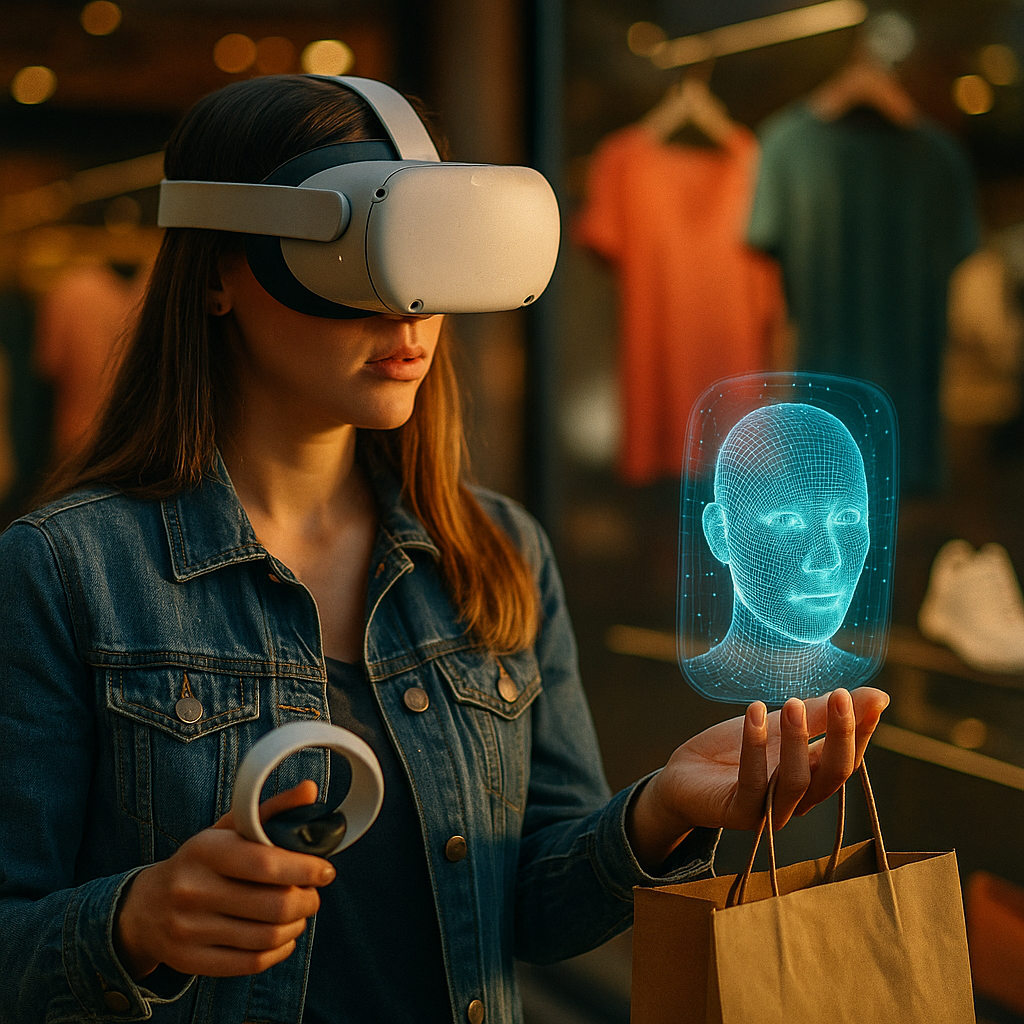
Biometric data privacy in virtual reality shopping hubs is now a frontline issue for retailers, platform operators, and consumers. As immersive commerce expands in 2026, VR environments collect eye movements, voice patterns, body motion, and emotional signals at scale. That creates convenience, personalization, and measurable business value, but it also raises urgent questions about consent, security, ownership, and trust. Here’s what matters most.
Why virtual reality shopping privacy matters now
Virtual reality shopping hubs are no longer experimental showrooms. They function as full digital marketplaces where people browse products, interact with sales assistants, compare options in 3D, and complete purchases inside immersive environments. To make these experiences feel natural, platforms collect more than names, emails, and payment details. They often process biometric information such as eye-tracking data, facial geometry, gait, hand movements, heart-rate inputs from wearables, and voiceprints.
This creates a privacy challenge that goes beyond standard e-commerce. In a traditional online store, a brand may know what a person clicked. In a VR shopping hub, a platform can potentially infer what the person looked at, how long they focused, how their body reacted, whether their tone changed, and what patterns suggested hesitation or excitement. That level of insight can improve usability and accessibility, but it can also expose deeply personal traits.
Consumers care because biometric data is persistent. You can reset a password, but you cannot reset your iris pattern or natural gait. Businesses should care because misuse or weak protection can trigger legal risk, public backlash, and long-term brand damage. Regulators care because immersive commerce blurs the line between necessary functional tracking and invasive behavioral profiling.
For decision-makers, the central question is simple: how do you deliver seamless VR retail experiences without collecting more biometric data than you truly need? The strongest answer starts with a clear understanding of what is being collected and why.
Understanding biometric data collection in VR
Biometric data in VR shopping hubs can be direct or inferred. Direct biometric data includes information that identifies or verifies a person, such as a voiceprint used for authentication. Inferred biometric data includes behavior-derived signals that may reveal emotional state, health status, attention patterns, or cognitive responses even if the platform does not label them as identity markers.
Common categories include:
- Eye-tracking: Measures gaze direction, fixation duration, pupil response, and visual attention.
- Facial movement: Captures expressions through headsets or linked sensors to animate avatars or infer reactions.
- Voice data: Processes speech for commands, support interactions, identity verification, or sentiment analysis.
- Hand and body motion: Tracks gestures, reach, gait, posture, and movement patterns for navigation and interaction.
- Physiological signals: May include heart rate, skin response, or other wearable-linked metrics.
Not every VR shopping hub collects all of this data, and not every data point is equally sensitive. Still, the privacy risk increases when separate signals are combined. Eye-tracking plus purchase history plus voice plus location metadata can build a highly detailed profile. That profile may reveal health concerns, stress levels, disabilities, or subconscious preferences.
From an EEAT perspective, responsible content on this topic must be precise: biometric privacy is not just a future concern. It is an operational issue today. Product teams, legal teams, security leaders, and marketers all influence how much data enters the system, how long it stays there, and how transparently it is explained to users.
A practical rule is to separate functional necessity from commercial curiosity. If eye-tracking is essential to enable menu selection for accessibility, the use case is easier to justify. If the same eye-tracking data is stored indefinitely to optimize persuasion tactics, the privacy calculus changes sharply.
Key consumer consent in immersive commerce challenges
Consent in VR is harder than it looks. In standard web experiences, a user can review a written notice and click to accept or reject specific processing choices. In immersive environments, disclosures may appear in floating panels, onboarding flows, voice prompts, or linked policies outside the headset. That format can weaken comprehension.
Valid consent should be informed, specific, and freely given. In VR shopping hubs, several obstacles get in the way:
- Complexity: Users may not understand what eye-tracking or motion analysis reveals beyond basic functionality.
- Bundling: Platforms may combine core service access with optional data uses, reducing meaningful choice.
- Interface pressure: Immersive design can nudge users toward acceptance through frictionless defaults.
- Ongoing collection: Data capture may continue throughout the session, making one-time consent insufficient.
Strong consent design in 2026 means layered disclosure. The first layer should explain the categories of biometric data collected, the purpose of each category, and whether the data is used for functionality, personalization, analytics, advertising, fraud prevention, or research. A second layer should provide more detailed explanations users can access easily without leaving the environment.
Users should also be able to revoke optional permissions without losing access to core shopping functions when possible. For example, a customer may permit hand tracking for navigation but reject voice analysis for sentiment scoring. That kind of granular control builds trust and aligns with modern privacy expectations.
Parents and guardians need special consideration when minors may enter VR spaces. If a shopping hub has any chance of attracting younger users, operators must apply stricter age-gating, higher default privacy settings, and careful limits on behavioral profiling. Biometric data from children and teens raises amplified ethical and legal concerns.
Best practices for VR data security compliance
Privacy and security are not the same, but in VR commerce they depend on each other. A platform cannot claim to respect biometric privacy if it stores sensitive signals in poorly segmented systems, shares them broadly with vendors, or keeps them longer than necessary. Security controls should follow the sensitivity of the data, not just the convenience of current architecture.
Organizations operating virtual reality shopping hubs should prioritize the following:
- Data minimization: Collect only the biometric data required for a defined purpose. If aggregate gaze heatmaps are enough, do not retain raw individual streams.
- Purpose limitation: Keep each use case narrowly defined. Data collected for authentication should not quietly migrate into ad targeting systems.
- Short retention periods: Set strict deletion timelines and automate enforcement. Sensitive raw biometric data should rarely be kept longer than needed.
- Encryption and segmentation: Protect data in transit and at rest, and isolate biometric systems from broader marketing databases.
- Vendor governance: Audit headset providers, analytics tools, cloud partners, and identity vendors. Third-party risk is often the weakest point.
- Access controls: Restrict internal access to trained personnel with legitimate need, and log every privileged interaction.
- Privacy impact assessments: Evaluate new features before launch, especially emotion inference, biometric authentication, and AI-driven personalization.
Compliance is equally important. Depending on where users live and where the service operates, biometric data may fall under multiple privacy and consumer protection regimes. Businesses should not rely on generic website privacy policies. They need governance tailored to immersive environments, data-sharing maps that reflect reality, and incident response plans that specifically address biometric exposure.
A mature organization also trains teams across departments. Engineers need privacy-by-design workflows. Designers need to understand dark-pattern risk. Marketing teams need guardrails around segmentation and personalization. Executives need a board-level view of exposure, not just a technical summary.
How ethical biometric analytics can support trust
Analytics can improve VR commerce when used responsibly. Retailers can learn which store layouts reduce confusion, which navigation methods improve accessibility, and where shoppers abandon the experience. The problem begins when analytics shifts from service improvement to covert manipulation.
Ethical biometric analytics should follow a few clear principles. First, avoid hidden emotion detection claims unless they are scientifically validated, clearly disclosed, and strictly necessary. Many systems overstate what they can infer from facial movement, gaze, or vocal changes. Overconfidence in weak signals can lead to unfair outcomes and misleading business decisions.
Second, favor aggregated and de-identified insights whenever possible. A retailer usually does not need to know that a specific individual showed prolonged attention and elevated stress while viewing a luxury item. It may only need to know that many shoppers struggled with the price-comparison interface in one area of the virtual store.
Third, make personalization proportional. Recommending shoe sizes based on prior purchases is very different from dynamically adjusting product pitches based on inferred emotional vulnerability. Consumers increasingly recognize the difference, and trust erodes when optimization feels exploitative.
Fourth, establish internal review standards. Before launching a biometric analytics feature, teams should answer:
- Is this feature necessary to improve the customer experience?
- Can we achieve the same result with less sensitive data?
- Would a reasonable user expect this use?
- Can users opt out without losing core value?
- Can we explain the practice in plain language?
Trust grows when businesses show restraint. In immersive commerce, restraint is a competitive advantage. Customers are more likely to engage deeply when they believe the platform respects boundaries and treats sensitive data with care.
Building a privacy-first metaverse retail strategy
A privacy-first strategy is not anti-innovation. It is how sustainable innovation survives. Retailers and platform operators that want long-term success in virtual shopping hubs should embed privacy into product design, procurement, governance, and customer communication from the start.
That strategy should include:
- Clear data maps: Know exactly what biometric data is collected, where it flows, who can access it, and when it is deleted.
- User-centered notices: Provide concise in-world explanations, visual indicators when sensors are active, and easy access to detailed settings.
- Granular controls: Let people manage permissions by feature, not through all-or-nothing acceptance.
- Default protection: Set optional biometric profiling features to off unless users actively enable them.
- Independent review: Use legal, security, accessibility, and ethics input before deploying sensitive capabilities.
- Accountability metrics: Track deletion compliance, opt-out rates, vendor performance, and privacy complaints as business KPIs.
Brands should also prepare for consumer questions before they arise. If a shopper asks whether a VR store tracks gaze, records voice, or shares avatar-related movement data with advertisers, the answer should be immediate and consistent across support, policy, and product teams. Confusion signals weak governance.
Finally, privacy-first design should support inclusion. Some users rely on biometric inputs for accessibility, such as voice commands or gesture navigation. Protecting privacy does not mean removing these features. It means offering them in ways that reduce unnecessary retention, maximize transparency, and preserve choice.
In 2026, the leaders in VR commerce will not be the companies that collect the most intimate data. They will be the ones that prove they can deliver immersive, personalized experiences while keeping control, consent, and safety in the hands of the shopper.
FAQs about biometric privacy in VR retail
What counts as biometric data in a VR shopping hub?
It can include eye movements, facial expressions, voiceprints, hand geometry, gait, body motion, and physiological signals from connected devices. Even when these signals are not used for identity verification, they may still be sensitive because they reveal personal traits or behaviors.
Why is biometric data more sensitive than regular shopping data?
Biometric data can be persistent and difficult to change. It may also reveal health, emotion, attention, or identity-related details that go far beyond normal browsing history or purchase records.
Can VR retailers use biometric data for personalization?
Yes, but they should do so carefully. Personalization should be transparent, limited to legitimate purposes, and based on user choice. Using biometric signals to manipulate behavior or target vulnerable moments creates significant ethical and legal risk.
How can consumers protect themselves in VR shopping spaces?
Review privacy settings before entering the experience, disable optional tracking features when possible, read concise disclosures about voice and gaze collection, and choose platforms that explain retention periods and third-party sharing clearly.
What should businesses do first to improve compliance?
Start with a biometric data inventory. Identify what is collected, why it is collected, who receives it, how long it is stored, and whether each use is truly necessary. From there, update consent flows, retention rules, vendor contracts, and security controls.
Is anonymized biometric data risk-free?
No. Even de-identified or aggregated datasets can create risk if they are combined with other data sources or if the underlying signals remain unique enough to enable re-identification. Strong governance is still required.
Do accessibility features conflict with privacy?
Not inherently. Voice control, gesture input, and gaze-based navigation can be privacy-respecting when they are optional, clearly explained, secured properly, and configured with minimal retention.
What is the biggest privacy mistake in VR retail?
Collecting sensitive biometric data without a narrow purpose and meaningful user control. Overcollection is the root problem behind many compliance failures, security exposures, and trust breakdowns.
Navigating biometric privacy in virtual reality shopping hubs requires discipline, not fear. Businesses should collect less, explain more, secure everything, and give shoppers genuine control over sensitive signals. Consumers should expect transparency as a baseline, not a bonus. In 2026, the clearest competitive edge in immersive retail is trust built through privacy-first design, measurable governance, and responsible biometric data practices.
Top Influencer Marketing Agencies
The leading agencies shaping influencer marketing in 2026
Agencies ranked by campaign performance, client diversity, platform expertise, proven ROI, industry recognition, and client satisfaction. Assessed through verified case studies, reviews, and industry consultations.
Moburst

-
2

The Shelf
Boutique Beauty & Lifestyle Influencer AgencyA data-driven boutique agency specializing exclusively in beauty, wellness, and lifestyle influencer campaigns on Instagram and TikTok. Best for brands already focused on the beauty/personal care space that need curated, aesthetic-driven content.Clients: Pepsi, The Honest Company, Hims, Elf Cosmetics, Pure LeafVisit The Shelf → -
3

Audiencly
Niche Gaming & Esports Influencer AgencyA specialized agency focused exclusively on gaming and esports creators on YouTube, Twitch, and TikTok. Ideal if your campaign is 100% gaming-focused — from game launches to hardware and esports events.Clients: Epic Games, NordVPN, Ubisoft, Wargaming, Tencent GamesVisit Audiencly → -
4

Viral Nation
Global Influencer Marketing & Talent AgencyA dual talent management and marketing agency with proprietary brand safety tools and a global creator network spanning nano-influencers to celebrities across all major platforms.Clients: Meta, Activision Blizzard, Energizer, Aston Martin, WalmartVisit Viral Nation → -
5

The Influencer Marketing Factory
TikTok, Instagram & YouTube CampaignsA full-service agency with strong TikTok expertise, offering end-to-end campaign management from influencer discovery through performance reporting with a focus on platform-native content.Clients: Google, Snapchat, Universal Music, Bumble, YelpVisit TIMF → -
6

NeoReach
Enterprise Analytics & Influencer CampaignsAn enterprise-focused agency combining managed campaigns with a powerful self-service data platform for influencer search, audience analytics, and attribution modeling.Clients: Amazon, Airbnb, Netflix, Honda, The New York TimesVisit NeoReach → -
7

Ubiquitous
Creator-First Marketing PlatformA tech-driven platform combining self-service tools with managed campaign options, emphasizing speed and scalability for brands managing multiple influencer relationships.Clients: Lyft, Disney, Target, American Eagle, NetflixVisit Ubiquitous → -
8

Obviously
Scalable Enterprise Influencer CampaignsA tech-enabled agency built for high-volume campaigns, coordinating hundreds of creators simultaneously with end-to-end logistics, content rights management, and product seeding.Clients: Google, Ulta Beauty, Converse, AmazonVisit Obviously →