


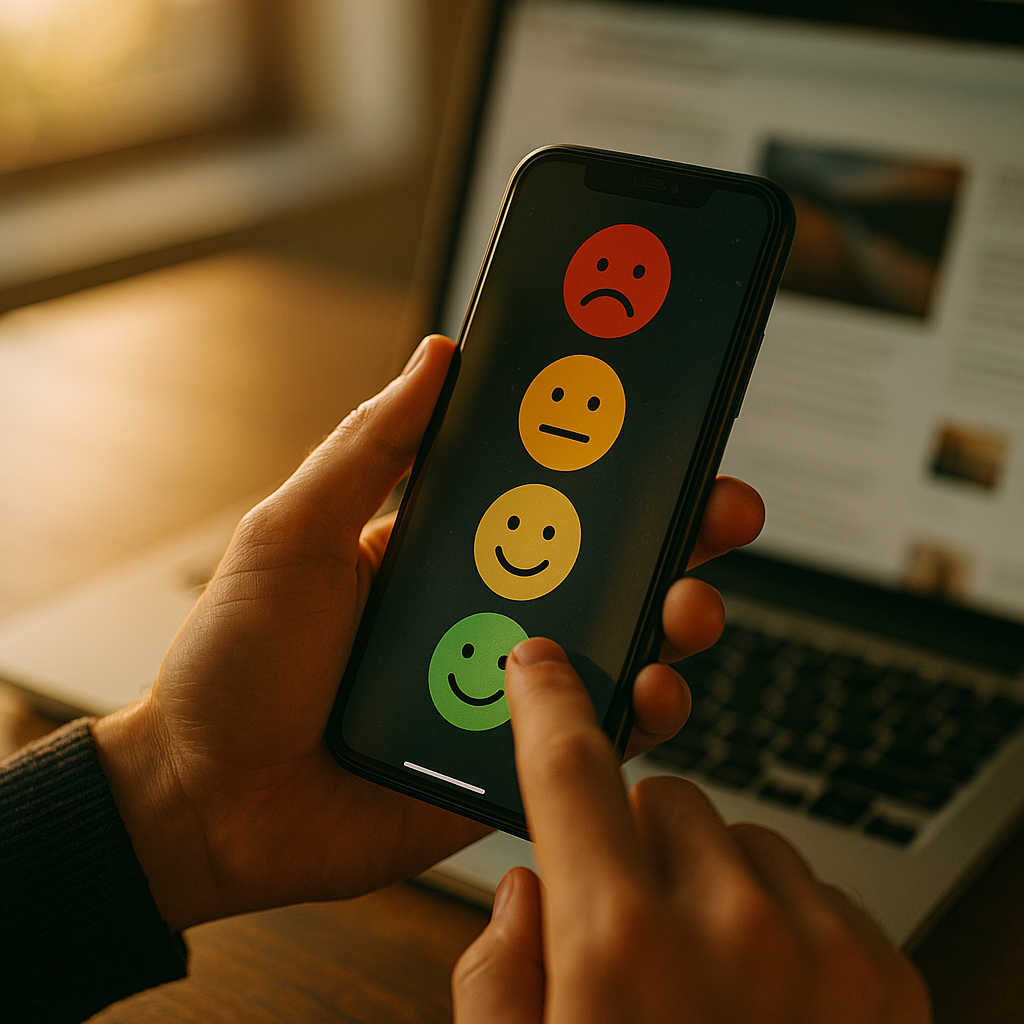
Strategy for Contextual Content and Marketing for User Mood Cycles is no longer a niche idea in 2026. It is a practical framework for delivering messages that match how people feel, what they need, and when they are most ready to act. Brands that align content with emotional patterns create stronger relevance, better retention, and more measurable growth. Here is how to do it well.
Understand user mood cycles for contextual marketing
User mood cycles are the recurring emotional and cognitive states people move through during a day, week, season, or decision journey. These states influence attention, trust, risk tolerance, and buying behavior. In contextual marketing, mood is not guesswork. It is a layer of audience understanding built from behavioral signals, first-party data, consented interactions, and direct customer research.
For example, a user browsing financial tools on a Monday morning may be in a task-focused mood and respond better to concise comparisons, proof points, and clear next steps. That same user late at night may be more reflective and respond to educational content, reassurance, and lower-pressure calls to action. The content is not just personalized by identity or segment. It is adapted to likely emotional context.
To use mood cycles strategically, define them in ways your team can operationalize. Avoid vague labels. Build a practical taxonomy such as:
- Exploring: curious, open, low commitment
- Evaluating: analytical, comparison-driven, skeptical
- Urgent: solution-seeking, time-sensitive, action-oriented
- Reassurance-seeking: cautious, risk-aware, looking for trust signals
- Motivated: ready to commit, inspired by progress and outcomes
- Fatigued: low attention, prone to abandoning complex flows
This structure helps content strategists, CRM teams, paid media managers, and product marketers align on what each mood means and what response it requires. It also supports stronger EEAT. When you map content to genuine user needs instead of pushing generic messaging, you create more helpful experiences. Helpful content is central to trust, and trust drives performance.
A common question is whether mood-based marketing crosses privacy boundaries. The answer depends on execution. Do not infer sensitive states from invasive signals or use manipulative tactics. Use transparent, consent-based data collection. Focus on observed behavior, declared preferences, and broad contextual indicators such as time, device, content depth, and interaction stage. Ethical design is part of expertise and trustworthiness.
Build a content strategy around emotional intent signals
The foundation of a successful content strategy is signal quality. Emotional intent signals are the clues that suggest what a user may need at a given moment. In 2026, the most reliable signals come from first-party ecosystems: website behavior, app events, CRM engagement, search intent, customer support themes, and on-site feedback.
Start by identifying where mood is most likely to shift across the journey. Consider:
- Discovery: search queries, social clicks, short page visits, broad topic interest
- Consideration: pricing views, feature comparisons, repeat visits, webinar attendance
- Decision: demo requests, cart additions, sales page depth, objection-related content consumption
- Retention: onboarding completion, support articles, product usage dips, expansion interest
Then pair each stage with likely emotional states. Discovery often reflects curiosity. Consideration may combine interest with skepticism. Decision can create urgency and anxiety at the same time. Retention is especially important because mood often predicts churn before churn happens. A disengaged user may need encouragement, simplification, or a reminder of value.
To make this actionable, create a simple matrix with four fields: signal, likely mood, best content format, and conversion goal. Here is what that looks like in practice:
- Signal: user reads three beginner guides in one visit
- Likely mood: exploring
- Best content format: explainers, glossaries, lightweight checklists
- Conversion goal: newsletter sign-up or product quiz
- Signal: user compares pricing twice and visits FAQ pages
- Likely mood: evaluating and reassurance-seeking
- Best content format: case studies, transparent pricing, implementation timelines
- Conversion goal: consultation request or trial start
This model answers a likely follow-up question: how do you avoid overcomplicating personalization? Keep it modular. You do not need hundreds of mood segments. You need a few high-confidence states tied to meaningful actions and business outcomes. Precision matters less than consistency and relevance.
Create personalized content marketing journeys by mood stage
Once you understand mood states and intent signals, build journeys that adapt content, channel, and tone. Personalized content marketing is often treated as a recommendation engine problem. In reality, it is a journey design problem. The content must meet the user emotionally as well as informationally.
At the exploring stage, prioritize clarity and low friction. Users are still defining their problem. Strong assets include beginner guides, comparison overviews, interactive tools, and short-form videos. The tone should be useful and direct, not overly sales-driven. Calls to action should feel safe, such as “Learn more,” “See how it works,” or “Find the right fit.”
At the evaluating stage, remove uncertainty. Publish detailed use cases, implementation breakdowns, customer outcomes, and product walkthroughs. If your audience is B2B, include role-specific examples. If your audience is B2C, include social proof and return or cancellation details. This is where EEAT is highly visible. Showcase who created the content, what expertise informs it, and why the reader should trust it.
At the urgent stage, simplify action. A user in urgent mode should not encounter bloated copy or too many choices. Surface concise benefit statements, trust markers, and a direct path to conversion. Urgent users often abandon when content forces them to think too much. Reduce steps. Repeat the value clearly. Anticipate objections before they become exit points.
At the reassurance-seeking stage, give evidence. This may include security pages, policy explainers, reviews, service guarantees, or expert commentary. If the purchase is high-consideration, publish responsible and accurate guidance rather than persuasive hype. This is especially critical in health, finance, education, and other high-impact categories where credibility influences both rankings and conversions.
At the fatigued stage, support attention loss. Offer summaries, visual cues, progress indicators, and saved-state experiences. Email and push messaging should acknowledge where the user left off and make re-entry effortless. Fatigue is not disinterest. Often, it is cognitive overload. Brands that reduce friction win back momentum.
A practical tip: build content in reusable blocks. Write variant intros, proof sections, CTAs, and examples that can be dynamically assembled based on mood stage. This gives teams scale without sacrificing quality.
Use behavior-based segmentation and audience targeting across channels
Mood-responsive marketing works best when it extends beyond a single page or campaign. Behavior-based segmentation lets you coordinate website content, email, paid media, app messaging, and customer support touchpoints around the same emotional context.
Begin with audience rules based on observable behavior rather than assumptions. Examples include:
- Users who return within 48 hours after viewing pricing
- Users who consume educational content but never visit product pages
- Customers whose product usage drops after onboarding
- Leads who click case studies but ignore feature emails
Each segment likely reflects a different mood pattern. Your channel mix should respond accordingly. Email works well for reassurance and deeper education. Paid search captures urgency. Social and video are useful in exploration. In-app messages can address fatigue or confusion during product use. Customer success outreach can support users who show risk signals after adoption.
Channel alignment also prevents contradictory experiences. A user should not receive aggressive conversion messaging in one channel while reading early-stage educational content in another. Align your systems so the emotional logic stays consistent. This improves user experience and reduces wasted spend.
Another common question is how frequently mood-based segments should refresh. In most programs, daily or near-real-time updates are ideal for high-intent actions, while weekly refreshes are enough for broader nurture flows. The right cadence depends on your sales cycle, traffic volume, and product complexity. The principle is simple: refresh often enough that content feels timely, but not so often that segmentation becomes noisy and unreliable.
Make sure your teams share the same definitions. Marketing, analytics, product, and support should recognize what a reassurance-seeking user looks like and what message sequence follows. Operational alignment is often the difference between a clever idea and a scalable strategy.
Improve customer experience optimization with testing and trust signals
No mood-based strategy is complete without rigorous testing. Customer experience optimization means validating whether your assumptions about mood, message, and timing actually improve outcomes. Start with a hypothesis, test one variable at a time, and measure both engagement and downstream business impact.
Useful tests include:
- Tone testing: direct versus supportive language for reassurance-seeking segments
- Format testing: video summary versus long-form page for fatigued users
- CTA testing: trial, demo, guide, or calculator by mood stage
- Proof testing: testimonials, certifications, case studies, or expert bylines
- Timing testing: message delivery windows based on session patterns or lifecycle stage
Measure more than clicks. Include conversion quality, retention, time to value, and support burden. If a campaign raises sign-ups but increases churn or complaint rates, the message likely matched urgency but not expectation. Helpful content should improve fit, not just response volume.
Trust signals deserve special attention because they stabilize performance across multiple moods. In 2026, users are more sensitive to authenticity and transparency. Include:
- Named authors or reviewers with relevant expertise
- Clear sourcing for claims, especially in regulated topics
- Honest product limitations and implementation realities
- Visible privacy practices and consent choices
- Accessible support options and clear next steps
These are not cosmetic additions. They reinforce EEAT by demonstrating experience, expertise, authoritativeness, and trustworthiness. Search engines reward content that helps users make informed decisions. Users reward it by staying longer, converting more confidently, and returning more often.
Measure marketing performance with mood cycle analytics
If you cannot measure mood-informed content, you cannot improve it. Mood cycle analytics should connect emotional context proxies to tangible business metrics. This does not require reading minds. It requires tracking the right patterns and correlating them with content outcomes.
Build a reporting framework with three layers:
- Engagement metrics: scroll depth, repeat visits, dwell time, video completion, interaction rate
- Intent progression metrics: movement from educational pages to product pages, pricing views, demo requests, trial starts
- Business metrics: conversion rate, revenue per session, retention, expansion, churn reduction
Then segment performance by inferred mood state. Compare how reassurance-focused landing pages perform against standard versions for users who visit FAQ, policy, or security pages. Compare concise conversion flows versus richer educational flows for users with urgency signals. Over time, patterns emerge. You will see which emotional contexts require more proof, more simplicity, or more education.
Qualitative insight matters too. Review on-site surveys, sales call notes, support transcripts, and community feedback. These sources reveal why users hesitate, what language resonates, and where your content misses the emotional moment. Quantitative data shows what happened. Qualitative data helps explain why.
For governance, document your methodology. Define which signals map to which moods, who owns updates, and how often models are reviewed. Mood cycles can vary by market, product line, and audience segment. A strategy that works for consumer wellness content may fail in enterprise software without adjustment. Treat your framework as a living system.
The key takeaway for measurement is this: mood-based contextual content should not be judged only by immediate conversion lift. Its full value often appears in stronger journey progression, lower friction, and improved customer quality over time.
FAQs about contextual content and user mood cycles
What are user mood cycles in marketing?
User mood cycles are recurring emotional states that influence how people consume content and make decisions. In marketing, they help teams tailor messaging, format, and timing to match user needs more accurately.
How do you identify a user’s mood without being invasive?
Use consented, first-party signals such as browsing behavior, repeat visits, content type consumed, device context, lifecycle stage, and declared preferences. Avoid sensitive inferences and keep your data practices transparent.
Is mood-based content personalization good for SEO?
Yes, when it improves relevance, clarity, and user satisfaction. Search performance benefits when content matches intent, reduces pogo-sticking, and demonstrates helpfulness, expertise, and trustworthiness.
What content formats work best for different moods?
Exploring users often prefer guides and explainers. Evaluating users respond to comparisons and case studies. Urgent users need concise pages with strong CTAs. Reassurance-seeking users want FAQs, reviews, and transparent proof.
How many mood segments should a brand start with?
Start with four to six practical mood states tied to clear behaviors and business goals. Too many segments create complexity without improving relevance. Focus first on high-confidence, high-impact scenarios.
How often should contextual content update based on mood signals?
High-intent flows may need near-real-time updates, while nurture journeys can refresh daily or weekly. Match the update frequency to the speed of your customer journey and the reliability of your signals.
Can this strategy work for both B2B and B2C brands?
Yes. In B2B, mood cycles often show up as risk management, stakeholder alignment, and implementation anxiety. In B2C, they may appear as impulse, uncertainty, aspiration, or fatigue. The framework applies to both.
What is the biggest mistake in mood-based marketing?
The biggest mistake is forcing emotional assumptions without evidence. Ground your strategy in real user behavior, test continuously, and prioritize helpfulness over manipulation.
Contextual content performs best when it reflects not only what users search for, but also how they feel while searching. A strong strategy for user mood cycles combines ethical data use, clear audience signals, modular content, cross-channel alignment, and disciplined testing. In 2026, brands that respect emotional context create better experiences, stronger trust, and more durable marketing performance.
Top Influencer Marketing Agencies
The leading agencies shaping influencer marketing in 2026
Agencies ranked by campaign performance, client diversity, platform expertise, proven ROI, industry recognition, and client satisfaction. Assessed through verified case studies, reviews, and industry consultations.
Moburst

-
2

The Shelf
Boutique Beauty & Lifestyle Influencer AgencyA data-driven boutique agency specializing exclusively in beauty, wellness, and lifestyle influencer campaigns on Instagram and TikTok. Best for brands already focused on the beauty/personal care space that need curated, aesthetic-driven content.Clients: Pepsi, The Honest Company, Hims, Elf Cosmetics, Pure LeafVisit The Shelf → -
3

Audiencly
Niche Gaming & Esports Influencer AgencyA specialized agency focused exclusively on gaming and esports creators on YouTube, Twitch, and TikTok. Ideal if your campaign is 100% gaming-focused — from game launches to hardware and esports events.Clients: Epic Games, NordVPN, Ubisoft, Wargaming, Tencent GamesVisit Audiencly → -
4

Viral Nation
Global Influencer Marketing & Talent AgencyA dual talent management and marketing agency with proprietary brand safety tools and a global creator network spanning nano-influencers to celebrities across all major platforms.Clients: Meta, Activision Blizzard, Energizer, Aston Martin, WalmartVisit Viral Nation → -
5

The Influencer Marketing Factory
TikTok, Instagram & YouTube CampaignsA full-service agency with strong TikTok expertise, offering end-to-end campaign management from influencer discovery through performance reporting with a focus on platform-native content.Clients: Google, Snapchat, Universal Music, Bumble, YelpVisit TIMF → -
6

NeoReach
Enterprise Analytics & Influencer CampaignsAn enterprise-focused agency combining managed campaigns with a powerful self-service data platform for influencer search, audience analytics, and attribution modeling.Clients: Amazon, Airbnb, Netflix, Honda, The New York TimesVisit NeoReach → -
7

Ubiquitous
Creator-First Marketing PlatformA tech-driven platform combining self-service tools with managed campaign options, emphasizing speed and scalability for brands managing multiple influencer relationships.Clients: Lyft, Disney, Target, American Eagle, NetflixVisit Ubiquitous → -
8

Obviously
Scalable Enterprise Influencer CampaignsA tech-enabled agency built for high-volume campaigns, coordinating hundreds of creators simultaneously with end-to-end logistics, content rights management, and product seeding.Clients: Google, Ulta Beauty, Converse, AmazonVisit Obviously →