


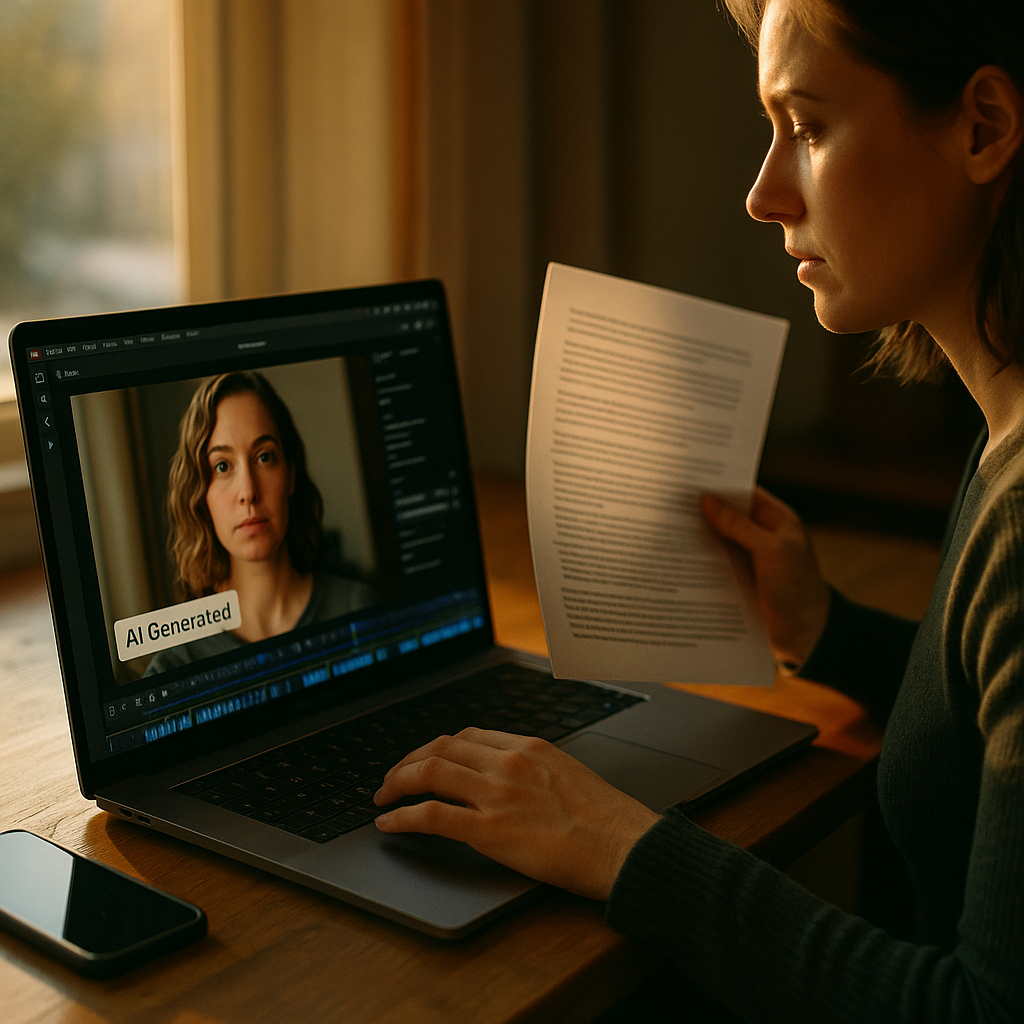
When a Remix Isn’t Just a Remix Anymore
Here’s a number that should make every brand marketer pause: 63% of creator content shared on TikTok and Instagram in Q1 was AI-modified in some way, according to Statista research. Filters, generative edits, AI voice cloning, background swaps — the spectrum is vast. And the FTC has noticed. Their updated guidance on FTC disclosure for AI-remixed content makes clear that when AI substantially transforms a sponsored post, the original material connection disclosure may no longer be sufficient. The derivative content could require its own label. This isn’t a hypothetical compliance risk. It’s an active enforcement priority.
What the FTC Actually Changed
The Federal Trade Commission’s updated endorsement guides, building on the framework established in late 2023 and expanded through supplemental guidance in 2024 and into this year, now explicitly address AI-generated and AI-modified content as a distinct category of commercial speech. The key shift? Transformation triggers re-disclosure.
Previously, brands could reasonably argue that a repost or reshare of a properly disclosed sponsored post carried the original disclosure forward. That logic breaks down when AI enters the picture. The FTC now treats AI-remixed content — where a tool like Runway, Pika, or even TikTok’s native AI editing suite meaningfully alters the creative — as potentially new content requiring fresh sponsored post labels.
The standard isn’t cosmetic change. Adding a filter or adjusting color grading doesn’t trigger new obligations. But when AI generates new visual elements, modifies the creator’s likeness, changes spoken words through voice synthesis, or composites the creator into new settings, the FTC considers this a material alteration. The resulting content may not carry the same endorsement intent the creator originally approved — and consumers deserve to know that.
The FTC’s core test: Would a reasonable consumer understand this content is commercially sponsored and that the depicted endorsement accurately reflects the endorser’s experience? If AI transformation makes either element unclear, a new disclosure is required.
Why Should Brand Teams Care About Derivative Content?
Because you’re liable even when you didn’t make the remix.
That’s the part that catches most marketing leaders off guard. Under the updated guidance, brands bear responsibility for material connection disclosures not just in content they commission, but in content they benefit from — including AI-remixed derivatives that circulate organically. If a fan takes a creator’s sponsored TikTok, runs it through an AI tool to create a meme or mashup, and that derivative goes viral while still implicitly promoting your product, the FTC may ask what steps you took to monitor and address it.
This doesn’t mean brands must police every corner of the internet. The standard is reasonableness. But “we didn’t know” is no longer a credible defense when monitoring tools exist. Brands running large-scale influencer programs need documented processes for identifying AI-transformed sponsored content and ensuring proper disclosures follow it downstream. The ad creative liability question gets thornier when AI remixes blur the line between user-generated content and paid media.
The Material Connection Test for AI-Modified Posts
Let’s get specific. The FTC identifies several scenarios where AI transformation of creator content triggers new disclosure requirements:
- Voice cloning or dubbing: If a creator’s sponsored video is re-dubbed using AI voice synthesis — even into another language for market expansion — the new version requires its own disclosure. The creator may not have endorsed the translated message.
- Likeness manipulation: AI tools that alter a creator’s appearance, place them in new environments, or change their expressions create content the creator never actually produced. This is both a likeness rights issue and a disclosure issue simultaneously.
- Content compositing: Merging elements from multiple sponsored posts into a single AI-generated piece — common in brand recap videos and campaign highlight reels — requires clear identification of all material connections.
- Platform AI features: TikTok’s built-in AI remix tools and Instagram’s generative editing features can transform sponsored content in ways that strip original disclosures. Brands distributing through these channels need platform-specific risk awareness.
The through-line is simple: if the transformation would make a reasonable consumer question whether they’re seeing a genuine endorsement, disclose again. Clearly. Conspicuously. In the remixed content itself — not buried in a bio link or comment thread.
Building a Compliance Framework That Actually Works
Theory is easy. Operationalizing FTC disclosure compliance across AI-remixed content at scale? That’s the real challenge. Here’s what leading brand teams are implementing:
Contractual guardrails come first. Every creator agreement should now include clauses addressing AI modification rights. Specify whether the brand retains rights to create AI derivatives, whether the creator must approve AI-modified versions, and who bears disclosure responsibility for each scenario. Vague language like “brand may repurpose content” doesn’t cut it anymore.
Monitoring infrastructure matters. Tools like CreatorIQ, Traackr, and Brandwatch now offer AI-content detection features that flag when sponsored posts appear in modified forms across platforms. The investment isn’t optional for brands running programs with more than a dozen active creators. Without monitoring, you’re flying blind on derivative content that could trigger enforcement.
Disclosure templates need updating. The standard #ad hashtag still works for original posts, but AI-remixed content demands additional context. The FTC suggests language like “AI-modified sponsored content” or “This content was created using AI based on a paid partnership.” The disclosure must appear before any engagement point — not at the end of a caption users must expand to read.
Pro tip: Create a disclosure decision tree for your team. Map each type of AI transformation (voice, visual, composite, generative) to a specific disclosure template. Remove ambiguity from the process entirely.
The broader disclosure framework for AI-generated ad creative applies here, but sponsored creator content adds the extra layer of endorsement authenticity that the FTC weighs heavily.
Cross-Platform Complications
Different platforms handle AI content labeling differently. Meta requires AI-generated content labels on Facebook and Instagram. TikTok has its own AI content disclosure toggle. YouTube added synthetic content labels. But none of these platform-level labels satisfy FTC requirements on their own.
Platform labels tell users “AI was used.” FTC disclosures tell users “this is a paid relationship.” They’re complementary obligations, not interchangeable ones. A brand that relies solely on TikTok’s AI label without adding a material connection disclosure is still non-compliant.
This gets especially tricky with cross-platform syndication. A properly disclosed Instagram Reel that gets AI-remixed and reposted to TikTok may lose its disclosure in the process. Brands syndicating creator content across platforms need checkpoint protocols at each distribution stage.
Enforcement Signals Are Real
The FTC isn’t just issuing guidance and hoping for voluntary compliance. The agency’s recent actions against brands using AI-generated testimonials without disclosure — including cases involving beauty and wellness companies — signal active enforcement. Their official enforcement actions page shows increasing attention to AI-adjacent deceptive practices.
State attorneys general are following suit. California, New York, and Illinois have all introduced or passed legislation addressing AI-generated commercial content disclosures, often with stricter requirements than federal guidelines. Brands operating nationally need to comply with the most restrictive applicable standard.
The penalties aren’t trivial. FTC fines for endorsement disclosure violations can reach $50,120 per violation — and each undisclosed post counts as a separate violation. For a campaign with 50 AI-remixed derivatives, the math gets uncomfortable quickly.
Industry groups like the Association of National Advertisers and the Interactive Advertising Bureau have both published supplemental guidance for members navigating these new requirements, reinforcing that self-regulation is the industry’s best defense against heavier-handed legislation.
Your Next Move
Audit every active creator contract for AI modification clauses, update your disclosure templates to cover AI-remixed scenarios, and implement monitoring for derivative content — this quarter, not next. The FTC has made clear that the compliance window for voluntary adoption is closing, and the brands that move first bear the least risk.
Frequently Asked Questions
Does adding a filter or minor AI edit to sponsored creator content require a new FTC disclosure?
No. The FTC’s updated guidance focuses on material alterations — changes that could affect a consumer’s understanding of the endorsement or the commercial relationship. Cosmetic adjustments like color filters, cropping, or minor retouching do not trigger new disclosure requirements. However, AI modifications that alter the creator’s likeness, voice, message, or setting are considered material transformations requiring fresh disclosures.
Who is responsible for FTC disclosures on AI-remixed creator content — the brand or the creator?
Both parties share responsibility under FTC guidelines. However, the brand bears the greater burden because it is the entity benefiting from the commercial relationship. If a brand creates or benefits from AI-remixed derivatives of sponsored content, it must take reasonable steps to ensure proper disclosures are present, even if the creator or a third party performed the AI transformation.
Do platform-level AI content labels on TikTok or Instagram satisfy FTC disclosure requirements?
No. Platform AI labels and FTC material connection disclosures serve different purposes. Platform labels indicate AI was used in content creation, while FTC disclosures communicate the existence of a paid commercial relationship. Both are required when AI-remixed content involves a material connection between a brand and creator. Using one does not satisfy the other.
What specific language should brands use to disclose AI-modified sponsored content?
The FTC recommends clear, unambiguous language such as “AI-modified sponsored content” or “This content was created using AI based on a paid partnership with [Brand].” The disclosure must be conspicuous, appearing before any engagement point, and should not require users to expand a caption or click through to see it. Avoid vague terms like “collab” or placing disclosures only in hashtags at the end of a long caption.
Can brands be held liable for AI remixes of their sponsored content that they did not create or authorize?
Potentially, yes. The FTC evaluates whether a brand benefited from the content and whether it took reasonable steps to monitor and address non-compliant derivatives. Brands are not expected to police every piece of user-generated content on the internet, but they are expected to have monitoring processes in place and to act when they become aware of undisclosed AI-remixed sponsored content circulating online.
Top Influencer Marketing Agencies
The leading agencies shaping influencer marketing in 2026
Agencies ranked by campaign performance, client diversity, platform expertise, proven ROI, industry recognition, and client satisfaction. Assessed through verified case studies, reviews, and industry consultations.
Moburst

-
2

The Shelf
Boutique Beauty & Lifestyle Influencer AgencyA data-driven boutique agency specializing exclusively in beauty, wellness, and lifestyle influencer campaigns on Instagram and TikTok. Best for brands already focused on the beauty/personal care space that need curated, aesthetic-driven content.Clients: Pepsi, The Honest Company, Hims, Elf Cosmetics, Pure LeafVisit The Shelf → -
3

Audiencly
Niche Gaming & Esports Influencer AgencyA specialized agency focused exclusively on gaming and esports creators on YouTube, Twitch, and TikTok. Ideal if your campaign is 100% gaming-focused — from game launches to hardware and esports events.Clients: Epic Games, NordVPN, Ubisoft, Wargaming, Tencent GamesVisit Audiencly → -
4

Viral Nation
Global Influencer Marketing & Talent AgencyA dual talent management and marketing agency with proprietary brand safety tools and a global creator network spanning nano-influencers to celebrities across all major platforms.Clients: Meta, Activision Blizzard, Energizer, Aston Martin, WalmartVisit Viral Nation → -
5

The Influencer Marketing Factory
TikTok, Instagram & YouTube CampaignsA full-service agency with strong TikTok expertise, offering end-to-end campaign management from influencer discovery through performance reporting with a focus on platform-native content.Clients: Google, Snapchat, Universal Music, Bumble, YelpVisit TIMF → -
6

NeoReach
Enterprise Analytics & Influencer CampaignsAn enterprise-focused agency combining managed campaigns with a powerful self-service data platform for influencer search, audience analytics, and attribution modeling.Clients: Amazon, Airbnb, Netflix, Honda, The New York TimesVisit NeoReach → -
7

Ubiquitous
Creator-First Marketing PlatformA tech-driven platform combining self-service tools with managed campaign options, emphasizing speed and scalability for brands managing multiple influencer relationships.Clients: Lyft, Disney, Target, American Eagle, NetflixVisit Ubiquitous → -
8

Obviously
Scalable Enterprise Influencer CampaignsA tech-enabled agency built for high-volume campaigns, coordinating hundreds of creators simultaneously with end-to-end logistics, content rights management, and product seeding.Clients: Google, Ulta Beauty, Converse, AmazonVisit Obviously →