


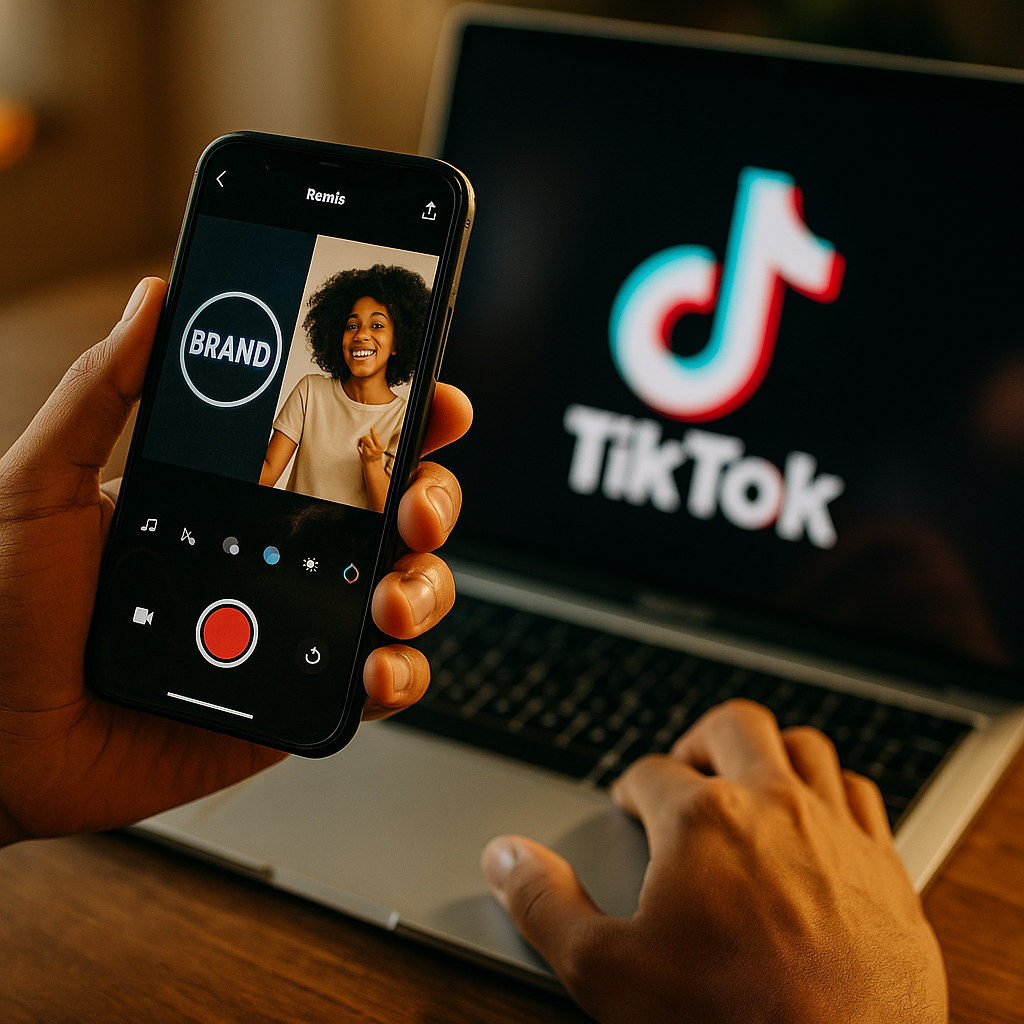
The Remix Economy Is Already Reshaping Brand Campaigns
Remixed TikTok content now generates 2.3x more engagement than original branded posts, according to TikTok’s business platform data from late last year. That’s not a minor uplift — it’s a structural shift in how content compounds. TikTok Remix as a brand amplification tool isn’t a speculative play anymore; it’s an operational reality that forward-thinking marketing teams are already building campaign architectures around.
But here’s the tension every brand strategist feels: remixes thrive on reinterpretation, while brand narratives demand consistency. How do you get the viral upside without the messaging chaos?
What TikTok Remix Actually Does — and Why AI Changes the Calculus
TikTok Remix lets users build new content on top of existing videos. Think of it as a structured duet with more creative latitude — users can clip, rearrange, overlay, and respond to a source video. The feature itself isn’t new. What’s new is the AI layer.
TikTok’s generative AI tools — including its Symphony Creative Studio and third-party integrations — now allow creators to produce remix variations at a pace that was impossible even eighteen months ago. A single creator can generate dozens of stylistic takes on a branded clip in hours. Multiply that across a campaign roster of 30-50 creators, and you’re looking at hundreds of content permutations from a single brief.
The real shift: AI-generated remixes collapse the time-to-content cycle from days to hours, making remix-first campaign structures economically viable for the first time.
This matters because volume is TikTok’s discovery currency. The algorithm rewards content diversity within topical clusters. A campaign that produces 200 genuine remix variations will outperform one that produces 15 polished hero videos — not because any single remix is better, but because the collective surface area of discovery is exponentially larger.
How Are Marketers Actually Structuring These Campaigns?
The brands getting this right aren’t winging it. They’re running what we’d call a “seed-and-scaffold” model. Here’s how it works in practice:
Step one: Create the seed asset. This is the original branded video specifically designed for remixability. It’s not a traditional ad. The best seed assets have modular moments — a distinct visual hook at the 0:02 mark, a clear sonic identity, and at least one “reaction-worthy” beat that practically begs for commentary. Think of it as content architecture, not content creation.
Step two: Define the remix rails. This is where narrative control lives. Brands issue structured briefs that specify: which segments of the seed can be remixed, what brand elements must remain intact (logo placement, product shot, tagline), and what themes are on- or off-limits. These aren’t loose guidelines — they’re contractual parameters embedded in creator agreements.
Step three: Activate creators in waves. The first wave (typically 5-8 creators) produces intentional remixes that set the tone. These are your narrative anchors. The second wave (20-40 creators) builds on what the first wave established, using AI tools to accelerate production. The third wave is organic — community members who remix the remixes, which is where the real amplification happens.
Fenty Beauty ran a variation of this model for a product launch in Q4 of last year. Their seed video was intentionally imperfect — a behind-the-scenes clip with rough lighting and casual dialogue. Creators remixed it into tutorials, reaction videos, and satirical takes. The campaign generated over 47 million views across remix variants, with brand recall rates 31% higher than their traditional influencer pushes.
If you’re scaling creator programs in parallel, the principles behind authentic creator partnerships apply directly here — remix campaigns fail when they feel manufactured.
Controlling Brand Narrative Without Killing the Vibe
Let’s be direct: you cannot control every remix. Attempting to do so defeats the purpose. But you can control the center of gravity of the conversation.
The most effective guardrail isn’t a legal document — it’s the seed asset itself. If you build the source video with a clear, emotionally resonant narrative hook, remixes naturally orbit that core message. Creators want engagement. They’ll lean into whatever element of your seed video drives the most reaction. Your job is to make sure that element is the one you want amplified.
Practical controls that work:
- Sonic branding locks. Require that remixes retain your audio signature (even if only 2-3 seconds). TikTok’s audio ecosystem makes this natural — sounds travel with content.
- Visual watermarking via AI. Tools like Synthesia and Runway now support embedded brand elements that persist through remix edits. They’re subtle enough not to feel intrusive.
- Pre-approved remix templates. Provide creators with AI-generated starter frameworks they can customize. This channels creativity without constraining it.
- Real-time monitoring dashboards. Platforms like Sprout Social and CreatorIQ offer remix tracking that flags off-brand derivatives before they gain momentum.
One thing I’d caution against: over-indexing on negative scenarios. Yes, a remix could go sideways. But the probability-weighted upside of a well-structured remix campaign dwarfs the tail risk. The brands that sit on the sideline waiting for “perfect control” will watch their competitors accumulate millions of impressions.
The AI-Specific Compliance Question
Here’s where things get operationally complex. When a creator uses AI tools to generate a remix of your branded content, who owns that derivative work? What disclosure obligations apply?
The FTC’s endorsement guidelines are clear that sponsored content requires disclosure regardless of how it’s produced. But AI-generated remixes introduce a gray area: if a creator uses generative AI to alter your product’s appearance, lighting, or context, does that constitute a modified claim? Regulators haven’t fully addressed this yet, but the trajectory is obvious — greater scrutiny is coming.
Smart brands are getting ahead of this by including AI-use clauses in creator contracts now. Specify which AI tools are approved, require disclosure of AI modification, and reserve the right to request takedowns of AI-altered product representations.
This isn’t hypothetical risk management. L’Oréal and Unilever have both updated their influencer agreements to include AI-specific provisions. If you’re running remix campaigns without these clauses, you’re accumulating compliance debt.
For brands already navigating community-driven content strategies — say, through branded Discord communities — the remix compliance framework should integrate with your broader UGC governance model.
Measuring What Matters: Beyond Vanity Metrics
Views are easy to count and easy to over-celebrate. The metrics that actually tell you whether TikTok Remix is working as a brand amplification tool are more nuanced:
Remix chain depth. How many “generations” deep do remixes go? A campaign where the original spawns remixes, which spawn their own remixes, signals genuine cultural penetration. Track this with TikTok’s Creative Center analytics and third-party tools like Statista’s social media benchmarks for comparison.
Brand element retention rate. Across all remix variants, what percentage retain your core brand identifiers (logo, sound, tagline)? If this drops below 40% by the third generation, your seed asset needs reworking.
Sentiment clustering. Use NLP-based monitoring to categorize remix content by sentiment and theme. You want to see tight clustering around your intended narrative — dispersion signals loss of control.
Conversion attribution. This is the hard one. TikTok’s attribution window is notoriously compressed. But brands running TikTok Shop integrations are finding that remix-originated traffic converts at 1.7x the rate of standard creator content, likely because the social proof layer is thicker when multiple creators are riffing on the same product moment.
If you’re already investing in micro-influencer syndicates, remix metrics slot naturally into your existing measurement framework — the syndicate model and the remix model share the same underlying logic of distributed amplification.
Building the Internal Capability
You can’t outsource remix campaign strategy entirely to your agency. The feedback loop is too fast.
When a remix starts trending in an unexpected direction — positive or negative — your team needs to make real-time decisions about whether to boost it, redirect it, or pull it. That requires someone internally who understands both TikTok’s creator ecosystem and your brand’s guardrails intimately.
The operational model we see working: a small, dedicated “remix ops” function sitting between your social team and your influencer marketing team. Two to three people. Their job is to monitor remix activity daily, coordinate with creators on second- and third-wave activations, and feed performance data back to the media buying team for paid amplification decisions.
Brands exploring Meta broadcast channels for community updates are finding that the same operational muscle — rapid content triage and response — translates directly to remix management.
Your Next Move
If you’re running TikTok creator campaigns without a remix-specific architecture, you’re leaving compounding amplification on the table. Start by redesigning one upcoming campaign’s hero asset as a remix-optimized seed video, define your brand rails, and deploy a two-wave creator activation with AI tools explicitly permitted and governed. Measure remix chain depth, not just views. That single structural shift will teach you more than any whitepaper.
Frequently Asked Questions
What is TikTok Remix and how does it differ from TikTok Duet?
TikTok Remix allows users to clip, rearrange, and creatively build upon segments of an existing video, offering more editorial flexibility than Duet. While Duet places two videos side-by-side in real time, Remix lets creators extract specific moments and integrate them into entirely new content structures — making it a more powerful tool for brand amplification campaigns.
How can brands maintain narrative control when creators remix their content with AI tools?
Brands maintain control through three primary mechanisms: designing seed assets with strong, emotionally resonant hooks that naturally guide remixes; embedding contractual remix rails in creator agreements that specify which elements must be retained; and using real-time monitoring dashboards to flag off-brand derivatives early. AI-specific clauses in contracts should also govern which tools creators can use and require disclosure of AI modifications.
What metrics should marketers track for TikTok Remix campaigns?
The most meaningful metrics are remix chain depth (how many generations of remixes your campaign spawns), brand element retention rate across remix variants, sentiment clustering analysis to confirm narrative coherence, and conversion attribution through TikTok Shop or pixel-based tracking. Views alone are insufficient — chain depth and brand retention tell you whether the campaign is compounding in the right direction.
Do AI-generated TikTok remixes require FTC disclosure?
Yes. Any sponsored content requires disclosure under FTC endorsement guidelines, regardless of whether AI was used in production. Additionally, brands should proactively require creators to disclose AI modification of product imagery or claims within their content, as regulatory scrutiny around AI-generated marketing materials is increasing.
How many creators do brands typically need for a remix-first TikTok campaign?
Effective remix campaigns typically use a tiered activation model: 5-8 creators in the first wave to set the narrative tone, 20-40 creators in a second wave to generate volume using AI-accelerated production, and then organic community participation as the third wave. The exact numbers depend on budget and category, but the wave structure matters more than total headcount.
Top Influencer Marketing Agencies
The leading agencies shaping influencer marketing in 2026
Agencies ranked by campaign performance, client diversity, platform expertise, proven ROI, industry recognition, and client satisfaction. Assessed through verified case studies, reviews, and industry consultations.
Moburst

-
2

The Shelf
Boutique Beauty & Lifestyle Influencer AgencyA data-driven boutique agency specializing exclusively in beauty, wellness, and lifestyle influencer campaigns on Instagram and TikTok. Best for brands already focused on the beauty/personal care space that need curated, aesthetic-driven content.Clients: Pepsi, The Honest Company, Hims, Elf Cosmetics, Pure LeafVisit The Shelf → -
3

Audiencly
Niche Gaming & Esports Influencer AgencyA specialized agency focused exclusively on gaming and esports creators on YouTube, Twitch, and TikTok. Ideal if your campaign is 100% gaming-focused — from game launches to hardware and esports events.Clients: Epic Games, NordVPN, Ubisoft, Wargaming, Tencent GamesVisit Audiencly → -
4

Viral Nation
Global Influencer Marketing & Talent AgencyA dual talent management and marketing agency with proprietary brand safety tools and a global creator network spanning nano-influencers to celebrities across all major platforms.Clients: Meta, Activision Blizzard, Energizer, Aston Martin, WalmartVisit Viral Nation → -
5

The Influencer Marketing Factory
TikTok, Instagram & YouTube CampaignsA full-service agency with strong TikTok expertise, offering end-to-end campaign management from influencer discovery through performance reporting with a focus on platform-native content.Clients: Google, Snapchat, Universal Music, Bumble, YelpVisit TIMF → -
6

NeoReach
Enterprise Analytics & Influencer CampaignsAn enterprise-focused agency combining managed campaigns with a powerful self-service data platform for influencer search, audience analytics, and attribution modeling.Clients: Amazon, Airbnb, Netflix, Honda, The New York TimesVisit NeoReach → -
7

Ubiquitous
Creator-First Marketing PlatformA tech-driven platform combining self-service tools with managed campaign options, emphasizing speed and scalability for brands managing multiple influencer relationships.Clients: Lyft, Disney, Target, American Eagle, NetflixVisit Ubiquitous → -
8

Obviously
Scalable Enterprise Influencer CampaignsA tech-enabled agency built for high-volume campaigns, coordinating hundreds of creators simultaneously with end-to-end logistics, content rights management, and product seeding.Clients: Google, Ulta Beauty, Converse, AmazonVisit Obviously →