


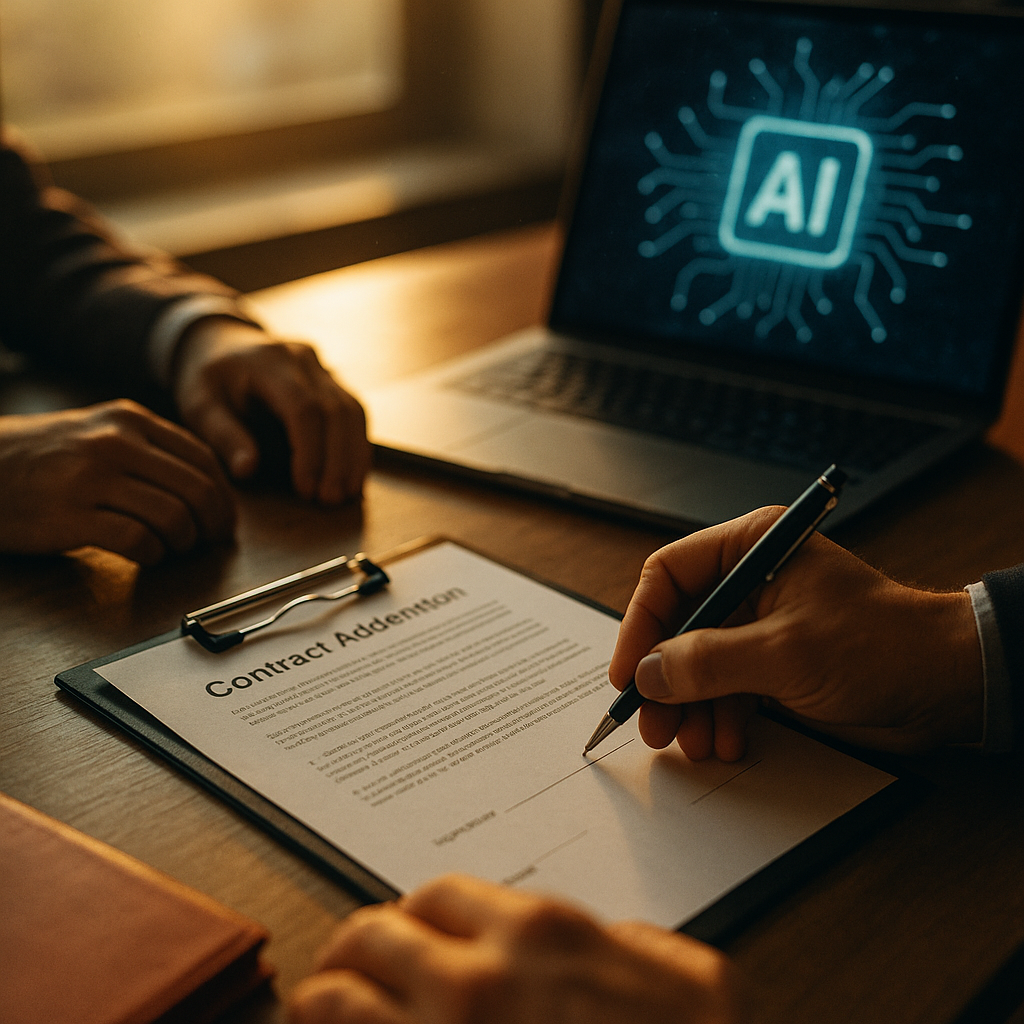
A recent survey by the Interactive Advertising Bureau found that 68% of brands have had sponsored content altered by platform AI features without prior approval. That number was 31% just eighteen months ago. If your creator contracts don’t include a brand safety contract addendum for AI remix environments, you’re operating with an open flank — and the platforms are moving faster than your legal team.
Why Standard Creator Contracts Are Already Obsolete
Think about what TikTok, Instagram, and YouTube have shipped in just the past year: AI-powered remixing tools, generative video effects that alter creator appearances, automated content “extensions” that repurpose clips into new formats, and synthesis features that blend multiple creators’ content into mashups. Every one of these capabilities can transform a carefully approved brand integration into something unrecognizable.
The problem isn’t theoretical. It’s contractual.
Most influencer agreements were drafted for a world where a creator shot content, the brand approved it, and the final deliverable was posted. That linear workflow is dead. Platform AI features now enable third parties — and sometimes the platforms themselves — to modify, extend, remix, and redistribute content that carries your brand marks, your messaging, and your compliance obligations. Your existing contracts almost certainly don’t account for this.
Understanding who owns the liability in these scenarios is no longer optional — it’s foundational to any brand partnership program.
The Six Clauses Every Addendum Needs
After reviewing addendum language from multiple agency legal teams and consulting published guidance from the Federal Trade Commission, we’ve identified six non-negotiable clause categories. Not suggestions. Requirements.
1. AI Modification Consent Clause. This clause establishes that no AI-generated modification, remix, or derivative of the original sponsored content may be created, published, or distributed without written brand approval. The key word is “derivative” — it must be broad enough to cover platform-generated variations the creator didn’t initiate. Specify that consent applies to both creator-initiated and platform-initiated AI transformations.
2. Brand Mark and Likeness Protection. Separate from general IP clauses, this provision specifically prohibits the use of brand logos, product imagery, slogans, and trade dress in any AI-generated or AI-modified content that hasn’t received approval. This matters because platforms like TikTok now have features that can automatically incorporate branded elements into remixed content. Brands exploring TikTok AI remix risks will recognize how fast this threat vector is evolving.
3. Platform Feature Restriction Schedule. This is the clause most brands miss entirely. It’s an attached schedule — updated quarterly — listing specific platform AI features the creator must disable or avoid when producing sponsored content. Think of it as an allowlist/blocklist for AI tools. Example: “Creator shall not enable Meta’s AI Extend feature or TikTok’s Remix AI for any deliverable under this agreement.”
A platform feature restriction schedule turns vague brand safety language into operational instructions creators can actually follow. Without it, you’re relying on creators to interpret risk on your behalf.
4. Disclosure Persistence Clause. When AI remixes sponsored content, FTC-required disclosures often get stripped, obscured, or rendered illegible. This clause requires that all FTC disclosure obligations persist through any transformation — and places affirmative responsibility on the creator to monitor and report when disclosures are compromised. It should also specify that the brand may issue takedown requests if disclosure integrity is lost.
5. Opt-Out and Takedown Rights. The addendum must grant the brand unilateral authority to request removal of any AI-modified version of sponsored content within a specified timeframe (48 hours is the emerging industry standard). This includes content the creator didn’t produce — if a platform’s AI feature generates a derivative, the creator is contractually obligated to pursue removal through the platform’s available mechanisms.
6. Data Training Exclusion. This clause prohibits the creator from opting into any platform feature that feeds sponsored content into AI training datasets. This addresses a growing concern about privacy risks in AI model training, and it protects your brand assets from being ingested into generative models that could reproduce them in unpredictable contexts.
Rights Reservations That Actually Hold Up
Clauses are only as strong as the rights they reserve. Too many addenda use aspirational language — “brand shall have the right to review” — without specifying enforcement mechanisms or consequences.
Three rights reservations to insist on:
- Right of pre-publication review for AI-assisted content. If a creator uses any AI tool in the production process (not just platform features, but tools like Runway, Pika, or CapCut’s generative suite), the brand gets an additional approval gate. This is separate from your standard content approval workflow.
- Right of audit. The brand may request documentation of which AI tools or platform features were used in producing or distributing any deliverable. This creates accountability and a paper trail.
- Right of immediate suspension. If an AI-modified version of sponsored content creates a brand safety incident, the brand can suspend all active deliverables under the agreement pending review — without triggering breach penalties against the brand.
These aren’t theoretical protections. The IAB’s framework for AI in advertising recommends that brands establish clear escalation paths for AI-related incidents. Your contract language should mirror that operational reality.
How Opt-Out Mechanisms Should Work in Practice
Here’s where most addenda fail: they describe what should happen but not how.
An effective opt-out mechanism has three layers:
Layer one: Platform-level opt-outs. The creator must enable every available platform setting that restricts AI remixing of their content. On TikTok, this means disabling the “Allow AI-generated content” toggle. On Instagram, it means opting out of Meta’s AI content features. The addendum should require screenshots or confirmation of these settings as a deliverable condition.
Layer two: Content-level flags. Where platforms offer content-level controls (YouTube’s per-video AI restriction settings, for example), the creator must apply the most restrictive available option to all sponsored content.
Layer three: Contractual backstop. Since platform settings can change, get overridden, or fail to prevent all AI modifications, the contract must state that the brand’s opt-out rights supersede any platform capability. If a platform doesn’t offer adequate controls, that doesn’t relieve the creator of their obligation — it means the creator must escalate to the brand before posting.
Platform opt-out settings are a first line of defense, not the last. Your contract is the backstop — and it needs to be written with the assumption that technical controls will fail.
For broader context on how brands are structuring these protections, our coverage of the AI remix disclosure compliance framework outlines the operational workflows that complement contract language.
Enforcement and Monitoring: The Uncomfortable Truth
You can write the best addendum in the world. It means nothing if you can’t detect violations.
Brands running large-scale creator programs need automated monitoring. Tools like Brandwatch and Sightengine can flag visual modifications to known brand assets. More advanced solutions from companies like Sprinklr now offer AI-specific content monitoring that detects when a published asset differs from the approved version beyond a defined threshold.
Build monitoring costs into your influencer marketing budget. Seriously. If you’re spending six or seven figures on creator partnerships and zero on post-publication compliance monitoring, your risk profile is inverted.
The addendum should also include a creator cooperation clause: the creator agrees to promptly respond to brand inquiries about potential AI modifications and to provide platform analytics showing content distribution patterns. This closes the information asymmetry gap that makes enforcement nearly impossible otherwise.
When to Deploy the Addendum — and When to Renegotiate Entirely
For existing creator relationships, an addendum works. It bolts onto your current agreement and fills the AI-specific gaps.
For new agreements, especially those involving platforms with aggressive AI feature rollouts, bake these protections into the master contract. Don’t treat them as supplementary. The distinction matters legally — addenda can sometimes be treated as secondary to conflicting master terms, weakening your position if a dispute reaches arbitration.
If you’re working with creators who resist these terms, that’s a signal. Not necessarily a deal-breaker, but a signal that their content production workflow may already be deeply integrated with AI tools in ways that create unacceptable brand risk. Have the conversation. Understand their process. Then make a risk-based decision.
Your next step: Pull your top ten creator agreements by spend. Check whether any of them address AI remixing, platform AI features, or data training exclusions. If fewer than half do, prioritize drafting your brand safety contract addendum for AI remix environments this quarter — before the next wave of platform feature releases makes the gap even wider.
FAQs
What is a brand safety contract addendum for AI remix environments?
It is a supplemental agreement attached to creator contracts that specifically addresses risks created by platform AI features — including content remixing, generative modifications, and AI training data usage. It establishes consent requirements, opt-out mechanisms, and enforcement rights that standard influencer agreements typically lack.
Do creators have to comply with platform AI opt-out requests from brands?
Only if the contract requires it. Without explicit contractual language, creators have no legal obligation to disable platform AI features on behalf of a brand. That is why including a platform feature restriction schedule and opt-out mechanism in the addendum is essential.
Can a brand be held liable for AI-remixed sponsored content it didn’t approve?
Potentially, yes. The FTC has indicated that brands bear responsibility for ensuring sponsored content remains compliant with disclosure rules, even when modified by platform features. A well-drafted addendum shifts operational responsibility to the creator while preserving the brand’s right to intervene.
How often should the platform feature restriction schedule be updated?
Quarterly updates are the emerging industry standard, though brands with large-scale programs on fast-moving platforms like TikTok and Instagram may need monthly reviews. The schedule should be treated as a living document attached to the addendum.
What happens if a platform doesn’t offer adequate AI opt-out controls?
The contractual backstop applies. The creator is still bound by the addendum terms, meaning they must escalate the limitation to the brand before publishing and may need to avoid using that platform for sponsored content until adequate controls are available.
Top Influencer Marketing Agencies
The leading agencies shaping influencer marketing in 2026
Agencies ranked by campaign performance, client diversity, platform expertise, proven ROI, industry recognition, and client satisfaction. Assessed through verified case studies, reviews, and industry consultations.
Moburst

-
2

The Shelf
Boutique Beauty & Lifestyle Influencer AgencyA data-driven boutique agency specializing exclusively in beauty, wellness, and lifestyle influencer campaigns on Instagram and TikTok. Best for brands already focused on the beauty/personal care space that need curated, aesthetic-driven content.Clients: Pepsi, The Honest Company, Hims, Elf Cosmetics, Pure LeafVisit The Shelf → -
3

Audiencly
Niche Gaming & Esports Influencer AgencyA specialized agency focused exclusively on gaming and esports creators on YouTube, Twitch, and TikTok. Ideal if your campaign is 100% gaming-focused — from game launches to hardware and esports events.Clients: Epic Games, NordVPN, Ubisoft, Wargaming, Tencent GamesVisit Audiencly → -
4

Viral Nation
Global Influencer Marketing & Talent AgencyA dual talent management and marketing agency with proprietary brand safety tools and a global creator network spanning nano-influencers to celebrities across all major platforms.Clients: Meta, Activision Blizzard, Energizer, Aston Martin, WalmartVisit Viral Nation → -
5

The Influencer Marketing Factory
TikTok, Instagram & YouTube CampaignsA full-service agency with strong TikTok expertise, offering end-to-end campaign management from influencer discovery through performance reporting with a focus on platform-native content.Clients: Google, Snapchat, Universal Music, Bumble, YelpVisit TIMF → -
6

NeoReach
Enterprise Analytics & Influencer CampaignsAn enterprise-focused agency combining managed campaigns with a powerful self-service data platform for influencer search, audience analytics, and attribution modeling.Clients: Amazon, Airbnb, Netflix, Honda, The New York TimesVisit NeoReach → -
7

Ubiquitous
Creator-First Marketing PlatformA tech-driven platform combining self-service tools with managed campaign options, emphasizing speed and scalability for brands managing multiple influencer relationships.Clients: Lyft, Disney, Target, American Eagle, NetflixVisit Ubiquitous → -
8

Obviously
Scalable Enterprise Influencer CampaignsA tech-enabled agency built for high-volume campaigns, coordinating hundreds of creators simultaneously with end-to-end logistics, content rights management, and product seeding.Clients: Google, Ulta Beauty, Converse, AmazonVisit Obviously →