


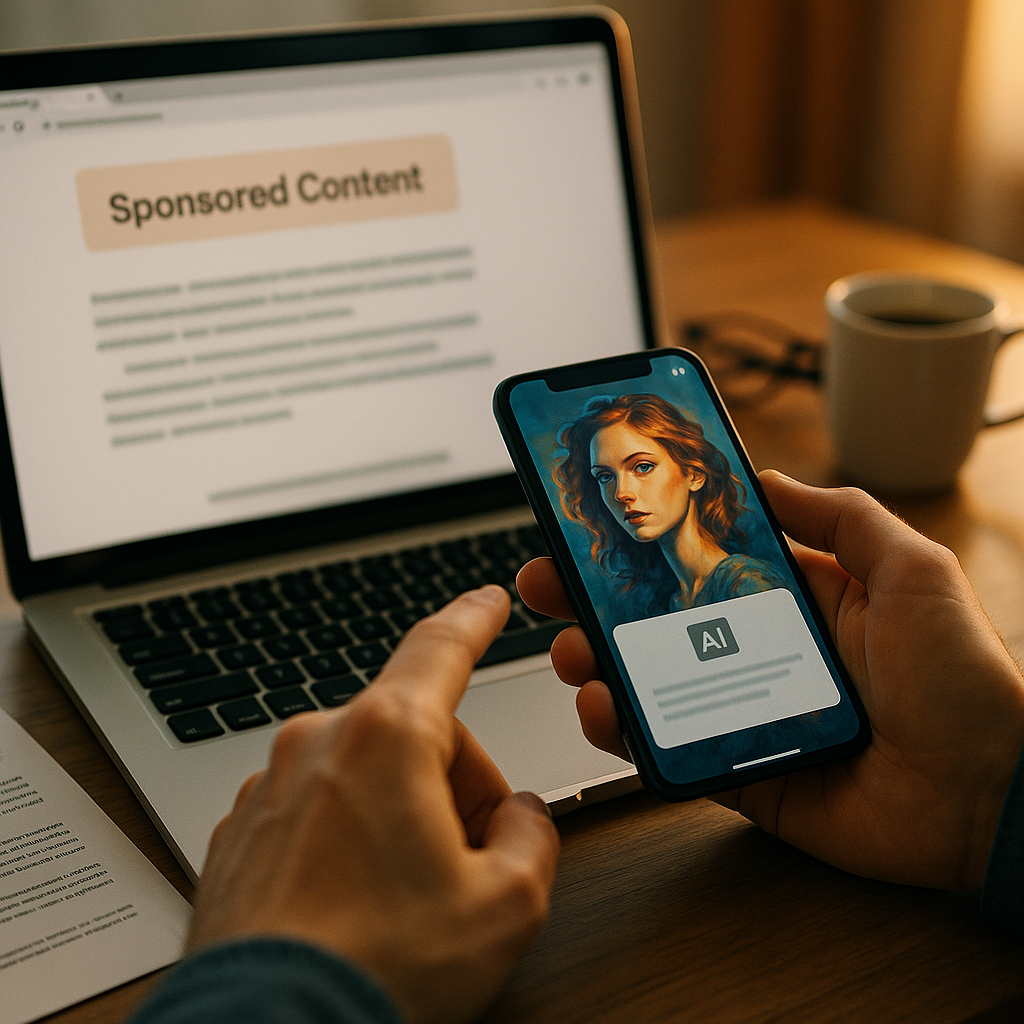
Your Sponsored Post Just Got Remixed by AI. Who’s Liable?
A staggering 41% of branded creator content on major platforms now gets algorithmically transformed before reaching secondary audiences—through AI-generated summaries, remix features, or auto-stitched compilations. Yet most brand compliance teams still treat disclosure as a one-and-done checkbox at the point of original publication. That gap between how disclosure works and how content actually travels is where enforcement risk lives. This step-by-step framework for disclosure compliance when AI remixes sponsored creator content will help you close it.
What Counts as an “Algorithmic Transformation”?
Before mapping compliance obligations, you need shared vocabulary. An algorithmic transformation is any platform-initiated modification that changes the form, context, or presentation of a creator’s original sponsored content. This isn’t theoretical. It’s happening right now across every major platform:
- TikTok’s AI Remix and Stitch features — platform algorithms auto-suggest or auto-generate remixed versions of popular content, often stripping original captions (and disclosures) in the process.
- Instagram’s AI-powered “Edits” tool — can recut Reels with new overlays, potentially obscuring #ad labels.
- YouTube’s “Dream Screen” and AI clip generation — creates derivative short-form clips from longer sponsored videos.
- Meta’s AI-generated ad variations — automatically produces multiple creative versions from a single uploaded asset.
Each of these scenarios introduces the same fundamental problem: the disclosure that existed in the original content may not survive the transformation. And under both FTC endorsement guidelines and the EU Digital Services Act, the obligation to disclose doesn’t evaporate just because an algorithm did the editing.
Why the FTC and EU DSA Both Point the Finger at Brands
Here’s the uncomfortable truth most legal teams aren’t discussing openly enough: regulators hold brands responsible for the downstream life of sponsored content.
The FTC’s updated Endorsement Guides make this explicit. If a reasonable consumer could encounter a derivative version of sponsored content and not understand it’s an ad, the sponsoring brand bears liability—regardless of whether a platform algorithm created the derivative. The FTC doesn’t care who pressed the button. They care whether the consumer was deceived.
Under both FTC and EU DSA frameworks, the brand’s disclosure obligation follows the commercial message—not the original file. If the message survives in a remix, the disclosure must survive too.
The EU DSA adds another layer. Articles 26 and 27 require that advertisements be clearly identifiable as such, with real-time labeling and transparency about the entity funding the promotion. When a platform’s AI remixes a sponsored Reel into a new format, the DSA’s “very large online platform” (VLOP) obligations kick in—but the brand’s own transparency duties remain intact. You can’t outsource compliance to TikTok’s algorithm and hope for the best.
For a deeper look at how FTC disclosure rules apply specifically to remixed content, we’ve covered the regulatory nuances in detail.
A Step-by-Step Compliance Framework
This framework assumes your brand runs influencer campaigns across multiple markets, uses platforms with AI remix features, and needs to satisfy both FTC and EU DSA requirements simultaneously. Adapt as needed for your specific jurisdictions.
Step 1: Audit Your Current Contracts for Remix Gaps
Most influencer agreements address original content deliverables. Very few address what happens when that content gets algorithmically transformed. Start here:
- Review every active creator contract for language about derivative works, platform remixing, and AI-generated variations.
- Add explicit clauses requiring creators to enable platform-level “paid partnership” tags that persist across remixes.
- Require creators to opt out of AI remix features where possible—or, if opting out isn’t available, to embed disclosure within the content itself (audio watermarks, on-screen text) rather than relying solely on captions.
We’ve published a detailed breakdown of brand safety clauses for AI remix that can serve as a template starting point for your legal team.
Step 2: Map Disclosure Persistence Across Platforms
Not all disclosure methods survive algorithmic transformation equally. You need a platform-by-platform matrix.
Caption-based disclosures (#ad, #sponsored) are the most fragile. They vanish when content is stitched, remixed, or auto-clipped. Platform-native “paid partnership” labels are more durable but still inconsistent across remix scenarios. The most resilient approach: bake disclosure into the content itself—spoken audio, burned-in text overlays, or both.
Build a simple grid for your team. Columns: platform name, AI feature type, whether native partnership labels persist, whether captions persist, your recommended disclosure method. Update it quarterly. This isn’t glamorous work. It’s the work that keeps you out of enforcement crosshairs.
Step 3: Implement Real-Time Monitoring
You cannot manage what you don’t see. And you will not see every algorithmic remix of your sponsored content unless you’re actively looking.
Tools like CreatorIQ, Traackr, and Sprout Social now offer derivative content tracking that flags when a sponsored post spawns AI-generated variants. Set up alerts. Assign someone on your team (or agency side) to review flagged derivatives weekly for disclosure compliance.
For EU DSA compliance specifically, you’ll also need to maintain records of the original ad’s transparency information and be able to demonstrate that you took reasonable steps to ensure disclosure survived downstream. The EU DSA enforcement framework is moving toward active auditing—brands that can produce a documented monitoring process will be in a dramatically better position than those relying on creator self-policing.
Step 4: Establish a Rapid Response Protocol
When monitoring catches a non-compliant remix (and it will), you need a playbook that’s already written. Speed matters. A non-disclosed sponsored remix circulating for six weeks is a fundamentally different regulatory exposure than one caught and corrected in 48 hours.
Your protocol should include:
- Immediate notification to the creator with a specific remediation request (re-add disclosure, request platform removal of the remix, or both).
- Direct platform escalation using your brand’s ads or partnership manager contact—flag the derivative as requiring commercial labeling.
- Documentation of every action taken, with timestamps. This creates your “reasonable efforts” defense.
- Legal team notification if the remix has been live for more than 72 hours without disclosure.
Understanding who owns liability for AI-generated ad creative will help you allocate responsibilities correctly between brand, agency, creator, and platform in these scenarios.
Step 5: Cross-Border Harmonization
If you’re running campaigns that touch both US and EU audiences—and statistically, you almost certainly are—you need to harmonize your approach rather than run two parallel systems.
The practical shortcut: default to the stricter standard. Right now, that’s the EU DSA’s requirement for real-time, machine-readable ad labeling combined with the FTC’s standard that disclosure must be “clear and conspicuous” to a reasonable consumer. Meet both, and you’re covered in most jurisdictions globally.
Default to the strictest applicable standard across your markets. The marginal cost of over-disclosing is near zero. The cost of an FTC enforcement action or DSA fine is not.
For brands syndicating content across platforms internationally, the legal exposure multiplies quickly. Our guide on cross-platform content syndication risks covers this territory in depth.
What About Platform Responsibility?
Fair question. Shouldn’t TikTok, Meta, and YouTube bear some of this burden?
They do—particularly under the EU DSA, where VLOPs have obligations to maintain ad repositories and provide transparency tools. Meta’s Ad Library and TikTok’s Commercial Content Library are steps in this direction. But here’s the operational reality: platform compliance tools are built for platforms’ risk, not yours. They will never be sufficient for your brand’s specific compliance needs.
Think of platform tools as your first layer, not your only layer. Your monitoring, contracts, and response protocols are the layers that actually protect you.
The Takeaway You Can Act on Monday Morning
Pull your five highest-spend creator campaigns from the last quarter. Search each platform for derivative or remixed versions of that content. If even one lacks proper disclosure—and odds are strong that several will—you’ve just found your compliance gap. Use the framework above to close it before regulators find it first.
Frequently Asked Questions
Who is liable when a platform’s AI remixes sponsored creator content without proper disclosure?
Under both FTC and EU DSA frameworks, the sponsoring brand bears primary liability for ensuring sponsored content is properly disclosed, even when a platform algorithm creates derivative versions. The FTC’s position is that brands must take reasonable steps to ensure disclosure survives downstream transformations. Platforms have their own obligations under the EU DSA, but those do not absolve the brand of its independent duty to ensure commercial messages are identifiable as such.
How can brands ensure FTC disclosure survives AI remixing on platforms like TikTok and Instagram?
The most reliable method is embedding disclosure directly into the content itself—through spoken audio acknowledgment, burned-in on-screen text overlays, or both. Caption-based disclosures like #ad are the most vulnerable to being stripped during algorithmic remixing. Platform-native paid partnership labels offer better persistence but are not guaranteed to carry through every remix scenario. Brands should use a layered approach combining multiple disclosure methods.
Does the EU Digital Services Act require specific labeling for AI-remixed sponsored content?
Yes. The EU DSA requires that all advertisements be clearly identifiable in real time, with machine-readable labeling and transparency about the funding entity. When sponsored content is algorithmically transformed on very large online platforms, both the platform and the brand have obligations to ensure the commercial nature of the content remains transparent. Brands operating in EU markets must maintain documentation showing they took active steps to preserve disclosure through remixing.
What contract clauses should brands add to protect against AI remix disclosure failures?
Brands should include clauses requiring creators to enable persistent platform-level paid partnership tags, embed disclosure within the audio and visual content itself, and either opt out of AI remix features or notify the brand when remix features are activated. Contracts should also specify the creator’s obligation to cooperate in rapid remediation if a non-compliant derivative is detected, and clarify liability allocation for disclosure failures caused by algorithmic transformation.
How often should brands monitor for AI-remixed versions of their sponsored content?
Brands should implement weekly monitoring at minimum for active campaigns, using tools like CreatorIQ, Traackr, or Sprout Social that can track derivative content. High-spend campaigns or those running on platforms with aggressive AI remix features may warrant more frequent monitoring. Quarterly audits of the disclosure persistence across platforms are also recommended to account for changes in platform features and policies.
Top Influencer Marketing Agencies
The leading agencies shaping influencer marketing in 2026
Agencies ranked by campaign performance, client diversity, platform expertise, proven ROI, industry recognition, and client satisfaction. Assessed through verified case studies, reviews, and industry consultations.
Moburst

-
2

The Shelf
Boutique Beauty & Lifestyle Influencer AgencyA data-driven boutique agency specializing exclusively in beauty, wellness, and lifestyle influencer campaigns on Instagram and TikTok. Best for brands already focused on the beauty/personal care space that need curated, aesthetic-driven content.Clients: Pepsi, The Honest Company, Hims, Elf Cosmetics, Pure LeafVisit The Shelf → -
3

Audiencly
Niche Gaming & Esports Influencer AgencyA specialized agency focused exclusively on gaming and esports creators on YouTube, Twitch, and TikTok. Ideal if your campaign is 100% gaming-focused — from game launches to hardware and esports events.Clients: Epic Games, NordVPN, Ubisoft, Wargaming, Tencent GamesVisit Audiencly → -
4

Viral Nation
Global Influencer Marketing & Talent AgencyA dual talent management and marketing agency with proprietary brand safety tools and a global creator network spanning nano-influencers to celebrities across all major platforms.Clients: Meta, Activision Blizzard, Energizer, Aston Martin, WalmartVisit Viral Nation → -
5

The Influencer Marketing Factory
TikTok, Instagram & YouTube CampaignsA full-service agency with strong TikTok expertise, offering end-to-end campaign management from influencer discovery through performance reporting with a focus on platform-native content.Clients: Google, Snapchat, Universal Music, Bumble, YelpVisit TIMF → -
6

NeoReach
Enterprise Analytics & Influencer CampaignsAn enterprise-focused agency combining managed campaigns with a powerful self-service data platform for influencer search, audience analytics, and attribution modeling.Clients: Amazon, Airbnb, Netflix, Honda, The New York TimesVisit NeoReach → -
7

Ubiquitous
Creator-First Marketing PlatformA tech-driven platform combining self-service tools with managed campaign options, emphasizing speed and scalability for brands managing multiple influencer relationships.Clients: Lyft, Disney, Target, American Eagle, NetflixVisit Ubiquitous → -
8

Obviously
Scalable Enterprise Influencer CampaignsA tech-enabled agency built for high-volume campaigns, coordinating hundreds of creators simultaneously with end-to-end logistics, content rights management, and product seeding.Clients: Google, Ulta Beauty, Converse, AmazonVisit Obviously →