


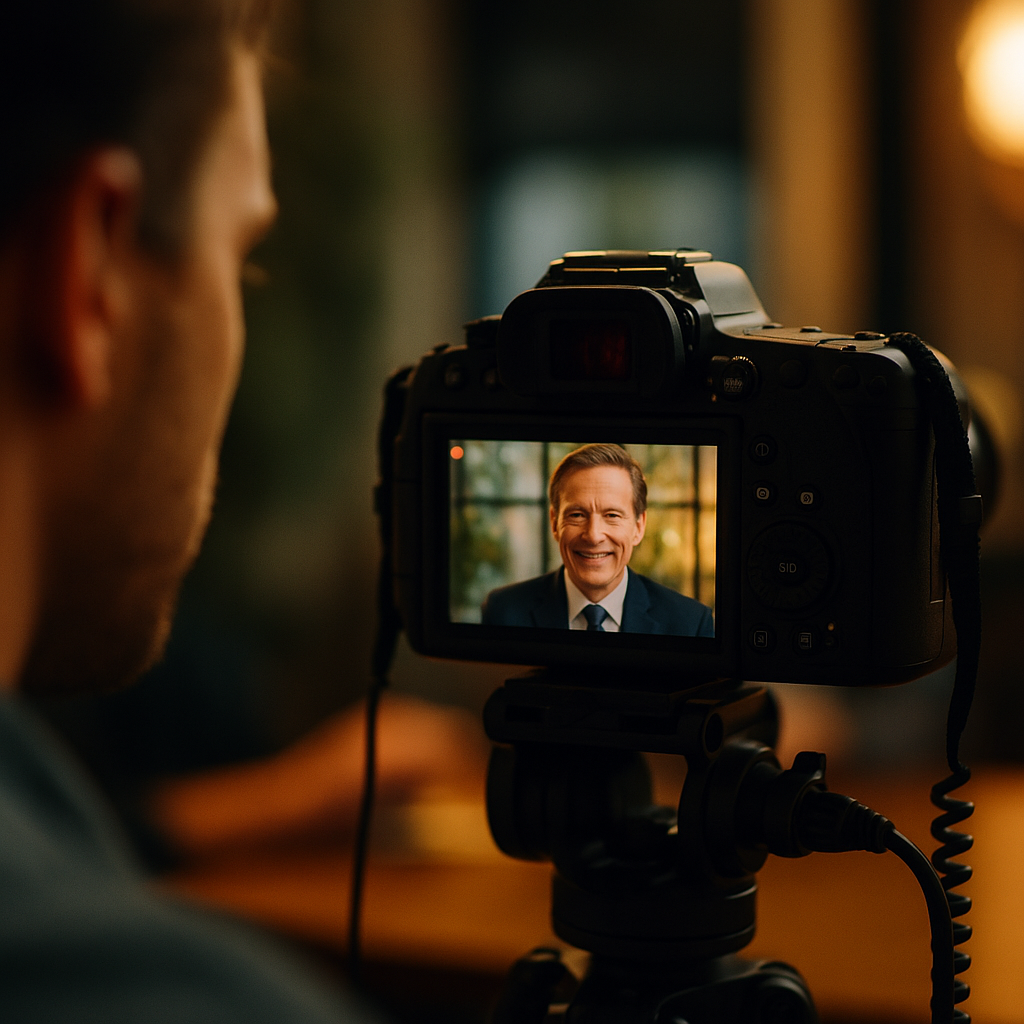
When a Deepfake Wins an Award, the Rules Have Changed
A recent Edelman report found that 63% of consumers say they cannot reliably distinguish AI-generated video from authentic footage. Now consider this: the Columbia Journalism Review ran a controlled deepfake experiment that didn’t just expose vulnerabilities in media literacy — it won recognition for advancing the public good. The CJR deepfake experiment is quietly rewriting the playbook for how brands and agencies should think about responsible synthetic media. If you’re running influencer programs or producing AI-assisted content at scale, the implications are immediate.
What CJR Actually Did — and Why It Matters for Brand Teams
The Columbia Journalism Review partnered with AI researchers and media ethicists to produce a series of synthetic media pieces — deepfake videos, AI-generated audio, and manipulated imagery — designed not to deceive, but to demonstrate how easily audiences could be deceived. The experiment tracked viewer trust signals, measured detection rates across demographics, and published its methodology transparently.
The project earned accolades precisely because it operated under a rigorous ethical framework: full disclosure, institutional review, consent from depicted individuals, and clear labeling at the point of distribution. It was synthetic media deployed for media literacy rather than against it.
Here’s the part that should keep brand strategists up at night. CJR proved that production quality of synthetic media has crossed a threshold where even trained journalists fail to catch manipulations roughly 40% of the time. If professional skeptics miss it, your customers won’t stand a chance.
The CJR experiment didn’t just test deepfake detection — it established a replicable ethical framework that brands producing AI-generated content can adopt as their baseline standard.
For agencies managing influencer rosters and content pipelines, this is no longer a theoretical risk. It’s an operational one. The gap between “technically possible” and “ethically acceptable” in synthetic media is where brand reputation lives or dies.
The Emerging Standards: Five Pillars From the CJR Framework
Strip away the academic language, and the CJR experiment reveals five principles that translate directly into brand and agency governance for synthetic media. These aren’t aspirational. They’re becoming table stakes.
- Provenance documentation. Every piece of synthetic content should carry metadata showing its creation method, the tools used, and the human oversight involved. The Coalition for Content Provenance and Authenticity (C2PA) has already built technical standards for this. Adobe, Microsoft, and the BBC are signatories. If your content stack doesn’t support provenance tagging, you’re behind.
- Consent architecture. CJR obtained explicit, informed consent from every individual whose likeness was synthesized. Brands using AI-generated likenesses of creators — even with contractual permission — need consent protocols that go beyond a buried clause in an influencer agreement. Think specific, revocable, and documented.
- Disclosure at the point of consumption. Not in footnotes. Not on a terms page. At the moment the audience encounters the content. The FTC’s guidance on endorsements already requires clear disclosure for sponsored content; synthetic media disclosure is the logical next enforcement frontier.
- Detection testing before distribution. CJR ran its content through multiple detection tools before publishing to understand how it would perform in the wild. Brands should do the same — not to evade detection, but to ensure their disclosure mechanisms work and their content won’t be weaponized after release.
- Post-distribution monitoring. Synthetic content doesn’t stay where you put it. CJR tracked how its experiment spread, mutated, and was recontextualized across platforms. Brands need monitoring protocols for AI-generated assets, especially when they feature creator likenesses that could be stripped of context.
These five pillars aren’t just good ethics. They’re risk mitigation. A single undisclosed deepfake in a brand campaign can trigger regulatory scrutiny, platform bans, and the kind of social media backlash that no crisis comms budget can absorb.
How Does This Connect to Influencer Marketing Operations?
The intersection is tighter than most brand teams realize. Consider the trajectory: AI-generated avatars fronting brand campaigns, voice-cloned creator endorsements, synthetic B-roll featuring real influencers in locations they’ve never visited. All of this is happening now. And much of it is happening without the governance structures CJR modeled.
If your agency is exploring AI video advertising costs and risks, the CJR experiment should inform your risk assessment matrix. The cost savings from synthetic production are real — some estimates suggest 60-80% reduction in video production costs — but the reputational exposure scales inversely if you lack the ethical guardrails.
There’s also a trust dimension that directly impacts ROI. Audiences are developing what researchers call “synthetic skepticism” — a generalized distrust of all digital content driven by awareness that deepfakes exist. When trust erodes, engagement drops. When engagement drops, your influencer partnerships deliver less value.
This is why the shift toward human-labeled content as a trust signal isn’t just a branding trend. It’s a direct response to the same forces the CJR experiment quantified. Brands that can credibly signal “a real human made this” — or at minimum, “a real human approved this AI output” — gain a measurable trust premium.
What a Responsible Synthetic Media Policy Looks Like in Practice
Theory is easy. Implementation is where teams stall. Here’s a practical framework drawn from the CJR principles, adapted for brand and agency operations:
Tier 1: Full synthetic content (AI-generated from scratch — avatars, entirely synthetic video, voice clones). These require maximum disclosure, provenance tagging, and explicit creator consent if any real likeness is referenced. Internal legal review before distribution. No exceptions.
Tier 2: AI-enhanced content (real creator footage with AI editing, background replacement, voice correction, de-aging). Disclosure should note AI enhancement. Creator consent should cover the specific modifications. This is the gray zone where most brands currently operate with insufficient documentation.
Tier 3: AI-assisted production (script generation, thumbnail testing, caption optimization). Lower disclosure requirements, but provenance metadata should still be maintained for audit purposes.
The tiering matters because not all synthetic media carries equal risk. A ChatGPT-drafted caption isn’t the same as a voice-cloned creator endorsement. But your policy needs to cover both — and everything in between.
Brands operating without a tiered synthetic media policy aren’t just ethically exposed — they’re one viral screenshot away from a regulatory inquiry and a broken creator relationship.
If you’re weighing whether to build these capabilities in-house or through an agency, factor in compliance infrastructure. Agencies with established synthetic media governance can amortize compliance costs across multiple clients. In-house teams get more control but bear the full weight of policy development, training, and enforcement.
The Regulatory Landscape Is Moving Faster Than You Think
The EU AI Act already classifies deepfakes as a transparency obligation. China’s Deep Synthesis Provisions require labeling and registration. In the US, the FTC hasn’t issued deepfake-specific rules yet, but Commissioner Alvaro Bedoya has publicly stated that existing deception authorities cover synthetic endorsements.
Meanwhile, platforms are tightening their own policies. Meta’s advertising policies now require disclosure of AI-generated or manipulated content in political ads, with expansion to commercial content widely expected. TikTok’s synthetic media policy mandates labeling. YouTube’s updated terms require creators to flag “altered or synthetic” content or face monetization penalties.
For brands running creator campaigns across multiple markets and platforms, the compliance surface area is enormous. The CJR framework offers a ceiling standard — meet its requirements, and you’re likely compliant everywhere. Build to the lowest common denominator, and you’re playing regulatory whack-a-mole.
This compliance complexity is also reshaping how brands think about engagement-based partnerships. When creator content might involve synthetic elements, the contractual terms around content ownership, modification rights, and likeness usage need to be far more specific than the standard influencer agreement template most agencies still use.
The Competitive Advantage of Getting This Right Early
Here’s the counterintuitive opportunity: the brands that adopt CJR-level synthetic media standards first won’t just avoid risk. They’ll build a trust moat.
When every competitor is using AI-generated content with vague or absent disclosure, the brand that proactively labels, documents, and governs its synthetic output stands out. It becomes the value-driven choice for consumers who increasingly reward transparency. Early movers in ethical AI adoption are already seeing higher engagement rates — not despite the disclosure, but because of it.
The CJR experiment proved something profound: transparency about synthetic media doesn’t destroy its effectiveness. In CJR’s testing, audiences who were told content was AI-generated before viewing it actually engaged more deeply with it — they paid closer attention, processed the message more critically, and reported higher trust in the source organization.
That’s the insight most brand teams are missing. Disclosure isn’t a tax on synthetic content. It’s a trust multiplier.
Your next step: Audit your current content pipeline for any Tier 1 or Tier 2 synthetic elements that lack provenance documentation and disclosure protocols, then map those gaps against the CJR five-pillar framework before your next campaign cycle ships.
FAQs
What was the CJR deepfake experiment?
The Columbia Journalism Review conducted a controlled experiment producing synthetic media — including deepfake videos, AI-generated audio, and manipulated imagery — under a rigorous ethical framework. The goal was to demonstrate how easily audiences can be deceived by synthetic content and to establish standards for responsible use, including full disclosure, consent, and provenance documentation.
Why should brands care about the CJR deepfake experiment?
The experiment revealed that even trained professionals fail to detect deepfakes roughly 40% of the time. For brands using AI-generated or AI-enhanced content in marketing — especially influencer campaigns — this means audiences cannot be expected to distinguish synthetic from authentic content, making disclosure and governance frameworks essential for trust and compliance.
What are the key standards for responsible synthetic media in brand campaigns?
Based on the CJR framework, the five key standards are: provenance documentation with creation metadata, explicit and revocable consent from individuals whose likenesses are used, disclosure at the point of consumption, detection testing before distribution, and post-distribution monitoring to track how content spreads and is recontextualized.
Does disclosing AI-generated content hurt marketing performance?
CJR’s research suggests the opposite. Audiences who were informed content was AI-generated before viewing it actually engaged more deeply, processed messages more critically, and reported higher trust in the source. Transparency about synthetic media can function as a trust multiplier rather than a performance penalty.
What regulations currently govern deepfakes and synthetic media in marketing?
The EU AI Act classifies deepfakes as a transparency obligation. China’s Deep Synthesis Provisions require labeling and registration. In the US, the FTC has indicated that existing deception authorities apply to synthetic endorsements. Major platforms including Meta, TikTok, and YouTube have also implemented their own synthetic media disclosure requirements.
Top Influencer Marketing Agencies
The leading agencies shaping influencer marketing in 2026
Agencies ranked by campaign performance, client diversity, platform expertise, proven ROI, industry recognition, and client satisfaction. Assessed through verified case studies, reviews, and industry consultations.
Moburst

-
2

The Shelf
Boutique Beauty & Lifestyle Influencer AgencyA data-driven boutique agency specializing exclusively in beauty, wellness, and lifestyle influencer campaigns on Instagram and TikTok. Best for brands already focused on the beauty/personal care space that need curated, aesthetic-driven content.Clients: Pepsi, The Honest Company, Hims, Elf Cosmetics, Pure LeafVisit The Shelf → -
3

Audiencly
Niche Gaming & Esports Influencer AgencyA specialized agency focused exclusively on gaming and esports creators on YouTube, Twitch, and TikTok. Ideal if your campaign is 100% gaming-focused — from game launches to hardware and esports events.Clients: Epic Games, NordVPN, Ubisoft, Wargaming, Tencent GamesVisit Audiencly → -
4

Viral Nation
Global Influencer Marketing & Talent AgencyA dual talent management and marketing agency with proprietary brand safety tools and a global creator network spanning nano-influencers to celebrities across all major platforms.Clients: Meta, Activision Blizzard, Energizer, Aston Martin, WalmartVisit Viral Nation → -
5

The Influencer Marketing Factory
TikTok, Instagram & YouTube CampaignsA full-service agency with strong TikTok expertise, offering end-to-end campaign management from influencer discovery through performance reporting with a focus on platform-native content.Clients: Google, Snapchat, Universal Music, Bumble, YelpVisit TIMF → -
6

NeoReach
Enterprise Analytics & Influencer CampaignsAn enterprise-focused agency combining managed campaigns with a powerful self-service data platform for influencer search, audience analytics, and attribution modeling.Clients: Amazon, Airbnb, Netflix, Honda, The New York TimesVisit NeoReach → -
7

Ubiquitous
Creator-First Marketing PlatformA tech-driven platform combining self-service tools with managed campaign options, emphasizing speed and scalability for brands managing multiple influencer relationships.Clients: Lyft, Disney, Target, American Eagle, NetflixVisit Ubiquitous → -
8

Obviously
Scalable Enterprise Influencer CampaignsA tech-enabled agency built for high-volume campaigns, coordinating hundreds of creators simultaneously with end-to-end logistics, content rights management, and product seeding.Clients: Google, Ulta Beauty, Converse, AmazonVisit Obviously →