


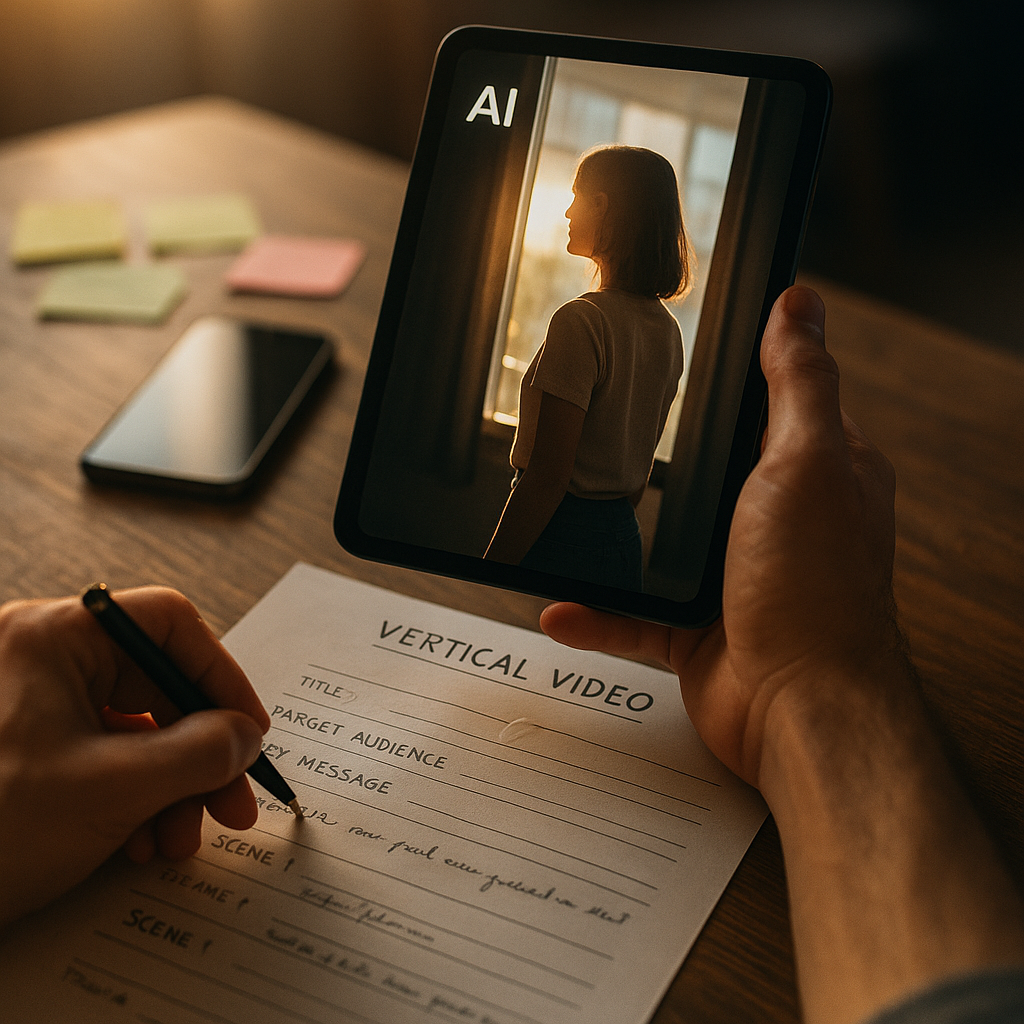
The Brief That Makes or Breaks AI-Enhanced Vertical Video
Seventy-three percent of vertical videos that surface through AI-powered recommendation engines share structural traits that most creative briefs never specify. That’s not a platform mystery — it’s a briefing failure. Brands investing in creator content without engineering for AI-enhanced vertical video are leaving discovery, remix amplification, and shoppable conversions on the table. This article gives you a creative brief template built to fix that, along with the reasoning behind every section so you can adapt it as platforms evolve.
Why Standard Briefs Fail the Algorithm
Most creative briefs were designed for a human audience. They specify tone, messaging pillars, brand guidelines, and maybe a call-to-action. Perfectly adequate for traditional campaigns. Completely insufficient for a distribution environment where AI systems decide what gets seen.
TikTok’s recommendation engine, Instagram’s Reels algorithm, YouTube Shorts’ discovery layer — each uses computer vision, audio fingerprinting, and engagement-pattern modeling to classify, rank, and distribute content. If your creator’s video lacks the structural markers these systems parse, it doesn’t matter how compelling the content is to humans. It won’t surface.
The brief is no longer just a creative document. It’s an engineering spec for algorithmic compatibility — and most brand teams haven’t updated theirs since short-form video was a novelty.
Think about what AI systems actually evaluate: scene segmentation, text overlay readability, audio clarity for transcription, visual safe zones, and hook retention within the first 1.2 seconds. Your brief needs to address all of this. If you’ve been exploring how TikTok’s AI discovery layer reshapes creator briefs, you already know the stakes.
The Template: Section by Section
Below is a creative brief framework designed for a single shoot that produces content compatible with AI-powered discovery, remix eligibility, and shoppable link integration. Adapt the specifics to your brand. The structure is what matters.
Section 1: Shoot Architecture
This isn’t your mood board. This is the structural skeleton the algorithm will parse.
- Aspect ratio: 9:16 native. No letterboxing, no cropping from horizontal. Platforms deprioritize reframed content.
- Duration tiers: Shoot for three cuts from the same session — a 15-second hook reel, a 30-45 second core narrative, and a 60-90 second extended version. Each must stand alone.
- Scene segmentation: Plan at least 4 distinct visual scenes in the 30-45 second cut. AI classifiers use scene transitions as engagement signals. Static single-shot content scores lower in novelty metrics.
- Safe zones: Keep essential visual information within the center 80% of frame. Platform UI overlays (usernames, captions, shop buttons) eat the edges — especially the bottom 15% and top 10%.
- Opening frame: The first frame must be visually distinct from the content that follows. AI systems sample the thumbnail from frame one. A blurry setup shot kills click-through before the hook even plays.
This level of structural specificity feels prescriptive. It is. Creators retain full creative latitude within these parameters, but the parameters themselves are non-negotiable if you want algorithmic surface area.
Section 2: Audio and Transcription Optimization
AI systems transcribe audio to classify content topically. If your creator’s audio is muddy, the algorithm misclassifies the video — and serves it to the wrong audience.
- Primary audio: Clear voice-over or direct-to-camera speech in the first 3 seconds. Ambient-only openings delay topic classification.
- Keyword seeding: Include 2-3 product-category keywords spoken naturally within the first 10 seconds. Not forced — woven into the narrative. The transcription engine needs them early.
- Music layer: Use platform-native trending sounds or royalty-free tracks. Copyrighted audio disqualifies content from remix features on most platforms. Check TikTok’s business tools for approved commercial audio libraries.
- Captions: Burn in stylized captions or use the platform’s auto-caption. Burned-in captions give you font control and boost retention — kinetic typography techniques can increase watch-through rates measurably.
Section 3: Remix Eligibility Engineering
Remix and duet features are earned media multipliers. But not every video is structurally eligible for them — and even fewer are designed to invite them.
A video becomes remix-worthy when it contains a clear reaction point, a visual gap another creator can fill, or a modular structure that invites reinterpretation. Your brief should specify:
- A “duet pause”: A 2-3 second moment where the creator looks off-screen, asks a question, or leaves visual white space. This is the seam where remixers insert themselves.
- Modular segments: Structure the video so a 5-8 second clip can be extracted without losing context. AI systems identify these segments for “use this sound” and “stitch” features automatically.
- Open-ended CTA: “Show me your version” outperforms “Link in bio” for remix generation. Brief creators to close with an invitation, not a directive.
Brands that treat remix features as earned media amplifiers consistently outperform those optimizing only for direct views. One beauty brand we’ve tracked generated 3.2x the impressions from remixed derivatives versus the original creator post — and the brief explicitly engineered for it.
If your brief doesn’t include a remix architecture section, you’re optimizing for one video when you could be seeding dozens.
Section 4: Shoppable Integration Points
Shoppable links aren’t an afterthought you pin to a finished video. The content must be structured around the commerce moment.
According to eMarketer’s research, social commerce conversion rates jump 40% when the product interaction occurs within the first half of the video versus a tagged mention at the end. Your brief should define:
- Product reveal timing: Between seconds 3-8 in a 30-second video. Early enough for the shoppable tag to be active during peak attention, late enough to follow the hook.
- Hold-and-show moment: A deliberate 2-second product hold at center-frame. Platform AI uses object recognition to auto-suggest product tags. If the product is partially obscured or in motion, the system won’t reliably detect it.
- Verbal price anchor: Creators should mention price or value (“under $30,” “half the cost of”) near the product reveal. Transcription-linked shopping AI uses these cues to serve the video to high-intent shoppers.
- Tap-zone awareness: The shoppable tag icon typically appears lower-right. Avoid placing competing visual elements there. Brief creators on the spatial relationship between their product display and the tap target.
For deeper guidance on structuring shoppable creator briefs, we’ve covered the conversion mechanics extensively.
What the Brief Doesn’t Include — and Shouldn’t
Resist the urge to script dialogue. AI discovery systems reward authentic speech patterns and penalize rehearsed delivery through engagement-decay signals. Your brief provides structure. The creator provides the voice. The distinction is critical, especially when targeting Gen Z audiences where authenticity paradoxes directly affect purchase behavior.
Also absent from this template: specific hashtag mandates. Platform AI has largely deprioritized hashtag-based discovery in favor of content-graph analysis. A handful of relevant tags still help with topical classification, but they’re supplementary — not strategic.
Operationalizing the Template at Scale
One brief for one creator is a starting point. The real operational question is how you deploy this across 20, 50, or 200 creators simultaneously without losing structural consistency.
The answer is tooling. HubSpot and CreatorIQ both offer brief templating with conditional logic — you set the structural requirements as locked fields, and creators fill in the creative variables. Pair this with an AI-enhanced UGC operations stack for automated QA checks on delivered content: safe-zone compliance, audio clarity scoring, scene-count verification.
The QA layer matters more than most teams realize. A brief is only useful if compliance is verifiable before the content goes live. Build automated checks into your review workflow or you’ll spend more time on revision cycles than you saved on briefing.
Measuring What This Brief Changes
Track three metrics after deploying this template versus your previous briefs:
- Algorithmic reach ratio: Impressions divided by follower count. Structurally optimized content should show a measurable lift in non-follower discovery.
- Remix derivative count: How many stitch, duet, or remix pieces spawn from the original. This is your earned media multiplier.
- Shoppable tap-through rate: Not just clicks — the ratio of taps on the product tag to total views. This tells you whether the commerce moment was structurally effective. Meta’s business suite and TikTok Shop analytics both surface this metric.
If all three metrics don’t improve within two campaign cycles, the problem isn’t the template — it’s creator selection or product-market fit. The structure removes the algorithmic ceiling. Performance still depends on execution.
Your next step: Take your current creator brief, map it against the four sections above, and count the gaps. Most brand teams find they’re missing at least three of the structural specifications. Fill those gaps before your next shoot, and you’ll produce content the algorithm actually knows how to distribute.
FAQs
What is AI-enhanced vertical video?
AI-enhanced vertical video is 9:16 content intentionally structured so that AI-powered platform algorithms can accurately classify, recommend, and distribute it. This includes optimizing audio for transcription, engineering scene segmentation for engagement signals, and designing visual safe zones for shoppable overlays — all planned during the briefing stage rather than added in post-production.
How do I make creator content eligible for remix and duet features?
Brief creators to include a deliberate 2-3 second “duet pause” — a moment of visual white space or a direct question — and structure the video in modular segments that can be extracted without losing context. Avoid copyrighted audio, which disqualifies content from remix features on most platforms. Close with an open-ended invitation rather than a hard CTA.
When should the product appear in a shoppable vertical video?
The product should be revealed between seconds 3 and 8 in a 30-second video. This timing places the shoppable tag during peak viewer attention while allowing the hook to land first. Include a clear 2-second product hold at center-frame so platform object recognition can auto-detect and tag the item reliably.
Can I use the same creative brief template across TikTok, Instagram Reels, and YouTube Shorts?
The structural principles — safe zones, scene segmentation, audio clarity, remix architecture — apply across all three platforms. However, each platform has unique UI overlay positions, shoppable feature sets, and audio library rules. Build a universal base template and add platform-specific appendices for tap-zone placement and commerce integration details.
How do I verify that creators followed the structural brief before publishing?
Use automated QA tools within your UGC operations stack to check delivered content against brief specifications. Key checkpoints include safe-zone compliance, audio clarity scoring, scene-count verification, and product visibility at the specified timestamp. Automated checks reduce revision cycles and ensure algorithmic compatibility before content goes live.
Top Influencer Marketing Agencies
The leading agencies shaping influencer marketing in 2026
Agencies ranked by campaign performance, client diversity, platform expertise, proven ROI, industry recognition, and client satisfaction. Assessed through verified case studies, reviews, and industry consultations.
Moburst

-
2

The Shelf
Boutique Beauty & Lifestyle Influencer AgencyA data-driven boutique agency specializing exclusively in beauty, wellness, and lifestyle influencer campaigns on Instagram and TikTok. Best for brands already focused on the beauty/personal care space that need curated, aesthetic-driven content.Clients: Pepsi, The Honest Company, Hims, Elf Cosmetics, Pure LeafVisit The Shelf → -
3

Audiencly
Niche Gaming & Esports Influencer AgencyA specialized agency focused exclusively on gaming and esports creators on YouTube, Twitch, and TikTok. Ideal if your campaign is 100% gaming-focused — from game launches to hardware and esports events.Clients: Epic Games, NordVPN, Ubisoft, Wargaming, Tencent GamesVisit Audiencly → -
4

Viral Nation
Global Influencer Marketing & Talent AgencyA dual talent management and marketing agency with proprietary brand safety tools and a global creator network spanning nano-influencers to celebrities across all major platforms.Clients: Meta, Activision Blizzard, Energizer, Aston Martin, WalmartVisit Viral Nation → -
5

The Influencer Marketing Factory
TikTok, Instagram & YouTube CampaignsA full-service agency with strong TikTok expertise, offering end-to-end campaign management from influencer discovery through performance reporting with a focus on platform-native content.Clients: Google, Snapchat, Universal Music, Bumble, YelpVisit TIMF → -
6

NeoReach
Enterprise Analytics & Influencer CampaignsAn enterprise-focused agency combining managed campaigns with a powerful self-service data platform for influencer search, audience analytics, and attribution modeling.Clients: Amazon, Airbnb, Netflix, Honda, The New York TimesVisit NeoReach → -
7

Ubiquitous
Creator-First Marketing PlatformA tech-driven platform combining self-service tools with managed campaign options, emphasizing speed and scalability for brands managing multiple influencer relationships.Clients: Lyft, Disney, Target, American Eagle, NetflixVisit Ubiquitous → -
8

Obviously
Scalable Enterprise Influencer CampaignsA tech-enabled agency built for high-volume campaigns, coordinating hundreds of creators simultaneously with end-to-end logistics, content rights management, and product seeding.Clients: Google, Ulta Beauty, Converse, AmazonVisit Obviously →