


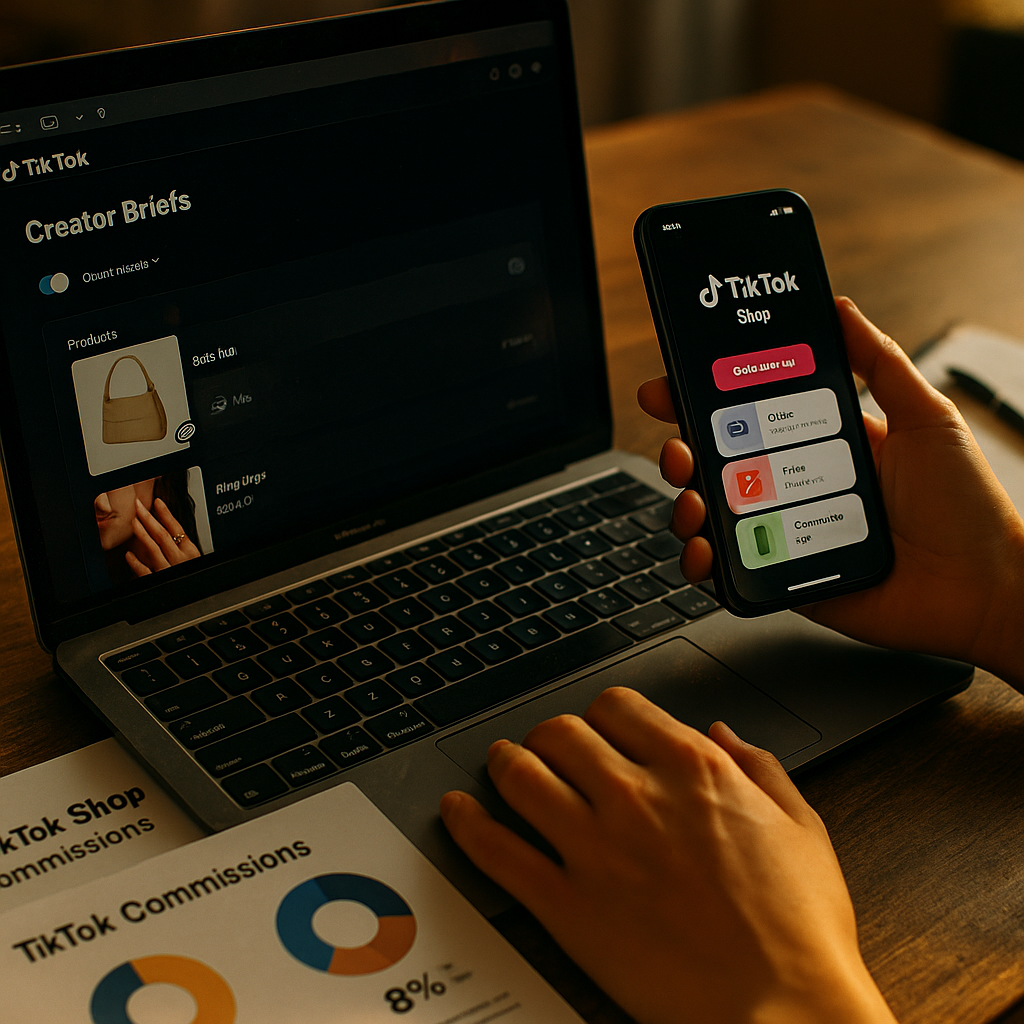
TikTok Shop as a Primary Revenue Channel: The Brand Strategist’s Playbook
Brands running TikTok Shop programs generated over $33 billion in GMV globally through the first three quarters of 2026, according to Statista’s latest commerce data. That’s not experimental budget anymore. TikTok Shop is a primary revenue channel — and the brands treating it like one are structuring their creator programs with the same rigor they’d apply to retail distribution. Here’s the operational playbook for brand strategists ready to move past “testing” and into consistent, scalable purchase completion.
Why Most Creator Briefings Fail at Commerce
The typical influencer brief was designed for awareness. It centers brand messaging, visual guidelines, and talking points. That’s fine for top-of-funnel campaigns. It’s terrible for commerce.
TikTok Shop demands a fundamentally different briefing architecture. The creator isn’t just telling a story — they’re closing a sale within a 30-to-90-second window where the viewer’s thumb is already hovering over the next swipe. Every element of the brief needs to serve conversion, not just impression.
Here’s what high-performing commerce briefs include that awareness briefs don’t:
- A defined “purchase trigger moment” — the exact second in the video where the product link should feel irresistible. This isn’t a CTA script. It’s a behavioral cue tied to demonstrating value, revealing a result, or creating urgency.
- Objection handling language — the top three reasons a viewer hesitates, and natural ways the creator can address them without sounding scripted.
- Price anchoring guidance — how to frame the product’s cost relative to alternatives, per-use value, or bundles without turning the content into an infomercial.
- Restock/scarcity signals — if applicable, real inventory context that creates urgency. Fake scarcity destroys trust. Real scarcity drives carts.
The brands seeing 4-6% purchase completion rates on TikTok Shop are the ones who brief creators like sales partners, not billboard actors. If you’re scaling creator partnerships at scale, this shift in briefing philosophy has to come first.
Product Link Placement: Timing, Context, and the “Dead Zone” Problem
Let’s talk about where the money actually leaks.
TikTok Shop’s native product link integration — the orange shopping bag icon, pinned product cards, and in-video anchors — gives creators multiple placement options. Most creators default to pinning the link at video start and mentioning it at the end. This is backwards.
Internal data from top-performing TikTok Shop affiliate programs shows that product links mentioned or visually reinforced between the 40-60% mark of a video’s total duration generate 2.3x higher add-to-cart rates than links mentioned only in the opening or closing frames.
Why? Because that mid-video window is where demonstration meets desire. The viewer has committed attention, seen the product in action, and hasn’t yet reached the mental “wrap-up” phase where they start evaluating whether to swipe.
The “dead zone” is the last 15% of any video. Viewers who’ve stayed that long are either already sold or already checked out. Placing your primary link reinforcement there is wasted effort.
Tactical recommendations for your briefing docs:
- Pin the product card from frame one — this is passive visibility, not active selling. It catches impulse buyers who recognize the product immediately.
- First verbal/visual link reference at 40-55% of video duration — timed to the peak value demonstration moment.
- Second reference as a “reminder close” at 70-80% — quick, casual, not desperate. “Link’s right there” energy.
- Never rely on caption-only placement — the vast majority of TikTok users never read captions on commerce content.
For a deeper dive into the mechanics of link optimization, our analysis of product links that boost add-to-cart rates covers specific formatting and placement patterns worth testing.
Commission Architecture That Actually Motivates Behavior
Flat commission rates are lazy. There, I said it.
A 10% commission across all creators, all products, all performance tiers tells your affiliate partners nothing about what you actually want them to do. It doesn’t reward their best work. It doesn’t penalize low effort. And it definitely doesn’t incentivize the behavior that drives purchase completion — which is repeat, high-frequency posting with genuine product integration.
The commission structures driving the strongest TikTok Shop performance in 2026 use tiered, behavior-linked models:
Tier 1: Base Commission (8-12%)
Available to all approved affiliates. Standard rate for product link sales. This is your floor — competitive enough to attract creators, but not so generous that it rewards passive link-dropping.
Tier 2: Volume Escalator (14-18%)
Unlocked when a creator generates a defined number of completed purchases (not just clicks) within a 30-day window. This rewards consistency. The threshold should be achievable but meaningful — typically 50-200 units depending on product price point.
Tier 3: Content Quality Bonus (flat fee + commission)
Reserved for creators who hit both volume targets and content benchmarks — video completion rate above 45%, comment sentiment scores, or save-to-share ratios. This is where you combine affiliate commission with a hybrid content fee, typically $200-$1,500 per qualifying video depending on creator reach.
Tier 4: Exclusive/Launch Access
Top performers get early product access, exclusive colorways or bundles, and co-branded landing pages. The commission rate matters less here — the exclusivity itself becomes the incentive because it gives creators content differentiation their audience can’t get elsewhere.
Brands using tiered commission structures on TikTok Shop report 37% higher creator retention and 28% more posts per creator per month compared to flat-rate programs, according to aggregated data from TikTok’s commerce platform.
One critical detail: pay fast. TikTok Shop’s native affiliate payout cycles are improving, but if you’re running a hybrid model with content bonuses, net-60 payment terms will kill creator motivation. Net-15 or net-30 maximum. The brands winning the creator talent war are the ones who treat payment speed as a competitive advantage.
The Briefing-to-Checkout Pipeline: Connecting the Pieces
Strategy without systems is just a wish list. Here’s how the briefing, placement, and commission components connect into a repeatable pipeline.
Step 1: Segment your creator roster by purchase intent strength. Not all creators drive the same buyer behavior. Some are discovery engines (high views, low conversion). Others are closers (moderate views, high add-to-cart). Brief them differently. Discovery creators get awareness-flavored commerce briefs. Closers get objection-handling, price-anchoring briefs.
Step 2: Match products to creator expertise and audience purchase power. A $14 lip gloss and a $180 skincare device require completely different creator profiles, content lengths, and demonstration approaches. This sounds obvious. Most brands still batch-assign their entire catalog.
Step 3: Build content cadence into the brief, not just content specs. A single video rarely drives sustained revenue. Brief creators for a 3-4 video arc: initial review, one-week follow-up, “still using it” check-in, and a comparison or “how I use it daily” piece. Each video serves a different stage of buyer hesitation.
Step 4: Use TikTok Shop analytics plus third-party attribution to connect content to cart. TikTok’s native analytics dashboard has improved significantly, but you’ll still want tools like HubSpot or dedicated affiliate tracking platforms to reconcile multi-touch attribution across creators.
Brands investing in AI remix strategies for content amplification are finding that extending the shelf life of top-performing creator videos through remix and duet mechanics further compounds the commerce return from a single brief.
Compliance and Disclosure: The Non-Negotiable Layer
TikTok Shop’s integrated commerce features don’t exempt creators from FTC disclosure requirements. Every affiliate link, every commission-based recommendation, every gifted product mention needs clear, conspicuous disclosure. Period.
Build disclosure language directly into your briefing templates. Don’t leave it to creators to figure out. Specify exactly where the #ad or #sponsored hashtag goes, whether verbal disclosure is required (it is for video content), and what language is acceptable. This protects your brand legally and, frankly, it protects creator trust with their audience — which is the entire engine powering your commerce program.
For brands also running cross-platform strategies, understanding how the creator strategy for AI product discovery intersects with TikTok Shop can reveal new attribution paths worth monitoring.
What Separates Revenue Channels from Experiments
The brands generating seven-figure monthly revenue through TikTok Shop aren’t doing anything magical. They’re doing the boring work well: structured briefs, tested link placements, tiered commissions, fast payouts, and rigorous compliance. They treat TikTok Shop like a retail channel with its own P&L, not a marketing experiment with fuzzy KPIs.
Your next step: Audit your current creator briefing template against the commerce-specific elements outlined above. If your brief doesn’t include a defined purchase trigger moment, objection handling guidance, and a link placement timeline mapped to video duration, you’re leaving revenue on the table every time a creator hits “post.”
FAQs
What commission rate should brands offer TikTok Shop creators?
Most competitive programs start with a base commission of 8-12% and scale to 14-18% for creators who hit volume targets. Top performers often receive hybrid compensation combining commission with flat content fees. The key is structuring tiers that reward purchase completion, not just link clicks.
How should product links be placed in TikTok Shop creator videos?
Pin the product card from frame one for passive visibility. The primary verbal or visual link reference should appear at the 40-55% mark of the video, when viewer engagement with the product demonstration peaks. A secondary casual mention at 70-80% serves as a reminder close. Avoid relying on caption-only placement.
What makes a TikTok Shop creator briefing different from a standard influencer brief?
Commerce-focused briefs include a defined purchase trigger moment, objection handling language, price anchoring guidance, and real scarcity signals. They also specify a multi-video content cadence rather than single-post deliverables, treating creators as sales partners rather than awareness vehicles.
How do brands track TikTok Shop sales attribution across multiple creators?
TikTok Shop’s native analytics dashboard provides per-creator sales data and conversion metrics. For multi-touch attribution and cross-platform reconciliation, brands supplement with third-party affiliate tracking platforms and CRM tools that can connect creator content touchpoints to completed purchases.
Do TikTok Shop affiliate posts require FTC disclosure?
Yes. Every commission-based product recommendation on TikTok Shop requires clear and conspicuous disclosure per FTC guidelines. This includes verbal disclosure in video content and visible hashtags like #ad or #sponsored. Brands should include specific disclosure language and placement instructions in every creator brief.
Top Influencer Marketing Agencies
The leading agencies shaping influencer marketing in 2026
Agencies ranked by campaign performance, client diversity, platform expertise, proven ROI, industry recognition, and client satisfaction. Assessed through verified case studies, reviews, and industry consultations.
Moburst

-
2

The Shelf
Boutique Beauty & Lifestyle Influencer AgencyA data-driven boutique agency specializing exclusively in beauty, wellness, and lifestyle influencer campaigns on Instagram and TikTok. Best for brands already focused on the beauty/personal care space that need curated, aesthetic-driven content.Clients: Pepsi, The Honest Company, Hims, Elf Cosmetics, Pure LeafVisit The Shelf → -
3

Audiencly
Niche Gaming & Esports Influencer AgencyA specialized agency focused exclusively on gaming and esports creators on YouTube, Twitch, and TikTok. Ideal if your campaign is 100% gaming-focused — from game launches to hardware and esports events.Clients: Epic Games, NordVPN, Ubisoft, Wargaming, Tencent GamesVisit Audiencly → -
4

Viral Nation
Global Influencer Marketing & Talent AgencyA dual talent management and marketing agency with proprietary brand safety tools and a global creator network spanning nano-influencers to celebrities across all major platforms.Clients: Meta, Activision Blizzard, Energizer, Aston Martin, WalmartVisit Viral Nation → -
5

The Influencer Marketing Factory
TikTok, Instagram & YouTube CampaignsA full-service agency with strong TikTok expertise, offering end-to-end campaign management from influencer discovery through performance reporting with a focus on platform-native content.Clients: Google, Snapchat, Universal Music, Bumble, YelpVisit TIMF → -
6

NeoReach
Enterprise Analytics & Influencer CampaignsAn enterprise-focused agency combining managed campaigns with a powerful self-service data platform for influencer search, audience analytics, and attribution modeling.Clients: Amazon, Airbnb, Netflix, Honda, The New York TimesVisit NeoReach → -
7

Ubiquitous
Creator-First Marketing PlatformA tech-driven platform combining self-service tools with managed campaign options, emphasizing speed and scalability for brands managing multiple influencer relationships.Clients: Lyft, Disney, Target, American Eagle, NetflixVisit Ubiquitous → -
8

Obviously
Scalable Enterprise Influencer CampaignsA tech-enabled agency built for high-volume campaigns, coordinating hundreds of creators simultaneously with end-to-end logistics, content rights management, and product seeding.Clients: Google, Ulta Beauty, Converse, AmazonVisit Obviously →