


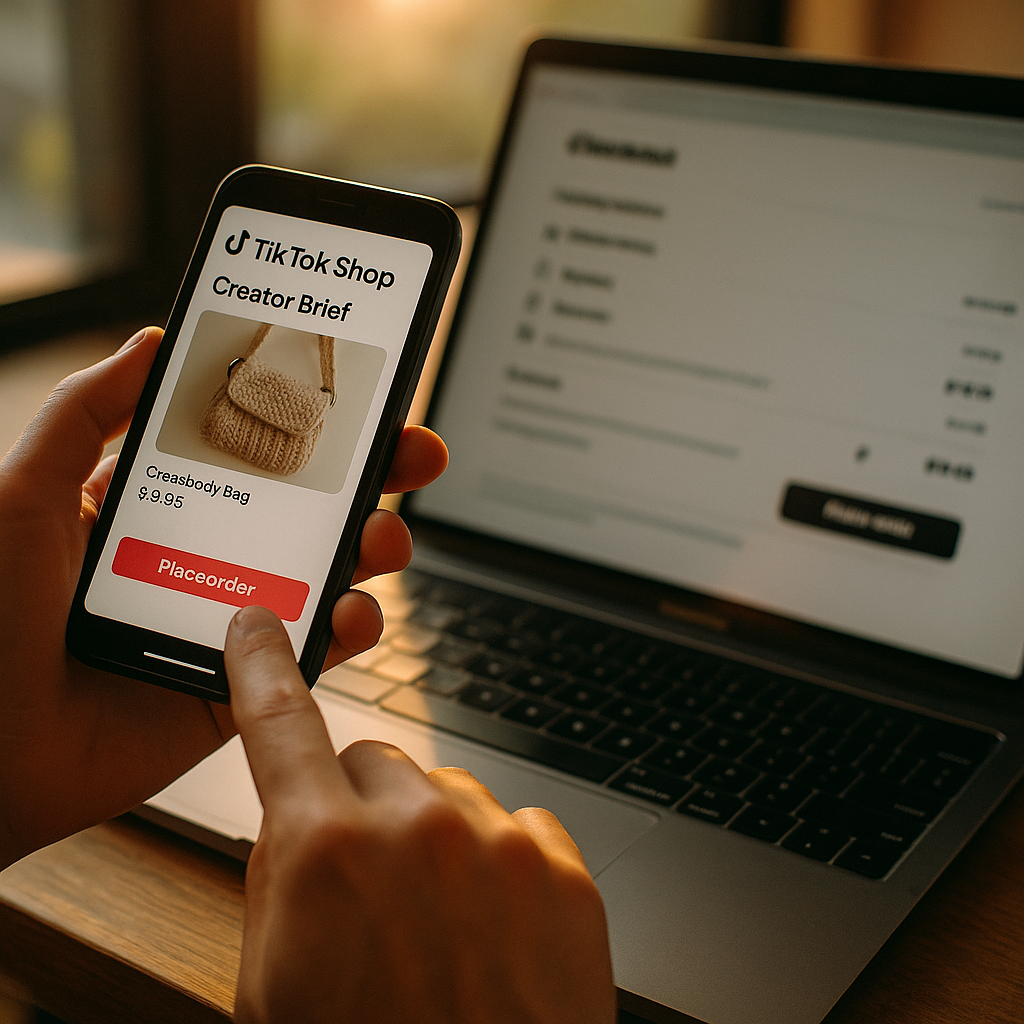
Brands running TikTok Shop campaigns in Q1 saw a 41% higher conversion rate when creator briefs included specific checkout-flow guidance versus those that didn’t, according to internal data shared by several mid-market DTC operators at Shoptalk Spring. That gap is only widening. As TikTok’s in-app purchase flow matures, the old way of briefing creators — loose product talking points plus a discount code — is becoming a liability. Commerce teams that treat brief architecture as a conversion lever, not an afterthought, are pulling ahead fast.
The Checkout Flow Isn’t What It Was Six Months Ago
TikTok has quietly shipped more than a dozen updates to its native checkout experience since late last year. Product detail pages now support richer media carousels. One-tap purchasing is live for saved payment users. And the platform’s commerce infrastructure now allows real-time inventory syncing at the SKU level — meaning out-of-stock embarrassments mid-campaign are largely preventable if your catalog integration is current.
What does this mean for creator briefs? Everything.
When checkout was clunky, creators could afford to be vague. The friction itself was a filter — only highly motivated buyers made it through. Now that the purchase path is genuinely smooth, the creator’s content is no longer just driving awareness. It’s the top of a very short funnel. Every word, every product tag placement, every CTA phrasing directly impacts whether someone taps “Buy Now” or scrolls past.
The smoother the checkout, the more weight the creative brief carries. A frictionless purchase path magnifies both good and bad creative decisions.
What Your Creator Briefs Need to Include Now
Most brand commerce teams still structure briefs around messaging pillars and brand guidelines. That’s table stakes. The new requirement set looks different — and more operational.
Product catalog alignment instructions. Creators need to know exactly which SKUs are active, which variants are in stock, and how the product detail page will appear when a viewer taps through. If you’re running a multi-SKU campaign, the brief should specify which product link the creator pins — and why. We’ve covered the mechanics of this in depth in our guide on product links that boost add-to-cart rates.
Checkout-aware CTA scripting. “Link in bio” is dead on TikTok Shop campaigns. Briefs should include 2-3 approved CTA variations that reference the in-video shopping tag, the product pin, or the basket icon — whatever the active UI element is for that campaign format. Specificity matters: “Tap the orange cart” converts differently than “Check the link.”
Timing windows tied to inventory and promotions. If your product catalog integration supports flash pricing or limited drops, the brief must include hard posting windows. A creator going live 20 minutes after a promotion expires creates customer service headaches and erodes trust.
Disclosure formatting for shoppable content. The FTC’s endorsement guidelines haven’t gotten simpler. When the content itself is the storefront, disclosure needs to be unmissable. Brief it explicitly, including placement and format.
Product Catalog Integration: The Backend Your Creators Can’t See (But Feel)
Here’s a scenario that plays out weekly: a creator publishes a TikTok Shop video, it gains traction, and by hour three the featured SKU shows “Currently Unavailable.” The content keeps performing — algorithmically, TikTok doesn’t care that your inventory is zeroed out — but every new viewer who taps through hits a dead end. You’ve paid for awareness that converts to frustration.
Catalog integration isn’t glamorous work. But it’s become one of the highest-leverage operational investments a brand commerce team can make.
TikTok’s Seller Center API now supports near-real-time inventory feeds. Platforms like Shopify and CommerceHub offer native connectors that sync stock levels, pricing, and product metadata on intervals as tight as 15 minutes. If your catalog still updates daily via CSV upload, you’re operating with one hand tied behind your back.
The brief connection? Creators can’t sell what isn’t there. But more subtly, creators who’ve been burned by out-of-stock issues become hesitant partners. They start hedging their CTAs, softening their recommendations, qualifying their enthusiasm. That hedging costs you conversion rate even when inventory is fine. Reliable catalog operations build creator confidence — and confident creators sell.
For teams managing multiple creator partnerships simultaneously, maintaining this operational backbone is essential to authentic partnerships at scale.
Reducing Checkout Friction: A Brief-Level Problem
Checkout friction reduction on TikTok isn’t just a platform engineering problem. Brands control more of the friction variables than they realize — and the creator brief is where you address them.
Consider pricing transparency. If a creator demonstrates a product at $29.99 but the checkout page shows $34.99 because shipping isn’t included, you’ve introduced friction the platform can’t solve. The brief should specify whether creators quote the all-in price, reference free shipping thresholds, or avoid specific price mentions entirely.
Bundle and variant complexity is another friction source. A creator showcasing a skincare set that requires the buyer to select size, shade, and fragrance at checkout is asking for drop-off. Smart briefs either limit the featured product to the lowest-complexity SKU or provide creators with explicit guidance on which variant to demonstrate and recommend — so the viewer arrives at checkout already knowing what to select.
Then there’s the trust gap. TikTok’s purchase protection and returns policies have improved significantly, but many buyers still hesitate at in-app checkout. Briefs that encourage creators to verbally reference TikTok’s buyer protection — “you’re covered if anything goes wrong” — see measurably higher completion rates. It’s a one-line addition to a brief that can move the needle 8-12% on checkout completion.
Every point of checkout friction that a creator can preemptively address in their content is one less reason for a viewer to abandon the cart. Brief it, or lose it.
The Remix and Amplification Layer
One dimension brand commerce teams frequently overlook: what happens after the original creator post goes live. TikTok’s remix and duet mechanics now interact with shopping tags. A remix of a shoppable video can inherit the product link — but only if the original content was set up correctly.
This means your brief needs to account for content reuse. Aspect ratios, product tag placement relative to the remix split-screen, even audio mix levels all matter if you want derivative content to remain shoppable. Teams using AI remix strategies for amplification should build these specifications directly into the initial creator brief rather than trying to retrofit them later.
The compounding effect is significant. A single well-briefed creator video that spawns 15-20 shoppable remixes can drive 3-5x the attributed revenue of the original post alone.
Building the Brief Template: A Practical Framework
For brand commerce teams ready to operationalize this, here’s the framework we’re seeing top performers adopt:
- Catalog snapshot section — Active SKUs, current pricing, stock status, and a link to the live product detail page so creators can preview the buyer experience before filming.
- Checkout flow map — A simple screen-by-screen walkthrough of what the buyer sees after tapping the product tag. Include screenshots. Creators who understand the post-tap experience make better content.
- CTA bank — Three to five approved calls-to-action calibrated to the current UI. Update this quarterly as TikTok ships interface changes.
- Friction pre-emption notes — Specific talking points that address known checkout hesitations: shipping cost, delivery time, return policy, payment security.
- Remix and reuse specifications — Technical requirements for content that will remain shoppable if remixed, dueted, or repurposed via TikTok Shop creator briefings best practices.
- Compliance and disclosure requirements — Exact language, placement, and format for FTC-compliant disclosures in shoppable content.
This isn’t about making briefs longer. It’s about making them more precise. The best briefs we’ve seen from high-performing commerce brands tracked on industry benchmarking platforms are actually shorter than old-school influencer briefs — they’ve just replaced vague brand messaging sections with operational specifics that directly impact revenue.
What Comes Next
TikTok’s commerce team has signaled that AI-powered product recommendation overlays — where the platform dynamically suggests products based on video content — will enter beta for select sellers this year. When that arrives, the brief paradigm shifts again: creators will need guidance on how to create content that triggers the right algorithmic product matches, not just showcase a single SKU.
Brand commerce teams that build operationally rigorous brief templates now will have the muscle memory to adapt when that next wave hits. Start by auditing your last five creator briefs against the framework above and closing the gaps before your next campaign cycle.
Frequently Asked Questions
How has TikTok’s in-app purchase flow changed creator brief requirements?
TikTok’s matured checkout experience — including one-tap purchasing, richer product detail pages, and real-time inventory syncing — means creator content now sits at the top of a very short conversion funnel. Briefs must include checkout-aware CTA scripting, product catalog alignment details, and friction pre-emption talking points rather than just brand messaging guidelines.
What should brand commerce teams include in TikTok Shop creator briefs?
Modern TikTok Shop briefs should include a catalog snapshot with active SKUs and stock status, a checkout flow map with screenshots, an approved CTA bank tied to current UI elements, friction pre-emption notes covering shipping and returns, remix and reuse specifications, and explicit FTC disclosure requirements.
How does product catalog integration affect TikTok creator campaign performance?
Poor catalog integration leads to out-of-stock situations during high-performing creator content, which wastes ad spend and damages creator confidence. Brands using near-real-time inventory feeds via platforms like Shopify’s native TikTok connector can prevent these issues and maintain creator trust, which directly correlates with stronger CTAs and higher conversion rates.
What checkout friction points can creator briefs help reduce?
Creator briefs can address pricing transparency (all-in vs. pre-shipping pricing), product variant complexity (guiding creators to recommend specific variants), and buyer trust gaps (encouraging creators to reference TikTok’s purchase protection). Each of these brief-level interventions can improve checkout completion rates by 8-12%.
How do TikTok remix and duet features interact with shoppable content?
TikTok remixes and duets can inherit the original video’s product shopping tag, but only if the source content is configured correctly. Briefs should specify aspect ratios, product tag placement relative to split-screen formats, and audio mix levels to ensure derivative content remains fully shoppable.
Top Influencer Marketing Agencies
The leading agencies shaping influencer marketing in 2026
Agencies ranked by campaign performance, client diversity, platform expertise, proven ROI, industry recognition, and client satisfaction. Assessed through verified case studies, reviews, and industry consultations.
Moburst

-
2

The Shelf
Boutique Beauty & Lifestyle Influencer AgencyA data-driven boutique agency specializing exclusively in beauty, wellness, and lifestyle influencer campaigns on Instagram and TikTok. Best for brands already focused on the beauty/personal care space that need curated, aesthetic-driven content.Clients: Pepsi, The Honest Company, Hims, Elf Cosmetics, Pure LeafVisit The Shelf → -
3

Audiencly
Niche Gaming & Esports Influencer AgencyA specialized agency focused exclusively on gaming and esports creators on YouTube, Twitch, and TikTok. Ideal if your campaign is 100% gaming-focused — from game launches to hardware and esports events.Clients: Epic Games, NordVPN, Ubisoft, Wargaming, Tencent GamesVisit Audiencly → -
4

Viral Nation
Global Influencer Marketing & Talent AgencyA dual talent management and marketing agency with proprietary brand safety tools and a global creator network spanning nano-influencers to celebrities across all major platforms.Clients: Meta, Activision Blizzard, Energizer, Aston Martin, WalmartVisit Viral Nation → -
5

The Influencer Marketing Factory
TikTok, Instagram & YouTube CampaignsA full-service agency with strong TikTok expertise, offering end-to-end campaign management from influencer discovery through performance reporting with a focus on platform-native content.Clients: Google, Snapchat, Universal Music, Bumble, YelpVisit TIMF → -
6

NeoReach
Enterprise Analytics & Influencer CampaignsAn enterprise-focused agency combining managed campaigns with a powerful self-service data platform for influencer search, audience analytics, and attribution modeling.Clients: Amazon, Airbnb, Netflix, Honda, The New York TimesVisit NeoReach → -
7

Ubiquitous
Creator-First Marketing PlatformA tech-driven platform combining self-service tools with managed campaign options, emphasizing speed and scalability for brands managing multiple influencer relationships.Clients: Lyft, Disney, Target, American Eagle, NetflixVisit Ubiquitous → -
8

Obviously
Scalable Enterprise Influencer CampaignsA tech-enabled agency built for high-volume campaigns, coordinating hundreds of creators simultaneously with end-to-end logistics, content rights management, and product seeding.Clients: Google, Ulta Beauty, Converse, AmazonVisit Obviously →