


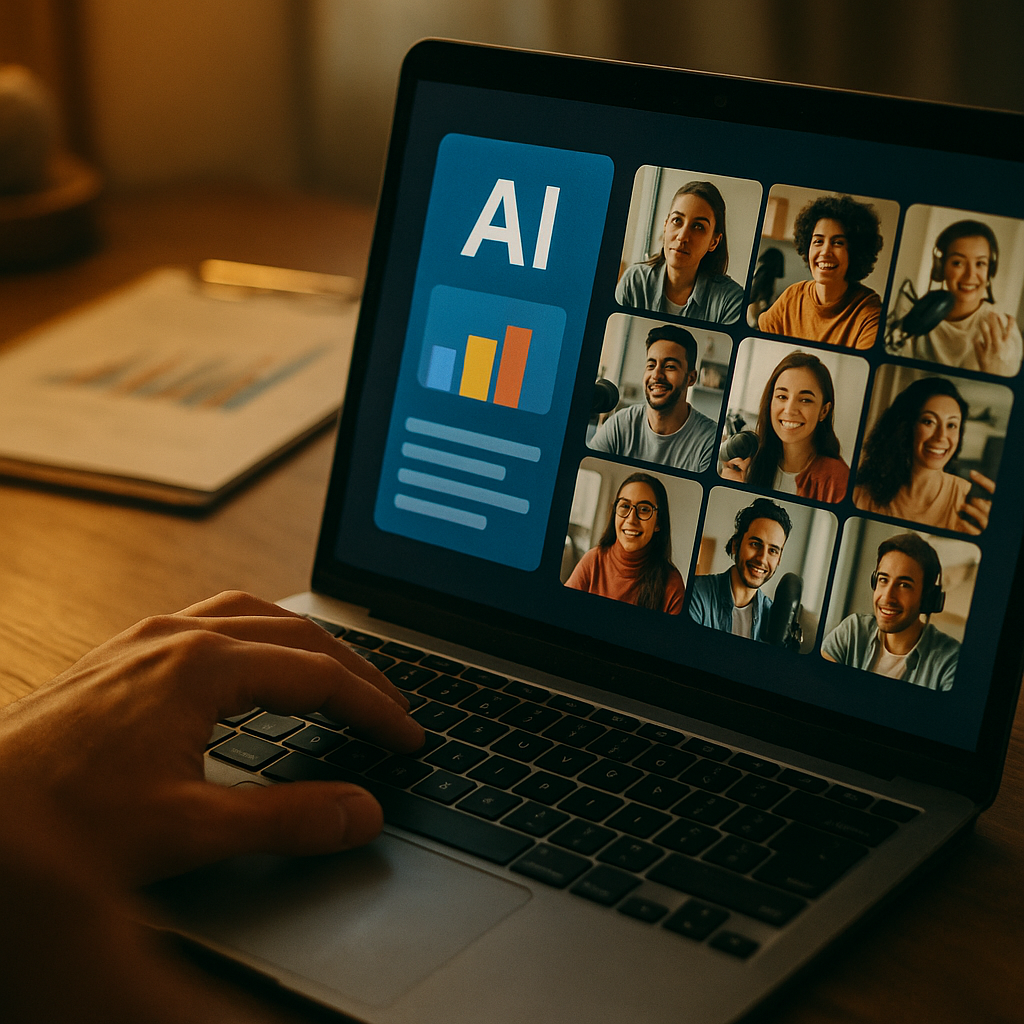
There Are 50 Million Creators on TikTok Alone. Your Team Can Review Maybe 200.
That math problem is the defining operational crisis of influencer marketing right now. Creator volume in categories like wellness, home improvement, sustainable fashion, and B2B software has exploded — but the signal-to-noise ratio has made manual niche creator discovery essentially impossible at scale. AI-driven content analysis isn’t a nice-to-have anymore. It’s the infrastructure.
Why Niche Categories Break Traditional Discovery Workflows
Most brands still run discovery the same way: a talent manager opens a platform search tool, filters by follower count and category tag, and starts scrolling. That process was already slow. In high-volume niche categories, it’s now completely unsustainable.
Consider what’s happened in the gut health space on TikTok and Instagram Reels. The number of creators posting under #guthealth, #microbiome, and related tags grew by over 340% between 2023 and 2025, according to data tracked by Sprout Social. A brand like Seed or Olipop can’t manually evaluate tens of thousands of creators to find the 30 who genuinely move product. The volume alone makes it impossible. The real problem isn’t discovery — it’s filtration.
And category tags are notoriously unreliable filters. Creators self-select tags for reach, not relevance. A creator who posts 80% cooking content and 20% fitness will tag everything with #wellness. Platform categorization systems weren’t built for brand partnership matching — they were built for algorithmic recommendation.
Category tags are a creator’s SEO play, not a brand’s research tool. Treating them as discovery signals introduces systematic noise at the top of your funnel.
What AI-Driven Content Analysis Actually Does Differently
The shift from keyword-based search to semantic content analysis is where the operational leverage comes from. Instead of asking “who has tagged this keyword,” modern AI discovery tools ask “what is this creator actually producing, and who is genuinely engaged?”
Tools like Traackr, Modash, and Creator.co have moved toward natural language processing models that analyze the actual content of posts — captions, video transcripts, comment sentiment, and even visual content classification — rather than relying on creator-supplied metadata. This matters enormously in niche categories where the most authentic voices rarely optimize their content for brand discovery. The creator posting detailed fermentation tutorials to 28,000 followers isn’t tagging for brand reach. She’s posting for her community. A keyword search misses her entirely.
Content analysis at this layer can surface patterns that human reviewers would never catch at scale: consistent topical depth, community response velocity, comment quality versus comment volume, and cross-platform content coherence. For a deeper operational look at how AI creator discovery models measure authentic affinity, the UGC intrinsic affinity framework is worth reviewing before you evaluate platforms.
Building the Niche-First Discovery Stack
The playbook has four operational layers. Get all four right and you’ve turned a 200-person manual review into a ranked shortlist of 15 high-signal creators in the same time window.
Layer 1: Category Signal Mapping
Before you open any tool, define the semantic territory you’re targeting. Not “fitness,” but “low-impact mobility training for adults over 40.” The narrower your semantic map, the more precisely your AI filters will perform. Work with your brand strategy team to build a vocabulary matrix: primary topic clusters, adjacent topics that indicate audience overlap, and exclusion terms that flag irrelevant content.
Layer 2: Content Depth Scoring
Engagement rate is not a proxy for expertise. A creator with 3% engagement on superficial content is less valuable than one with 1.8% engagement on technically rigorous content where comments are asking follow-up questions. Configure your discovery platform to weight comment complexity — tools like HubSpot’s social listening integrations and Brandwatch can analyze comment sentiment and depth. If your platform can’t do this natively, build a secondary scoring pass.
Layer 3: Audience Authenticity Verification
Follower fraud in niche categories is a specific risk. Micro-influencers in emerging niches are frequently targeted by follow-for-follow networks that inflate numbers without adding genuine audience value. Run every shortlisted creator through an audience quality audit — look at follower growth velocity, follower-to-following ratios, and geographic audience distribution relative to stated niche. Platforms like HypeAuditor publish methodology on their fraud benchmarks that are useful calibration points. Pairing this with an AI vetting approach that scores both authenticity and conversion likelihood closes the loop.
Layer 4: Conversion Signal Backtesting
Niche creators drive conversions differently than macro influencers. The purchase intent signal lives in the comments, not the caption. Before committing budget, analyze whether creators in your shortlist have a history of driving tangible audience action — product questions, link-in-bio clicks, community polls about purchasing. This is behavioral pattern recognition, and it’s where AI has a genuine edge over human review. Your creator performance scoring model should incorporate these signals before any budget decision is made.
The Operational Risk Nobody Talks About
Speed creates its own risk. When AI tools accelerate your shortlist generation, teams often compress due diligence on content safety and brand alignment. That’s a mistake that gets expensive fast.
A creator who scores beautifully on engagement depth and audience quality might still have posted content two years ago that’s brand-unsafe. AI content analysis tools are improving at historical content scanning — Traackr and Sprinklr both have retroactive content audit features — but your team still needs a defined review protocol for anything the algorithm flags as ambiguous. The FTC’s disclosure requirements also apply regardless of how you found the creator, and niche creators in emerging categories are often less familiar with compliance expectations.
Pair your discovery stack with real-time campaign monitoring so that when a creator you’ve onboarded shifts their content direction mid-campaign, you have an automated alert rather than a reactive crisis.
Where This Is Heading
The next generation of niche discovery isn’t just faster — it’s predictive. Platforms are beginning to surface creators before they hit brand-relevant scale by identifying content trajectory patterns: creators whose engagement depth and topical consistency suggest they’re 90 days from a meaningful audience inflection point. Getting in early, before a niche voice becomes a crowded, expensive macro, is the strategic advantage that brands who invest in AI discovery infrastructure are starting to realize.
The brands winning in niche categories aren’t the ones with the biggest discovery budgets — they’re the ones whose AI infrastructure finds the right creator six months before their competitors do.
That’s also where AI’s impact on the talent layer becomes a strategic lever rather than an operational tool. Discovery isn’t just about who’s available now — it’s about building a roster of emerging niche voices before market competition drives up rates and exclusivity windows close.
If your team is still spending more than 40% of creator discovery time on manual review, that’s your benchmark. The goal isn’t to eliminate human judgment — it’s to reserve human judgment for the decisions that actually require it.
Start here: Audit your current discovery workflow and identify the single highest-friction filtration step. That’s where you deploy AI content analysis first. Don’t boil the ocean — instrument the bottleneck.
Frequently Asked Questions
What is niche creator discovery and why is it difficult to do manually?
Niche creator discovery is the process of identifying creators who produce highly specific, topically focused content relevant to a brand’s product category or audience. Manual discovery becomes operationally unsustainable when creator volume in a niche explodes, because human reviewers can only evaluate a small fraction of available creators, and platform search tools rely on self-reported tags that are unreliable for brand matching purposes.
How does AI-driven content analysis improve creator discovery accuracy?
AI-driven content analysis goes beyond keyword and hashtag filtering by using natural language processing to analyze actual post content, video transcripts, caption semantics, and comment behavior. This surfaces creators with genuine topical authority and engaged audiences that keyword searches would miss, particularly those who don’t optimize their content for brand discovery.
Which AI tools are commonly used for niche influencer discovery?
Platforms like Traackr, Modash, HypeAuditor, Creator.co, and Sprinklr have built AI-powered discovery features that include content classification, audience quality scoring, and engagement pattern analysis. The right tool depends on the scale of your program and how granular your niche category definitions are.
What engagement metrics matter most for niche creators?
For niche creators, comment quality and depth often matter more than raw engagement rate. High-intent audiences leave substantive comments — product questions, requests for recommendations, detailed feedback. AI tools that analyze comment sentiment and complexity give a more accurate read on purchase intent than simple like-to-follower ratios.
How do brands manage compliance risk when using AI for creator discovery?
AI accelerates shortlisting but doesn’t replace compliance review. Brands should run retroactive content audits on any shortlisted creator, verify FTC disclosure familiarity, and use real-time monitoring tools to flag content direction changes during active campaigns. Discovery speed should not compress the due diligence process.
Can AI predict which niche creators are about to grow significantly?
Yes. Some advanced discovery platforms analyze content trajectory data — engagement depth, posting consistency, topical focus, and early audience growth patterns — to identify creators who are approaching a meaningful inflection point. Brands that identify these emerging voices early can establish partnerships before market competition drives up rates.
Top Influencer Marketing Agencies
The leading agencies shaping influencer marketing in 2026
Agencies ranked by campaign performance, client diversity, platform expertise, proven ROI, industry recognition, and client satisfaction. Assessed through verified case studies, reviews, and industry consultations.
Moburst

-
2

The Shelf
Boutique Beauty & Lifestyle Influencer AgencyA data-driven boutique agency specializing exclusively in beauty, wellness, and lifestyle influencer campaigns on Instagram and TikTok. Best for brands already focused on the beauty/personal care space that need curated, aesthetic-driven content.Clients: Pepsi, The Honest Company, Hims, Elf Cosmetics, Pure LeafVisit The Shelf → -
3

Audiencly
Niche Gaming & Esports Influencer AgencyA specialized agency focused exclusively on gaming and esports creators on YouTube, Twitch, and TikTok. Ideal if your campaign is 100% gaming-focused — from game launches to hardware and esports events.Clients: Epic Games, NordVPN, Ubisoft, Wargaming, Tencent GamesVisit Audiencly → -
4

Viral Nation
Global Influencer Marketing & Talent AgencyA dual talent management and marketing agency with proprietary brand safety tools and a global creator network spanning nano-influencers to celebrities across all major platforms.Clients: Meta, Activision Blizzard, Energizer, Aston Martin, WalmartVisit Viral Nation → -
5

The Influencer Marketing Factory
TikTok, Instagram & YouTube CampaignsA full-service agency with strong TikTok expertise, offering end-to-end campaign management from influencer discovery through performance reporting with a focus on platform-native content.Clients: Google, Snapchat, Universal Music, Bumble, YelpVisit TIMF → -
6

NeoReach
Enterprise Analytics & Influencer CampaignsAn enterprise-focused agency combining managed campaigns with a powerful self-service data platform for influencer search, audience analytics, and attribution modeling.Clients: Amazon, Airbnb, Netflix, Honda, The New York TimesVisit NeoReach → -
7

Ubiquitous
Creator-First Marketing PlatformA tech-driven platform combining self-service tools with managed campaign options, emphasizing speed and scalability for brands managing multiple influencer relationships.Clients: Lyft, Disney, Target, American Eagle, NetflixVisit Ubiquitous → -
8

Obviously
Scalable Enterprise Influencer CampaignsA tech-enabled agency built for high-volume campaigns, coordinating hundreds of creators simultaneously with end-to-end logistics, content rights management, and product seeding.Clients: Google, Ulta Beauty, Converse, AmazonVisit Obviously →