


The Real Cost of Skipping AI-Powered Creator Vetting
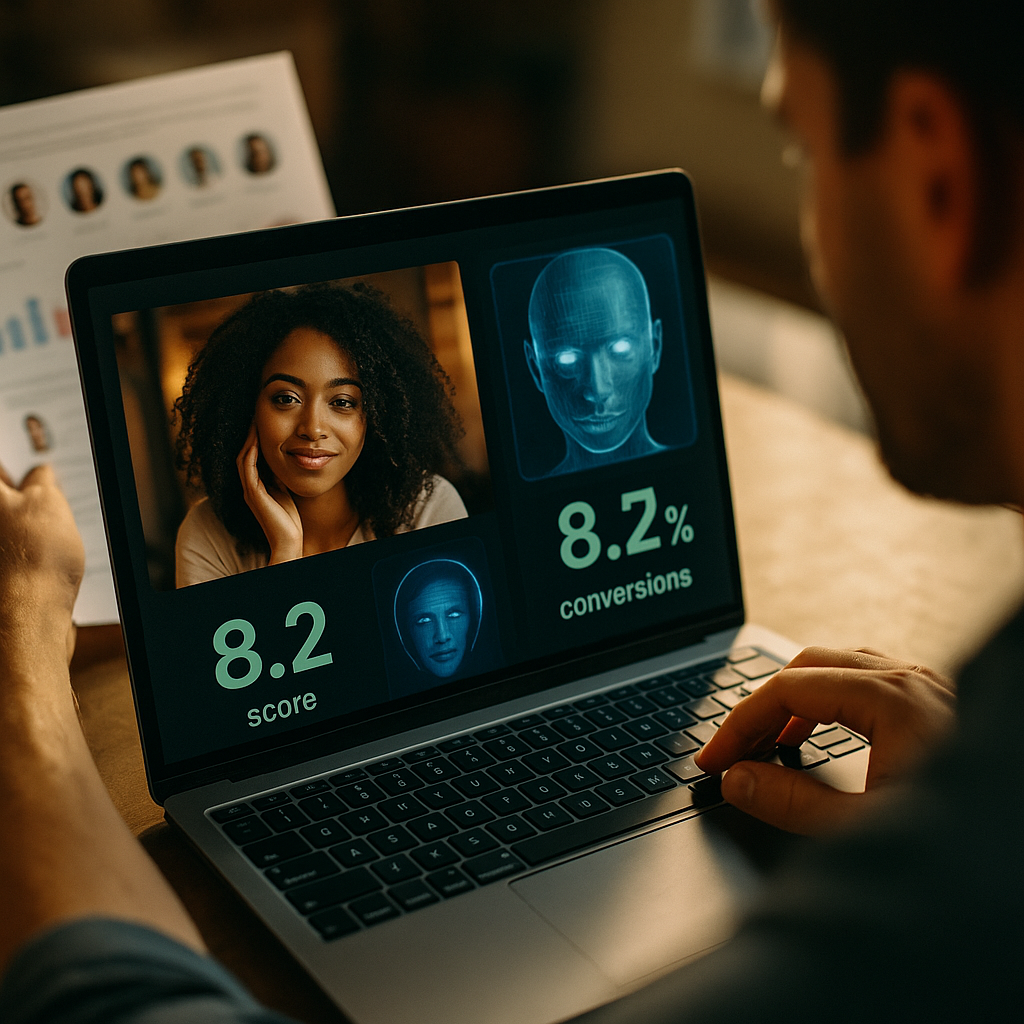
A 2024 WARC study found that 67% of influencer marketing budgets suffer measurable waste from misaligned creator partnerships. That number should terrify anyone managing a seven-figure creator program. The root cause isn’t bad creative or poor timing — it’s inadequate pre-campaign creator vetting. AI is now fundamentally reshaping how brands evaluate creators before a single dollar is committed, using sentiment scanning, audience authenticity scoring, and predictive conversion modeling to eliminate guesswork.
Why Manual Vetting Broke Down
For years, the creator vetting process looked something like this: a junior team member scrolling through an influencer’s recent posts, eyeballing engagement rates, checking follower counts, maybe running a quick Google search for past controversies. It was slow, subjective, and riddled with blind spots.
The math alone makes manual vetting impossible at scale. A mid-market DTC brand might evaluate 200-400 creators per quarter across TikTok, Instagram, and YouTube. Each creator requires audience demographic analysis, content tone assessment, brand safety checks, and performance benchmarking. That’s thousands of data points per candidate. No spreadsheet survives that workload intact.
More critically, manual vetting can’t detect what it can’t see. Purchased followers. Engagement pods. Sentiment shifts buried in comment threads. A creator whose audience skews 60% bot traffic looks identical to a legitimate one if you’re only checking surface metrics. This is exactly where AI steps in — not as a nice-to-have efficiency tool, but as a risk mitigation engine.
Sentiment Scanning: Reading the Room Before You Enter It
Modern AI vetting platforms — think CreatorIQ, Traackr, and HypeAuditor — now perform deep sentiment analysis across a creator’s content and audience interactions. This goes far beyond flagging profanity or controversial keywords.
Natural language processing models analyze comment sections, reply threads, quote tweets, and even caption subtext to build a sentiment profile of both the creator and their community. The question isn’t just “Is this person brand-safe?” It’s “How does their audience feel about branded content?”
A creator with 500K followers and enthusiastic organic engagement around sponsored posts is fundamentally different from one with 500K followers whose audience routinely mocks brand partnerships. AI sentiment scanning surfaces that distinction in seconds.
Some platforms now layer temporal sentiment analysis on top of static scoring. This means the system tracks how audience sentiment has shifted over weeks or months. A creator recovering from a controversy might show improving sentiment trajectories, while another might be in slow decline despite stable follower counts. For brand strategists, this temporal dimension is gold — it reveals momentum, not just snapshots.
Brands concerned about protecting their reputation during campaigns should also explore how AI shields against sentiment sabotage in real time.
Audience Authenticity: The Fake Follower Problem Is Worse Than You Think
Statista research estimates that influencer fraud costs brands over $1.3 billion annually. And the sophistication of fraud has evolved dramatically. We’re not talking about crude bot farms anymore. Modern fake engagement networks use AI-generated profiles with realistic posting histories, varied engagement patterns, and geo-distributed activity that evades basic detection.
Fighting AI with AI is the only viable strategy.
Current audience authenticity scoring tools analyze dozens of signals per follower account: posting frequency, follower-to-following ratios, engagement reciprocity patterns, account age distribution, and geographic clustering anomalies. HypeAuditor’s Audience Quality Score, for instance, weights these signals into a single metric that brands can use as a threshold filter before deeper evaluation begins.
But the real advancement isn’t just identifying fake followers — it’s quantifying reachable audience. A creator might have a 92% authenticity score but only 40% of their audience falls within your target demographic. AI vetting platforms now cross-reference audience composition data against first-party brand personas, producing an “addressable audience” metric that’s far more predictive of campaign performance than raw follower count.
This connects directly to how AI reshapes the talent layer by making audience quality — not vanity metrics — the primary currency in creator selection.
Predictive Conversion Modeling: The Pre-Campaign Crystal Ball
Here’s where things get genuinely transformative. Predictive conversion modeling uses historical campaign data, creator performance patterns, audience behavioral signals, and category benchmarks to forecast likely outcomes before a contract is signed.
Platforms like Grin, impact.com, and AspireIQ have integrated machine learning models that ingest a creator’s past branded content performance — click-through rates, swipe-up conversions, promo code redemptions, view-through behavior — and project expected performance for a specific campaign brief. The models account for variables like content format, posting cadence, seasonal trends, and even platform algorithm shifts.
This isn’t theoretical. A beauty brand running a holiday campaign can now input their target CPA, feed in a shortlist of 50 creators, and receive a ranked output showing projected conversion rates, estimated revenue per creator, and confidence intervals for each prediction. Creators who looked equivalent on paper suddenly separate into tiers.
Predictive conversion modeling doesn’t replace creative judgment — it prevents expensive misjudgments. When you can see that Creator A historically drives 3.2x the conversion rate of Creator B for similar product categories, budget allocation becomes a data decision, not a gut call.
For teams looking to extend this intelligence beyond the vetting phase, real-time roster optimization keeps the same analytical rigor active throughout live campaigns.
What About Attribution After Vetting?
Pre-campaign modeling is only as good as the attribution framework that validates it post-campaign. This is a critical feedback loop that many brands still neglect. If your attribution model is broken, your predictive models train on flawed data, and future vetting decisions degrade over time.
Multi-touch attribution platforms — and increasingly, AI-driven incrementality testing — feed performance data back into vetting algorithms, improving prediction accuracy with each campaign cycle. Brands running 20+ creator campaigns per year see their predictive models improve by 15-25% in accuracy over 12 months, according to internal benchmarks shared by CreatorIQ at their 2024 Connect conference.
This is why fixing attribution for creator-driven sales isn’t a separate initiative from vetting — it’s the same system, viewed from a different point in the campaign lifecycle.
Operationalizing the AI Vetting Stack
Knowing the technology exists is one thing. Implementing it without creating a bureaucratic bottleneck is another.
Practical rollout typically follows three phases:
- Threshold automation. Set minimum scores for audience authenticity (e.g., 85%+), sentiment positivity (e.g., net positive across last 90 days), and demographic overlap (e.g., 50%+ match to target persona). Creators below threshold are auto-declined. This alone eliminates 40-60% of candidates and frees analyst time.
- Predictive ranking. Remaining candidates are scored using conversion models calibrated to your specific category, price point, and platform. Output is a ranked shortlist with projected CPAs and confidence bands.
- Human review of the shortlist. Brand teams evaluate the top 15-20% for creative fit, voice alignment, and strategic narrative — the qualitative factors AI can inform but not fully adjudicate. This is where experienced marketers add irreplaceable value.
The goal isn’t to remove humans from vetting. It’s to ensure humans spend their time on judgment calls, not data gathering.
For teams managing paid social creative governance, the vetting stack integrates naturally — the same brand safety signals used in creator selection inform ad approval workflows downstream.
Compliance and Ethical Guardrails
AI vetting introduces its own risks. Algorithmic bias in audience scoring can inadvertently deprioritize creators from underrepresented communities. Sentiment models trained primarily on English-language data may misread cultural context in multilingual content. And over-reliance on historical conversion data can create a “rich get richer” dynamic where only proven creators receive opportunities.
Smart brands address this with explicit diversity benchmarks in their vetting criteria, regular audits of algorithmic outputs, and “discovery pools” that bypass predictive scoring to surface emerging creators. The FTC’s evolving guidelines on AI transparency also mean brands should document how automated decisions affect creator selection — especially as regulatory scrutiny of AI in advertising intensifies.
Platforms like Meta for Business and TikTok’s ad platform are increasingly surfacing their own creator authenticity signals, which can supplement third-party vetting tools and reduce single-source dependency.
The Bottom Line for Brand Teams
If your creator vetting process still relies primarily on follower counts, engagement rates, and manual scrolling, you’re making six- and seven-figure allocation decisions with incomplete information. Integrate AI-powered sentiment scanning, audience authenticity scoring, and predictive conversion modeling into your pre-campaign workflow — and start treating vetting as a continuous data asset, not a one-time checklist.
Frequently Asked Questions
What is AI-powered creator vetting?
AI-powered creator vetting uses machine learning models to evaluate influencers before a campaign launches. It analyzes audience authenticity, sentiment patterns, demographic overlap, and historical performance data to predict which creators are most likely to deliver against specific campaign objectives — replacing manual, surface-level evaluation with data-driven risk assessment.
How does sentiment scanning work in influencer marketing?
Sentiment scanning uses natural language processing to analyze comments, replies, and audience interactions across a creator’s content. It builds a sentiment profile that reveals how an audience feels about branded content, tracks sentiment shifts over time, and flags potential brand safety risks before a partnership is finalized.
What is audience authenticity scoring?
Audience authenticity scoring examines individual follower accounts for signals of fraudulent or inactive behavior, including posting patterns, engagement reciprocity, account age, and geographic clustering. The result is a percentage score indicating how much of a creator’s audience consists of real, active users likely to see and engage with sponsored content.
Can AI predict influencer campaign conversions before launch?
Yes. Predictive conversion modeling uses historical campaign data, creator performance benchmarks, audience behavioral signals, and category-specific trends to forecast metrics like click-through rates, conversion rates, and estimated revenue per creator. These projections improve in accuracy as more campaign data feeds back into the models over time.
What tools are used for AI creator vetting?
Leading tools include CreatorIQ, HypeAuditor, Traackr, Grin, impact.com, and AspireIQ. Each offers different combinations of audience authenticity scoring, sentiment analysis, predictive modeling, and demographic matching. Many brands use multiple tools in combination to reduce single-source risk and improve vetting accuracy.
Top Influencer Marketing Agencies
The leading agencies shaping influencer marketing in 2026
Agencies ranked by campaign performance, client diversity, platform expertise, proven ROI, industry recognition, and client satisfaction. Assessed through verified case studies, reviews, and industry consultations.
Moburst

-
2

The Shelf
Boutique Beauty & Lifestyle Influencer AgencyA data-driven boutique agency specializing exclusively in beauty, wellness, and lifestyle influencer campaigns on Instagram and TikTok. Best for brands already focused on the beauty/personal care space that need curated, aesthetic-driven content.Clients: Pepsi, The Honest Company, Hims, Elf Cosmetics, Pure LeafVisit The Shelf → -
3

Audiencly
Niche Gaming & Esports Influencer AgencyA specialized agency focused exclusively on gaming and esports creators on YouTube, Twitch, and TikTok. Ideal if your campaign is 100% gaming-focused — from game launches to hardware and esports events.Clients: Epic Games, NordVPN, Ubisoft, Wargaming, Tencent GamesVisit Audiencly → -
4

Viral Nation
Global Influencer Marketing & Talent AgencyA dual talent management and marketing agency with proprietary brand safety tools and a global creator network spanning nano-influencers to celebrities across all major platforms.Clients: Meta, Activision Blizzard, Energizer, Aston Martin, WalmartVisit Viral Nation → -
5

The Influencer Marketing Factory
TikTok, Instagram & YouTube CampaignsA full-service agency with strong TikTok expertise, offering end-to-end campaign management from influencer discovery through performance reporting with a focus on platform-native content.Clients: Google, Snapchat, Universal Music, Bumble, YelpVisit TIMF → -
6

NeoReach
Enterprise Analytics & Influencer CampaignsAn enterprise-focused agency combining managed campaigns with a powerful self-service data platform for influencer search, audience analytics, and attribution modeling.Clients: Amazon, Airbnb, Netflix, Honda, The New York TimesVisit NeoReach → -
7

Ubiquitous
Creator-First Marketing PlatformA tech-driven platform combining self-service tools with managed campaign options, emphasizing speed and scalability for brands managing multiple influencer relationships.Clients: Lyft, Disney, Target, American Eagle, NetflixVisit Ubiquitous → -
8

Obviously
Scalable Enterprise Influencer CampaignsA tech-enabled agency built for high-volume campaigns, coordinating hundreds of creators simultaneously with end-to-end logistics, content rights management, and product seeding.Clients: Google, Ulta Beauty, Converse, AmazonVisit Obviously →