


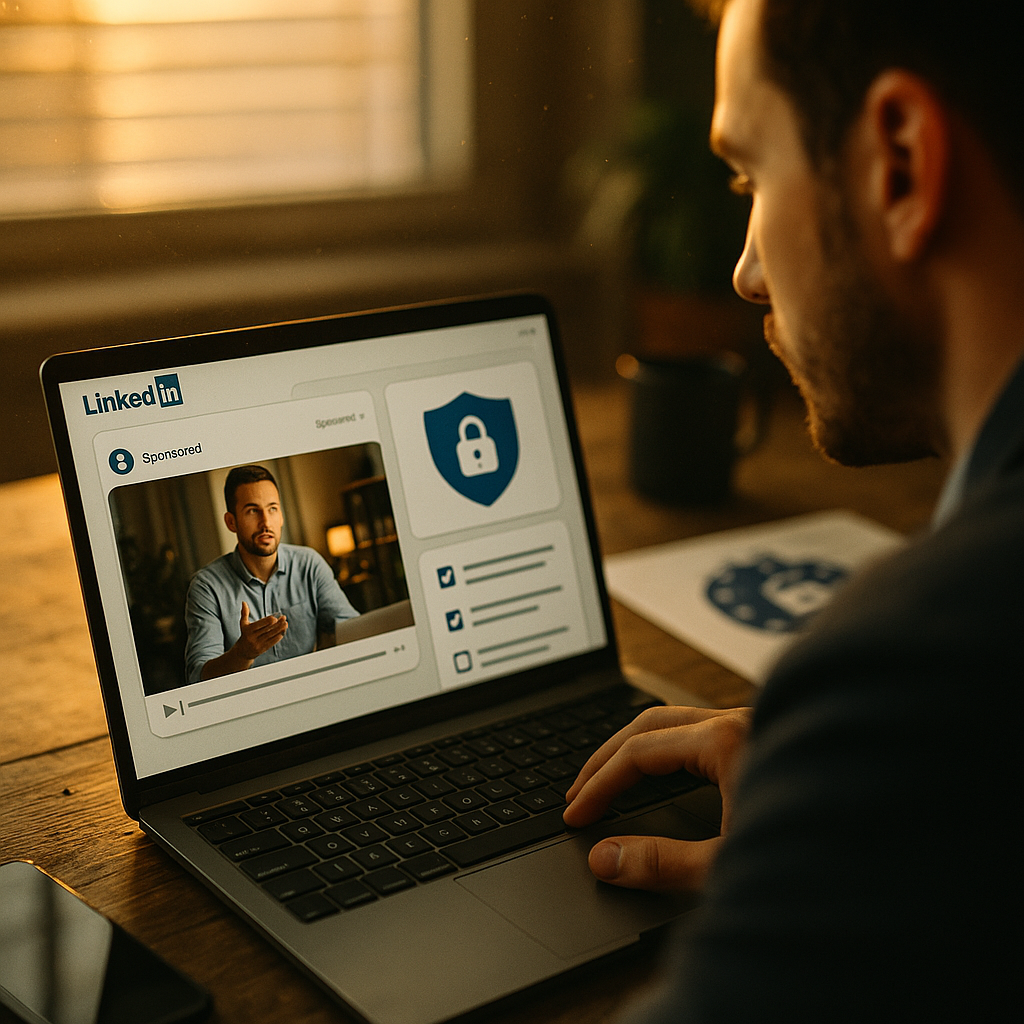
Your LinkedIn Creator Campaign May Already Be a Privacy Liability
LinkedIn retains advertising identifiers for up to 365 days, collects IP addresses across its extended ad network, and tracks user interactions far beyond what most brand advertisers realize when they click “launch campaign.” If your team hasn’t audited these data practices against your current targeting configuration and privacy disclosures, you have an exposure problem — not a theoretical one.
What LinkedIn Actually Collects (And for How Long)
Let’s be precise. LinkedIn’s advertising infrastructure operates across two distinct environments: the LinkedIn platform itself, and the LinkedIn Audience Network — a programmatic extension that serves ads across third-party apps and websites. Each environment has different data collection behaviors, and most brand teams conflate them.
On-platform, LinkedIn collects member profile data (job title, industry, seniority, company size), behavioral signals like content engagement and video views, and device identifiers. Across the Audience Network, it additionally collects IP addresses and interaction data from users who may not even be active LinkedIn members at the time of exposure.
The 365-day identifier retention window is the piece that should be getting more attention in legal and compliance reviews. This means a user who interacted with your LinkedIn ad or creator-sponsored content up to a year ago can still be matched, re-targeted, or included in lookalike audience modeling. For brands running B2B influencer campaigns — where audiences tend to include decision-makers in regulated industries like finance, healthcare, and legal — that persistence creates real downstream risk.
A 365-day identifier retention window means a single campaign touchpoint can generate re-targeting exposure across an entire annual budget cycle. Most brand privacy disclosures aren’t written to cover that duration explicitly.
The Audience Network Problem Brands Keep Missing
When you enable the LinkedIn Audience Network in Campaign Manager, your ads extend beyond LinkedIn.com to third-party inventory. LinkedIn’s own documentation confirms that this network collects IP addresses for targeting and fraud prevention. It also tracks whether users clicked, scrolled past, or otherwise interacted with your creative — interaction data that feeds back into your campaign’s audience segments.
Here’s the operational issue: most brand advertisers running creator campaigns opt into the Audience Network by default, either because it’s pre-checked in campaign setup or because media buyers prioritize reach over network granularity. The IP address collection that happens off-platform is rarely surfaced in brand-level privacy disclosures — and it absolutely should be.
This is not a niche legal concern. Under GDPR, CCPA/CPRA, and increasingly under state-level privacy laws being enacted across the U.S., IP addresses are classified as personal data. If your campaign targets EEA users or California residents and you haven’t disclosed off-platform IP collection in your privacy policy, you’re running out of compliance. The UK ICO and European Data Protection Board have both issued guidance treating IP address collection as triggering data processing obligations under Article 13 of GDPR.
The parallel with other platforms is instructive. We’ve covered similar mechanics in depth around TikTok ad network data collection — and the operational fixes brands need there apply equally to LinkedIn’s extended network, with the additional complexity that LinkedIn’s audience skews toward professionals in roles where data sensitivity is higher.
Creator Campaigns Add a Layer of Complexity
Standard paid social campaigns are complicated enough. Creator campaigns on LinkedIn — boosted thought leadership posts, sponsored creator content, document ads from influencer accounts — introduce an additional wrinkle: the creator’s own audience data is being used as a targeting signal, and their followers are being exposed to tracking infrastructure that the creator almost certainly hasn’t disclosed.
When a brand pays to amplify a creator’s LinkedIn post, LinkedIn’s ad system attaches the same tracking mechanisms to that content as it would to any direct brand ad. The creator’s followers who engage with that content — even organic followers who never clicked on an ad unit — can be captured in interaction audiences. Their identifiers persist for up to 365 days. The brand’s pixel or matched audience list may receive signals from those engagements, depending on campaign configuration.
This creates a disclosure gap. Your brand’s privacy policy may describe how you collect data through your website or app, but does it explicitly cover interaction data collected through LinkedIn creator content that you sponsor? If not, that’s a gap your legal team needs to close before the next campaign brief goes out.
On the creator side, FTC compliance obligations around FTC-compliant creator briefs are increasingly being interpreted to include material technical relationships — which arguably includes the data tracking infrastructure a brand attaches to sponsored content. This isn’t settled law, but it’s a direction of travel that compliance-forward brands should get ahead of now.
Configuring Campaigns to Reduce Privacy Risk
There are four concrete configuration decisions that reduce LinkedIn data privacy exposure for brand advertisers running creator campaigns:
- Opt out of the LinkedIn Audience Network unless you have a specific reach objective that justifies it and your privacy disclosures cover off-platform IP collection. The reach trade-off is real, but so is the compliance exposure.
- Shorten your Matched Audience retention windows to the minimum required for your campaign objectives. If you’re running a 90-day campaign, there’s no business justification for 365-day identifier retention. LinkedIn Campaign Manager allows you to configure website retargeting windows — use this control deliberately.
- Audit your Insight Tag deployment. LinkedIn’s Insight Tag — their site-side tracking pixel — collects member data even for non-LinkedIn visitors if they’re logged into LinkedIn elsewhere. Brands often deploy this without fully modeling the data flows it creates. Review what pages it fires on, what data it’s passing back, and whether your privacy policy accurately describes this relationship.
- Restrict sensitive audience signals for creator amplification campaigns. LinkedIn allows targeting by health industry, financial services seniority, and other categories that can approximate sensitive data categories under GDPR. When amplifying creator content, default to broader professional targeting and document the rationale for any narrower segmentation.
Turning off the LinkedIn Audience Network for creator amplification campaigns is the single highest-leverage privacy configuration decision most brand advertisers aren’t making.
What Your Privacy Disclosures Must Now Say
Generic “we use third-party advertising partners” language in your privacy policy is no longer sufficient. Regulators — and increasingly, sophisticated B2B buyers who read privacy policies before signing enterprise contracts — expect specificity.
At minimum, your privacy disclosures should now explicitly reference: (1) that LinkedIn may collect IP addresses when users interact with your ads on the LinkedIn Audience Network; (2) that ad interaction data may be retained for up to 365 days for retargeting purposes; (3) that users can opt out of LinkedIn ad tracking through LinkedIn’s ad settings; and (4) that sponsored creator content carries the same data tracking characteristics as direct brand advertising.
This isn’t just about GDPR. The FTC’s approach to AI and FTC liability gaps signals broader scrutiny of undisclosed data practices in marketing contexts — and the logical extension of that scrutiny reaches the tracking infrastructure brands deploy through influencer campaigns.
For brands selling into regulated verticals, the bar is higher. A financial services company running LinkedIn creator campaigns targeting CFOs needs to treat the data governance of that campaign the same way it treats any client data program — with documented data flows, retention justifications, and disclosure language reviewed by legal, not just marketing ops.
The FTC’s guidance on commercial data practices continues to evolve, and LinkedIn’s ad infrastructure — particularly its cross-network identifier persistence — is precisely the kind of opaque data relationship regulators are scrutinizing more aggressively.
Consider also reviewing how your AI-driven media buying tools interact with LinkedIn’s data. If you’re using programmatic or AI-assisted campaign management, the oversight protocols for AI media buying need to include LinkedIn data configuration checks — not just performance metrics.
Finally, cross-reference your LinkedIn data practices against your broader digital advertising audit. The eMarketer data on B2B ad spend consistently shows LinkedIn commanding premium CPMs precisely because of its audience targeting fidelity — which is another way of saying it collects and retains more granular professional data than any other platform. That targeting precision is a feature brands pay for. The compliance obligations that come with it are the cost of that precision.
Run your next LinkedIn creator campaign through a privacy configuration checklist before launch — not after a regulatory inquiry forces the issue.
Frequently Asked Questions
What does LinkedIn’s 365-day identifier retention mean for brand advertisers?
LinkedIn retains advertising identifiers — data points tied to users who have interacted with your ads or creator content — for up to 365 days. This means users can be re-targeted or included in lookalike audiences for a full year after a single campaign touchpoint. For brand advertisers, this extends data processing obligations well beyond the campaign flight dates and requires privacy disclosures to account for long-term retention, not just active campaign periods.
Does the LinkedIn Audience Network collect IP addresses?
Yes. When brands opt into the LinkedIn Audience Network, ads are served across third-party apps and websites outside LinkedIn.com. In this environment, LinkedIn collects IP addresses for targeting and fraud prevention purposes. Under GDPR and CCPA/CPRA, IP addresses are classified as personal data, which triggers disclosure and legal basis requirements that many brand privacy policies don’t currently address explicitly.
How does creator content amplification on LinkedIn create data privacy exposure?
When a brand boosts or sponsors a creator’s LinkedIn post, LinkedIn’s standard ad tracking infrastructure — including interaction tracking and identifier persistence — attaches to that content. Followers who engage with the creator’s sponsored post can be captured in the brand’s interaction audiences, and their data may be retained for up to 365 days. Most brand privacy disclosures don’t specifically cover data collected through third-party creator content, creating a compliance gap.
Should brands opt out of the LinkedIn Audience Network for creator campaigns?
For most creator amplification campaigns, yes. Unless your campaign has a specific reach objective that requires extended network distribution and your privacy disclosures already cover off-platform IP address collection, the compliance risk of the Audience Network outweighs the incremental reach benefit. Opting out limits data collection to on-platform interactions, which are easier to disclose and govern.
What privacy disclosure language do brands need to add for LinkedIn advertising?
Brand privacy policies should explicitly state that LinkedIn may collect IP addresses when users interact with ads on the LinkedIn Audience Network, that interaction data may be retained for up to 365 days, that users can opt out through LinkedIn’s ad preference settings, and that sponsored creator content carries the same data tracking characteristics as direct brand ads. Generic “third-party advertising partners” language is insufficient under current regulatory standards.
Top Influencer Marketing Agencies
The leading agencies shaping influencer marketing in 2026
Agencies ranked by campaign performance, client diversity, platform expertise, proven ROI, industry recognition, and client satisfaction. Assessed through verified case studies, reviews, and industry consultations.
Moburst

-
2

The Shelf
Boutique Beauty & Lifestyle Influencer AgencyA data-driven boutique agency specializing exclusively in beauty, wellness, and lifestyle influencer campaigns on Instagram and TikTok. Best for brands already focused on the beauty/personal care space that need curated, aesthetic-driven content.Clients: Pepsi, The Honest Company, Hims, Elf Cosmetics, Pure LeafVisit The Shelf → -
3

Audiencly
Niche Gaming & Esports Influencer AgencyA specialized agency focused exclusively on gaming and esports creators on YouTube, Twitch, and TikTok. Ideal if your campaign is 100% gaming-focused — from game launches to hardware and esports events.Clients: Epic Games, NordVPN, Ubisoft, Wargaming, Tencent GamesVisit Audiencly → -
4

Viral Nation
Global Influencer Marketing & Talent AgencyA dual talent management and marketing agency with proprietary brand safety tools and a global creator network spanning nano-influencers to celebrities across all major platforms.Clients: Meta, Activision Blizzard, Energizer, Aston Martin, WalmartVisit Viral Nation → -
5

The Influencer Marketing Factory
TikTok, Instagram & YouTube CampaignsA full-service agency with strong TikTok expertise, offering end-to-end campaign management from influencer discovery through performance reporting with a focus on platform-native content.Clients: Google, Snapchat, Universal Music, Bumble, YelpVisit TIMF → -
6

NeoReach
Enterprise Analytics & Influencer CampaignsAn enterprise-focused agency combining managed campaigns with a powerful self-service data platform for influencer search, audience analytics, and attribution modeling.Clients: Amazon, Airbnb, Netflix, Honda, The New York TimesVisit NeoReach → -
7

Ubiquitous
Creator-First Marketing PlatformA tech-driven platform combining self-service tools with managed campaign options, emphasizing speed and scalability for brands managing multiple influencer relationships.Clients: Lyft, Disney, Target, American Eagle, NetflixVisit Ubiquitous → -
8

Obviously
Scalable Enterprise Influencer CampaignsA tech-enabled agency built for high-volume campaigns, coordinating hundreds of creators simultaneously with end-to-end logistics, content rights management, and product seeding.Clients: Google, Ulta Beauty, Converse, AmazonVisit Obviously →