


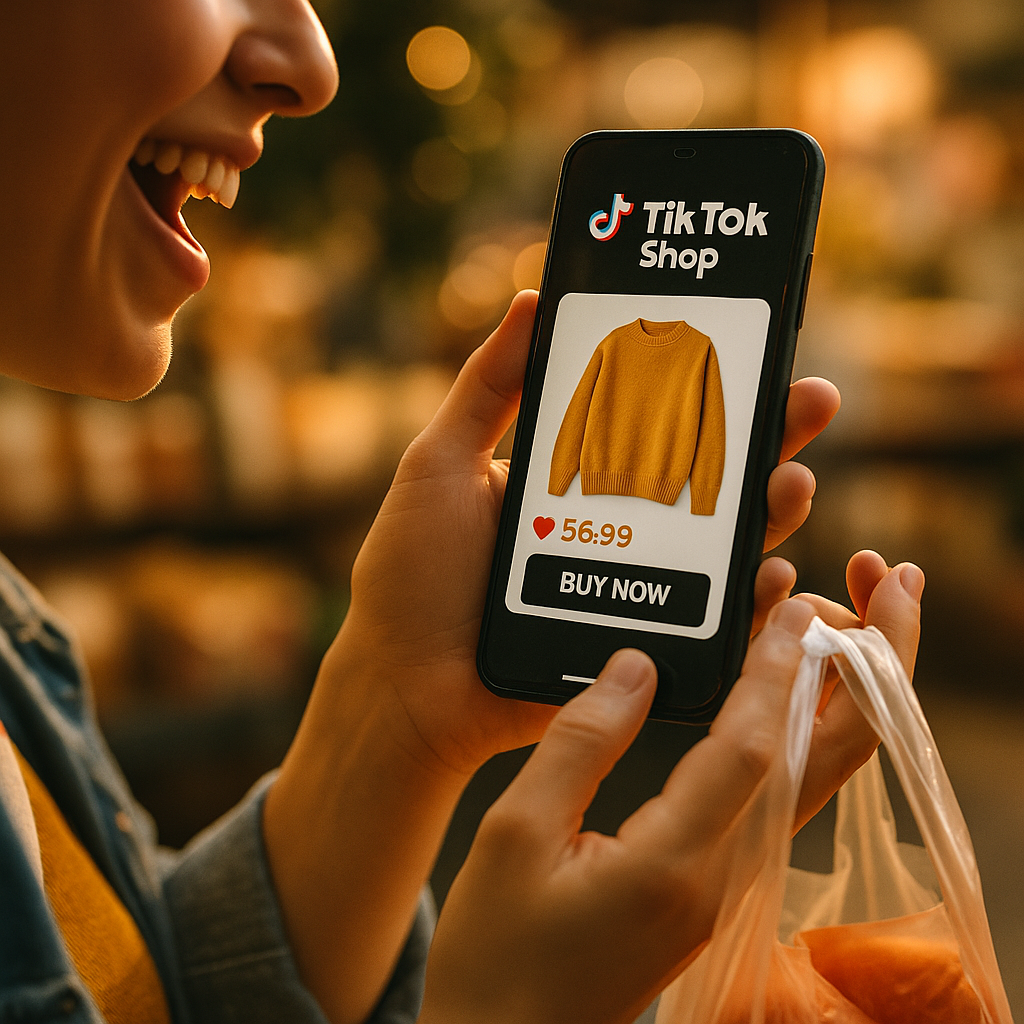
If your social commerce budget still treats TikTok as a supplementary channel, the Ipsos research on TikTok Shop users should force a serious reallocation conversation. A 29 percent higher emotional engagement rate and 40 percent stronger brand recall compared to non-TikTok Shop users aren’t incremental gains — they’re structural advantages that change how brands should weight platform spend.
Why Emotional Engagement Is the Metric That Actually Predicts Purchase
Most brand measurement frameworks still anchor on reach, frequency, and click-through rate. Those metrics tell you about exposure. They tell you almost nothing about conversion likelihood or long-term brand equity. Emotional engagement is different. It’s the neurological precursor to action — the gap between a user passively scrolling past your product and one who stops, watches, shares, and buys.
Ipsos, one of the most credible third-party research firms in marketing measurement, has built its methodology around emotional response tracking for decades. When their data shows TikTok Shop users registering 29 percent higher emotional engagement, that’s not a platform-commissioned vanity metric — it’s a signal rooted in behavioral and attitudinal research design. The implication is direct: audiences on TikTok Shop aren’t just watching. They’re feeling something about what they see. And feeling drives buying.
Emotional engagement is the neurological precursor to purchase intent. A 29% advantage on that metric doesn’t just affect top-of-funnel brand perception — it accelerates the entire decision cycle, including the moment someone opens a checkout window.
The 40 percent stronger brand recall finding compounds this. Recall is the retention side of the equation. Higher recall means your brand occupies more mental real estate after exposure, which reduces the number of touchpoints required before conversion. For brands running omnichannel programs — TikTok plus Meta, YouTube, retail media, and paid search — stronger TikTok recall lowers the cost of converting on every other channel downstream.
What’s Actually Driving the TikTok Shop Engagement Gap
The numbers are compelling. The mechanism matters more for budget planning.
TikTok’s engagement advantage isn’t accidental. It’s architecturally designed. The algorithm surfaces content based on watch behavior, not social graph, which means brand content competes on entertainment quality rather than relationship proximity. That forces creators — and brands working with them — to produce content that actually earns attention rather than assuming it.
TikTok Shop layers commerce directly into that attention-rich environment without interrupting the content experience. The purchase pathway is embedded, not redirected. A user watching a creator demonstrate a skincare product can complete a purchase without leaving the video. That frictionless architecture reduces the cognitive load that typically kills conversion between discovery and checkout. The emotional engagement doesn’t get diluted by a context switch.
Compare that to the standard Instagram Shopping flow, where a user must tap through to a product page that often feels disconnected from the creator content that drove interest. The emotional state at the moment of discovery doesn’t survive the redirect cleanly. TikTok Shop solves for this at the product level.
For brands thinking carefully about content format ROI by vertical, this architecture distinction is critical. Short-form video with embedded commerce isn’t just another content format — it’s a fundamentally different conversion environment.
The Budget Allocation Implication: How Much Weight Should TikTok Get?
Here’s the uncomfortable question most media planning frameworks avoid: if TikTok Shop users demonstrate measurably superior emotional engagement and brand recall, what percentage of your social commerce budget is defensible on Meta and YouTube based on current performance data?
There’s no universal answer. But there’s a framework for thinking it through.
Start with your existing attribution model and stress-test it. If you’re using last-click attribution across platforms, you’re systematically undervaluing TikTok’s contribution to conversion paths that close on other channels — precisely because stronger recall makes those downstream conversions easier. A TikTok ad budget decision framework that accounts for assisted conversion value will almost always surface a higher true ROI than one that doesn’t.
Second, segment your audience before you reallocate. TikTok’s demographic concentration remains heaviest in 18-34, though it has matured significantly. If your core buyer skews 45-plus, the emotional engagement advantage may not transfer at the same magnitude. Validate the Ipsos findings against your own first-party audience data before moving budget.
Third, account for creator dependency. TikTok Shop’s performance is heavily mediated by creator quality. The platform’s native affiliate model means brands don’t always control which creators are selling their products, and creator quality variance is significant. Budget reallocation into TikTok Shop needs to be paired with a rigorous creator curation strategy. Brands that ignore niche creator curation and just flood the affiliate pool tend to see high volume with inconsistent brand representation.
Risk Factors Brands Can’t Ignore
Concentration risk is real. TikTok’s regulatory environment remains uncertain in key markets, and any brand that over-rotates budget into a single platform — regardless of its performance data — is building operational fragility. The Ipsos findings justify a meaningful increase in TikTok Shop weighting. They don’t justify abandoning diversification logic.
There’s also a content infrastructure cost that doesn’t always surface in budget models. High-performing TikTok Shop content requires a production cadence that’s genuinely different from polished brand creative. Brands that try to repurpose Instagram-optimized content into TikTok typically underperform. The platform rewards authenticity signals, creator-led narrative, and format-native production. That requires either investment in creator partnerships or an internal content capability that most mid-market brands don’t have at scale. As AI-generated content becomes more prevalent, maintaining that authenticity signal gets harder, not easier.
Compliance is the third consideration. TikTok Shop’s affiliate and creator disclosure requirements are evolving alongside FTC guidance. Any brand scaling spend on the platform needs to have disclosure workflows embedded in creator briefs — not treated as an afterthought. The FTC’s endorsement guidelines apply regardless of platform, and TikTok’s native purchase integration creates scenarios where the commercial relationship can be less obvious to viewers.
Scaling TikTok Shop without a creator compliance framework isn’t just a legal risk — it’s a brand trust risk. Undisclosed affiliate relationships erode exactly the emotional authenticity that makes the platform’s engagement advantage real.
Practical Reallocation Steps for Mid-to-Senior Marketing Teams
If the Ipsos data has moved your thinking, here’s how to operationalize it without reckless pivoting.
- Run a 90-day TikTok Shop test budget at a level meaningful enough to generate statistically significant data — typically 15-20 percent of your current social commerce allocation, not a token $10K experiment.
- Instrument for emotional and recall signals, not just clicks and conversions. Use brand lift studies through TikTok’s measurement tools or commission third-party attitudinal research alongside your standard analytics.
- Segment creator tiers deliberately. The engagement advantage Ipsos identified likely concentrates in mid-tier and niche creator content rather than mega-influencer posts. Data supporting micro-creators outperforming mega-influencers on CPA aligns with TikTok’s algorithm-driven discovery model.
- Build a platform-agnostic creative team or brief structure. The content that works on TikTok Shop rarely works unmodified on Meta. Budget for format-specific production rather than assuming cross-platform repurposing.
- Review your attribution model with your analytics team or agency before drawing conclusions. MTA (multi-touch attribution) or media mix modeling will give you a more accurate read on TikTok’s contribution than last-click alone. Reference benchmarks from eMarketer’s social commerce data to contextualize your performance against category norms.
One structural consideration worth raising with your CFO: the amplified creator spend model is shifting. Amplified creator spend — putting paid media behind organic creator content — is proving more efficient than traditional sponsorship fees in social commerce contexts. On TikTok, this is operationalized through Spark Ads, which boost existing creator posts with native commerce integration intact. That efficiency argument may be the most persuasive budget case you can make to a skeptical CFO.
The broader creator economy is also shifting toward DTC models that give brands less control over the sales environment. Understanding how to renegotiate creator partnerships in this context is increasingly relevant as TikTok Shop’s affiliate infrastructure matures. For additional category benchmarks and social commerce investment data, Statista’s social commerce reports provide useful context, and Sprout Social’s platform benchmarks can help calibrate engagement expectations by industry vertical.
Start by auditing your current social commerce attribution model this quarter — if TikTok’s assisted conversion contribution isn’t visible in your reporting, you’re making reallocation decisions with incomplete data, and the Ipsos findings suggest you’re likely underinvesting.
FAQs
What does the Ipsos research on TikTok Shop actually measure?
The Ipsos research measures emotional engagement and brand recall among TikTok Shop users compared to users who don’t engage with TikTok Shop. Emotional engagement tracks the affective response audiences have to content — how strongly they feel something when exposed to brand or creator material. Brand recall measures whether audiences can accurately remember a brand after exposure. TikTok Shop users showed 29 percent higher emotional engagement and 40 percent stronger brand recall, indicating that the integrated commerce environment amplifies both the emotional resonance and the memory encoding of brand content.
Should brands shift their entire social commerce budget to TikTok Shop?
No. While the Ipsos data makes a strong case for increasing TikTok Shop’s weighting in social commerce budgets, full concentration in any single platform creates operational and regulatory risk. TikTok’s regulatory environment remains uncertain in several markets. The correct approach is to increase TikTok Shop allocation meaningfully — most likely from a supplementary to a primary channel for applicable audience segments — while maintaining diversification across Meta, YouTube, and retail media networks. The reallocation should be data-validated against your specific audience demographics and attribution model.
How does TikTok Shop’s emotional engagement advantage affect attribution modeling?
TikTok Shop’s higher emotional engagement and stronger brand recall likely contribute to conversions that close on other platforms or channels — a contribution that last-click attribution models miss entirely. If a user discovers and engages with a brand on TikTok but converts through a paid search click two days later, last-click credits search and erases TikTok’s contribution. Brands should use multi-touch attribution or media mix modeling to surface TikTok’s true influence on conversion paths before drawing budget conclusions from standard analytics dashboards.
What types of creators drive the strongest performance on TikTok Shop?
Mid-tier and niche creators — typically those with 50,000 to 500,000 followers in a defined category — tend to generate stronger emotional engagement on TikTok than mega-influencers. This aligns with TikTok’s algorithm, which surfaces content based on watch behavior and relevance rather than follower count. Niche creators produce content that feels more authentic and contextually relevant to their audiences, which amplifies the emotional engagement signal that the Ipsos research identifies. Brands should prioritize creator-category alignment and production quality over raw audience size when building TikTok Shop programs.
What compliance requirements apply to TikTok Shop creator partnerships?
FTC endorsement guidelines require clear disclosure of any material connection between a creator and a brand, including affiliate commission relationships. On TikTok Shop, where creators can earn commissions through the platform’s native affiliate system, disclosure must be explicit — not buried in hashtags or implied. Brands should embed disclosure language requirements directly into creator briefs and use TikTok’s built-in paid partnership labels where applicable. Non-compliance creates both regulatory exposure and brand trust risk, particularly given that TikTok Shop’s integrated commerce format can make commercial relationships less immediately obvious to viewers.
Top Influencer Marketing Agencies
The leading agencies shaping influencer marketing in 2026
Agencies ranked by campaign performance, client diversity, platform expertise, proven ROI, industry recognition, and client satisfaction. Assessed through verified case studies, reviews, and industry consultations.
Moburst

-
2

The Shelf
Boutique Beauty & Lifestyle Influencer AgencyA data-driven boutique agency specializing exclusively in beauty, wellness, and lifestyle influencer campaigns on Instagram and TikTok. Best for brands already focused on the beauty/personal care space that need curated, aesthetic-driven content.Clients: Pepsi, The Honest Company, Hims, Elf Cosmetics, Pure LeafVisit The Shelf → -
3

Audiencly
Niche Gaming & Esports Influencer AgencyA specialized agency focused exclusively on gaming and esports creators on YouTube, Twitch, and TikTok. Ideal if your campaign is 100% gaming-focused — from game launches to hardware and esports events.Clients: Epic Games, NordVPN, Ubisoft, Wargaming, Tencent GamesVisit Audiencly → -
4

Viral Nation
Global Influencer Marketing & Talent AgencyA dual talent management and marketing agency with proprietary brand safety tools and a global creator network spanning nano-influencers to celebrities across all major platforms.Clients: Meta, Activision Blizzard, Energizer, Aston Martin, WalmartVisit Viral Nation → -
5

The Influencer Marketing Factory
TikTok, Instagram & YouTube CampaignsA full-service agency with strong TikTok expertise, offering end-to-end campaign management from influencer discovery through performance reporting with a focus on platform-native content.Clients: Google, Snapchat, Universal Music, Bumble, YelpVisit TIMF → -
6

NeoReach
Enterprise Analytics & Influencer CampaignsAn enterprise-focused agency combining managed campaigns with a powerful self-service data platform for influencer search, audience analytics, and attribution modeling.Clients: Amazon, Airbnb, Netflix, Honda, The New York TimesVisit NeoReach → -
7

Ubiquitous
Creator-First Marketing PlatformA tech-driven platform combining self-service tools with managed campaign options, emphasizing speed and scalability for brands managing multiple influencer relationships.Clients: Lyft, Disney, Target, American Eagle, NetflixVisit Ubiquitous → -
8

Obviously
Scalable Enterprise Influencer CampaignsA tech-enabled agency built for high-volume campaigns, coordinating hundreds of creators simultaneously with end-to-end logistics, content rights management, and product seeding.Clients: Google, Ulta Beauty, Converse, AmazonVisit Obviously →