


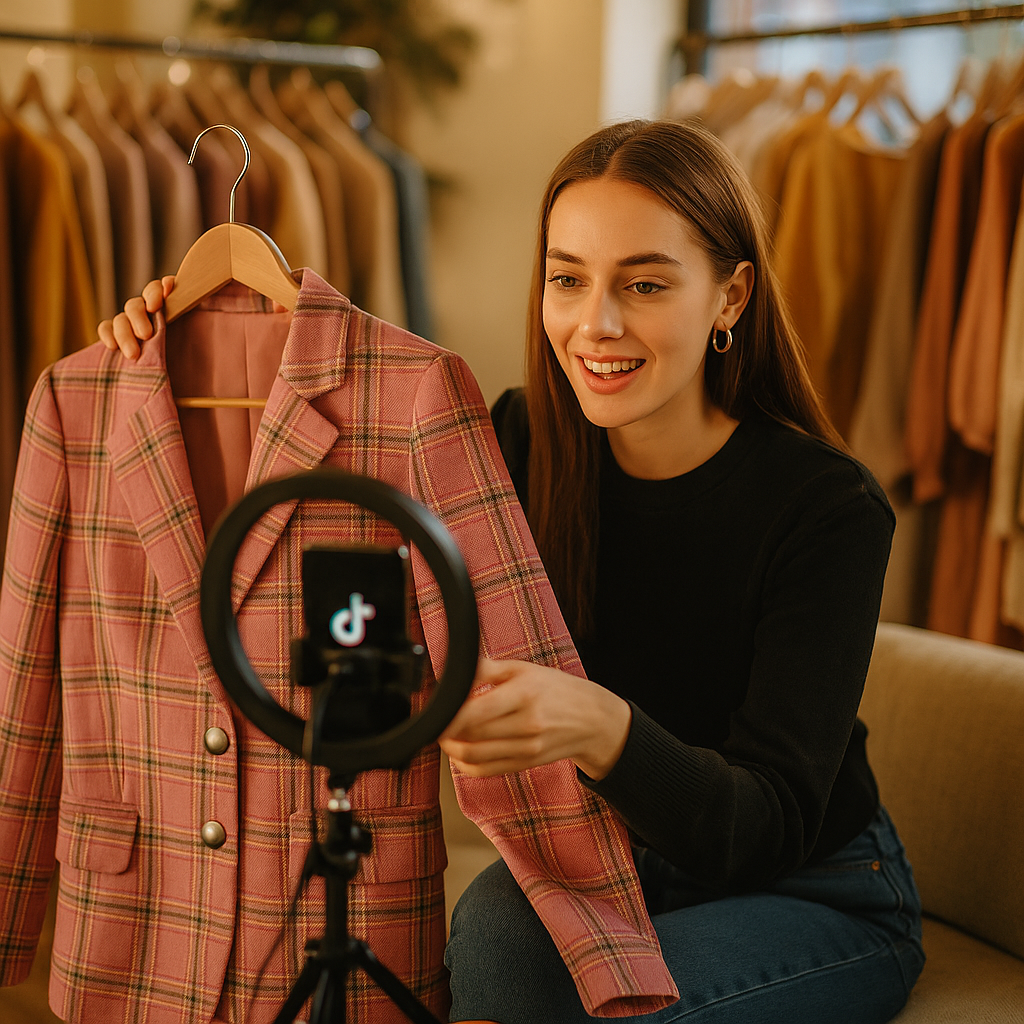
One in three UK online shoppers has already made a purchase through TikTok Shop. For British fashion retailers still treating the platform as a brand awareness channel, that statistic should feel like a missed invoice. The UK fashion brand TikTok Shop opportunity is no longer emerging — it’s compounding, and the brands building structured creator-commerce programs right now are locking in the operational advantages that will be very hard to close later.
Why British Fashion Is the Ideal Category for TikTok Shop
Fashion is the single highest-performing product category on TikTok Shop globally, and the UK is TikTok’s most commercially mature Western market. The platform launched TikTok Shop in the UK earlier than anywhere else in Europe, which means UK consumers are further along the trust curve. They’ve already navigated the checkout flow. They’ve returned items. They’ve left reviews. That behavioral maturity changes the commercial calculus for fashion brands completely.
The category aligns with TikTok’s content mechanics in ways that, say, insurance or software never will. Try-on hauls, outfit checks, styling transitions — these are native TikTok formats that double as product demonstrations. A creator showing how a blazer fits across three different body types isn’t just entertainment; it’s the closest thing to a fitting room that e-commerce has ever produced.
UK fashion brands that treat TikTok Shop as an extension of their existing e-commerce funnel — rather than a separate experiment — are reporting creator-driven revenue that rivals their paid search spend, at a fraction of the cost-per-acquisition.
The PepsiCo Blueprint — and What Fashion Brands Can Actually Steal From It
PepsiCo’s creator-commerce model isn’t fashion, but the structural logic transfers directly. PepsiCo treats creators not as distribution channels for pre-approved messaging but as co-manufacturers of demand. They build creator programs with tiered access to product, performance data, and creative briefs — and they let creators own the commercial relationship with their audiences. The result is content that converts because it doesn’t look like content designed to convert.
British fashion brands are adapting this in two ways. First, they’re moving from one-off gifting relationships to affiliate-first creator rosters — giving creators a genuine stake in the revenue outcome. Second, they’re building creator briefs that are optimized for TikTok Shop’s checkout mechanics, not just for views. If your brief doesn’t explicitly address the in-video product pin, the call-to-action timing, and the live shopping window, you’re leaving conversion on the table. The TikTok Shop creator brief for conversion is a different document entirely from a standard influencer brief.
The second structural steal from PepsiCo: program architecture over campaign thinking. PepsiCo doesn’t run TikTok campaigns. They run always-on creator programs with rotating product focuses. For a fashion brand, that might mean 15–20 affiliate creators posting consistently across a season, seeded with new drops, briefed on trend cycles, and compensated through a commission structure that rewards actual purchases rather than just posting frequency.
Building the Roster: Tier Logic for UK Fashion Brands
Most British fashion brands make the same mistake: they chase follower counts. The TikTok Shop algorithm doesn’t care about follower count in the way brands assume it does. It cares about video completion rate, comment velocity, and — critically — whether content is driving product page visits and add-to-cart behavior. A creator with 40,000 followers and a genuine fashion community will outperform a 500,000-follower lifestyle account on conversion metrics every time.
A workable three-tier roster for a mid-market British fashion brand:
- Tier 1 — Anchor creators (2–4): 100k–500k followers, strong fashion-specific engagement, used for hero content and new season launches. Higher flat fee plus commission.
- Tier 2 — Conversion creators (8–12): 20k–100k followers, high video completion rates, active comment sections. Primarily commission-based with product provision. These are your workhorses.
- Tier 3 — Discovery creators (10–20): Sub-20k followers, hyper-niche styling communities. Low cost, high authenticity signal, and occasionally produce organic viral content. Gifting plus micro-commission.
The ratio matters as much as the tiers. Most brands over-invest in Tier 1 because it feels safer and more measurable. The brands outperforming in UK social commerce are spending 60–70% of their creator budget on Tiers 2 and 3 combined.
The Brief That Actually Drives Checkout
Creator briefs for TikTok Shop are operationally distinct from standard sponsored content briefs. The platform’s impulse purchase mechanics require a specific content architecture: problem/solution framing in the first three seconds, product demonstration within 15 seconds, and a clear verbal and visual CTA that directs viewers to the pinned product link — not the bio, not the website, the pinned product link.
UK fashion brands should also be building live shopping into their creator programs. TikTok LIVE commerce has matured significantly, and the conversion rates during live sessions are substantially higher than standard video content. Briefing creators for live events requires additional guidance: session length, product reveal sequencing, scarcity framing, and comment management. It’s more production overhead, but the revenue density per hour of content is unmatched on any other UK social platform right now.
One more thing brands consistently underestimate: the product page itself. Your creator can execute a perfect brief and drive 10,000 clicks to a TikTok Shop listing with two images, no sizing guide, and generic copy. The checkout flow is a brand responsibility, not a creator responsibility. Optimizing that checkout flow is a separate workstream that needs to sit alongside your creator program, not after it.
Compliance, ASA Rules, and the UK-Specific Risk Layer
The UK’s Advertising Standards Authority has been explicit: TikTok Shop affiliate content requires clear disclosure, whether the creator is paid via flat fee, commission, or gifting. The ASA treats commission-based affiliate relationships as advertising relationships. That means every piece of content where a creator earns a commercial benefit from a purchase — even a small percentage commission — needs to be disclosed with #ad or #sponsored, not buried in a caption or mentioned verbally at the end of a 60-second video.
The ICO angle matters too. If your TikTok Shop program involves creators collecting or processing customer data — through link-in-bio tools, landing pages, or third-party affiliate platforms — you need to ensure your data handling practices are compliant with UK GDPR. For more on platform-level data obligations, the ICO guidance is the starting point. Non-compliance isn’t a brand safety risk in the abstract — it’s a trading standards risk in the concrete.
Build disclosure requirements directly into your creator brief. Not as a footnote. As a requirement with examples. Creators who’ve built audiences on authenticity often resist #ad labels instinctively; your job is to frame disclosure as audience respect, not legal box-ticking.
The ASA’s enforcement posture on affiliate disclosure has hardened. British fashion brands running TikTok Shop programs without explicit disclosure protocols aren’t just risking creator relationships — they’re risking formal rulings that get publicised.
Measuring What Actually Matters
TikTok Shop provides more direct attribution data than almost any other social commerce environment. You can see, at the creator level, which videos drove product page visits, add-to-cart events, and completed purchases. Use it. Build a performance dashboard that tracks GMV (gross merchandise value) per creator, conversion rate from video view to purchase, and average order value by creator tier.
The metrics you should deprioritize: raw view counts, follower growth from campaigns, and engagement rate as a standalone figure. These are vanity metrics in a commerce context. A video with 500,000 views and 40 purchases is underperforming relative to a video with 80,000 views and 200 purchases. Optimize for the latter.
Cross-reference your TikTok Shop data with your broader e-commerce analytics. Are TikTok Shop customers new to your brand, or are they existing customers buying through a new channel? New customer acquisition cost through TikTok Shop creator programs is often dramatically lower than paid social — but only if you’re tracking it properly. Tools like Shopify‘s TikTok integration and third-party platforms like Grin or LTK can help consolidate attribution across your creator roster. For broader benchmarking data on UK social commerce behavior, Statista and eMarketer publish UK-specific social commerce figures worth anchoring your internal projections against.
Budget allocation decisions don’t live in isolation either. If you’re actively running Instagram creator programs alongside TikTok Shop, the TikTok vs Instagram budget framework is worth revisiting — the comparative ROI picture has shifted materially as TikTok Shop has matured in the UK.
Finally, treat your best-performing creators like commercial partners, not vendors. Share performance data with them. Tell them which products converted, which CTAs worked, which hooks drove completion. Creators who understand the commercial mechanics of your program produce better content. That’s not a soft benefit — it compounds directly into GMV over time.
Start by auditing your current TikTok presence against your TikTok Shop listing quality: if your content is driving traffic to product pages that aren’t optimized for conversion, fix the listing before you brief another creator.
Frequently Asked Questions
How much does it cost to launch a TikTok Shop creator program for a UK fashion brand?
Entry-level programs using primarily Tier 2 and Tier 3 creators on a commission-plus-gifting model can launch for £3,000–£8,000 per month in direct creator costs, excluding product. Brands adding Tier 1 anchor creators on flat-fee arrangements should budget an additional £5,000–£15,000 per month depending on creator scale. TikTok Shop’s affiliate commission structure (typically 5–15% of GMV) means creator costs scale with revenue, which makes the model significantly more capital-efficient than flat-fee-only campaigns.
Do UK fashion brands need a TikTok Shop storefront to run creator affiliate programs?
Yes. TikTok Shop’s affiliate program requires brands to operate a verified TikTok Shop storefront. Creators link directly to your product listings within the app, and purchases complete within TikTok’s native checkout. Without a storefront, creators can feature your products in content but cannot use the in-app affiliate linking that drives TikTok Shop’s conversion advantage. Setting up a UK TikTok Shop account requires a UK business registration and bank account.
What disclosure rules apply to TikTok Shop affiliate content in the UK?
The UK Advertising Standards Authority requires clear, upfront disclosure for all content where a commercial relationship exists — including commission-based affiliate arrangements. #ad or #sponsored must appear prominently at the start of a caption or be stated verbally within the first few seconds of a video. Gifted products, even without a commission arrangement, typically also require disclosure. Brands are responsible for ensuring their creator contracts mandate compliant disclosure practices.
Which creator tier drives the best ROI for UK fashion TikTok Shop programs?
Mid-tier creators (20k–100k followers) with strong fashion-community engagement consistently deliver the best conversion rates relative to cost in UK TikTok Shop programs. Their audiences tend to be more niche and purchase-oriented than large lifestyle accounts, their commission costs are lower than Tier 1 creators, and TikTok’s algorithm rewards content quality and engagement signals over raw follower count when distributing shoppable content.
How does TikTok LIVE commerce work for UK fashion brands?
TikTok LIVE commerce allows creators or brand accounts to host live shopping sessions where products are showcased, demonstrated, and purchasable in real time via pinned product links. Conversion rates during live sessions are significantly higher than standard video content because of real-time social proof, scarcity mechanics, and immediate Q&A. UK fashion brands can host lives through their own brand account or commission creators to host on their behalf. Successful live sessions typically run 60–120 minutes with a planned product reveal sequence and pre-promoted scheduling.
Top Influencer Marketing Agencies
The leading agencies shaping influencer marketing in 2026
Agencies ranked by campaign performance, client diversity, platform expertise, proven ROI, industry recognition, and client satisfaction. Assessed through verified case studies, reviews, and industry consultations.
Moburst

-
2

The Shelf
Boutique Beauty & Lifestyle Influencer AgencyA data-driven boutique agency specializing exclusively in beauty, wellness, and lifestyle influencer campaigns on Instagram and TikTok. Best for brands already focused on the beauty/personal care space that need curated, aesthetic-driven content.Clients: Pepsi, The Honest Company, Hims, Elf Cosmetics, Pure LeafVisit The Shelf → -
3

Audiencly
Niche Gaming & Esports Influencer AgencyA specialized agency focused exclusively on gaming and esports creators on YouTube, Twitch, and TikTok. Ideal if your campaign is 100% gaming-focused — from game launches to hardware and esports events.Clients: Epic Games, NordVPN, Ubisoft, Wargaming, Tencent GamesVisit Audiencly → -
4

Viral Nation
Global Influencer Marketing & Talent AgencyA dual talent management and marketing agency with proprietary brand safety tools and a global creator network spanning nano-influencers to celebrities across all major platforms.Clients: Meta, Activision Blizzard, Energizer, Aston Martin, WalmartVisit Viral Nation → -
5

The Influencer Marketing Factory
TikTok, Instagram & YouTube CampaignsA full-service agency with strong TikTok expertise, offering end-to-end campaign management from influencer discovery through performance reporting with a focus on platform-native content.Clients: Google, Snapchat, Universal Music, Bumble, YelpVisit TIMF → -
6

NeoReach
Enterprise Analytics & Influencer CampaignsAn enterprise-focused agency combining managed campaigns with a powerful self-service data platform for influencer search, audience analytics, and attribution modeling.Clients: Amazon, Airbnb, Netflix, Honda, The New York TimesVisit NeoReach → -
7

Ubiquitous
Creator-First Marketing PlatformA tech-driven platform combining self-service tools with managed campaign options, emphasizing speed and scalability for brands managing multiple influencer relationships.Clients: Lyft, Disney, Target, American Eagle, NetflixVisit Ubiquitous → -
8

Obviously
Scalable Enterprise Influencer CampaignsA tech-enabled agency built for high-volume campaigns, coordinating hundreds of creators simultaneously with end-to-end logistics, content rights management, and product seeding.Clients: Google, Ulta Beauty, Converse, AmazonVisit Obviously →