


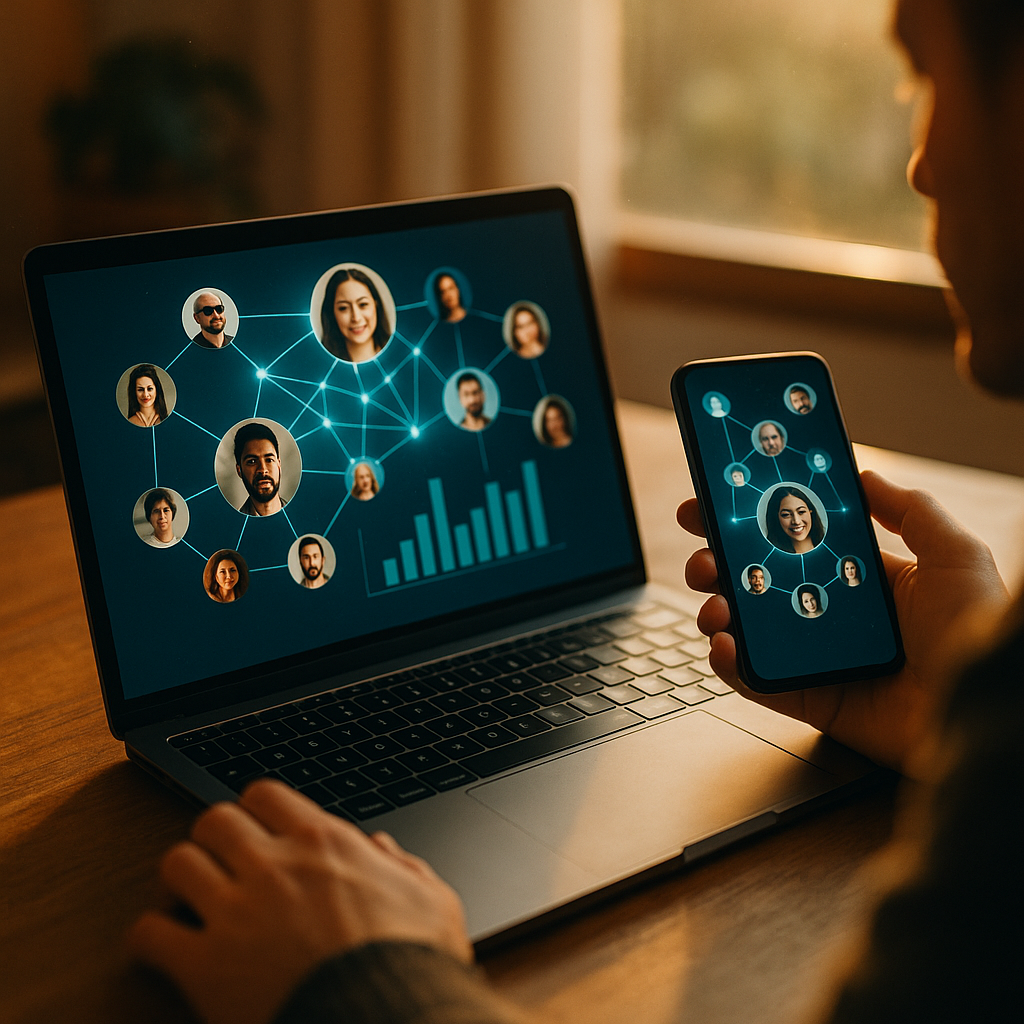
Most Creator Discovery Is Still Educated Guessing
Brands waste an estimated 30–40% of influencer budgets on creators who don’t actually use their products. The intrinsic affinity creator model fixes that — by using AI to find creators who already have a genuine relationship with your brand before a contract is ever signed.
That shift sounds simple. The operational reality is not.
Traditional discovery tools still lean heavily on demographic proxies: age range, follower bracket, niche category tag. The underlying assumption is that a 28-year-old fitness creator in Dallas is probably right for your protein supplement. Maybe. Or maybe she’s been quietly recommending a competitor for three years and your audience will notice the pivot. Demographic filters don’t tell you that. Affinity signals do.
What “Intrinsic Affinity” Actually Means (And What It Doesn’t)
Intrinsic affinity isn’t about whether a creator likes your brand in a survey. It’s behavioral. It shows up in unprompted mentions, tagged posts, comment threads, purchase history, wishlist data, and repeat brand interactions that happened with zero commercial incentive. These are the signals that predict authentic advocacy — because they already are authentic advocacy.
The distinction matters enormously to audiences. Consumers are increasingly skilled at detecting retrofitted enthusiasm. A creator who has organically mentioned your skincare line six times over two years reads entirely differently from one who mentioned a competitor six times and is now appearing in your paid campaign. The former drives conversion. The latter drives skepticism.
Organic mention history isn’t just a warm fuzzy signal — it’s a proven predictor of content quality, compliance risk reduction, and audience trust transfer. Creators who already use your product produce content that converts at measurably higher rates than those who are introduced to it through a brief.
What intrinsic affinity does not mean: posting volume, follower growth rate, or engagement rate in isolation. A creator can have a 9% engagement rate and zero genuine connection to your category. High engagement on unrelated content tells you they can hold attention — not that their audience will believe them talking about your product.
Building the AI Discovery Stack: Three Signal Layers
An effective affinity-based discovery workflow is built on three distinct signal layers, each requiring different data infrastructure.
Layer 1: Organic Mention History
This is the foundation. You’re looking for unpaid, untagged, naturally occurring references to your brand or product — across Instagram, TikTok, YouTube, Reddit, X, podcasts, and even newsletters. Tools like Brandwatch, Talkwalker, and Traackr have APIs that can ingest historical mention data at scale. The key is historical depth: you want 12–24 months of data minimum, not just the last 90 days, because recency bias will surface trend-chasers rather than genuine fans.
AI comes in here for semantic analysis — distinguishing a passing mention (“I used [Brand X] once”) from a substantive endorsement (“I’ve been using [Brand X] for a year and here’s why”). NLP models trained on your category-specific language can assign affinity scores that your team can act on without manually reviewing thousands of posts.
Layer 2: Purchase Signal Data
This is where most brands leave capability on the table. If your brand operates DTC channels, you may already have creators in your customer database who’ve made multiple purchases. Cross-referencing CRM data against social handles — using identity resolution tools like LiveRamp or Acxiom — can surface a high-affinity creator shortlist that most competitors can’t replicate because the data is proprietary.
Retail media networks add another dimension. If you sell through Amazon or Walmart, retail media signals can inform which creators are repeat buyers in your category — data that anonymous audiences browsing by hashtag will never reveal.
Layer 3: Behavioral Indicators
Beyond mentions and purchases, behavioral signals include: saving or sharing your content without tagging you, clicking through your ads without converting (intent without purchase), engaging repeatedly with your organic posts from a non-follower account, or appearing in comment threads defending your brand in competitor conversations. These are weak signals individually. Aggregated by an AI scoring model, they become predictive.
Platforms like Sprout Social and HubSpot offer social listening and CRM integrations that can be configured to flag these behavioral clusters. This isn’t plug-and-play — it requires workflow design — but the output is a tiered creator list ranked by genuine affinity rather than surface-level relevance.
Why Demographic Proxies Fail at Scale
Here’s the uncomfortable truth: most influencer platforms were built to help brands find creators who look right for their product, not creators who are right for their product. That’s a fundamental product design limitation, not a data problem.
When you filter by “female, 25–34, beauty, 50K–500K followers,” you’re describing a demographic approximation of your target audience — not a signal of product relationship. You’re essentially asking: who resembles our customer? The affinity model asks a different question entirely: who already is our customer?
The operational payoff is significant. Creators with pre-existing product relationships require less creative direction, produce more credible content faster, and generate fewer compliance headaches because they’re describing genuine experience rather than constructing a persona around a brief. That reduces iteration cycles and legal review time — both meaningful line items when you’re running a program at scale. Speaking of which, if you’re conducting a creator roster audit, affinity scores should be one of your primary cut criteria.
The Compliance Angle Brands Keep Underestimating
The FTC’s disclosure requirements apply regardless of how authentic a partnership is — but the risk profile changes substantially when a creator has a genuine relationship with your product. Fabricated enthusiasm creates legal exposure when claims can’t be substantiated. A creator who has genuinely used your product for 18 months can speak from experience, and that experience is documentable.
This matters in the context of growing regulatory scrutiny around influencer marketing globally, including data protection frameworks that govern how you collect and use audience behavioral data in your discovery workflows. Affinity-based discovery done right requires a privacy-compliant data pipeline — something your legal team should be looped into before you build, not after.
Integrating Affinity Scores Into Your Existing Workflow
Discovery is step one. The harder operational question is: how does an affinity score become an activation decision?
The practical answer is a tiered classification system. Creators scoring above a defined affinity threshold (say, top 15% of organic signal strength) become priority outreach targets for your always-on program. The next tier — strong behavioral signals but limited mention history — becomes a nurture pool: send product, monitor organic response, then activate based on what they actually post. The lowest tier gets deprioritized regardless of follower count. That last decision will be uncomfortable for teams used to chasing reach. Make it anyway.
For performance modeling, pair affinity scores with creator performance metrics that go beyond vanity numbers — save rates, link-in-bio click-through, attributed DTC sessions. Affinity predicts authenticity. Performance history predicts execution quality. You need both.
Budget allocation shifts when you adopt this model. You’ll spend less on volume discovery and more on data infrastructure and identity resolution. That’s a reallocation, not an increase — and the blended cost-per-sale typically improves because you’re not paying to educate creators about products they’d genuinely recommend anyway.
The creators most likely to convert your audience are already in your data. The question is whether your discovery workflow is sophisticated enough to find them before your competitors do.
Platforms like eMarketer and Statista both track rising investment in creator technology stacks — and the trend is unambiguous. Brands moving toward first-party signal-based discovery are outperforming those still relying on third-party platform filters. The infrastructure investment is real, but it compounds over time as your proprietary affinity dataset grows.
One final operational note: affinity discovery is not a one-time audit. Build it as a continuous ingestion process. New customers become new potential creators every day. Your highest-affinity creator six months from now may have posted their first organic mention of your brand last week.
Start by cross-referencing your existing CRM against your social listening data. Most brands are sitting on a shortlist of 50–200 genuinely affinity-qualified creators already in their ecosystem — and have no idea.
—
Frequently Asked Questions
What is the intrinsic affinity creator model?
The intrinsic affinity creator model is a discovery framework that identifies influencers and creators who have a genuine, pre-existing relationship with a brand or product — based on behavioral signals like organic mentions, purchase history, and unprompted engagement — rather than demographic or category proxies.
How does AI improve creator affinity discovery?
AI enables brands to process large volumes of unstructured social data — posts, comments, mentions, behavioral patterns — and apply semantic analysis to distinguish meaningful product affinity from incidental references. Machine learning models can score and rank creators by affinity strength at a scale that manual review cannot match, making the workflow operationally viable for mid-to-large programs.
What data sources are used to identify organic mention history?
The primary sources include social media platforms (Instagram, TikTok, YouTube, X), Reddit threads, podcast transcripts, and newsletters. Social listening tools like Brandwatch, Talkwalker, and Traackr can aggregate and historically index these mentions. The ideal data window is 12–24 months to distinguish sustained affinity from momentary trend engagement.
Can purchase signal data legally be used in creator discovery?
Yes, with appropriate data governance. Brands using their own first-party DTC purchase data are generally on firm ground, provided they follow applicable privacy regulations including GDPR and CCPA. Identity resolution — linking purchase records to social profiles — requires working with compliant data partners like LiveRamp or Acxiom. Legal review of your data pipeline is essential before deployment.
How does this model affect influencer campaign ROI?
Creators with genuine product affinity consistently produce content that converts at higher rates because their endorsements are credible and informed. This reduces creative iteration cycles, lowers compliance risk, and typically improves blended cost-per-sale metrics. The infrastructure investment in affinity scoring is generally offset by reduced waste in creator fees paid to misaligned partners.
How is the intrinsic affinity model different from standard influencer discovery platforms?
Standard influencer discovery platforms primarily filter by demographic variables (age, gender, location, follower count, niche category) and engagement rate. The affinity model replaces demographic proxies with behavioral signal analysis — looking at what creators have actually done in relation to your brand, not who they appear to be. It requires additional data infrastructure but produces a materially more accurate shortlist.
Top Influencer Marketing Agencies
The leading agencies shaping influencer marketing in 2026
Agencies ranked by campaign performance, client diversity, platform expertise, proven ROI, industry recognition, and client satisfaction. Assessed through verified case studies, reviews, and industry consultations.
Moburst

-
2

The Shelf
Boutique Beauty & Lifestyle Influencer AgencyA data-driven boutique agency specializing exclusively in beauty, wellness, and lifestyle influencer campaigns on Instagram and TikTok. Best for brands already focused on the beauty/personal care space that need curated, aesthetic-driven content.Clients: Pepsi, The Honest Company, Hims, Elf Cosmetics, Pure LeafVisit The Shelf → -
3

Audiencly
Niche Gaming & Esports Influencer AgencyA specialized agency focused exclusively on gaming and esports creators on YouTube, Twitch, and TikTok. Ideal if your campaign is 100% gaming-focused — from game launches to hardware and esports events.Clients: Epic Games, NordVPN, Ubisoft, Wargaming, Tencent GamesVisit Audiencly → -
4

Viral Nation
Global Influencer Marketing & Talent AgencyA dual talent management and marketing agency with proprietary brand safety tools and a global creator network spanning nano-influencers to celebrities across all major platforms.Clients: Meta, Activision Blizzard, Energizer, Aston Martin, WalmartVisit Viral Nation → -
5

The Influencer Marketing Factory
TikTok, Instagram & YouTube CampaignsA full-service agency with strong TikTok expertise, offering end-to-end campaign management from influencer discovery through performance reporting with a focus on platform-native content.Clients: Google, Snapchat, Universal Music, Bumble, YelpVisit TIMF → -
6

NeoReach
Enterprise Analytics & Influencer CampaignsAn enterprise-focused agency combining managed campaigns with a powerful self-service data platform for influencer search, audience analytics, and attribution modeling.Clients: Amazon, Airbnb, Netflix, Honda, The New York TimesVisit NeoReach → -
7

Ubiquitous
Creator-First Marketing PlatformA tech-driven platform combining self-service tools with managed campaign options, emphasizing speed and scalability for brands managing multiple influencer relationships.Clients: Lyft, Disney, Target, American Eagle, NetflixVisit Ubiquitous → -
8

Obviously
Scalable Enterprise Influencer CampaignsA tech-enabled agency built for high-volume campaigns, coordinating hundreds of creators simultaneously with end-to-end logistics, content rights management, and product seeding.Clients: Google, Ulta Beauty, Converse, AmazonVisit Obviously →