


Creator Consulting Is Now a Six-Figure Advisory Category
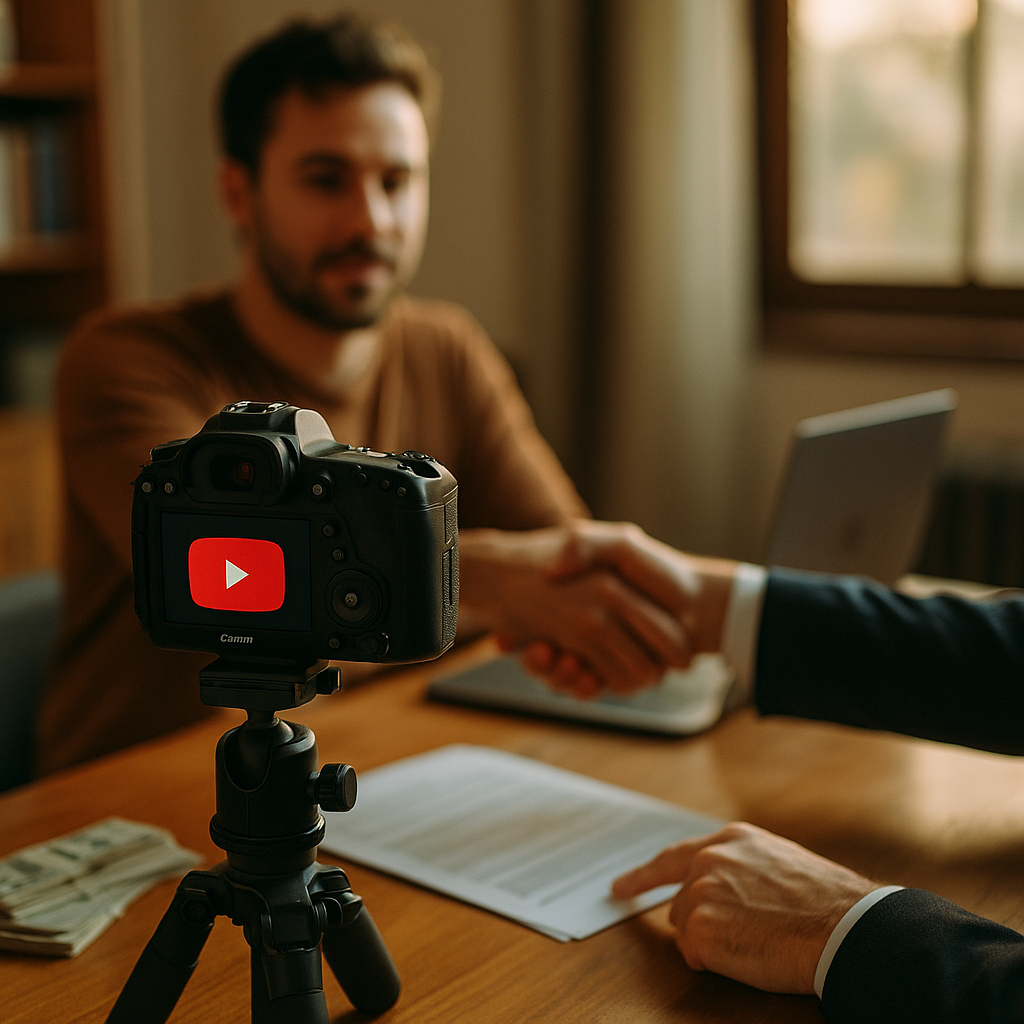
When a single YouTube strategist charges $25,000 to review a channel’s content architecture, you’re no longer in influencer management territory. You’re in management consulting territory. The viral video consulting industry has quietly crossed a threshold — and brands that haven’t restructured their YouTube partnership strategy to account for consultant involvement are already operating with outdated assumptions.
This isn’t a trend. It’s a structural shift in who holds creative and strategic authority in the creator economy.
How the Consulting Layer Emerged
For years, YouTube’s algorithm rewarded consistency and volume. Creators who understood retention curves, CTR optimization, and thumbnail psychology could grow without outside expertise. Then the game changed.
Mid-funnel content fragmented across Shorts, TikTok, and Instagram Reels. YouTube’s recommendation engine began weighting watch time against competitive session data, not just a creator’s own historical performance. The analytical burden became genuinely difficult to manage solo — especially for creators managing brand deals, merchandise lines, and licensing simultaneously.
Enter the creator strategist. These aren’t social media managers or MCN talent reps. They’re analysts and architects: people who can A/B test video titles at scale using tools like TubeBuddy or VidIQ, interpret spikes in impression share, and build content calendars that serve both audience growth and brand partnership windows. The sophistication gap between a well-advised creator and an unadvised one has become wide enough that brands can measure the difference in campaign performance.
A McKinsey analysis on the broader creator economy noted that professionalization typically follows monetization density — once income concentration in a sector crosses a threshold, advisory services formalize around it. YouTube’s top tier crossed that threshold years ago. The advisor market is now catching up fast.
What Premium Advisory Fees Actually Signal
Creator consultants charging $5,000 to $30,000+ per engagement aren’t just pricing for their time. They’re pricing for decision leverage. A strategist advising a creator with 2M subscribers on which brand deals to accept — and how to position those deals within an editorial calendar — directly influences the economic value of that creator’s inventory.
When a creator has professional advisory support, their negotiating position with brands shifts materially. Consultants coach creators to reject undervalued flat-fee arrangements in favor of performance-linked structures — which means brands negotiating without awareness of consultant involvement are often negotiating blind.
This matters operationally. As covered in our analysis of flat-fee contract mispricing, the standard brand approach of offering a fixed fee for a deliverable is increasingly misaligned with how sophisticated creators and their advisors value inventory. Consultants are actively coaching creators to push back — and to push back with data.
The implications run deeper than deal terms. Creator consultants are now involved in shaping the creative brief response process. Some are ghostwriting creator proposals to brands. Others are auditing brand briefs and advising clients to decline if creative constraints are too restrictive. According to reporting in the creator economy space tracked by eMarketer, creator satisfaction with brand partnership terms has become a primary retention variable — and consultants function as the professional filter through which those terms are now evaluated.
The Brief Has Become a Battleground
If you’re still sending a three-page brand brief and expecting a creator to execute without pushback, you need to know: that brief is being reviewed by someone who does this professionally. Creator consultants are actively rewriting what brands can expect from the brief process — and they’re winning those negotiation rounds because they come armed with benchmark data on creative freedom, usage rights, and exclusivity windows that most brand teams simply don’t carry.
This isn’t adversarial by design. It’s professional. The problem is that brand teams haven’t developed corresponding sophistication on their side of the table. The solution isn’t to fight it — it’s to match it.
How Brands Should Restructure Partnership Frameworks
The practical implication for brand and agency teams is straightforward: treat creator consultants the way you’d treat a talent agent or entertainment lawyer. Acknowledge their existence, factor them into your negotiation timeline, and consider whether early engagement with them creates better outcomes than treating them as an obstacle.
Several structural adjustments are worth implementing immediately:
- Build consultant identification into discovery. When vetting potential creator partners, ask directly whether they work with a strategist or advisor. This isn’t intrusive — it’s due diligence. It tells you how sophisticated the negotiation will be and what prep your team needs.
- Extend deal timelines. Consultant-advised creators take longer to say yes. They’re running your brief past someone who will check usage rights clauses, exclusivity windows, and performance benchmarks. If your campaign timeline doesn’t accommodate a two-week review cycle, you’ll lose access to the best-advised talent.
- Rethink the brief format. A brief written for a creator operating solo lands differently with a creator-consultant team. Build briefs that anticipate professional scrutiny — be specific about performance KPIs, explicit about usage rights, and transparent about exclusivity terms. Vagueness will be flagged and sent back.
- Revisit your fee structures. The budget reallocation question in a professionalized creator economy isn’t just about channel mix. It’s about whether your per-creator budgets reflect the increased negotiation sophistication on the creator side.
- Consider co-briefing sessions. For high-value, long-term partnerships, some brand teams are beginning to include creator consultants in early briefing sessions alongside the creator. This compresses the revision cycle and surfaces creative constraints earlier. It’s uncomfortable for teams used to controlling the brief — and it’s dramatically more efficient.
The brands winning premium YouTube inventory aren’t fighting the professionalization of the creator side. They’re matching it with equivalent sophistication on the brand side — dedicated partnership leads, legal teams briefed on creator deal structures, and procurement processes built for creative negotiations, not vendor management.
The ROI Case for Engaging Rather Than Resisting
Here’s the performance argument. Creator consultants push their clients toward better content. That’s literally the job. A creator working with a retention specialist produces videos with higher average view duration, better CTR, and more algorithmic reach. Your brand integration lives inside that content. The distribution quality of your sponsorship is directly tied to how well-advised that creator is.
Brands that engage proactively with consultant-backed creators — and that structure deals with the flexibility those advisors require — are effectively paying for better-performing inventory. The alternative is fighting for creator attention, losing access to the top-tier advised talent, and filling the gap with less sophisticated (and less strategically optimized) content. As we’ve tracked in our coverage of creator CPA performance, the quality signal in creator content is a real performance variable, not a soft metric.
The Sprout Social Index consistently identifies authenticity and production quality as the top two factors driving consumer trust in creator content. Creator consultants, at their best, are in the business of optimizing exactly those variables. That’s a brand benefit, not a complication.
The consulting infrastructure around YouTube — including firms like Padawan Media and independent strategists operating through platforms like LinkedIn and creator-specific networks — is growing faster than most brand teams have clocked. And the FTC’s ongoing disclosure guidance adds another layer: consultants are increasingly coaching creators on compliance positioning, which means brands partnering with advised creators often get better disclosure practices built in — a real risk mitigation win.
The Professionalization Isn’t Stopping Here
YouTube creator strategists are the visible edge of a much broader shift. The creator economy at scale doesn’t remain amateur. Markets professionalize. Advisory layers form. Pricing gets more sophisticated. The brands that treat this as a nuisance will find themselves progressively locked out of the best inventory.
The smarter read: creator consultants are your early signal that the supply side of the creator market is maturing. Match that maturity on your side, and the performance delta becomes your competitive advantage.
Your next move: Before your next YouTube partnership negotiation, ask whether the creator has a strategist. If they do, request a pre-negotiation call that includes them. That single process change will compress your revision cycles, improve brief quality, and give you faster access to deal terms that actually stick.
Frequently Asked Questions
What is a YouTube creator consultant, and how are they different from a talent manager?
A YouTube creator consultant is a specialist who advises creators on content strategy, algorithm optimization, and audience growth — using data tools like TubeBuddy or VidIQ to inform decisions about upload cadence, thumbnail testing, and retention architecture. A talent manager, by contrast, focuses primarily on deal sourcing and relationship management. Creator consultants often overlap with deal advisory when they help creators evaluate brand partnership terms, but their core expertise is strategic content performance, not just talent representation.
How should brands adjust their negotiation process when a creator works with a consultant?
Build more time into the deal timeline — advisor-backed creators typically run brand briefs through a review cycle that can add one to two weeks. Use more precise brief language around usage rights, exclusivity, and performance expectations, since vague terms will be flagged. Consider requesting a joint briefing session with the creator and their consultant early in the process to compress revision rounds and surface creative constraints before they become deal blockers.
Do creator consultants increase the cost of brand partnerships?
In the short term, consultant-advised creators often negotiate higher fees and more favorable terms — consultants benchmark against market data and coach creators to push back on undervalued flat-fee structures. However, the performance case supports the premium: better-advised creators produce higher-quality content with better distribution metrics, which means brand integrations reach more engaged audiences. The ROI calculus frequently favors paying a premium for better-performing inventory over paying less for lower-reach, lower-retention content.
What should brands include in briefs to satisfy professional creator review standards?
Briefs reviewed by creator consultants will be evaluated on specificity around KPIs, clarity of creative freedom versus brand requirements, explicit usage rights and exclusivity scope, and compliance with FTC disclosure standards. Brands should move away from open-ended deliverable descriptions and toward briefs that are explicit about what is required, what is optional, and what the performance benchmark is. This protects both parties and makes the negotiation process significantly faster.
Is the creator consulting trend limited to YouTube, or is it expanding across platforms?
The trend started with YouTube’s analytical complexity but is expanding rapidly across TikTok, Twitch, and Substack as monetization density in those ecosystems increases. Creator consultants are increasingly cross-platform strategists, though YouTube remains the primary market due to the platform’s long-form content economics and higher per-creator revenue potential. As social commerce grows on TikTok and Meta, advisory services are also developing around shop performance and affiliate optimization.
Top Influencer Marketing Agencies
The leading agencies shaping influencer marketing in 2026
Agencies ranked by campaign performance, client diversity, platform expertise, proven ROI, industry recognition, and client satisfaction. Assessed through verified case studies, reviews, and industry consultations.
Moburst

-
2

The Shelf
Boutique Beauty & Lifestyle Influencer AgencyA data-driven boutique agency specializing exclusively in beauty, wellness, and lifestyle influencer campaigns on Instagram and TikTok. Best for brands already focused on the beauty/personal care space that need curated, aesthetic-driven content.Clients: Pepsi, The Honest Company, Hims, Elf Cosmetics, Pure LeafVisit The Shelf → -
3

Audiencly
Niche Gaming & Esports Influencer AgencyA specialized agency focused exclusively on gaming and esports creators on YouTube, Twitch, and TikTok. Ideal if your campaign is 100% gaming-focused — from game launches to hardware and esports events.Clients: Epic Games, NordVPN, Ubisoft, Wargaming, Tencent GamesVisit Audiencly → -
4

Viral Nation
Global Influencer Marketing & Talent AgencyA dual talent management and marketing agency with proprietary brand safety tools and a global creator network spanning nano-influencers to celebrities across all major platforms.Clients: Meta, Activision Blizzard, Energizer, Aston Martin, WalmartVisit Viral Nation → -
5

The Influencer Marketing Factory
TikTok, Instagram & YouTube CampaignsA full-service agency with strong TikTok expertise, offering end-to-end campaign management from influencer discovery through performance reporting with a focus on platform-native content.Clients: Google, Snapchat, Universal Music, Bumble, YelpVisit TIMF → -
6

NeoReach
Enterprise Analytics & Influencer CampaignsAn enterprise-focused agency combining managed campaigns with a powerful self-service data platform for influencer search, audience analytics, and attribution modeling.Clients: Amazon, Airbnb, Netflix, Honda, The New York TimesVisit NeoReach → -
7

Ubiquitous
Creator-First Marketing PlatformA tech-driven platform combining self-service tools with managed campaign options, emphasizing speed and scalability for brands managing multiple influencer relationships.Clients: Lyft, Disney, Target, American Eagle, NetflixVisit Ubiquitous → -
8

Obviously
Scalable Enterprise Influencer CampaignsA tech-enabled agency built for high-volume campaigns, coordinating hundreds of creators simultaneously with end-to-end logistics, content rights management, and product seeding.Clients: Google, Ulta Beauty, Converse, AmazonVisit Obviously →