


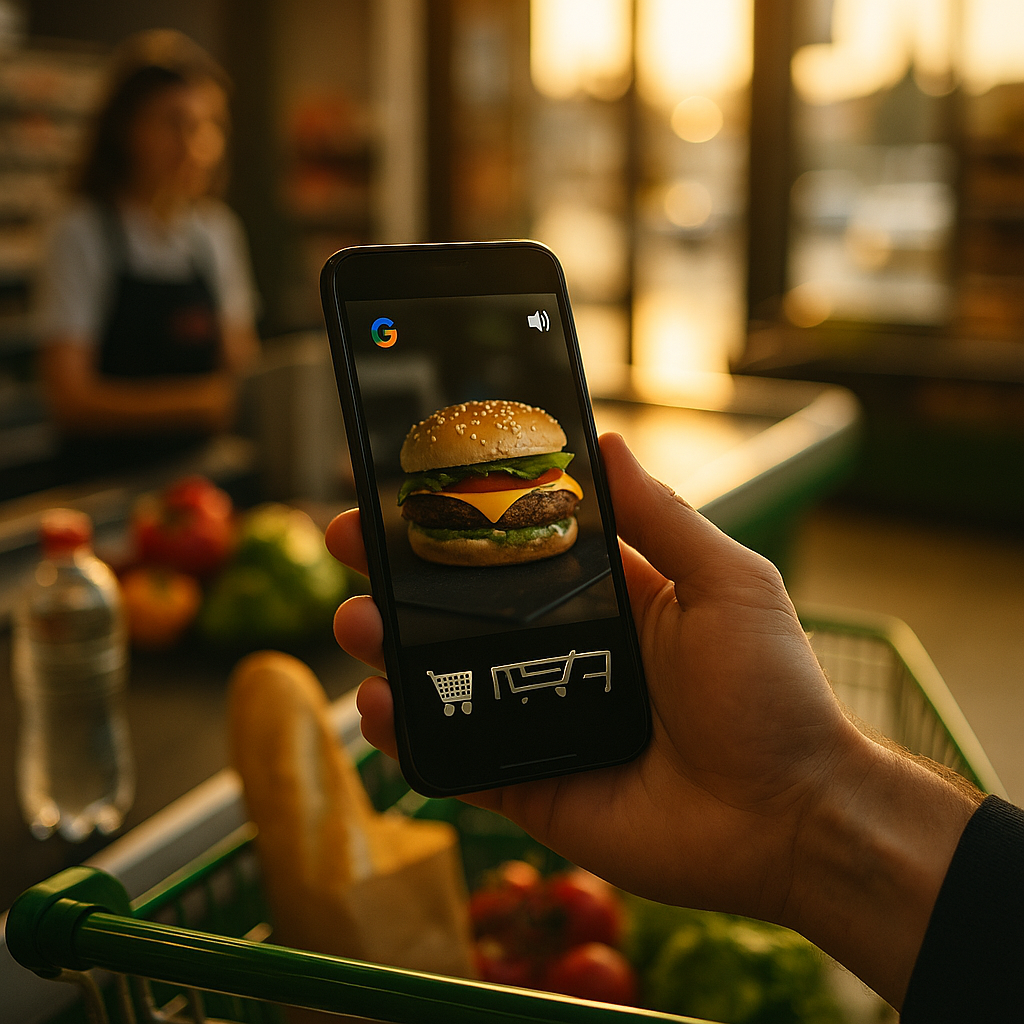
One Pipeline. Every Market. Zero Redundant Production Budget.
Brands running paid video across more than three markets waste an average of 34% of their creative production budget on market-specific reshoots that differ only in voiceover, price callout, or end-card retailer. Gemini Omni Flash localized video ads change that equation entirely. The question is not whether generative pipelines can replace traditional localization. The question is how fast your team can architect one before your competitors do.
What Gemini Omni Flash Actually Does (and What It Doesn’t)
Google’s Gemini Flash models sit inside the Gemini family as the high-throughput, low-latency tier. They are built for volume output at speed, which makes them operationally relevant for brands that need to generate dozens of video variants from a single master creative. The “Omni” capability means the model can process and output across modalities: text, image, video frames, and audio simultaneously.
For a brand marketing team, that translates to a specific workflow. You feed a master 30-second video asset, a market-specific product catalog, localized pricing data, and a retailer endpoint URL, and the pipeline returns a market-ready variant with re-dubbed audio, overlaid local pricing, a localized end-card, and a direct purchase link. No reshoot. No separate agency briefing per market. One orchestrated generative run.
What it does not do: replace the strategic brief. The model does not know that your German audience expects clinical proof points while your Brazilian audience responds to social proof. That context has to be structured into your prompt architecture before the pipeline runs. Garbage in, garbage out applies here as much as it does in any media buy.
The operational advantage of a generative localization pipeline is not speed alone. It is the ability to A/B test market-specific creative hypotheses in parallel without doubling your production spend.
Building the Brief Architecture Before You Touch the Pipeline
The brief is the upstream lever that determines whether your pipeline outputs are usable on day one or require three rounds of human revision. Most teams underinvest here because they are excited about the technology and underestimate how much cultural and commercial context has to be encoded before the model runs.
Structure your input brief across four layers:
- Market persona layer: Emotional drivers, purchase barriers, preferred proof types (testimonial, data, demonstration), and platform-native format expectations per market.
- Commercial layer: Local pricing, promotional cadence, retailer priority (Amazon DE vs. Kaufland vs. MediaMarkt), and checkout flow type (in-app, redirect, or scan-to-buy).
- Compliance layer: Advertising standards per market, required disclosures, age-gating requirements, and any product claim restrictions. This is non-negotiable. The FTC guidelines govern US outputs; the UK’s ASA and ICO frameworks govern British variants.
- Purchase link layer: Exact UTM parameters, retailer affiliate tags, and deep-link structures that route to the correct product page in each market. This is where most teams make their first error: linking to a homepage instead of a SKU-level product page with purchase intent.
If your team is already running GEO-specific content briefs for other AI-driven content, you can adapt that brief architecture directly for this pipeline. The structural logic is the same; the output format is video rather than editorial.
The Pipeline Architecture: From Master Asset to Market-Ready Ad
Here is a concrete production sequence your team can implement:
- Master asset production: Shoot a single “clean” master with neutral voiceover, no on-screen pricing, and a blank end-card zone. This is your reusable template across all markets.
- Gemini Flash ingestion: Pass the master video through the Google AI platform with your structured market brief as the prompt context. The model parses the video frame-by-frame and identifies substitution zones.
- Automated dubbing and audio sync: Use a voice synthesis layer (ElevenLabs or Google’s own WaveNet variants work at this stage) to generate market-specific voiceover and synchronize it to the existing video pacing.
- Dynamic overlay injection: Pricing, promotional copy, and retailer branding are injected as composited layers at the end-card and mid-video callout zones identified in step two.
- Purchase link embedding: Each variant receives a unique tracked URL routed to the appropriate retailer checkout. For platforms supporting in-stream checkout, the link schema should be formatted for TikTok Shop or Meta’s Shops API depending on the distribution channel.
- QA and compliance review: Automated flagging against your compliance layer brief, followed by a lightweight human review pass. At volume, this is a spot-check workflow, not a full review cycle.
The teams seeing the fastest throughput are those that treat the UGC rights and content automation infrastructure they already run as a foundation. If you have already invested in a UGC automation pipeline for rights clearance, the generative localization layer sits on top of that infrastructure without requiring a parallel build.
Connecting Video Variants Directly to Purchase Points
This is where most generative video programs leave performance on the table. They produce the localized video, distribute it, and route traffic to a generic product landing page. That is a conversion leak.
Purchase-point linkage means every video variant points to the exact SKU, in the exact retailer, in the exact market, with inventory status verified at the time of ad serving. If the product is out of stock at Amazon.de, the end-card routes to the Kaufland listing. This requires a live inventory API feed integrated into your ad-serving layer, not a static UTM structure built at production time.
For brands running shoppable video experiences, the connection between video variant and purchase point is already part of the infrastructure. The generative localization layer simply extends that infrastructure to cover additional markets without proportionally increasing production cost.
Shoppable integration also affects the video format itself. If your end destination is an in-stream checkout, your video needs to hold a clean visual frame for the purchase overlay at seconds 22-27 of a 30-second unit. That is a creative constraint that must be encoded in your master asset brief before production begins, not retrofitted afterward.
Measuring What Actually Matters
Most brand teams default to view-through rate and click-through rate as primary metrics for video campaign performance. Neither tells you whether the localization is working.
For a Gemini Omni Flash localized campaign, your measurement framework should track:
- Add-to-cart rate by market variant: This isolates whether the localized commercial message is converting at the point of intent, not just generating awareness.
- Checkout completion rate per retailer endpoint: A high add-to-cart with low checkout completion usually signals a friction problem in the retailer’s checkout flow, not a creative failure.
- Creative variant performance delta: Compare identical markets where only the localized element varies (e.g., same market, different proof type in the voiceover). This is your generative A/B test signal. Pair this with modular A/B brief frameworks to systematize the learning.
- Cost-per-localized-variant over time: Your benchmark in the first run will be high as you build the pipeline. By the third campaign cycle, cost per variant should drop by 40-60% as your prompt architecture matures and your QA pass rate improves.
Attribution across markets is genuinely hard, and anyone who tells you otherwise is selling you something. The practical answer is to use market-specific pixel configurations and retailer API integrations to build a cleaner signal than UTM-only tracking allows. Statista’s e-commerce data can provide baseline conversion rate benchmarks per market to contextualize your performance against category norms.
Localization is not translation. A video that performs in the top quartile in the UK can underperform in Australia running the same script with different pricing. The generative pipeline gives you the infrastructure to test that hypothesis at scale rather than assuming parity.
Operational Risks Teams Consistently Underestimate
Voice synthesis quality varies significantly by language. Languages with complex tonal structures (Mandarin, Thai, Vietnamese) require a higher-quality synthesis tier and a native-speaker QA pass before any variant goes live. Budget for this explicitly.
Brand safety in generative outputs is a real operational risk, not a theoretical one. Your compliance layer brief needs explicit negative constraints, not just positive directives. Tell the model what the brand will never say, claim, or visually imply, in addition to what it should do.
Retailer co-op compliance is a separate issue. Some retail media networks have specific requirements about how their branding appears in video ads that link to their platform. Violating these terms can result in delisted products or suspended advertising access. Review retailer brand guidelines before your pipeline runs, not after your first batch of variants is produced.
Finally, consider creator content integration. Brands that blend generative localization with creator-sourced footage, referenced in a cross-platform repurposing stack, consistently outperform purely AI-generated creative in markets where social proof is the dominant purchase driver. The pipeline does not have to be entirely synthetic to be efficient.
Start with your two highest-revenue markets, build the pipeline end-to-end including live retailer API integration, and run a four-week variant test before scaling. The infrastructure investment pays back when you reach market five; do not try to launch twelve markets simultaneously in your first pipeline cycle.
Frequently Asked Questions
What is Gemini Omni Flash and how does it apply to localized video advertising?
Gemini Omni Flash is Google’s high-throughput, multimodal generative model capable of processing and outputting across text, image, video, and audio simultaneously. For localized video advertising, it enables brands to take a single master video asset and produce market-specific variants at scale, with localized voiceover, pricing, retailer branding, and direct purchase links, without requiring separate production shoots per market.
How do you connect localized video ads directly to purchase points?
Effective purchase-point linkage requires integrating a live inventory API feed into your ad-serving layer so that each video variant routes to the exact SKU at the correct retailer in the correct market. Static UTM structures built at production time are insufficient because they cannot account for stock availability or retailer priority changes. The end-card and in-stream checkout overlay must be dynamically updated based on real-time inventory data.
What compliance risks should brands be aware of when using generative video pipelines?
Brands must build a compliance layer into their prompt architecture that reflects the advertising standards of each target market, including FTC guidelines for the US, ASA rules for the UK, and equivalent frameworks in each additional market. Voice synthesis outputs in particular require native-speaker QA review for tonal languages. Retailer co-op branding requirements must also be reviewed before any variant is distributed, as violations can result in delisted products or suspended advertising access.
How many markets should a brand target in its first generative localization pipeline run?
Starting with two high-revenue markets is the recommended approach for a first pipeline cycle. This allows teams to build and validate the full end-to-end infrastructure, including retailer API integration, compliance review workflows, and QA processes, before scaling. Attempting to launch twelve or more markets simultaneously in the first cycle significantly increases error risk and reduces the quality of the learning signal from initial variant testing.
What metrics should brands use to evaluate localized video ad performance?
The most relevant metrics for a generative localized video program are add-to-cart rate by market variant, checkout completion rate per retailer endpoint, creative variant performance delta across localization variables, and cost-per-localized-variant over successive campaign cycles. View-through and click-through rates alone are insufficient because they do not isolate whether the localization itself is driving purchase intent or just awareness.
Top Influencer Marketing Agencies
The leading agencies shaping influencer marketing in 2026
Agencies ranked by campaign performance, client diversity, platform expertise, proven ROI, industry recognition, and client satisfaction. Assessed through verified case studies, reviews, and industry consultations.
Moburst

-
2

The Shelf
Boutique Beauty & Lifestyle Influencer AgencyA data-driven boutique agency specializing exclusively in beauty, wellness, and lifestyle influencer campaigns on Instagram and TikTok. Best for brands already focused on the beauty/personal care space that need curated, aesthetic-driven content.Clients: Pepsi, The Honest Company, Hims, Elf Cosmetics, Pure LeafVisit The Shelf → -
3

Audiencly
Niche Gaming & Esports Influencer AgencyA specialized agency focused exclusively on gaming and esports creators on YouTube, Twitch, and TikTok. Ideal if your campaign is 100% gaming-focused — from game launches to hardware and esports events.Clients: Epic Games, NordVPN, Ubisoft, Wargaming, Tencent GamesVisit Audiencly → -
4

Viral Nation
Global Influencer Marketing & Talent AgencyA dual talent management and marketing agency with proprietary brand safety tools and a global creator network spanning nano-influencers to celebrities across all major platforms.Clients: Meta, Activision Blizzard, Energizer, Aston Martin, WalmartVisit Viral Nation → -
5

The Influencer Marketing Factory
TikTok, Instagram & YouTube CampaignsA full-service agency with strong TikTok expertise, offering end-to-end campaign management from influencer discovery through performance reporting with a focus on platform-native content.Clients: Google, Snapchat, Universal Music, Bumble, YelpVisit TIMF → -
6

NeoReach
Enterprise Analytics & Influencer CampaignsAn enterprise-focused agency combining managed campaigns with a powerful self-service data platform for influencer search, audience analytics, and attribution modeling.Clients: Amazon, Airbnb, Netflix, Honda, The New York TimesVisit NeoReach → -
7

Ubiquitous
Creator-First Marketing PlatformA tech-driven platform combining self-service tools with managed campaign options, emphasizing speed and scalability for brands managing multiple influencer relationships.Clients: Lyft, Disney, Target, American Eagle, NetflixVisit Ubiquitous → -
8

Obviously
Scalable Enterprise Influencer CampaignsA tech-enabled agency built for high-volume campaigns, coordinating hundreds of creators simultaneously with end-to-end logistics, content rights management, and product seeding.Clients: Google, Ulta Beauty, Converse, AmazonVisit Obviously →