


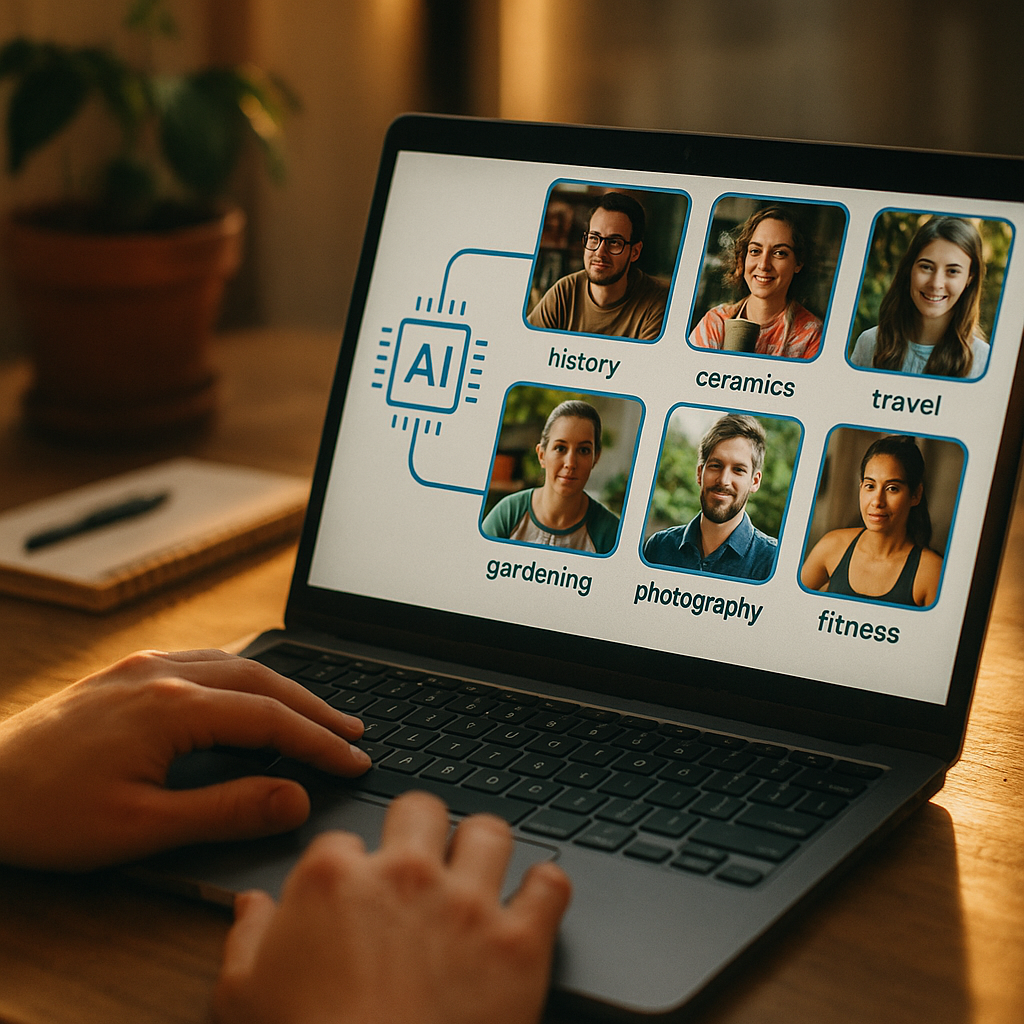
The Creator Economy Is About to Drown You in Options
There are already an estimated 50 million people who identify as creators globally, and analysts tracking creator economy growth project that figure is on a trajectory toward 100 million within a few years. That sounds like opportunity. For most brand teams, it will feel like a flood.
The real risk is not a shortage of creators. It is signal collapse: the point at which the volume of available voices becomes so large that your discovery infrastructure can no longer reliably surface the ones who actually move your business metrics. Brands that recognize this now have a narrow window to redesign their AI-powered creator discovery systems before the supply explosion makes the problem structurally unsolvable at scale.
Why Traditional Discovery Models Are Already Failing
Most creator discovery today is still built on a follower-threshold logic: set a floor, filter by category, browse results. Tools like Traackr, Aspire, and CreatorIQ have added layers of engagement analysis and audience-quality scoring, but their core search architecture was designed for a world with tens of thousands of relevant creators, not tens of millions. If you want a direct comparison of how those platforms stack up today, our breakdown of leading discovery platforms is worth reading before you renew any contract.
The follower-filter model has three compounding failure modes as the creator pool scales:
- Relevance decay: Broad category tags (fitness, beauty, finance) get applied to millions of creators, making keyword search return results that are technically accurate but commercially useless.
- Quality dilution: Engagement rate benchmarks shift downward as more creators compete for the same audience attention, making historical thresholds unreliable for predicting campaign performance.
- Infrastructure lag: Platforms index new creators slowly, meaning the most relevant emerging voices in a niche often do not appear in your search results until they are already over-partnered.
None of this is a vendor failure. It is an architectural mismatch between tools built for a smaller supply environment and a market that has outgrown them.
Rethinking the Signal: What “High-Signal Niche Voice” Actually Means
Before redesigning your infrastructure, clarify what you are actually trying to find. A high-signal niche creator is not simply a micro-influencer with good engagement. The signal you want is a combination of three things: audience specificity (the creator’s followers match your ICP with unusual precision), content authority (the creator demonstrably shapes purchasing behavior within a defined subcategory), and commercial sustainability (the creator produces consistently enough to support an ongoing partnership, not a one-off activation).
This distinction matters because AI discovery tools optimized for reach will surface different creators than tools optimized for conversion signal. If your discovery layer is not configured around the right signal definition, you will scale your discovery infrastructure and still end up with the wrong results, faster.
The brands winning in niche creator discovery are not searching harder. They are defining what “right” looks like with more precision than their competitors, then letting AI do the matching at scale.
The Infrastructure Redesign: Four Operational Shifts
Redesigning for supply-scale conditions requires more than swapping platforms. It requires rethinking how discovery, evaluation, and activation connect as a system.
1. Move from keyword search to semantic indexing. Modern AI discovery tools, including newer modules within AI infrastructure stacks built on models like Gemini or xAI, can analyze creator content at the semantic level rather than relying on creator-submitted category tags. This means discovering a creator who makes videos about “meal prepping for night-shift nurses” without that phrase ever appearing in their bio. Semantic indexing finds the voice, not the keyword.
2. Build a proprietary creator graph, not just a search query. Brands that rely entirely on third-party platform search are renting discovery infrastructure they do not control. Building a proprietary creator graph means continuously ingesting creator content signals, audience overlap data, and partnership history into a structured internal database. This is not a small investment, but it compounds. Each campaign generates data that makes the next discovery cycle more precise.
3. Integrate performance attribution into the discovery feedback loop. Discovery and measurement need to stop operating as separate functions. When a campaign ends, the performance data should automatically update your creator scoring model, surfacing similar profiles for the next brief. Tools that enable real-time campaign measurement make this loop tighter. If your discovery tool and your attribution tool cannot talk to each other, you are manually rebuilding institutional knowledge that should accumulate automatically.
4. Layer in agentic workflows for first-pass evaluation. Human review at scale is not viable. When the creator pool hits 100 million, even filtering to 10,000 candidates in your niche still requires evaluating thousands of profiles. Agentic AI workflows, configured to score creators against your brand-specific criteria and flag anomalies (sudden follower spikes, brand safety concerns, audience geography mismatches), can handle first-pass triage and escalate only the top candidates for human judgment. Understanding where AI marketing deployments fail before you build this layer will save you from expensive mistakes.
Platform Dynamics Make Timing Critical
The creator supply explosion is not uniform across platforms. TikTok and YouTube Shorts are producing the majority of new creator entrants, while commerce-native formats on those platforms are accelerating the professionalization of smaller creators faster than most brand teams anticipated. Niche voices on these platforms move from obscure to over-partnered in months, not years.
This compresses the discovery advantage window significantly. A brand that identifies a rising creator in the sustainable home goods space today may have 60 to 90 days before that creator is actively courted by competitors. AI-powered discovery needs to be configured for early detection, not just efficient search among established names.
LinkedIn is also producing a new wave of B2B niche creators, a segment most discovery tools handle poorly because the platform’s API access is more restrictive than TikTok or Instagram. If your brand targets a professional buyer, your discovery infrastructure needs to account for that gap explicitly.
Governance and Data Quality Cannot Be Afterthoughts
Scaling AI discovery without governance architecture is how you end up with a system that surfaces brand-unsafe creators efficiently. Before deploying any agentic discovery layer, establish clear data quality standards: how creator profiles are ingested, how frequently they are updated, and what triggers an automatic disqualification flag.
The compliance dimension is equally real. FTC disclosure guidelines apply regardless of how you found a creator, and audience demographic data used in creator targeting must be handled in line with applicable privacy regulations. If you are using data clean room infrastructure for creator attribution, ensure your discovery system is compatible with the same privacy architecture rather than creating a parallel data environment that introduces compliance risk.
AI discovery without governance is not efficiency. It is risk at scale. The speed at which agentic systems operate means that a misconfigured filter or a biased training dataset can exclude entire creator segments before a human ever reviews a single profile.
Choosing Infrastructure That Scales Without Breaking
One practical question every brand team faces: buy, build, or compose? Buying an off-the-shelf discovery platform is the fastest path to capability but leaves you dependent on vendor roadmaps that may not prioritize your specific niche requirements. Building proprietary infrastructure is expensive and requires sustained engineering investment. The middle path, composing a stack from interoperable components, is increasingly viable given the maturity of creator economy technology vendors, but requires rigorous evaluation of how components connect. Before committing, a MarTech readiness audit will expose integration gaps that become expensive at scale.
Whichever path you choose, prioritize platforms with open APIs, documented data models, and demonstrated ability to ingest creator data from multiple source environments. Closed systems will become bottlenecks as the creator pool scales. The MarTech interoperability question is not theoretical at this scale: it is the difference between a discovery system that improves with each campaign and one that requires manual workarounds every quarter.
Evaluating AI tools specifically? HubSpot’s AI research and the Sprout Social index both publish benchmarks on AI adoption in marketing operations that help contextualize where creator discovery fits within the broader stack investment decision.
Start auditing your current discovery infrastructure against a 100-million-creator scenario now, identify the three most likely failure points, and prioritize fixing the one that would cause you to miss the highest-value niche voices in your category.
Frequently Asked Questions
What is “supply explosion risk” in the creator economy?
Supply explosion risk refers to the operational challenge brands face as the global creator pool scales toward 100 million. As more creators enter the market, traditional discovery tools built on keyword and follower-threshold filtering become less effective at surfacing high-quality, commercially relevant niche voices, creating signal collapse for brand teams.
How does AI improve creator discovery at scale?
AI improves creator discovery by enabling semantic content analysis (finding creators by what they actually talk about, not just category tags), automating first-pass evaluation through agentic workflows, and creating feedback loops between campaign performance data and discovery scoring models. This allows brand teams to identify relevant niche creators earlier and with greater precision than manual or keyword-based search.
What is the difference between a high-reach creator and a high-signal niche creator?
A high-reach creator has a large following but may not have an audience that matches a brand’s ICP or influences purchasing decisions in a specific subcategory. A high-signal niche creator has a highly specific audience, demonstrable authority over purchase decisions within a defined niche, and the content consistency to support ongoing brand partnerships. AI discovery infrastructure needs to be configured to optimize for the latter.
What platforms are producing the most new niche creators?
TikTok and YouTube Shorts are currently producing the majority of new creator entrants, particularly in commerce-adjacent niches. LinkedIn is producing a growing wave of B2B niche creators that most discovery tools handle poorly due to API restrictions. Brand teams should audit their discovery tools’ coverage of each platform relevant to their target audience.
How should brands structure the feedback loop between discovery and campaign performance?
Brands should integrate their creator discovery database with their campaign attribution and ROI measurement tools so that post-campaign performance data automatically updates creator scoring models. This means similar high-performing creator profiles are surfaced more prominently in future discovery cycles, while underperformers are deprioritized, creating a continuously improving discovery system rather than one that resets with each brief.
What governance practices are essential for AI-powered creator discovery?
Essential governance practices include: establishing clear data quality standards for how creator profiles are ingested and updated, configuring automated brand safety and compliance flags, ensuring creator audience data is handled in line with FTC disclosure requirements and applicable privacy regulations, and conducting regular audits of AI model outputs to detect and correct any systematic biases in creator scoring or filtering.
Top Influencer Marketing Agencies
The leading agencies shaping influencer marketing in 2026
Agencies ranked by campaign performance, client diversity, platform expertise, proven ROI, industry recognition, and client satisfaction. Assessed through verified case studies, reviews, and industry consultations.
Moburst

-
2

The Shelf
Boutique Beauty & Lifestyle Influencer AgencyA data-driven boutique agency specializing exclusively in beauty, wellness, and lifestyle influencer campaigns on Instagram and TikTok. Best for brands already focused on the beauty/personal care space that need curated, aesthetic-driven content.Clients: Pepsi, The Honest Company, Hims, Elf Cosmetics, Pure LeafVisit The Shelf → -
3

Audiencly
Niche Gaming & Esports Influencer AgencyA specialized agency focused exclusively on gaming and esports creators on YouTube, Twitch, and TikTok. Ideal if your campaign is 100% gaming-focused — from game launches to hardware and esports events.Clients: Epic Games, NordVPN, Ubisoft, Wargaming, Tencent GamesVisit Audiencly → -
4

Viral Nation
Global Influencer Marketing & Talent AgencyA dual talent management and marketing agency with proprietary brand safety tools and a global creator network spanning nano-influencers to celebrities across all major platforms.Clients: Meta, Activision Blizzard, Energizer, Aston Martin, WalmartVisit Viral Nation → -
5

The Influencer Marketing Factory
TikTok, Instagram & YouTube CampaignsA full-service agency with strong TikTok expertise, offering end-to-end campaign management from influencer discovery through performance reporting with a focus on platform-native content.Clients: Google, Snapchat, Universal Music, Bumble, YelpVisit TIMF → -
6

NeoReach
Enterprise Analytics & Influencer CampaignsAn enterprise-focused agency combining managed campaigns with a powerful self-service data platform for influencer search, audience analytics, and attribution modeling.Clients: Amazon, Airbnb, Netflix, Honda, The New York TimesVisit NeoReach → -
7

Ubiquitous
Creator-First Marketing PlatformA tech-driven platform combining self-service tools with managed campaign options, emphasizing speed and scalability for brands managing multiple influencer relationships.Clients: Lyft, Disney, Target, American Eagle, NetflixVisit Ubiquitous → -
8

Obviously
Scalable Enterprise Influencer CampaignsA tech-enabled agency built for high-volume campaigns, coordinating hundreds of creators simultaneously with end-to-end logistics, content rights management, and product seeding.Clients: Google, Ulta Beauty, Converse, AmazonVisit Obviously →