


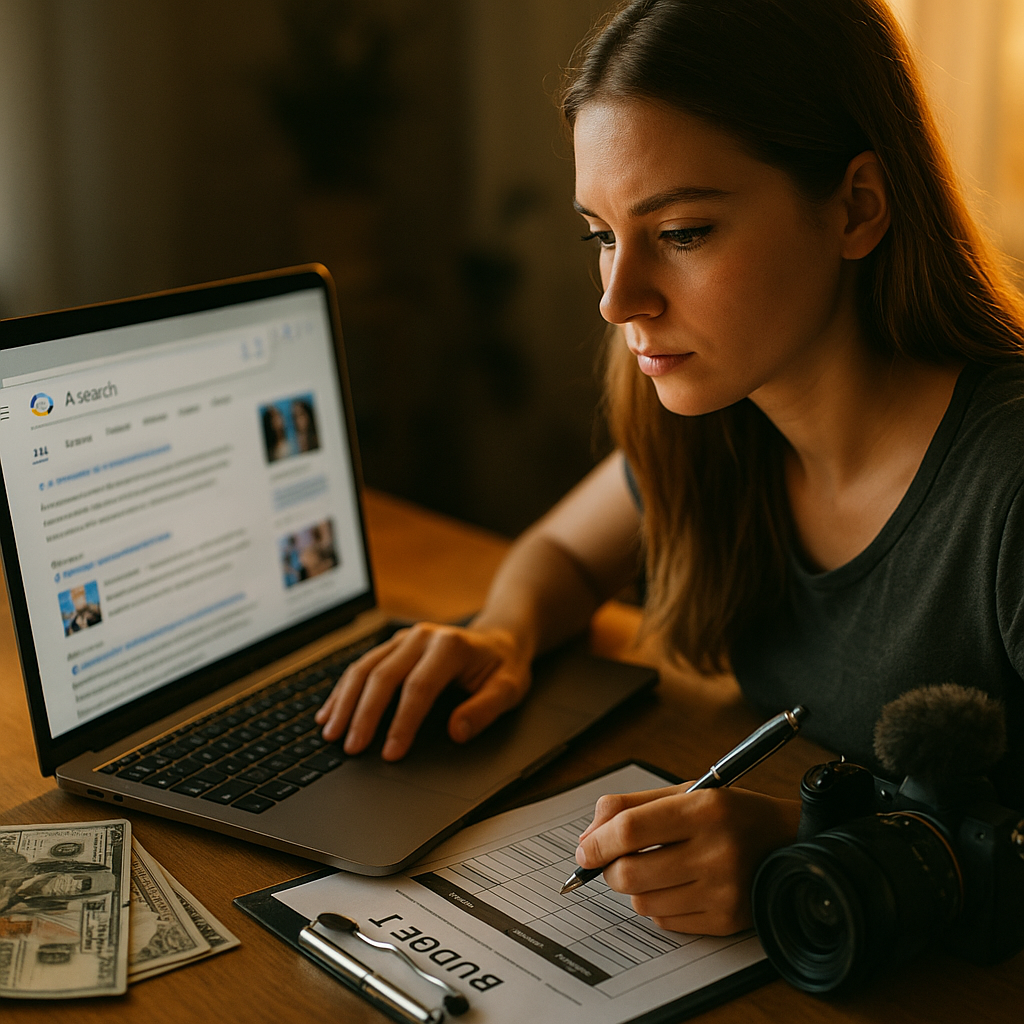
One in four Gen Z consumers now begins a product search inside an AI tool rather than a traditional search engine or social platform. That single behavioral shift is quietly dismantling the content allocation logic most brands have operated on for the past five years.
Why This Stat Should Change Your Budget Meeting
The 25% figure is not a rounding error. Research tracked by eMarketer and corroborated by platform usage data from Statista confirms that for Gen Z, AI-native search has moved from novelty to default for product discovery. ChatGPT, Perplexity, Google’s AI Overviews, and Gemini are now the first stop, not a supplement. The downstream consequence: creator content that lives only inside a platform’s feed algorithm is becoming invisible at the most critical moment in the purchase journey.
If your influencer program is built entirely around TikTok saves, Instagram Reel views, and YouTube watch time, you are optimizing for an audience that increasingly never arrives through those doors first.
Platform-native engagement metrics still matter, but they no longer capture the full discovery surface. A creator post that earns zero AI citations is now a strategically incomplete asset, regardless of its on-platform performance.
How Gen Z AI Search Actually Works (and Where Creator Content Fits)
When a Gen Z shopper types “best moisturizer for oily skin under $30” into Perplexity or asks Gemini for a product recommendation, the AI assembles an answer from crawlable, authoritative, structured content. It surfaces brand mentions, expert reviews, long-form creator articles, and structured product data. A 15-second TikTok with no transcript, no external URL, and no indexable text? Invisible to that query.
This is the structural problem. The formats that win on platform feeds (short-form vertical video, ephemeral Stories, low-text carousels) are largely unreadable by AI search engines. The formats that get cited in AI answers (long-form YouTube video with chapters and closed captions, detailed blog posts from creator websites, Reddit threads, structured review content) are the ones most brands have historically underfunded.
For a deeper breakdown of how to structure creator content for AI retrieval, the analysis on agentic search and structured data is worth reviewing before your next briefing cycle.
The Two-Layer Content Problem Brands Are Now Managing
The honest framing for brand strategists: you are now running two parallel content systems that have fundamentally different technical requirements.
Layer one is platform-native content. This is your TikTok and Reels ecosystem, your in-feed brand mentions, your creator collaborations built for algorithm reach and community engagement. It drives awareness, affinity, and conversion inside the platform. TikTok CPE benchmarks continue to rise, meaning the cost of that layer is increasing while its discovery surface is contracting for AI-first searchers.
Layer two is generative-search-optimized content. This includes long-form YouTube videos (indexed, chaptered, captioned), creator-authored editorial content on owned or third-party domains, structured review posts, and podcast transcripts. These formats feed AI citation engines. They are slower to produce, harder to brief, and require creators who can write or speak in depth, not just perform in front of a camera.
The allocation mistake most brands are making right now: spending 85-90% of creator budgets on layer one while expecting layer two performance to emerge organically. It will not.
Reallocating Creator Investment: A Practical Framework
There is no universal split that works across every category, but the directional logic is consistent. Brands selling considered-purchase products (electronics, skincare, financial products, software) to Gen Z audiences need to weight generative-search-optimized formats more heavily than brands selling impulse-purchase CPG.
Consider this reallocation framework:
- Considered-purchase brands: Move toward a 60/40 split favoring platform-native content, but allocate that 40% explicitly to indexable, long-form creator formats. Commission YouTube deep-dives with structured descriptions, creator blog reviews, and detailed comparison content.
- Impulse and CPG brands: Maintain a 75/25 split toward platform-native, but ensure the 25% generative-search budget produces content that answers the specific natural-language queries your Gen Z audience is typing into AI tools.
- All brands: Audit existing creator contracts. If deliverables do not include at least one indexable, long-form asset per campaign cycle, you are leaving the AI citation layer unserved. Revisiting hybrid contract structures that reward both platform performance and search citation outcomes is worth exploring.
Detailed guidance on how to structure budget allocation between AI search and creator content is covered in this resource on splitting your budget across channels.
Creator Selection Changes Too
This is where the operational implications get real. The skill set required to produce generative-search-optimized content is different from the skill set that drives viral platform performance.
A creator with 200K TikTok followers who produces punchy 30-second videos is valuable for layer one. But if they have no YouTube presence, no blog, no podcast, and no history of producing long-form content, they contribute nothing to your AI citation surface. The inverse is also true: a creator with a 40K YouTube audience and a detailed skincare review channel may generate substantially more AI-cited brand mentions than a creator with ten times the TikTok following.
Brands need to start evaluating creator rosters along a second axis: searchable depth, not just social reach. Does this creator produce content that AI engines can read, index, and cite? Do their posts answer questions in natural language? Do they have a domain with authority or a YouTube channel with enough structured content to surface in AI answers?
The Gen Z brand loyalty research reinforces this point: the formats that build durable trust with this cohort are proof-based and substantive, not just entertaining. That aligns directly with the content types AI search engines prefer to cite.
Reach is a platform metric. Citation frequency is a discovery metric. For Gen Z product queries that start in AI, citation frequency is the more consequential number.
Measurement: You Cannot Optimize What You Are Not Tracking
Most influencer measurement dashboards are built entirely around platform-native metrics: impressions, saves, shares, click-through rates, promo code redemptions. None of those metrics tell you whether your creator content is being cited in AI-generated answers.
Tracking AI citation is currently manual and imperfect. Tools like HubSpot’s AI search monitoring features and third-party visibility trackers such as Sprout Social are beginning to incorporate generative search presence reporting, but the category is early. Brands should be running regular brand-mention audits across Perplexity, ChatGPT, and Google’s AI Overviews using targeted query sets that mirror actual Gen Z search behavior.
The methodology for AEO budget and measurement strategy offers a practical starting point for building this tracking layer into existing reporting structures.
Separately, if your brand is not yet tracking how often it appears in AI-generated answers for category-relevant queries, you are flying blind on roughly 25% of your Gen Z discovery surface. That number will be higher within 18 months based on current adoption curves from eMarketer’s generational usage projections.
The Move: Stop Treating AI Search as an SEO Problem
Here is the strategic reframe that changes the budget conversation. Generative AI search optimization is not an SEO team problem. It is a creator content problem. The assets that get cited in AI answers are the same assets that influencer programs are uniquely positioned to produce: trusted, specific, human-voiced, experience-based content.
The mistake is routing this challenge to your technical SEO team while your creator program keeps producing short-form video that AI engines cannot parse. The fix is briefing creators differently, selecting creators with the right format capabilities, and allocating budget to longer-form deliverables that serve both the platform feed and the AI citation layer.
Start by auditing the last six months of creator deliverables and identifying which assets are indexable. Then commission one long-form test per category, measure AI citation rates after 60 days, and use that data to justify the next budget reallocation.
Frequently Asked Questions
What does “AI-first search” mean for Gen Z product discovery?
AI-first search means that a growing segment of Gen Z consumers open tools like ChatGPT, Perplexity, or Google’s AI Overviews as their primary method for researching and discovering products, rather than starting on Google Search, TikTok, or Instagram. For brands, this means product discovery is increasingly happening outside of social platform feeds and inside AI-generated answer summaries, which pull from indexable, long-form content rather than short-form social media posts.
Which creator content formats are most likely to be cited in AI search answers?
Long-form YouTube videos with structured descriptions, closed captions, and chapter markers, creator-authored blog posts and editorial reviews on indexed domains, detailed Reddit threads, and podcast transcripts with text versions are the formats most likely to be retrieved and cited by AI search engines. Short-form vertical video (TikTok, Instagram Reels) is largely unreadable by current AI retrieval systems because it lacks indexable text and structured metadata.
How should brands adjust creator briefs to produce generative-search-optimized content?
Briefs should specify at least one long-form deliverable per campaign: a YouTube video of eight minutes or longer with a detailed description and chapter markers, a written review on the creator’s website or a third-party platform, or a detailed product comparison post. Briefs should also include a list of the specific natural-language questions your target audience is likely to ask in AI tools, so creators can structure their content to answer those queries directly.
How do you measure whether creator content is appearing in AI search results?
Currently, measurement requires a combination of manual brand-mention audits and emerging AI visibility tools. Brands should run regular queries across Perplexity, ChatGPT, and Google’s AI Overviews using query sets that mirror real Gen Z search behavior, then track which creators and content assets are being cited. Some social analytics platforms are beginning to add generative search presence reporting, but robust automated tracking remains an early-stage capability.
Does this AI search shift mean brands should reduce investment in TikTok and Instagram creators?
Not necessarily. Platform-native content still drives significant awareness, engagement, and conversion inside social feeds. The strategic shift is about adding a second layer of investment in generative-search-optimized formats, not replacing platform-native content entirely. Brands should reassess the ratio of short-form to long-form creator deliverables within their programs, and ensure that budgets reflect the dual requirement of performing on-platform and being discoverable in AI-generated answers.
Top Influencer Marketing Agencies
The leading agencies shaping influencer marketing in 2026
Agencies ranked by campaign performance, client diversity, platform expertise, proven ROI, industry recognition, and client satisfaction. Assessed through verified case studies, reviews, and industry consultations.
Moburst

-
2

The Shelf
Boutique Beauty & Lifestyle Influencer AgencyA data-driven boutique agency specializing exclusively in beauty, wellness, and lifestyle influencer campaigns on Instagram and TikTok. Best for brands already focused on the beauty/personal care space that need curated, aesthetic-driven content.Clients: Pepsi, The Honest Company, Hims, Elf Cosmetics, Pure LeafVisit The Shelf → -
3

Audiencly
Niche Gaming & Esports Influencer AgencyA specialized agency focused exclusively on gaming and esports creators on YouTube, Twitch, and TikTok. Ideal if your campaign is 100% gaming-focused — from game launches to hardware and esports events.Clients: Epic Games, NordVPN, Ubisoft, Wargaming, Tencent GamesVisit Audiencly → -
4

Viral Nation
Global Influencer Marketing & Talent AgencyA dual talent management and marketing agency with proprietary brand safety tools and a global creator network spanning nano-influencers to celebrities across all major platforms.Clients: Meta, Activision Blizzard, Energizer, Aston Martin, WalmartVisit Viral Nation → -
5

The Influencer Marketing Factory
TikTok, Instagram & YouTube CampaignsA full-service agency with strong TikTok expertise, offering end-to-end campaign management from influencer discovery through performance reporting with a focus on platform-native content.Clients: Google, Snapchat, Universal Music, Bumble, YelpVisit TIMF → -
6

NeoReach
Enterprise Analytics & Influencer CampaignsAn enterprise-focused agency combining managed campaigns with a powerful self-service data platform for influencer search, audience analytics, and attribution modeling.Clients: Amazon, Airbnb, Netflix, Honda, The New York TimesVisit NeoReach → -
7

Ubiquitous
Creator-First Marketing PlatformA tech-driven platform combining self-service tools with managed campaign options, emphasizing speed and scalability for brands managing multiple influencer relationships.Clients: Lyft, Disney, Target, American Eagle, NetflixVisit Ubiquitous → -
8

Obviously
Scalable Enterprise Influencer CampaignsA tech-enabled agency built for high-volume campaigns, coordinating hundreds of creators simultaneously with end-to-end logistics, content rights management, and product seeding.Clients: Google, Ulta Beauty, Converse, AmazonVisit Obviously →