


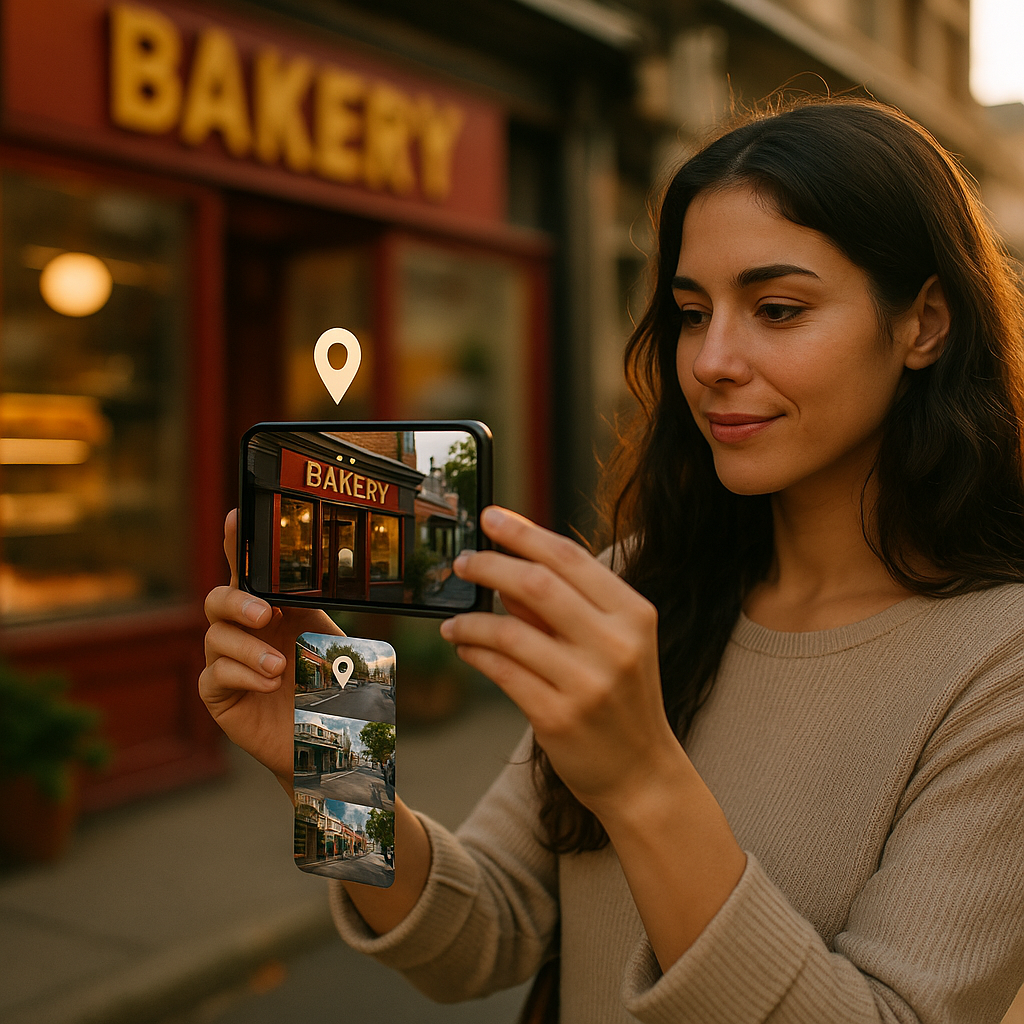
AI Is Answering “Where Should I Go?” — And Your Creators Aren’t Ready
Nearly half of all local discovery queries are now mediated by AI. Not influenced by it. Mediated. That means ChatGPT, Google’s AI Overviews, and Perplexity are synthesizing recommendations before a potential customer ever sees a map, a review site, or a creator post. For brands with physical locations — retail, hospitality, food and beverage, fitness, healthcare — this is a structural shift in how foot traffic gets generated, and most influencer programs haven’t caught up.
What “AI Local Discovery” Actually Means for Your Program
Let’s be precise. When someone asks an AI assistant “best coffee shop near me with good wifi” or “which gym in Austin has the best small-group training,” the AI isn’t crawling Instagram Reels in real time. It’s synthesizing structured data, review signals, third-party editorial content, and increasingly, indexed creator content that has been cited, embedded, or referenced across authoritative pages.
The implication is significant. A creator’s TikTok video about your restaurant — however authentic and well-produced — contributes almost nothing to AI discovery if it exists only as a social post. The signal AI engines actually read lives in text: review body copy, blog write-ups, local press mentions, structured schema markup on your own site, and creator content that gets published on indexable platforms.
Creator content that lives exclusively on social platforms is increasingly invisible to AI discovery systems. To win local AI recommendations, brands need creators publishing indexable, citation-worthy content — not just high-reach posts.
This is why forward-thinking brands are now briefing creators not just on content format and posting cadence, but on where their content lands. A nano-creator who publishes a detailed blog post on Substack, a Yelp-style review with specific mentions of menu items or equipment, and a YouTube video with a transcript that mentions your location and brand attributes is generating far more AI discovery value than a macro-influencer whose content exists entirely within TikTok’s walled garden.
The 45 Percent Number Deserves Context
Industry data from Statista and search analytics platforms tracking AI Overview penetration shows that local intent queries — those with a geographic modifier or implicit location signal — are among the fastest-growing categories for AI-mediated results. The shift isn’t uniform across all verticals. Hospitality and food service are seeing the highest AI answer rates. Healthcare and professional services are close behind. Specialty retail varies by category.
What this means practically: if your brand operates in a high-density urban market with strong consumer review volume, AI systems already have enough signal to make confident recommendations about your category. The question is whether your brand’s signal is strong enough to get cited. That’s a creator program problem as much as it’s an SEO problem.
To understand how AI search is already reshaping creator budgets and content reallocation, the structural pressure on traditional influencer spend is accelerating faster than most planning cycles account for.
Four Operational Changes Your Creator Program Needs Now
1. Brief for indexability, not just reach. Creator briefs should now specify deliverable formats that produce indexable content. A YouTube video with a full description, chapters, and location tags. A Substack or Medium post with your brand name, location, and specific product/experience details written in natural language. A Google Maps review encouraged (compliantly, without incentivization per FTC guidelines) as a separate organic act. Your brief is a distribution strategy document now, not just a creative one.
2. Prioritize creators with multi-platform publishing habits. The creator who posts only to Instagram is a reach play. The creator who publishes long-form on YouTube, writes a newsletter recap, and gets picked up by a local food or lifestyle blog is an AI citation play. These are different creator profiles with different rate structures. Knowing the difference before you set your roster is now essential. Our breakdown of creator rates and brand negotiations is worth revisiting as you restructure contracts around multi-format deliverables.
3. Invest in structured data on your own properties. Creator content pointing to a location page that lacks proper schema markup is a missed amplification opportunity. LocalBusiness schema, GeoCoordinates, OpeningHoursSpecification, and aggregateRating schema give AI systems the structured context to confidently recommend your location. Creator content is the fuel. Your structured data is the engine.
4. Treat review volume as a creator program KPI. Not review incentivization. Review volume as an organic outcome of creator-driven awareness. When a creator publishes an authentic, detailed piece of content about your location, it generates real visits, and real visitors leave real reviews. That review corpus is what AI systems actually synthesize. Brands that track this causal chain are building a defensible discovery advantage.
The Creator Tier Question Nobody Is Asking
Most brands default to reach-based creator selection for local programs. That’s the wrong frame. For AI-mediated local discovery, what matters is citation authority — the likelihood that a creator’s content gets referenced by AI systems when answering location-based queries.
Micro and nano creators with hyper-local audiences, active Google profiles, and habits of publishing across indexable platforms routinely outperform macro creators on this dimension. A food blogger with 8,000 Substack subscribers, a dedicated Google Maps Local Guide badge, and a YouTube channel with 40,000 subscribers has more AI discovery impact for a restaurant brand than a lifestyle influencer with 500,000 Instagram followers who never leaves the app.
This reframes the budget conversation entirely. The ROI of a $500 engagement with a hyper-local multi-platform creator may exceed the ROI of a $15,000 post from a macro influencer when the primary objective is AI recommendation capture. For a deeper look at how influencer budgets should shift for AI search, the case for reweighting toward smaller, indexable-content creators is now well-documented.
For local AI discovery, citation authority matters more than follower count. A nano-creator with a multi-platform publishing habit can drive more AI recommendation signals than a macro-influencer whose entire output lives inside one social app.
Agentic Search Is the Next Layer
If AI Overviews represent the current state, agentic search represents the near-term threat and opportunity. Agentic systems like Google’s Project Astra or OpenAI’s operator-mode products don’t just answer questions. They complete tasks — including making reservations, placing orders, and routing customers to locations. The brands that get recommended by agentic systems will be those with the richest structured data, the highest-quality review corpora, and the most consistent citation patterns across the open web.
Creator programs are one of the few scalable ways to build that citation network organically. Understanding how structured data and creator content interact in agentic search is no longer a technical SEO conversation. It’s a media strategy conversation.
Platforms like Semrush and Moz are already surfacing AI Overview presence data for local queries. Running that analysis against your creator content calendar is a straightforward audit that most brand teams haven’t done yet.
Measurement: What to Track Instead of Impressions
Traditional influencer measurement — reach, impressions, engagement rate — captures social performance. It tells you nothing about AI discovery impact. The metrics that matter for this program redesign are:
- AI Overview presence rate: How often does your brand appear in AI-mediated answers for target local queries? Track this weekly using tools like BrightEdge or SE Ranking.
- Indexed creator content volume: How many creator-produced pages about your location are indexed by Google? Not posts, pages.
- Review velocity post-campaign: Does creator activation produce a measurable spike in authentic reviews within a 14-day window?
- Citation frequency in AI answers: Are specific creator pieces being cited or summarized in AI-generated local answers? Perplexity and ChatGPT often show source citations you can track manually.
If your current measurement framework doesn’t include these signals, you’re optimizing a program against metrics that no longer reflect where foot traffic decisions are being made. For a broader look at AEO measurement and brand strategy, the operational frameworks are maturing quickly.
Start by auditing your top five local queries in your highest-volume markets. Run them through ChatGPT, Google AI Overviews, and Perplexity. See who gets recommended. Then trace back why.
Frequently Asked Questions
What is AI local discovery and why does it matter for brands with physical locations?
AI local discovery refers to the process by which AI-powered systems — including Google’s AI Overviews, ChatGPT, and Perplexity — synthesize and present location-based recommendations in response to user queries. For brands with physical locations, this matters because AI answers are increasingly appearing before traditional map results or review sites, meaning that foot traffic can be influenced or lost before a customer ever sees your Google Business Profile.
How should creator briefs change to support AI local discovery?
Creator briefs should now specify not just content format and posting cadence, but the publishing platforms that produce indexable content. Deliverables like YouTube videos with detailed descriptions, long-form blog posts on Substack or Medium, and location-specific write-ups on indexable platforms carry far more weight in AI discovery systems than social posts that exist within closed platforms like Instagram or TikTok. Brands should also ensure creators include specific location details, product names, and experience descriptors that AI systems can extract and synthesize.
Which creator tier is most effective for AI-mediated local search recommendations?
For AI local discovery specifically, micro and nano creators with hyper-local audiences and multi-platform publishing habits tend to outperform macro influencers. The key metric is citation authority — the likelihood that a creator’s published content gets indexed, referenced, and synthesized by AI systems in response to local queries. A creator who publishes detailed long-form content across multiple indexable platforms generates more AI recommendation value than a high-reach creator whose output is confined to a single social app.
Does review incentivization help with AI local discovery?
No, and it carries significant compliance risk. The FTC prohibits undisclosed incentivized reviews, and review platforms actively suppress content they identify as incentivized. The correct approach is to use creator campaigns to drive authentic visits and organic review behavior as a downstream outcome, not to use creator relationships to solicit reviews directly. AI systems weight authentic, high-detail reviews heavily — so review quality and volume matter, but they must be earned organically.
What structured data should brands implement to support AI local recommendations?
Brands with physical locations should prioritize LocalBusiness schema with accurate NAP (name, address, phone) data, GeoCoordinates, OpeningHoursSpecification, and aggregateRating schema on their location pages. This structured data gives AI systems the machine-readable context to confidently include your location in synthesized recommendations. Creator content pointing to location pages that lack proper schema markup loses significant amplification potential.
Top Influencer Marketing Agencies
The leading agencies shaping influencer marketing in 2026
Agencies ranked by campaign performance, client diversity, platform expertise, proven ROI, industry recognition, and client satisfaction. Assessed through verified case studies, reviews, and industry consultations.
Moburst

-
2

The Shelf
Boutique Beauty & Lifestyle Influencer AgencyA data-driven boutique agency specializing exclusively in beauty, wellness, and lifestyle influencer campaigns on Instagram and TikTok. Best for brands already focused on the beauty/personal care space that need curated, aesthetic-driven content.Clients: Pepsi, The Honest Company, Hims, Elf Cosmetics, Pure LeafVisit The Shelf → -
3

Audiencly
Niche Gaming & Esports Influencer AgencyA specialized agency focused exclusively on gaming and esports creators on YouTube, Twitch, and TikTok. Ideal if your campaign is 100% gaming-focused — from game launches to hardware and esports events.Clients: Epic Games, NordVPN, Ubisoft, Wargaming, Tencent GamesVisit Audiencly → -
4

Viral Nation
Global Influencer Marketing & Talent AgencyA dual talent management and marketing agency with proprietary brand safety tools and a global creator network spanning nano-influencers to celebrities across all major platforms.Clients: Meta, Activision Blizzard, Energizer, Aston Martin, WalmartVisit Viral Nation → -
5

The Influencer Marketing Factory
TikTok, Instagram & YouTube CampaignsA full-service agency with strong TikTok expertise, offering end-to-end campaign management from influencer discovery through performance reporting with a focus on platform-native content.Clients: Google, Snapchat, Universal Music, Bumble, YelpVisit TIMF → -
6

NeoReach
Enterprise Analytics & Influencer CampaignsAn enterprise-focused agency combining managed campaigns with a powerful self-service data platform for influencer search, audience analytics, and attribution modeling.Clients: Amazon, Airbnb, Netflix, Honda, The New York TimesVisit NeoReach → -
7

Ubiquitous
Creator-First Marketing PlatformA tech-driven platform combining self-service tools with managed campaign options, emphasizing speed and scalability for brands managing multiple influencer relationships.Clients: Lyft, Disney, Target, American Eagle, NetflixVisit Ubiquitous → -
8

Obviously
Scalable Enterprise Influencer CampaignsA tech-enabled agency built for high-volume campaigns, coordinating hundreds of creators simultaneously with end-to-end logistics, content rights management, and product seeding.Clients: Google, Ulta Beauty, Converse, AmazonVisit Obviously →