


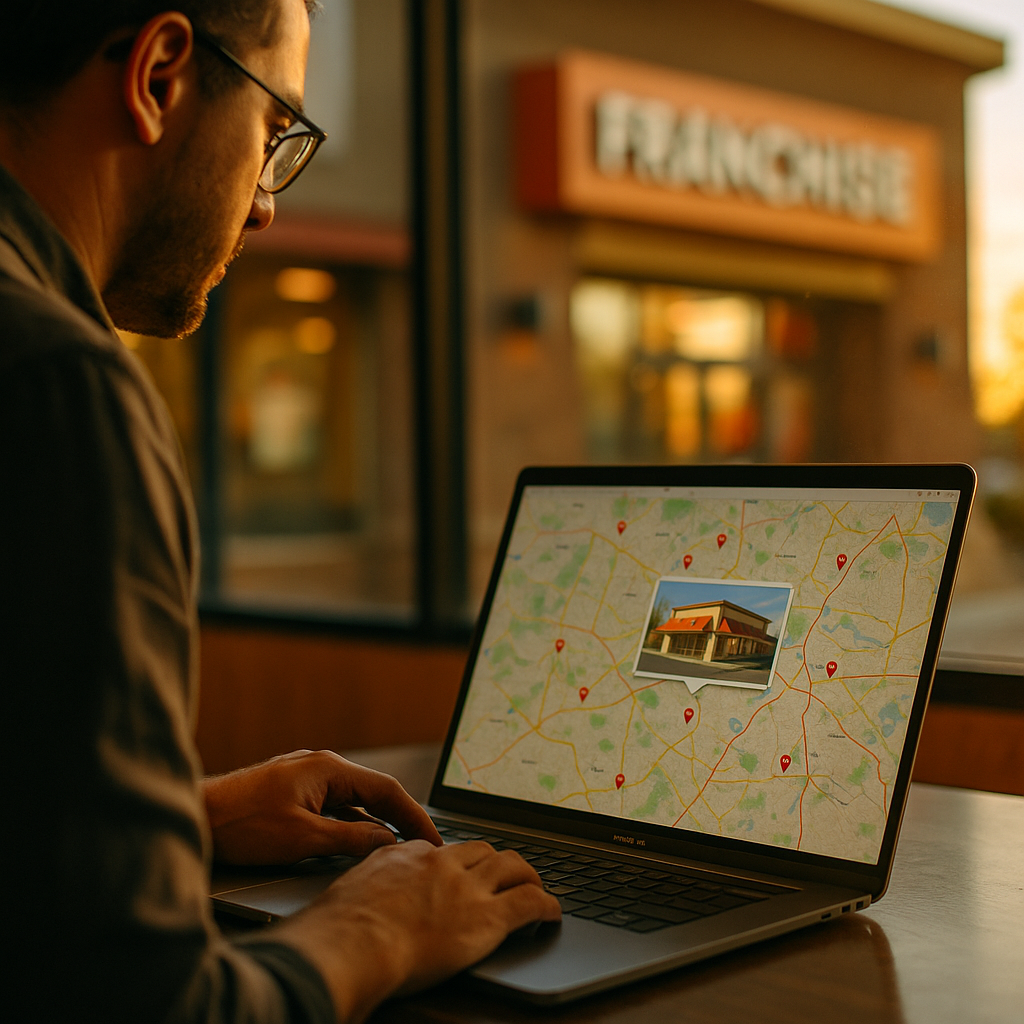
When a consumer asks ChatGPT or Google’s AI Overviews “who’s the best HVAC company near me,” does your brand appear? For franchise and retail operators managing dozens or hundreds of locations, multi-location brand visibility in AI local search is no longer a nice-to-have. It’s a revenue line item.
Why AI Local Search Is Rewriting the Foot Traffic Equation
Traditional local SEO was a location-page game: build enough Google Business Profile signals, collect reviews, and rank in the local 3-pack. AI assistants have changed the scoring system entirely. ChatGPT, Perplexity, Google AI Overviews, and Apple Intelligence don’t serve a list of ten results. They recommend one, maybe two options. That compresses the winner-takes-most dynamic to an extreme most brand teams haven’t priced into their channel mix.
According to Statista, AI assistant adoption among US adults has grown sharply, with conversational search queries now a significant share of local intent searches. For a franchise with 200 locations, the math is brutal: if your brand earns one AI recommendation per market instead of appearing in a ten-result SERP, you’re either winning everything or losing everything in that query moment.
AI assistants recommend one or two options per local query. For multi-location brands, the difference between appearing and not appearing is the entire opportunity in that market.
What “GEO” Actually Means for Multi-Location Operators
Generative Engine Optimization (GEO) is the practice of structuring your brand’s content, data, and third-party signals so AI language models cite you favorably. For single-brand DTC companies, GEO is primarily a content authority play. For franchise and multi-location retail brands, it’s an operational infrastructure problem.
You’re not optimizing one entity. You’re optimizing hundreds of them simultaneously, each with its own local signals, review velocity, NAP (name, address, phone) consistency, and service-area relevance. The gap between a solid single-location GEO strategy and a scalable multi-location program is enormous, and most franchise marketing teams are still running the single-location playbook at volume without a systemic approach.
For CMOs building the internal business case, the resource allocation questions are real. Our guide on GEO budget strategy outlines how to frame this investment for finance stakeholders who still think in traditional SEO terms.
The Five Pillars of a Systematic Multi-Location GEO Program
1. Structured Data at Location Scale
Every location page needs Google-compliant LocalBusiness schema with accurate hours, service categories, service area boundaries, and accepted payment methods. AI models ingest structured data as high-confidence signals. Inconsistencies across locations actively degrade your AI citation probability. Run a quarterly schema audit using tools like Screaming Frog or Semrush’s Site Audit to catch drift caused by franchise operator edits, holiday hour changes, or location remodels.
2. Authoritative Location-Specific Content
Thin location pages that duplicate boilerplate content are being filtered out by generative models because they don’t signal genuine local expertise. Each location page needs content that demonstrates actual knowledge of the service area: local landmarks as reference points, specific service scenarios relevant to that market’s climate or demographics, and answers to the hyper-local questions consumers actually ask AI assistants. A Jiffy Lube in Phoenix has different service urgency signals than one in Minneapolis. That content differentiation is what AI models reward.
3. Review Velocity and Sentiment Management
AI models pull review data from Google, Yelp, and increasingly from platforms like Trustpilot. Review volume and recency are citation-probability factors. Build a systematic post-service review request workflow for every location, not just the flagship markets. Franchises that let individual operators manage reviews independently consistently see a long tail of low-review-count locations that are invisible to AI recommendations. Centralize the review request cadence while personalizing the outreach at the local level.
4. NAP Consistency Across Data Aggregators
Yext, Uberall, and Rio SEO exist for a reason. AI models aggregate location data from dozens of sources, including data aggregators like Foursquare and Factual (now part of Foursquare’s infrastructure). A franchise location that has three slightly different address formats across the web creates conflicting signals that reduce the model’s confidence in recommending it. This isn’t glamorous work, but it’s load-bearing infrastructure for your GEO program.
5. Third-Party Citation and Creator Signal Building
AI recommendations are heavily influenced by what authoritative third-party sources say about your locations. Local news coverage, neighborhood blogs, local influencer content, and industry directories all function as citation signals. This is where creator strategy intersects directly with GEO. Brands that align creator content with AI search build the third-party citation layer that AI models need to confidently recommend a specific location.
Franchise Governance: The Hidden GEO Risk
Here’s the operational tension no franchise marketing guide talks about enough: individual franchisees making ad-hoc changes to their Google Business Profiles can actively undermine your GEO program. An operator who changes the business name to add a neighborhood descriptor (“Massage Envy Westside Plaza”) creates a brand inconsistency. A franchisee who disables online booking because they’re short-staffed removes a feature AI assistants use as a quality signal.
Build GEO governance into your franchise operations manual. Define what franchisees can and cannot change on their digital profiles. Create an approval workflow for any GBP edits that affect structured data. And audit centrally. The brands winning AI local search recommendations at scale are running this like a data quality program, not a marketing campaign.
The broader challenge of maintaining brand integrity at scale while enabling local relevance is one worth studying. The generative search budget framework for CMOs addresses how to resource this governance layer without it becoming a full-time headcount drain.
How Creator Partnerships Amplify Local GEO Signals
Local micro-influencers and community creators are underutilized as GEO infrastructure assets. When a creator with genuine local authority publishes a review, a “best of” recommendation, or a service walkthrough for your franchise location, that content functions as a high-trust third-party citation. AI models weight third-party content from sources with established topical authority more heavily than brand-owned content.
The playbook: identify creators with 5,000 to 50,000 followers in each major market, brief them to naturally include specific location signals (address mentions, neighborhood references, service category language), and structure the content so it’s indexable and crawlable. Review the creator briefing process for AI citation to understand how to structure those briefs for maximum AI pickup.
One important distinction: don’t brief creators to say things that aren’t true about your locations, and ensure any paid relationships are disclosed per FTC guidelines. AI models are increasingly factoring in source credibility, and undisclosed paid content carries citation risk if it’s identified as inauthentic by model training processes.
Local micro-influencer content functions as a third-party citation signal for AI models. It’s not just brand awareness — it’s GEO infrastructure.
Measuring What Actually Matters
Traditional local SEO metrics (local pack rankings, GBP impressions, direction requests) are necessary but insufficient for measuring GEO performance. You need to add a layer of AI-specific measurement. Tools like Semrush and Brightedge have begun offering AI Overviews visibility tracking. Perplexity and ChatGPT don’t expose query-level data directly, so proxy metrics matter: direct traffic lifts in markets where you’ve run concentrated GEO campaigns, brand mention velocity from third-party tracking tools, and review sentiment trends correlated with AI recommendation share.
For attribution frameworks that connect AI search visibility to actual revenue, the methodology in answer engine attribution is a strong starting point for multi-location operators trying to close the loop.
Set baseline measurements by market before launching a systematic GEO program. You need a before/after comparison at the location level to prove incrementality to your CFO. Segment markets by GEO investment level, run for 90 days minimum, and measure direct traffic, call volume from GBP, and in-store traffic proxies like foot traffic data from tools like Placer.ai.
Where Most Franchise Brands Are Underinvesting
Schema. Reviews in secondary markets. Governance documentation. Creator briefs with explicit location signals. These aren’t high-glamour line items, but they’re where the AI citation gap actually lives. Most franchise marketing budgets are still weighted toward paid social and traditional local digital — channels that AI assistants don’t consult when forming their recommendations.
Brands that start treating their multi-location digital infrastructure as a GEO asset rather than a compliance checkbox will accumulate citation authority that compounds over time. That’s a durable competitive moat. Start the program in your top 20 markets, prove the model, then scale the playbook across the full location portfolio.
Frequently Asked Questions
What is GEO and why does it matter for franchise brands?
Generative Engine Optimization (GEO) is the practice of structuring your brand’s content, data, and third-party signals so that AI language models like ChatGPT, Perplexity, and Google AI Overviews cite and recommend your business. For franchise brands with multiple locations, GEO matters because AI assistants now answer local service queries by recommending one or two specific options rather than serving a full list of results. If your locations aren’t optimized for AI citation, you’re invisible in that recommendation moment, regardless of your traditional SEO performance.
How is multi-location GEO different from standard local SEO?
Standard local SEO focuses on ranking individual location pages in Google’s local 3-pack and organic results. Multi-location GEO requires building AI citation signals at scale across every location simultaneously. This includes schema consistency, review velocity management, NAP accuracy across dozens of data aggregators, and third-party content signals for each market. The governance challenge is also distinct: franchisees making uncoordinated edits to their Google Business Profiles can actively undermine centralized GEO efforts, which requires operational controls that traditional local SEO never demanded.
Which AI platforms should franchise brands prioritize for local visibility?
Prioritize Google AI Overviews first, because Google still handles the majority of local search queries and its AI layer pulls directly from Google Business Profile data and indexed local content. ChatGPT and Perplexity are secondary priorities for local service queries, though their influence is growing. Apple Intelligence, which pulls from Maps and Yelp data, is increasingly relevant for mobile-first local queries, particularly for restaurant, salon, and service brand categories. Build your foundational GEO infrastructure so it feeds all of these platforms through consistent structured data and strong third-party citation signals.
How many reviews does a location need to be competitive in AI recommendations?
There’s no single threshold that applies universally, but locations with fewer than 50 recent reviews (within the past 12 months) are generally at a disadvantage in competitive local markets. More important than the total count is review recency and sentiment consistency. AI models appear to weight a steady cadence of recent, high-sentiment reviews more heavily than a large but stale review set. For franchise operators, building a systematic post-service review request process for every location is more valuable than running periodic review campaigns in select markets.
Can local creator content actually improve AI citation probability for specific locations?
Yes, and this is one of the most underutilized GEO tactics for multi-location brands. AI models use third-party content from authoritative local sources as citation signals when recommending specific businesses. When a creator with established local credibility publishes indexable content that includes specific location signals — address, neighborhood, service category language — that content functions as a high-trust citation for AI models. The key is briefing creators to include the right structured information and ensuring the content is published on platforms that AI models actively crawl and index.
Top Influencer Marketing Agencies
The leading agencies shaping influencer marketing in 2026
Agencies ranked by campaign performance, client diversity, platform expertise, proven ROI, industry recognition, and client satisfaction. Assessed through verified case studies, reviews, and industry consultations.
Moburst

-
2

The Shelf
Boutique Beauty & Lifestyle Influencer AgencyA data-driven boutique agency specializing exclusively in beauty, wellness, and lifestyle influencer campaigns on Instagram and TikTok. Best for brands already focused on the beauty/personal care space that need curated, aesthetic-driven content.Clients: Pepsi, The Honest Company, Hims, Elf Cosmetics, Pure LeafVisit The Shelf → -
3

Audiencly
Niche Gaming & Esports Influencer AgencyA specialized agency focused exclusively on gaming and esports creators on YouTube, Twitch, and TikTok. Ideal if your campaign is 100% gaming-focused — from game launches to hardware and esports events.Clients: Epic Games, NordVPN, Ubisoft, Wargaming, Tencent GamesVisit Audiencly → -
4

Viral Nation
Global Influencer Marketing & Talent AgencyA dual talent management and marketing agency with proprietary brand safety tools and a global creator network spanning nano-influencers to celebrities across all major platforms.Clients: Meta, Activision Blizzard, Energizer, Aston Martin, WalmartVisit Viral Nation → -
5

The Influencer Marketing Factory
TikTok, Instagram & YouTube CampaignsA full-service agency with strong TikTok expertise, offering end-to-end campaign management from influencer discovery through performance reporting with a focus on platform-native content.Clients: Google, Snapchat, Universal Music, Bumble, YelpVisit TIMF → -
6

NeoReach
Enterprise Analytics & Influencer CampaignsAn enterprise-focused agency combining managed campaigns with a powerful self-service data platform for influencer search, audience analytics, and attribution modeling.Clients: Amazon, Airbnb, Netflix, Honda, The New York TimesVisit NeoReach → -
7

Ubiquitous
Creator-First Marketing PlatformA tech-driven platform combining self-service tools with managed campaign options, emphasizing speed and scalability for brands managing multiple influencer relationships.Clients: Lyft, Disney, Target, American Eagle, NetflixVisit Ubiquitous → -
8

Obviously
Scalable Enterprise Influencer CampaignsA tech-enabled agency built for high-volume campaigns, coordinating hundreds of creators simultaneously with end-to-end logistics, content rights management, and product seeding.Clients: Google, Ulta Beauty, Converse, AmazonVisit Obviously →