


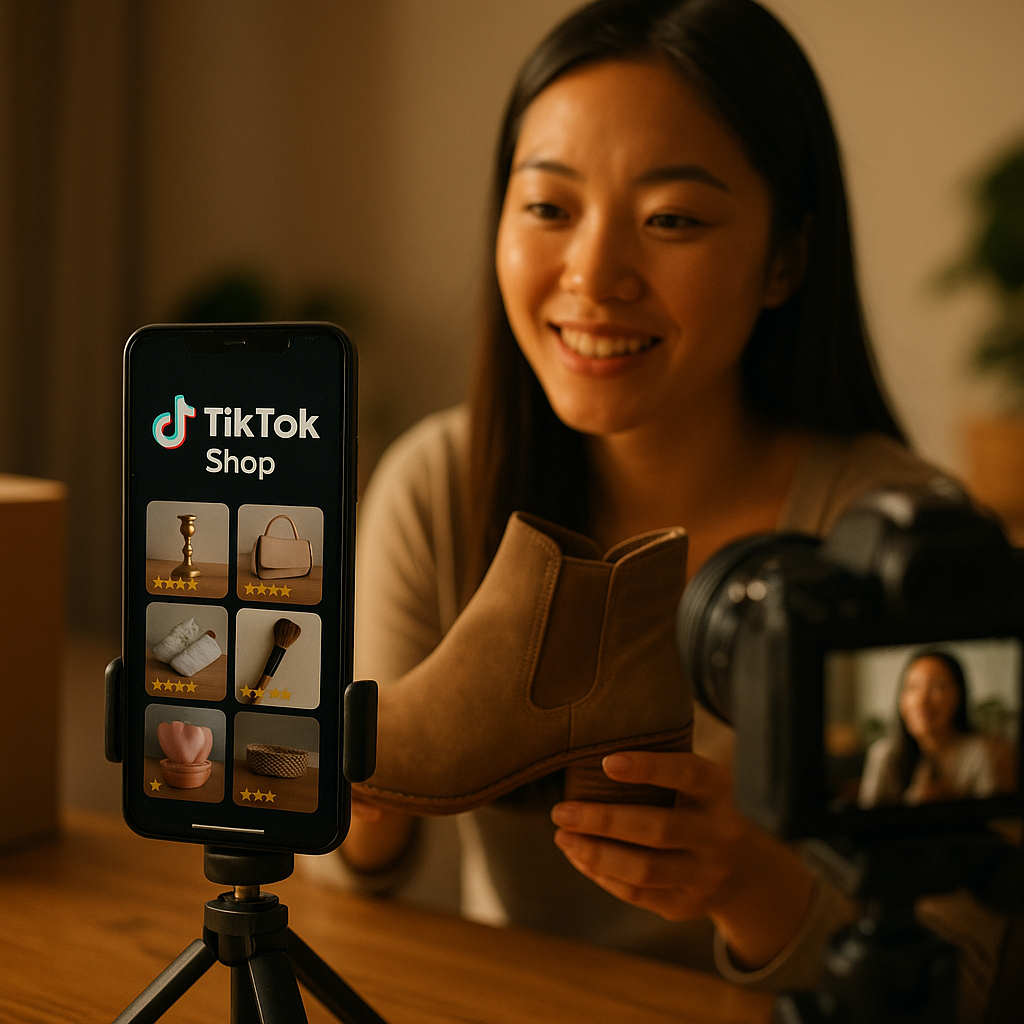
Over 60% of TikTok Shop purchases now originate from AI-curated discovery surfaces rather than direct creator affiliate links. If your influencer program is still built around spray-and-pray seeding, you’re not just leaving revenue on the table — you’re actively training the algorithm against your brand. Understanding TikTok Shop’s AI-driven shopping experience is no longer optional for commerce teams.
How TikTok’s AI Shopping Layer Actually Works
TikTok’s discovery interface has evolved well beyond a chronological feed with occasional ads. The platform now operates a multi-layered recommendation engine that pulls product signals from creator content, user interaction data, purchase history, and real-time trend momentum. The TikTok Ads platform documentation describes this as “shopping intent modeling” — the system is actively predicting what users will buy before they search for it.
Two distinct surfaces now compete for purchase intent: the AI-generated Shopping Tab, which surfaces products based on behavioral data, and the For You feed, where creator content lives. The mistake most brand teams make is treating these as separate channels. They’re not. They feed each other. A creator’s video that generates strong watch time and save rates on a product will cause that product to surface more aggressively in the Shopping Tab for similar audience segments. The relationship is symbiotic, but only if your creator briefs are written to exploit it.
Creator content isn’t just driving direct clicks anymore. On TikTok Shop, high-performing creator videos function as training data for the AI recommendation layer, amplifying product visibility across the entire platform discovery surface.
The Brand Mistake: Treating Creator Content as a Closed Loop
Most creator commerce programs are designed around a simple funnel: creator posts, affiliate link clicks, purchase. That model made sense when the feed was relatively chronological and discovery was social. It no longer reflects how TikTok distributes content or how users actually shop on the platform.
When brands brief creators purely for conversion (swipe-up link, discount code, buy now), the resulting content tends to look promotional. Promotional content gets lower organic reach. Lower reach means fewer signals fed into TikTok’s recommendation engine. Fewer signals means your product surfaces less in the AI Shopping Tab. You’ve built a program that cannibalizes its own visibility.
Compare that to a brand like e.l.f. Cosmetics, which has consistently briefed creators for entertainment and cultural participation first, commerce second. Their products regularly appear in TikTok’s AI-surfaced recommendations because the underlying creator content generates the depth of engagement signals the algorithm values: replays, saves, comment threads, and stitches. The affiliate revenue follows the reach, not the other way around.
For a deeper look at structuring briefs that work with platform discovery mechanics, the analysis on TikTok vs Instagram briefs breaks down how brief design affects downstream algorithmic behavior across both platforms.
Designing Creator Programs That Feed the Algorithm
Practically speaking, aligning your creator program with TikTok’s AI shopping layer requires changes at four operational levels: brief design, creator selection, content signal optimization, and data feedback loops.
Brief design: Stop leading with the product pitch. Lead with the use-case scenario. Brief creators to show the problem, the context, the lifestyle moment — the product is the resolution, not the premise. This generates longer watch times and higher save rates, which are the signals TikTok’s algorithm weights most heavily for shopping intent classification.
Creator selection: Reach alone is not the right filter. You need creators whose existing audience behavioral profile matches your target purchase-intent segment. TikTok’s own creator marketplace data shows that niche creators with highly engaged sub-communities generate 3-5x more Shopping Tab spillover per view than broad lifestyle accounts. The work on micro-creator briefs for niche ROI covers the brief architecture that makes this work operationally.
Content signal optimization: Specifically request content formats that generate the signals TikTok’s shopping AI prioritizes. Tutorial and transformation formats (before/after, how-to, product demo with problem setup) consistently outperform static lifestyle content for Shopping Tab activation. Duration matters too: 45-90 second videos currently outperform shorter clips for shopping intent classification, because they allow the full problem-solution arc that the algorithm has learned to associate with purchase behavior.
Data feedback loops: This is where most programs fail operationally. You need to track not just affiliate link clicks and ROAS from creator content, but Shopping Tab impression volume and product card performance in the weeks following a creator campaign. A well-structured creator activation should produce a measurable lift in organic Shopping Tab surfacing 7-14 days post-publication. If it doesn’t, your brief design or creator selection is generating low-quality signals. For building the measurement architecture to capture this, the piece on TikTok Shop omnichannel integration is worth the read.
Where Creator Content and AI Recommendations Actually Compete
There’s a tension worth naming directly. TikTok’s AI Shopping Tab will sometimes surface competitor products to users who just watched your creator’s content. The algorithm is optimizing for user purchase satisfaction, not brand loyalty. This is a real risk for brands investing heavily in creator seeding without controlling the downstream shopping experience.
The mitigation strategy is product catalog hygiene and Shopping Tab optimization, which operates in parallel to your creator program, not instead of it. Brands running structured TikTok Shop ad campaigns alongside creator seeding are seeing better product card placement because paid signals reinforce organic creator signals in the recommendation model. Think of it as a co-bidding strategy: creator content builds the behavioral signal, paid amplification ensures your product card wins the placement when the algorithm surfaces that intent.
For brands also running creator programs on adjacent platforms, the TikTok vs Instagram budget split framework provides a useful model for allocating resources across discovery surfaces with different AI architectures.
Compliance and Disclosure in an AI-Surfaced Commerce Environment
One operational complication brands often overlook: when AI surfaces a product recommendation that originated from a paid creator post, FTC disclosure requirements still apply to the original content. The FTC’s endorsement guidelines are clear that material connections must be disclosed regardless of how the content is later distributed or surfaced. As TikTok’s AI pulls creator videos into Shopping Tab placements that look increasingly like organic recommendations, compliance teams need to ensure disclosure tags are embedded in the content itself, not just the caption. A creator deleting or editing a caption post-publication can create material compliance exposure for the brand.
The evolving regulatory landscape, especially in markets outside the US, adds another layer. Teams running EU-facing campaigns should cross-reference EU regulations affecting TikTok reach before building programs that rely on AI amplification of creator content.
The Consideration-Phase Problem
TikTok’s AI shopping recommendations are optimized for bottom-of-funnel intent. That creates a structural gap for brands selling higher-consideration products: the AI surfaces your product to users who are already close to purchase, but creator content that builds the consideration case never gets the same algorithmic amplification as conversion-focused content.
The answer is building a two-tier creator strategy. One tier runs consideration-phase content (education, storytelling, problem framing) designed to build the behavioral signal profile the algorithm needs. The second tier runs conversion-phase content that the AI will amplify once that intent profile exists. The briefs for each tier are fundamentally different. The resource on TikTok Shop briefs for consideration-phase buyers goes deeper on structuring this correctly.
TikTok’s AI Shopping layer rewards the brands that build behavioral signal depth over time, not the ones chasing single-campaign ROAS. The creator programs that win are engineered to teach the algorithm what your buyer looks like before asking it to surface your product.
Complementary reading from eMarketer’s commerce data and Sprout Social’s platform benchmarks can help you contextualize your performance against broader social commerce trends as you build out this architecture.
Your next step: Audit your last three TikTok creator campaigns against Shopping Tab impression lift data, not just affiliate ROAS. If you can’t pull that data, fixing your measurement setup is the highest-leverage action you can take before your next creator activation.
Frequently Asked Questions
How does TikTok’s AI Shopping Tab decide which products to recommend?
TikTok’s AI Shopping Tab uses a combination of behavioral signals including watch time, saves, comment engagement, purchase history, and real-time trend data to predict purchase intent. Creator content that generates strong engagement signals on a product feeds into this recommendation model, increasing the likelihood that product surfaces for similar user segments in the Shopping Tab.
Should creator content on TikTok Shop be optimized for direct conversion or for algorithmic discovery?
Both, but sequentially. Discovery-optimized content (entertainment-first, product as resolution) should run first to build the behavioral signal profile TikTok’s AI needs. Conversion-focused content can then ride the algorithmic lift that follows. Running conversion-only content from the start typically suppresses organic reach and weakens the brand’s Shopping Tab presence over time.
Do FTC disclosure rules apply when TikTok’s AI resurfaces creator content in shopping recommendations?
Yes. FTC endorsement guidelines require that material connections between brands and creators are disclosed in the content itself, not just in captions that can be edited or deleted. When TikTok’s AI surfaces sponsored creator content through Shopping Tab placements, the original disclosure requirements remain in effect regardless of how the content is distributed by the platform.
What content formats work best for activating TikTok’s shopping recommendation layer?
Tutorial, transformation, and problem-resolution formats consistently generate the strongest signals for TikTok’s shopping AI. Videos in the 45-90 second range tend to outperform shorter clips for shopping intent classification. The key is allowing the full problem-solution narrative arc to play out, which the algorithm has learned to associate with genuine purchase consideration.
How do I measure whether my creator content is influencing TikTok Shopping Tab performance?
Track Shopping Tab impression volume and product card performance in the 7-14 days following a creator campaign publication, not just affiliate link clicks and ROAS during the campaign window. A well-structured creator activation should produce measurable lift in organic Shopping Tab surfacing as the algorithm incorporates the new behavioral signals from creator content engagement.
Top Influencer Marketing Agencies
The leading agencies shaping influencer marketing in 2026
Agencies ranked by campaign performance, client diversity, platform expertise, proven ROI, industry recognition, and client satisfaction. Assessed through verified case studies, reviews, and industry consultations.
Moburst

-
2

The Shelf
Boutique Beauty & Lifestyle Influencer AgencyA data-driven boutique agency specializing exclusively in beauty, wellness, and lifestyle influencer campaigns on Instagram and TikTok. Best for brands already focused on the beauty/personal care space that need curated, aesthetic-driven content.Clients: Pepsi, The Honest Company, Hims, Elf Cosmetics, Pure LeafVisit The Shelf → -
3

Audiencly
Niche Gaming & Esports Influencer AgencyA specialized agency focused exclusively on gaming and esports creators on YouTube, Twitch, and TikTok. Ideal if your campaign is 100% gaming-focused — from game launches to hardware and esports events.Clients: Epic Games, NordVPN, Ubisoft, Wargaming, Tencent GamesVisit Audiencly → -
4

Viral Nation
Global Influencer Marketing & Talent AgencyA dual talent management and marketing agency with proprietary brand safety tools and a global creator network spanning nano-influencers to celebrities across all major platforms.Clients: Meta, Activision Blizzard, Energizer, Aston Martin, WalmartVisit Viral Nation → -
5

The Influencer Marketing Factory
TikTok, Instagram & YouTube CampaignsA full-service agency with strong TikTok expertise, offering end-to-end campaign management from influencer discovery through performance reporting with a focus on platform-native content.Clients: Google, Snapchat, Universal Music, Bumble, YelpVisit TIMF → -
6

NeoReach
Enterprise Analytics & Influencer CampaignsAn enterprise-focused agency combining managed campaigns with a powerful self-service data platform for influencer search, audience analytics, and attribution modeling.Clients: Amazon, Airbnb, Netflix, Honda, The New York TimesVisit NeoReach → -
7

Ubiquitous
Creator-First Marketing PlatformA tech-driven platform combining self-service tools with managed campaign options, emphasizing speed and scalability for brands managing multiple influencer relationships.Clients: Lyft, Disney, Target, American Eagle, NetflixVisit Ubiquitous → -
8

Obviously
Scalable Enterprise Influencer CampaignsA tech-enabled agency built for high-volume campaigns, coordinating hundreds of creators simultaneously with end-to-end logistics, content rights management, and product seeding.Clients: Google, Ulta Beauty, Converse, AmazonVisit Obviously →