


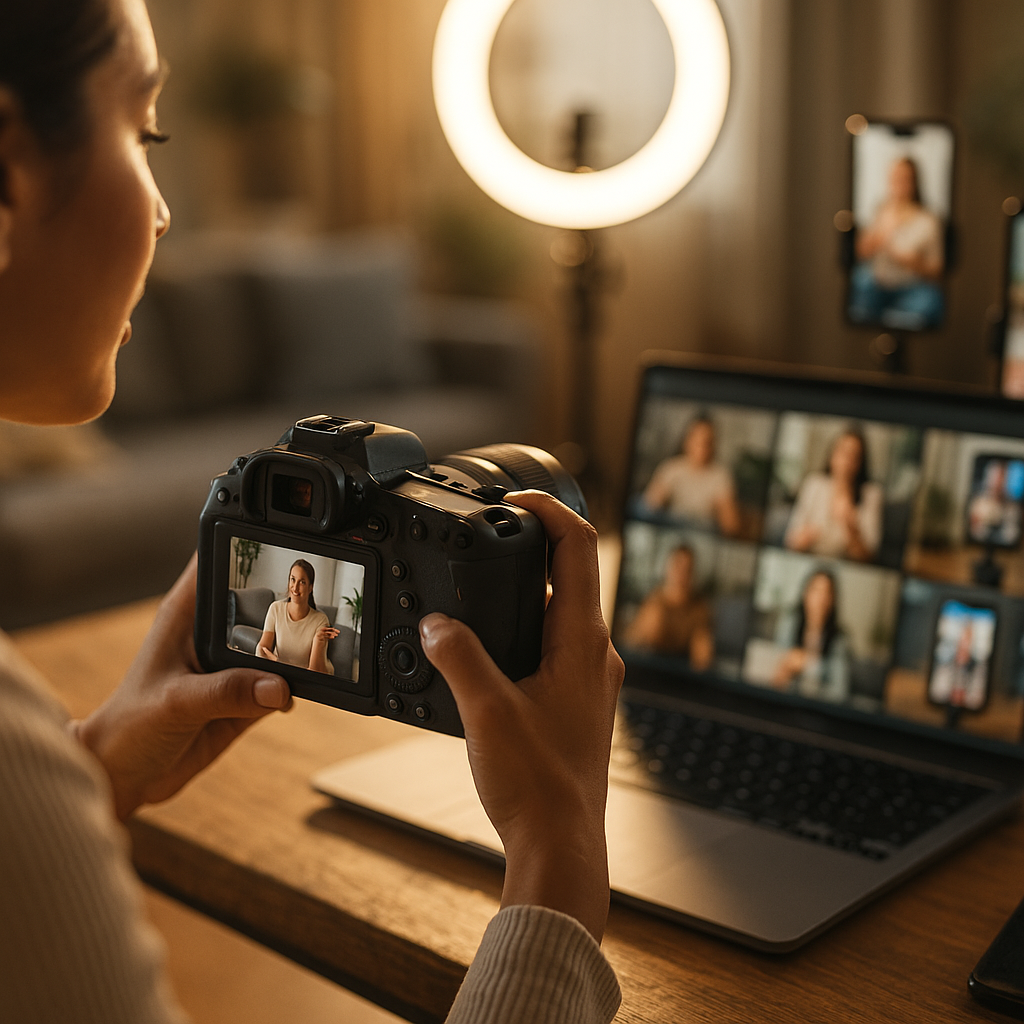
One Shoot. Five Deliverables. Zero Wasted Budget.
Brands running separate shoots for TikTok, podcast clips, and brand spots are leaving serious money on the table. Cross-platform creator content repurposing architecture is the operational framework that fixes this, and the brands building it now are compressing production costs by 40-60% while multiplying content output across every major channel.
Why Most Influencer Productions Are Structurally Broken
The traditional production model was built for a simpler era: one brief, one platform, one deliverable. A creator shoots a sponsored Instagram Reel. The brand gets one asset. The shoot wraps. Everyone moves on.
That model is expensive, slow, and increasingly indefensible to CFOs. According to HubSpot’s marketing research, brands now distribute content across an average of seven channels simultaneously. Running siloed shoots for each one isn’t a content strategy. It’s a billing strategy for production vendors.
The fix isn’t working creators harder. It’s designing the shoot differently from the start.
What “Architecture” Actually Means Here
Think of a single-shoot production architecture as a shooting script written backward from your distribution map. You don’t start with the creator’s setup and figure out edits later. You start with a list of every asset you need, then engineer one shoot session that captures all the raw material to build them.
A well-designed single-session shoot can typically yield:
- 2-4 vertical short-form clips (9:16) for TikTok, Instagram Reels, and YouTube Shorts
- 1-2 horizontal video podcast segments (16:9) formatted for YouTube, Spotify, and LinkedIn
- 1 music-style brand spot (30-60 seconds) with cinematic sequencing and licensed audio
- Static image cutdowns for paid social and OOH
- B-roll packages the brand can repurpose independently for CTV pre-roll
This isn’t theoretical. Brands like Glossier and e.l.f. Cosmetics have operated modular creator shoot systems for several years. The architecture they use is scalable to mid-market brands with a fraction of their resources.
The Four Structural Pillars of a Repurposing-Ready Shoot
1. Aspect Ratio Capture Strategy
Every camera angle in the shoot must account for how it will be cropped and reframed. Shooting a creator at 4K in a wider frame than you think you need creates the headroom for both a 16:9 podcast segment and a 9:16 vertical crop without losing critical visual information. This sounds obvious. Most production briefs ignore it entirely.
2. Modular Scene Design
Break the shoot into discrete scene blocks rather than one continuous performance. A “talking head” block, a “product interaction” block, a “movement/lifestyle” block, and a “reaction/emotion” block. Each block feeds different output types. The lifestyle block becomes B-roll. The talking head block becomes your podcast clip. The movement block, when cut to a beat, becomes your music-style brand spot. Build a shot list that maps each block to its output destination before the shoot date.
3. Audio Architecture
Capture clean dialogue with a lavalier and a boom simultaneously. Record ambient room tone separately. License your background music track before the shoot and give the creator a tempo reference so their movements and cadence can be cut to the beat in post. This is how you get a music-style brand spot without a second shoot. The music-style production playbook goes deeper on the specific audio considerations that separate polished brand spots from basic sponsored content.
4. Brief Engineering
Your creator brief has to carry the entire architecture. A brief that only specifies “one TikTok video and one Reel” will produce exactly that. A brief engineered for repurposing specifies which segments should be platform-native versus platform-adapted, which moments require product prominence for paid social, and what the creator should never say (for legal compliance reasons) in segments destined for CTV. The single-session shoot framework for multi-platform distribution is worth reviewing before you write your next brief.
The brief is your architecture document. If it doesn’t specify every output format, the shoot will optimize for one and shortchange the others. Write the brief for your editor, not just your creator.
Building the Music-Style Brand Spot Without a Separate Budget
This is where most brands leave the biggest asset on the table. A music-style brand spot, think of it as a visual essay cut to licensed music rather than a voiceover, can pull from the exact same footage as your organic creator content. The difference is entirely editorial.
You need: a 30-60 second music track licensed for commercial use (platforms like Musicbed or Artlist offer brand licensing at approachable price points), a rough cut of your best lifestyle and product interaction B-roll, and an editor who understands beat-sync cutting. That’s it. The creative philosophy behind why this format performs is worth understanding before you brief your editor. The music video format revival in creator content is directly relevant context here.
The resulting asset is usable as a paid social video, a YouTube pre-roll, a CTV spot, and an organic brand channel post. Four placements from footage you already paid to capture.
Podcast Clip Extraction: The Underused Asset Category
Video podcast sponsorship is now a standard line item in influencer budgets, but most brands still treat podcast segments as isolated deliverables. They shouldn’t be. If you’ve already captured a creator talking clearly to camera in good light with clean audio, you have raw material for a podcast-style clip that can run as a standalone asset on YouTube, LinkedIn, and even connected TV.
According to Statista, video podcast consumption grew faster than audio-only podcast consumption in the last two years across the 18-44 demographic. Brands that understand video podcast CPMs and buying strategy are already paying for this placement separately. Getting it from a shoot you already own is a material cost advantage.
The production requirement for a credible podcast clip is lower than you think: stable framing, eye-level camera, and a creator who can speak naturally without a script for 90-180 seconds. Build that into your shoot structure and you have an additional asset category without additional spend.
Post-Production Workflow: Where the Architecture Gets Stress-Tested
The architecture breaks down in post if you haven’t planned for it. Build a clear asset manifest before the edit begins: a spreadsheet that lists every output format, its target platform, its required duration, its aspect ratio, its audio mix requirements (captions on, music off for podcast clips; music on for brand spot), and its compliance checklist (FTC disclosure language visible in paid placements). The UGC repurposing pipeline framework covers how to systematize this across owned, paid, and earned channels.
Assign one editor as the “architecture owner” for each shoot. Their job is to ensure no output format gets shortchanged in the edit queue. Without a single accountable person, short-form clips get rushed to hit a posting deadline and the brand spot never gets finished.
Production budget isn’t the constraint most brands think it is. Planning discipline is. A $15,000 shoot designed correctly outperforms a $50,000 campaign designed poorly every time.
Compliance Isn’t an Afterthought in Multi-Format Architecture
Each output format carries its own regulatory exposure. A segment cleared for organic TikTok use may not be compliant for paid amplification without FTC disclosure language added. A music-style brand spot running as CTV pre-roll in certain markets may require additional disclosures under FTC guidelines. A podcast clip syndicated to Spotify has different tagging requirements than a YouTube video.
Map compliance requirements by output format in your brief, not retroactively. Your legal review should happen once, against the full asset manifest, before the shoot, not after you’ve already cut five different versions.
If you’re working with creators on narrative-integrated sponsorships, the FTC-compliant brief framework covers how to structure disclosure across integrated formats without breaking the content.
Start here: Before your next creator shoot, build a distribution map first. List every channel where content will run, every format each channel requires, and every compliance rule each format carries. Then write your brief. The shoot will pay for itself three times over.
Frequently Asked Questions
What is cross-platform creator content repurposing architecture?
It is a pre-production planning framework that designs a single creator shoot session to capture all the raw material needed to produce multiple output formats across different platforms, including short-form vertical video, video podcast clips, and music-style brand spots, without running separate shoots for each format.
How much can brands realistically save using a single-shoot repurposing model?
Brands that design shoots specifically for multi-format output typically report production cost reductions of 40-60% compared to running separate shoots per platform. The savings come from eliminating redundant crew, location, and creator fees across multiple engagements.
What equipment or setup changes are needed to shoot for multiple formats simultaneously?
The primary requirements are shooting in 4K with wider framing than a single platform would need, capturing dual audio (lavalier and boom), and planning scene blocks in advance. No specialized equipment is required beyond what a competent creator production setup already includes.
How do you create a music-style brand spot from existing creator footage?
License a commercial music track in advance of the shoot, brief the creator and director to capture lifestyle and product interaction B-roll that can be beat-synced in post, and assign an editor specifically to cut the brand spot using that B-roll. The raw footage from the same session that produces organic creator content is sufficient if the shoot was architecturally planned for it.
Does each output format need its own FTC compliance review?
Yes. FTC disclosure requirements vary by format and placement type. Organic posts, paid amplification, podcast segments, and CTV spots each carry distinct disclosure obligations. Compliance review should happen against the full asset manifest before the shoot, not after editing is complete.
How should creator briefs be structured for a multi-format repurposing shoot?
The brief should specify every output format, its target platform, required duration, aspect ratio, audio requirements, and compliance obligations. It should map which scene blocks correspond to which outputs and give the creator clear guidance on which segments will be platform-native versus platform-adapted. Treating the brief as an architecture document rather than a simple deliverables list is the key shift.
Top Influencer Marketing Agencies
The leading agencies shaping influencer marketing in 2026
Agencies ranked by campaign performance, client diversity, platform expertise, proven ROI, industry recognition, and client satisfaction. Assessed through verified case studies, reviews, and industry consultations.
Moburst

-
2

The Shelf
Boutique Beauty & Lifestyle Influencer AgencyA data-driven boutique agency specializing exclusively in beauty, wellness, and lifestyle influencer campaigns on Instagram and TikTok. Best for brands already focused on the beauty/personal care space that need curated, aesthetic-driven content.Clients: Pepsi, The Honest Company, Hims, Elf Cosmetics, Pure LeafVisit The Shelf → -
3

Audiencly
Niche Gaming & Esports Influencer AgencyA specialized agency focused exclusively on gaming and esports creators on YouTube, Twitch, and TikTok. Ideal if your campaign is 100% gaming-focused — from game launches to hardware and esports events.Clients: Epic Games, NordVPN, Ubisoft, Wargaming, Tencent GamesVisit Audiencly → -
4

Viral Nation
Global Influencer Marketing & Talent AgencyA dual talent management and marketing agency with proprietary brand safety tools and a global creator network spanning nano-influencers to celebrities across all major platforms.Clients: Meta, Activision Blizzard, Energizer, Aston Martin, WalmartVisit Viral Nation → -
5

The Influencer Marketing Factory
TikTok, Instagram & YouTube CampaignsA full-service agency with strong TikTok expertise, offering end-to-end campaign management from influencer discovery through performance reporting with a focus on platform-native content.Clients: Google, Snapchat, Universal Music, Bumble, YelpVisit TIMF → -
6

NeoReach
Enterprise Analytics & Influencer CampaignsAn enterprise-focused agency combining managed campaigns with a powerful self-service data platform for influencer search, audience analytics, and attribution modeling.Clients: Amazon, Airbnb, Netflix, Honda, The New York TimesVisit NeoReach → -
7

Ubiquitous
Creator-First Marketing PlatformA tech-driven platform combining self-service tools with managed campaign options, emphasizing speed and scalability for brands managing multiple influencer relationships.Clients: Lyft, Disney, Target, American Eagle, NetflixVisit Ubiquitous → -
8

Obviously
Scalable Enterprise Influencer CampaignsA tech-enabled agency built for high-volume campaigns, coordinating hundreds of creators simultaneously with end-to-end logistics, content rights management, and product seeding.Clients: Google, Ulta Beauty, Converse, AmazonVisit Obviously →