


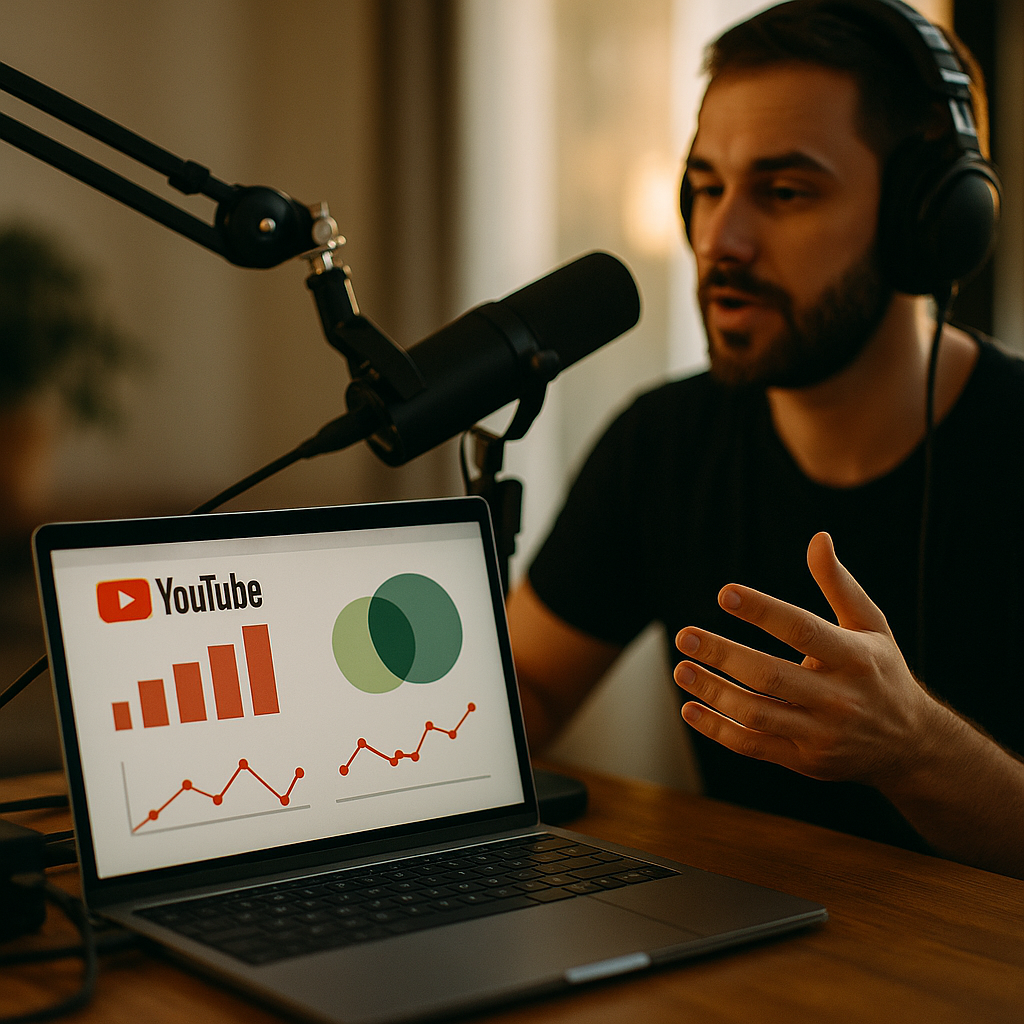
Bundled creator inventory sounds like a smart buy. You get YouTube reach plus podcast audio in one deal, one creator relationship, one invoice. But brands that buy these packages without a structured evaluation framework are routinely overpaying for duplicate audiences, misaligned placements, and metrics that flatter the seller.
Why Bundles Are Everywhere Right Now
The math is straightforward from the creator’s side. A YouTube channel with 800,000 subscribers and a companion podcast pulling 60,000 monthly listeners represents two monetizable surfaces. Media reps and creator management firms have been packaging these together aggressively, pitching them as a “full-funnel” buy that captures viewers at the awareness stage on video and re-engages them in audio. According to eMarketer, podcast ad spend continues its upward trajectory, making audio placements an increasingly attractive add-on for YouTube-native creators looking to diversify revenue.
The pitch is compelling. The execution is where brands get burned.
The Audience Overlap Problem No One Is Talking About
Before you sign any bundled package, you need to answer one critical question: how many people consume both the YouTube channel and the podcast? If the answer is 70%, you are not buying incremental reach. You are buying frequency — at a premium — while the seller calls it “reach extension.”
Most creators cannot give you a clean answer here, because the data does not exist in a single dashboard. YouTube Analytics and Spotify for Podcasters (or Apple Podcasts Connect) are entirely separate data environments. A creator who publishes both a YouTube show and a podcast may have audiences that skew toward the same demographic segment, the same professional niche, or even the same geographic market. The overlap could be substantial.
Audience deduplication is the single most important calculation in a bundled creator deal. If a seller cannot provide a credible estimate of cross-platform audience overlap, treat the bundle as a single-surface buy and price it accordingly.
Practically, you can pressure-test this by asking for audience surveys or third-party attribution data. Tools like Sprout Social and Chartable (now part of Spotify’s toolkit) offer some cross-platform listener insight, but they are imperfect. Your media team should model a conservative overlap assumption (start at 40-50%) and use that to recalculate the effective CPM of the bundle.
For a deeper look at how YouTube-specific CPMs compare to paid social alternatives, the analysis in our piece on YouTube creator bundle CPMs provides a useful benchmark baseline before you enter any negotiation.
Evaluating the Podcast Placement Itself
Podcast sponsorships within a creator bundle are usually mid-roll host-read spots. They can be extremely effective. They can also be completely forgettable. The quality variable here is creator engagement with the brand message, not just download numbers.
Ask for the last three episodes’ download figures, not an average. Podcast audiences are inconsistent, and a creator who had one breakout episode 18 months ago may be papering over a declining trend. IAB-certified download numbers are the standard; anything else is negotiable at best, unreliable at worst. The IAB Podcast Measurement Guidelines exist for exactly this reason, and any credible podcast property should be able to confirm compliance.
Also consider the format. A YouTube creator who repurposes their video content as an audio podcast (stripping the video track and publishing to Spotify) is offering a very different product than a creator who records a dedicated audio show with distinct content. The former tends to have lower podcast engagement because the audience is consuming the video version anyway. That repurposed audio is worth less.
Pricing Logic: How to Structure a Fair Deal
Most bundled packages are priced with a nominal “discount” applied to what would theoretically be two separate line items. Do not accept the theoretical separate pricing at face value. Build your own pricing model from first principles.
- YouTube sponsorship value: Use cost-per-view benchmarks for the creator’s niche and recent average view counts, not subscriber counts. A creator with 500,000 subscribers averaging 80,000 views per video is priced differently than one averaging 300,000 views.
- Podcast placement value: Apply an audience-adjusted CPM based on verified downloads, with a deduction for estimated overlap with the YouTube audience.
- Bundle premium or discount: You should be paying less than the sum of two separate deals, not more. If the bundled rate exceeds your modeled fair value by more than 15-20%, push back or unbundle.
Understanding how creator sponsorships beyond pre-roll are structured on YouTube gives additional context for where integration value genuinely lives in these deals.
Brand Safety, Compliance, and the Dual-Surface Risk
Running across two surfaces also means double the compliance exposure. FTC disclosure requirements apply to both placements, and the rules are not identical across contexts. A YouTube integration requires a verbal disclosure plus an on-screen card. A podcast mid-roll requires a clear verbal disclosure. Both need to appear prominently, not buried. Review the current FTC endorsement guidelines with your legal team before briefing across both formats.
Brand safety has a second dimension here too. A creator’s YouTube channel and their podcast may occupy different tonal registers. The YouTube content may be polished and brand-safe; the podcast, recorded more casually, may drift into territory that creates reputational risk. Pull 3-5 recent podcast episodes and actually listen to them. Do not assume that because the YouTube channel is clean, the podcast is the same product.
Brand safety review for bundled inventory must cover both surfaces independently. A brand-safe YouTube channel and a risky podcast hosted by the same creator are not a wash — they are two separate liability exposures that require separate sign-off.
Measuring Incrementality Across Both Channels
Attribution across YouTube and podcast is genuinely hard. YouTube offers view-through attribution, clickable links in descriptions, and pinned comments. Podcasts offer vanity URLs, promo codes, and QR codes in show notes. These measurement systems do not talk to each other natively.
Build your measurement plan before you sign the deal. Define: what is the primary conversion signal (promo code redemptions, branded search lift, direct traffic spike)? Which surface gets credit if both fire within the same attribution window? This is where brands that invest in AI-assisted campaign tracking for YouTube have a structural advantage: they can isolate the YouTube contribution before layering in podcast attribution estimates.
For campaigns where podcast reach into a specific demographic is a core objective (say, reaching the 35-54 professional audience), cross-reference the creator’s podcast listener data against your first-party CRM segments using a clean room solution. Google’s data clean room tools can help here if YouTube is part of the buy, allowing for privacy-safe audience matching without exposing raw customer data.
One often-overlooked tactic: use distinct promo codes or landing page variants for the YouTube placement and the podcast placement. Even crude incrementality signals (code A vs. code B redemptions) give you a read on which surface is driving conversion, informing how you negotiate the next deal.
When Bundles Actually Make Sense
Bundles are not inherently bad. They make genuine strategic sense when the podcast audience is meaningfully different from the YouTube audience (different demographic, different use case, different platform behavior) and when the creator can demonstrate that distinction with data. They also make sense when your campaign goal is frequency across a single high-value audience segment, and you are explicitly buying impressions rather than reach. Know which objective you are serving.
For brands expanding into emerging formats, understanding how creator assets work in AI-driven placements adds context for why multi-surface creator relationships are becoming a structural media consideration, not just a nice-to-have.
The bundle is a viable tool. Treat it as a structured media buy with verifiable inputs, not as a favor from a creator you like.
Bottom line: Before approving any YouTube-podcast bundle, require audience overlap estimates, IAB-certified podcast downloads, and a dual-surface brand safety review. If the seller cannot provide all three, reprice the deal as a single-surface buy.
Frequently Asked Questions
What is a YouTube creator-podcast bundle in influencer marketing?
A YouTube creator-podcast bundle is a packaged sponsorship deal where a brand purchases integrated placements across a creator’s YouTube channel (typically a mid-roll or dedicated segment) and their affiliated podcast (typically a host-read mid-roll) as a single inventory unit. These bundles are sold on the premise of delivering incremental audience reach across video and audio surfaces through a single creator relationship.
How should brands calculate the fair value of a bundled creator package?
Brands should build a bottom-up pricing model using verified YouTube view averages (not subscriber counts) and IAB-certified podcast download figures. Apply an audience overlap deduction (a conservative starting assumption is 40-50% overlap) to the podcast audience before assigning a CPM. The bundled rate should be lower than the sum of two separate placements; if it is not, renegotiate or separate the buy.
What is the FTC disclosure requirement for a YouTube-podcast bundle?
FTC disclosure requirements apply to both placements independently. YouTube integrations require a verbal disclosure and an on-screen text card. Podcast mid-roll reads require a clear verbal disclosure that the content is a paid partnership. Brands should confirm that both disclosure formats are contractually required and review the FTC’s current endorsement guidelines with legal counsel before the campaign goes live.
How do you measure incrementality when a campaign runs on both YouTube and a podcast?
Use distinct promo codes or unique landing page URLs for each surface to isolate conversion signals. Branded search lift studies can help measure overall campaign impact. For more sophisticated attribution, privacy-safe clean room solutions can match first-party CRM data against YouTube audience exposure data. Define the primary conversion signal and attribution logic in the contract before the campaign launches.
What questions should you ask before buying a YouTube-podcast bundle?
Key questions include: What percentage of the podcast audience also watches the YouTube channel? Are podcast downloads IAB-certified? Is the podcast original audio content or a repurposed video stream? What is the average view count (not subscriber count) for recent YouTube episodes? Can the creator provide recent brand safety-relevant episodes of both the YouTube channel and the podcast for review? What disclosure formats are included in the deliverables?
Top Influencer Marketing Agencies
The leading agencies shaping influencer marketing in 2026
Agencies ranked by campaign performance, client diversity, platform expertise, proven ROI, industry recognition, and client satisfaction. Assessed through verified case studies, reviews, and industry consultations.
Moburst

-
2

The Shelf
Boutique Beauty & Lifestyle Influencer AgencyA data-driven boutique agency specializing exclusively in beauty, wellness, and lifestyle influencer campaigns on Instagram and TikTok. Best for brands already focused on the beauty/personal care space that need curated, aesthetic-driven content.Clients: Pepsi, The Honest Company, Hims, Elf Cosmetics, Pure LeafVisit The Shelf → -
3

Audiencly
Niche Gaming & Esports Influencer AgencyA specialized agency focused exclusively on gaming and esports creators on YouTube, Twitch, and TikTok. Ideal if your campaign is 100% gaming-focused — from game launches to hardware and esports events.Clients: Epic Games, NordVPN, Ubisoft, Wargaming, Tencent GamesVisit Audiencly → -
4

Viral Nation
Global Influencer Marketing & Talent AgencyA dual talent management and marketing agency with proprietary brand safety tools and a global creator network spanning nano-influencers to celebrities across all major platforms.Clients: Meta, Activision Blizzard, Energizer, Aston Martin, WalmartVisit Viral Nation → -
5

The Influencer Marketing Factory
TikTok, Instagram & YouTube CampaignsA full-service agency with strong TikTok expertise, offering end-to-end campaign management from influencer discovery through performance reporting with a focus on platform-native content.Clients: Google, Snapchat, Universal Music, Bumble, YelpVisit TIMF → -
6

NeoReach
Enterprise Analytics & Influencer CampaignsAn enterprise-focused agency combining managed campaigns with a powerful self-service data platform for influencer search, audience analytics, and attribution modeling.Clients: Amazon, Airbnb, Netflix, Honda, The New York TimesVisit NeoReach → -
7

Ubiquitous
Creator-First Marketing PlatformA tech-driven platform combining self-service tools with managed campaign options, emphasizing speed and scalability for brands managing multiple influencer relationships.Clients: Lyft, Disney, Target, American Eagle, NetflixVisit Ubiquitous → -
8

Obviously
Scalable Enterprise Influencer CampaignsA tech-enabled agency built for high-volume campaigns, coordinating hundreds of creators simultaneously with end-to-end logistics, content rights management, and product seeding.Clients: Google, Ulta Beauty, Converse, AmazonVisit Obviously →