


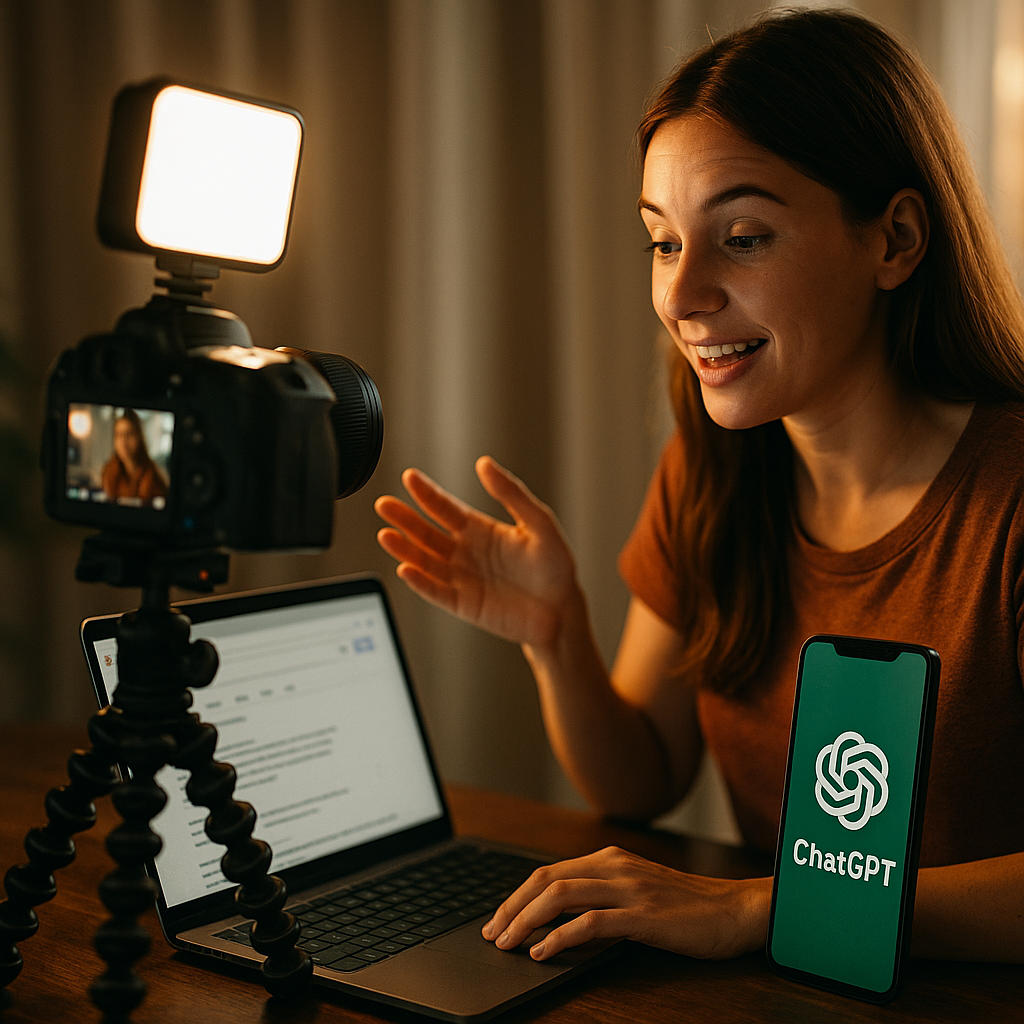
ChatGPT Is Now a Consumer Search Engine. Is Your Creator Content Feeding It?
Seventy-seven percent of US consumers are now using ChatGPT as a primary search tool, according to recent adoption data. That number should be sitting at the top of every influencer program brief in circulation right now. The question is no longer whether AI recommendation engines matter to brand discovery — it’s whether your creator content is structured to influence those outputs before a consumer opens a browser tab.
The Discovery Layer Has Shifted
Traditional search worked on a simple premise: create content, earn backlinks, rank. AI-driven discovery operates differently. ChatGPT, Perplexity, and Google’s AI Mode don’t just crawl pages — they synthesize them. They pull patterns from publicly indexed content, forum discussions, review structures, and creator posts to construct answers to questions users haven’t even typed into Google yet.
This means the brands that win in AI-assisted discovery are not necessarily the ones with the most ad spend. They’re the ones whose products appear repeatedly, in credible contexts, described in specific language that mirrors how consumers phrase their problems. Creator content is one of the most reliable mechanisms for seeding that language at scale.
AI recommendation engines don’t rank pages — they synthesize patterns. Brands that appear repeatedly in contextually relevant creator content are more likely to surface in ChatGPT outputs than brands relying solely on paid search or traditional SEO.
If you’re thinking about this through a creator strategy for AI search lens, the content architecture decisions you make today directly affect how AI models represent your brand in recommendation outputs six to twelve months from now.
Why 77 Percent Changes Your Brief-Writing Process
Here’s what that adoption figure actually means operationally: a significant share of your prospective customers are forming purchase intent through AI conversation, not through a keyword search that lands them on a product page. They’re asking ChatGPT things like “what’s the best protein powder for endurance athletes” or “which skincare brands are dermatologist-recommended.” The AI generates an answer. Your brand is either in that answer or it isn’t.
Traditional influencer briefs focus on reach, engagement rate, and platform. That’s still relevant. But a brief that ignores AI signal optimization is leaving a substantial discovery layer untouched. When you’re writing a brief today, you need to think about what patterns in the creator’s content will be indexed, what language they use to describe product benefits, and whether their content ecosystem contributes to a consistent, authoritative signal for your category.
For a practical framework on this, the influencer brief structure for organic amplification covers how to move beyond vanity metrics and build briefs that create durable signal value.
Four Structural Changes to Make Now
1. Prioritize problem-framing language over product-feature language. AI models are trained on how consumers ask questions, not how brand PR teams describe products. Creator content that opens with “if you’ve ever struggled with X” maps more cleanly onto conversational AI queries than content that leads with “introducing the new Y formula.” Brief your creators to describe the problem context first. This is a small change in content direction that has outsized impact on how AI synthesizes that content into recommendations.
2. Build category authority, not just brand mentions. ChatGPT and Perplexity construct answers by pulling from multiple credible sources in a category. If your creators are consistently associated with a specific use case or problem set, your brand benefits from category-level signal density. A skincare brand that has twenty creators discussing the role of ceramides in barrier repair builds a much stronger AI recommendation signal than a brand with a hundred creators posting undifferentiated “glow up” content.
3. Structure long-form creator content for machine readability. YouTube descriptions, blog-style content, newsletter integrations, and podcast show notes are all indexed. When a creator publishes a YouTube video with a properly structured description that names your product, explains its use case, and links to a credible source, that content becomes part of the data ecosystem AI models draw from. The SEO fundamentals haven’t disappeared. They’ve been absorbed into a larger system. Consider pairing your influencer program with the kind of structured data thinking covered in structured data for Gemini recommendations.
4. Treat earned media as a generative signal, not just a PR metric. When a creator’s content earns organic commentary, shares, or responses that echo your brand’s messaging, that secondary content layer becomes additional signal. Creator earned media as a generative signal is an underappreciated asset in AI-era brand strategy. The more your brand is discussed in natural, contextually rich language across multiple content environments, the stronger your AI recommendation footprint becomes.
Platform Selection Is Now an AI Signal Decision
Reddit is indexed by OpenAI. YouTube transcripts feed large language models. Substack posts, Medium essays, and long-form TikTok captions contribute to the publicly available text that AI systems train and retrieve from. Instagram Reels with no caption? Practically invisible to AI discovery infrastructure.
This reframes platform mix decisions in ways most brands haven’t fully processed. A mid-tier creator with a well-maintained YouTube channel and a consistent sub-niche focus may deliver more AI signal value than a mega-influencer whose content lives entirely in ephemeral, caption-light formats. This isn’t about abandoning Instagram or TikTok — it’s about building a creator roster that includes voices contributing to indexed, text-rich environments. The roster architecture and ROI framework is worth revisiting with this lens.
A creator with 80,000 YouTube subscribers and structured, problem-focused content may drive more AI recommendation visibility than a creator with 800,000 Instagram followers posting caption-light Reels. Platform architecture is now part of AI signal strategy.
Budget Allocation Follows Signal Value
If a meaningful portion of your addressable consumers are discovering brands through ChatGPT queries before they ever visit a brand website, then the creator content feeding that discovery layer deserves dedicated budget. Not a reclassification of existing spend — actual incremental allocation toward AI-optimized creator content.
The measurement challenge is real. You can’t directly attribute a ChatGPT recommendation to a creator post the way you’d track a click from a paid placement. But you can monitor how frequently your brand appears in AI-generated answers using tools like Brandwatch, Semrush’s AI overview tracking, or emerging GEO (generative engine optimization) audit tools. You can also run structured prompt testing against competitor category queries to assess your AI recommendation share of voice.
For budget modeling that accounts for AI-era discovery, the influencer budget for AI search framework offers a useful starting point, particularly for teams trying to justify new line items to a CFO who still thinks in last-click attribution terms.
Statista has tracked the rapid growth of AI tool adoption across consumer demographics, and the data consistently shows younger cohorts leading adoption while broader consumer segments follow. eMarketer research on AI-influenced purchase journeys reinforces that the discovery-to-consideration funnel is increasingly front-loaded by AI interaction. For brands building influencer programs without an AI signal component, the competitive gap is widening in real time.
OpenAI’s own positioning reflects this shift. Their dual-CMO model separating creator and AI ad strategy signals that even the platform itself recognizes these as distinct operational domains that require distinct expertise.
The Compliance and Attribution Problem Brands Are Ignoring
One issue that hasn’t gotten enough attention: when ChatGPT recommends a brand, there’s currently no disclosure mechanism for whether that recommendation was influenced by branded creator content. The FTC has not yet issued specific guidance on AI-mediated brand recommendations seeded through influencer programs, but the regulatory surface area is expanding. Brands building AI signal strategies through creator content should document their content architecture and keep legal counsel engaged, particularly as the FTC continues to evolve its endorsement guidance framework.
Sprout Social and HubSpot have both published on the growing importance of AI search visibility for brand strategy, and the consensus is consistent: content structured for human readability and machine synthesis outperforms content optimized for either audience alone.
What to Do This Week
Run ten category-relevant ChatGPT queries that your target customer would plausibly ask. Record which brands appear, what language is used to describe them, and whether your brand is present. That audit tells you more about your current AI recommendation share of voice than most analytics dashboards. Use the gaps to rewrite your next creator brief.
Frequently Asked Questions
What does a 77% ChatGPT adoption rate mean for influencer marketing programs?
It means a significant portion of your target consumers are forming purchase intent and brand awareness through AI conversation before they ever reach a brand website or social feed. Influencer programs that don’t structure content to appear in AI-generated recommendations are missing an increasingly important discovery layer. Brands need to build creator briefs that optimize for AI synthesis, not just engagement metrics.
How does creator content influence ChatGPT recommendation outputs?
ChatGPT and similar AI tools synthesize publicly indexed content to construct answers. Creator content published on indexed platforms — YouTube, blogs, Reddit, Substack, podcast show notes — contributes to the data ecosystem these models draw from. When creators consistently describe your brand in problem-focused, specific language across multiple credible contexts, your brand develops a stronger AI recommendation signal in relevant category queries.
Which content formats are most effective for AI search visibility?
Text-rich, indexed formats perform best. YouTube videos with structured descriptions, long-form blog integrations, newsletter mentions, and podcast show notes all contribute to AI-readable signal. Caption-light Instagram Reels and ephemeral Stories have minimal AI discovery value. Brands should build creator rosters that include voices active in at least one high-indexability format alongside their social presence.
How do you measure AI recommendation share of voice?
Direct attribution isn’t yet available, but brands can conduct structured prompt audits by running category-relevant queries through ChatGPT, Perplexity, and Google’s AI Mode to monitor brand appearance. Tools like Semrush’s AI overview tracking and emerging GEO audit platforms offer more systematic monitoring. Tracking shifts in organic branded search volume and direct traffic alongside AI query testing gives a reasonable proxy measurement.
Are there FTC compliance risks in using creator content to influence AI recommendations?
The FTC has not yet issued specific guidance on AI-mediated recommendations seeded through influencer programs. However, the underlying content still falls under existing endorsement and disclosure rules. Brands should document their content strategy, ensure all creator partnerships carry appropriate disclosures, and monitor FTC guidance updates as the regulatory framework evolves to address AI-assisted brand discovery.
Top Influencer Marketing Agencies
The leading agencies shaping influencer marketing in 2026
Agencies ranked by campaign performance, client diversity, platform expertise, proven ROI, industry recognition, and client satisfaction. Assessed through verified case studies, reviews, and industry consultations.
Moburst

-
2

The Shelf
Boutique Beauty & Lifestyle Influencer AgencyA data-driven boutique agency specializing exclusively in beauty, wellness, and lifestyle influencer campaigns on Instagram and TikTok. Best for brands already focused on the beauty/personal care space that need curated, aesthetic-driven content.Clients: Pepsi, The Honest Company, Hims, Elf Cosmetics, Pure LeafVisit The Shelf → -
3

Audiencly
Niche Gaming & Esports Influencer AgencyA specialized agency focused exclusively on gaming and esports creators on YouTube, Twitch, and TikTok. Ideal if your campaign is 100% gaming-focused — from game launches to hardware and esports events.Clients: Epic Games, NordVPN, Ubisoft, Wargaming, Tencent GamesVisit Audiencly → -
4

Viral Nation
Global Influencer Marketing & Talent AgencyA dual talent management and marketing agency with proprietary brand safety tools and a global creator network spanning nano-influencers to celebrities across all major platforms.Clients: Meta, Activision Blizzard, Energizer, Aston Martin, WalmartVisit Viral Nation → -
5

The Influencer Marketing Factory
TikTok, Instagram & YouTube CampaignsA full-service agency with strong TikTok expertise, offering end-to-end campaign management from influencer discovery through performance reporting with a focus on platform-native content.Clients: Google, Snapchat, Universal Music, Bumble, YelpVisit TIMF → -
6

NeoReach
Enterprise Analytics & Influencer CampaignsAn enterprise-focused agency combining managed campaigns with a powerful self-service data platform for influencer search, audience analytics, and attribution modeling.Clients: Amazon, Airbnb, Netflix, Honda, The New York TimesVisit NeoReach → -
7

Ubiquitous
Creator-First Marketing PlatformA tech-driven platform combining self-service tools with managed campaign options, emphasizing speed and scalability for brands managing multiple influencer relationships.Clients: Lyft, Disney, Target, American Eagle, NetflixVisit Ubiquitous → -
8

Obviously
Scalable Enterprise Influencer CampaignsA tech-enabled agency built for high-volume campaigns, coordinating hundreds of creators simultaneously with end-to-end logistics, content rights management, and product seeding.Clients: Google, Ulta Beauty, Converse, AmazonVisit Obviously →