


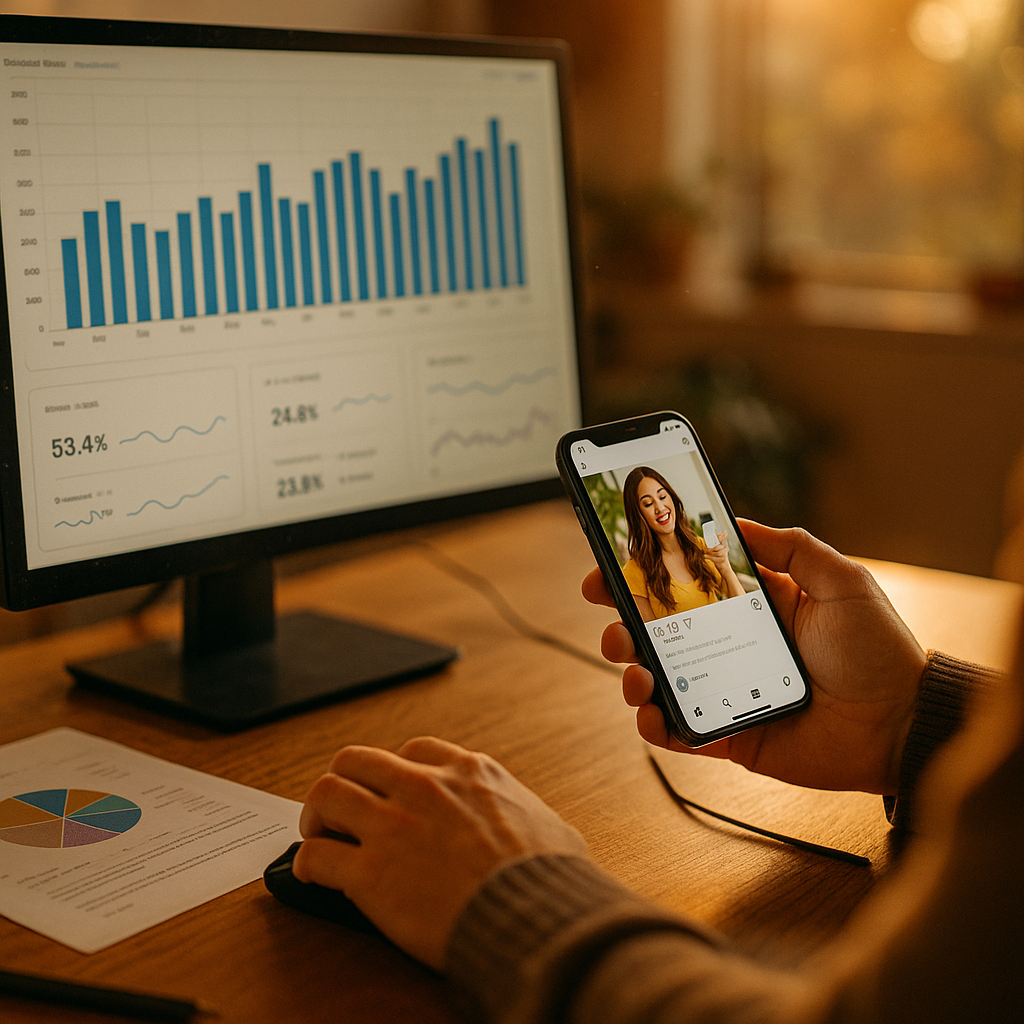
What if the content driving your brand’s placement in AI-generated answers isn’t yours at all? Research tracking generative engine outputs consistently shows third-party creator content — reviews, tutorials, demonstrations — earning citation at higher rates than brand-owned pages. For marketing leaders trying to measure creator-produced earned media as a generative engine signal, that gap represents both a risk and a serious strategic lever.
Why AI Answers Prefer Creator Voices Over Brand Pages
Generative engines like ChatGPT, Perplexity, and Google’s AI Overviews are trained to surface content that reads as authoritative, independent, and experiential. Brand-owned content, by its nature, reads promotional. A product page optimized for conversion is not the same as a 2,000-word creator tutorial that walks a real user through setup, troubleshooting, and honest caveats. The AI doesn’t care about your domain authority in the traditional SEO sense. It cares about signal quality.
Creator-generated reviews on YouTube, Reddit threads anchored by creator posts, TikTok tutorials with high engagement, and long-form demonstration videos are precisely the content formats that generative engines treat as high-confidence reference material. These formats contain the vocabulary, use-case specificity, and contextual depth that LLMs use to construct confident answers.
Brands that treat influencer content purely as a paid media play are missing its second job: seeding the corpus of information that AI systems draw on when answering purchase-intent queries.
The Measurement Gap Most Brands Haven’t Closed
Ask your analytics team to pull the percentage of AI-driven referral sessions attributed to creator content versus brand-owned pages. Most can’t do it cleanly. That’s the problem.
The current measurement stack for influencer programs was built for social attribution: clicks, swipe-ups, promo codes, UTM parameters. None of those tools were designed to capture a user who asked Perplexity “what’s the best project management tool for remote teams,” received an AI-generated answer that cited a creator’s YouTube review, and then navigated directly to your site. That session registers as direct or organic. The creator’s contribution is invisible.
Closing this gap requires a two-layer approach. First, you need query-level monitoring. Tools like industry trackers and emerging GEO (Generative Engine Optimization) platforms — including early-stage tools from companies like Profound and Goodie AI — allow brands to monitor which URLs are being cited in AI answers for target keyword clusters. Segment those citations by domain type: brand-owned vs. creator vs. press. Run this weekly, not monthly. Second, map those citation URLs back to your influencer roster. If a creator’s YouTube tutorial is being cited in 40% of AI answers for a core query, that creator is delivering compounding value far beyond their original contracted deliverable. Your measurement framework needs to capture that.
For a broader look at how influencer budgets are shifting toward AI search outcomes, the reallocation logic is already underway at forward-thinking brands.
Creator Content vs. Brand Content: What the Citation Data Actually Shows
Across category searches with purchase intent, creator-generated content appears in AI answer citations at a disproportionately high rate relative to its share of total indexed content. The pattern holds across B2C and B2B queries. A software brand might publish 200 blog posts and five product pages, while a creator publishes one thorough 18-minute walkthrough. The walkthrough wins the citation because it contains decision-relevant specificity: “here’s what happens when you import a CSV with mismatched headers” is a sentence no brand marketing team approves.
This asymmetry is structural, not accidental. Brand content is written to protect and persuade. Creator content is written (or filmed) to inform and connect. Generative engines optimizing for user satisfaction weight the latter more heavily.
The practical implication: your creator brief strategy needs to explicitly accommodate depth, not just reach. A creator with 80,000 subscribers who produces a meticulous 20-minute product demonstration will likely generate more AI citation value than a mega-influencer who posts a 45-second unboxing. If your current creator brief strategies don’t account for long-form, search-indexable content formats, they’re leaving generative engine signal on the table.
Building a Share-of-AI-Answer Metric
Call it Share of AI Answer (SAA). It’s the percentage of AI-generated responses to your target queries that include a citation traceable to content your brand influenced, categorized by source type.
Here’s a practical framework:
- Define your target query set: Pull 50 to 150 high-intent queries where your brand should appear. Include category queries, comparison queries, and use-case queries.
- Run weekly citation audits: Use a GEO monitoring tool or a manual sampling protocol across ChatGPT, Perplexity, and Google AI Overviews. Log which URLs appear in answers.
- Classify citations by source: Brand-owned (your domain), creator-owned (influencer channels, personal sites), earned press (editorial coverage), and user-generated (Reddit, forums, review sites).
- Map creator citations to contracts: Cross-reference which creator-owned URLs appear in citations against your active and past influencer relationships. Calculate the citation contribution per creator and per campaign.
- Track longitudinal shift: Monitor how your SAA splits change over time as you activate more creator content, publish more brand content, or earn more press. This tells you which input is actually moving the needle.
This is adjacent to but distinct from traditional AEO (Answer Engine Optimization). The difference is attribution granularity. For deeper context on AEO budget and measurement fundamentals, that framing is essential before building the SAA layer on top.
Share of AI Answer is the metric that finally makes creator-driven earned media legible to a CFO — because it connects content investment to a measurable position in the AI discovery layer.
Briefing Creators for Generative Engine Value
Once you’ve built the measurement foundation, the logical next step is briefing creators with AI citation value in mind. This doesn’t mean turning influencer content into SEO articles. It means ensuring that the content creators produce contains the structural signals that generative engines use to build confident answers.
Practically, that means: encourage long-form over short-form where the platform supports it. Ask creators to include specific use cases, not just brand messaging. Request that tutorials cover setup, common failure modes, and comparisons to alternatives — the exact questions users ask AI. Ensure the content is indexed. A private Discord post or a disappearing Story has zero generative engine value regardless of its engagement rate.
Platform selection matters here. YouTube remains the most reliable platform for indexed, citable creator content. Reddit, creator-owned newsletters, and personal blogs are strong secondary surfaces. TikTok content has limited direct citation value in current generative engines, but can seed demand that leads users to ask the AI queries your YouTube content answers. Think of it as a funnel: TikTok awareness drives AI-mediated discovery via YouTube and Reddit citations.
The budget reallocation logic for Gen Z AI search behavior reinforces exactly this platform sequencing for brands targeting younger buyers.
Where Brand-Owned Content Still Wins
This is not an argument to abandon brand content. Brand-owned pages hold distinct advantages in AI citations for branded queries, technical specification lookups, and compliance-sensitive categories where third-party attribution creates liability. A pharmaceutical brand is better served by owning its AI answer citations than relying on a creator who might update or delete their content.
Brand content also anchors the authority signals that give generative engines confidence in citing creator content about your brand. If your brand-owned domain is authoritative and well-structured, AI systems are more likely to treat creator content about your brand as credible by association. The two content streams are complementary, not competitive.
The brands that will dominate generative engine results over the next three years are the ones building an integrated content ecosystem: brand-owned depth plus creator-produced experiential content, measured together under a unified SAA framework. For further grounding on how this intersects with agentic search and structured data, the operational requirements are significant but achievable.
External frameworks from Google’s search guidance and emerging GEO best practices tracked by HubSpot’s research team both point toward the same conclusion: content that demonstrates genuine expertise and real-world experience earns the citations. Creators, when briefed well, are the fastest path to producing that content at scale.
Start this week by pulling your top 20 purchase-intent queries and manually checking ChatGPT and Perplexity responses. Count how many citations belong to your creators versus your own domain. That single exercise will tell you more about your generative engine exposure than a quarter of traditional SEO reporting.
Frequently Asked Questions
What is a generative engine signal in the context of creator content?
A generative engine signal refers to any piece of content that an AI answer system like ChatGPT, Perplexity, or Google AI Overviews uses as a reference when constructing a response. Creator-produced content, including reviews, tutorials, and product demonstrations, often functions as a high-quality signal because it contains experiential detail, specific use cases, and independent perspective that generative models weight heavily when answering purchase-intent queries.
How do I measure how much of my AI answer presence is driven by creator content?
The most practical starting point is a Share of AI Answer (SAA) audit. Run your target queries through ChatGPT, Perplexity, and Google AI Overviews, log which URLs are cited in responses, and classify each citation as brand-owned, creator-owned, earned press, or user-generated. Cross-reference creator citations against your influencer roster to understand which partnerships are generating AI discovery value. GEO monitoring tools from vendors like Profound or Goodie AI can automate parts of this process at scale.
Why does creator content outperform brand content in AI answer citations?
Generative engines are optimized for user satisfaction, which means they favor content that is informative, experiential, and independent over content that is promotional. Brand-owned content is typically written to persuade and convert, while creator content is written to inform and connect with an audience. Long-form creator tutorials, honest reviews, and comparison demonstrations contain the specific vocabulary and decision-relevant detail that LLMs use to construct confident, useful answers.
Which content platforms are most valuable for generative engine citation?
YouTube is currently the most reliable platform for indexed, citable creator content. Reddit threads with creator participation, creator-owned blogs, and newsletters are strong secondary surfaces. TikTok content has limited direct citation value in most generative engines today, though it can seed awareness and drive users to ask AI queries that your YouTube and Reddit content is positioned to answer.
Should brands reduce investment in brand-owned content if creator content performs better in AI citations?
No. Brand-owned content and creator content serve complementary roles in generative engine optimization. Brand-owned pages anchor authority signals for branded and technical queries, and they provide the credibility foundation that makes AI systems more likely to treat creator content about your brand as reliable. The goal is an integrated content ecosystem measured together under a unified Share of AI Answer framework, not a substitution of one for the other.
Top Influencer Marketing Agencies
The leading agencies shaping influencer marketing in 2026
Agencies ranked by campaign performance, client diversity, platform expertise, proven ROI, industry recognition, and client satisfaction. Assessed through verified case studies, reviews, and industry consultations.
Moburst

-
2

The Shelf
Boutique Beauty & Lifestyle Influencer AgencyA data-driven boutique agency specializing exclusively in beauty, wellness, and lifestyle influencer campaigns on Instagram and TikTok. Best for brands already focused on the beauty/personal care space that need curated, aesthetic-driven content.Clients: Pepsi, The Honest Company, Hims, Elf Cosmetics, Pure LeafVisit The Shelf → -
3

Audiencly
Niche Gaming & Esports Influencer AgencyA specialized agency focused exclusively on gaming and esports creators on YouTube, Twitch, and TikTok. Ideal if your campaign is 100% gaming-focused — from game launches to hardware and esports events.Clients: Epic Games, NordVPN, Ubisoft, Wargaming, Tencent GamesVisit Audiencly → -
4

Viral Nation
Global Influencer Marketing & Talent AgencyA dual talent management and marketing agency with proprietary brand safety tools and a global creator network spanning nano-influencers to celebrities across all major platforms.Clients: Meta, Activision Blizzard, Energizer, Aston Martin, WalmartVisit Viral Nation → -
5

The Influencer Marketing Factory
TikTok, Instagram & YouTube CampaignsA full-service agency with strong TikTok expertise, offering end-to-end campaign management from influencer discovery through performance reporting with a focus on platform-native content.Clients: Google, Snapchat, Universal Music, Bumble, YelpVisit TIMF → -
6

NeoReach
Enterprise Analytics & Influencer CampaignsAn enterprise-focused agency combining managed campaigns with a powerful self-service data platform for influencer search, audience analytics, and attribution modeling.Clients: Amazon, Airbnb, Netflix, Honda, The New York TimesVisit NeoReach → -
7

Ubiquitous
Creator-First Marketing PlatformA tech-driven platform combining self-service tools with managed campaign options, emphasizing speed and scalability for brands managing multiple influencer relationships.Clients: Lyft, Disney, Target, American Eagle, NetflixVisit Ubiquitous → -
8

Obviously
Scalable Enterprise Influencer CampaignsA tech-enabled agency built for high-volume campaigns, coordinating hundreds of creators simultaneously with end-to-end logistics, content rights management, and product seeding.Clients: Google, Ulta Beauty, Converse, AmazonVisit Obviously →