


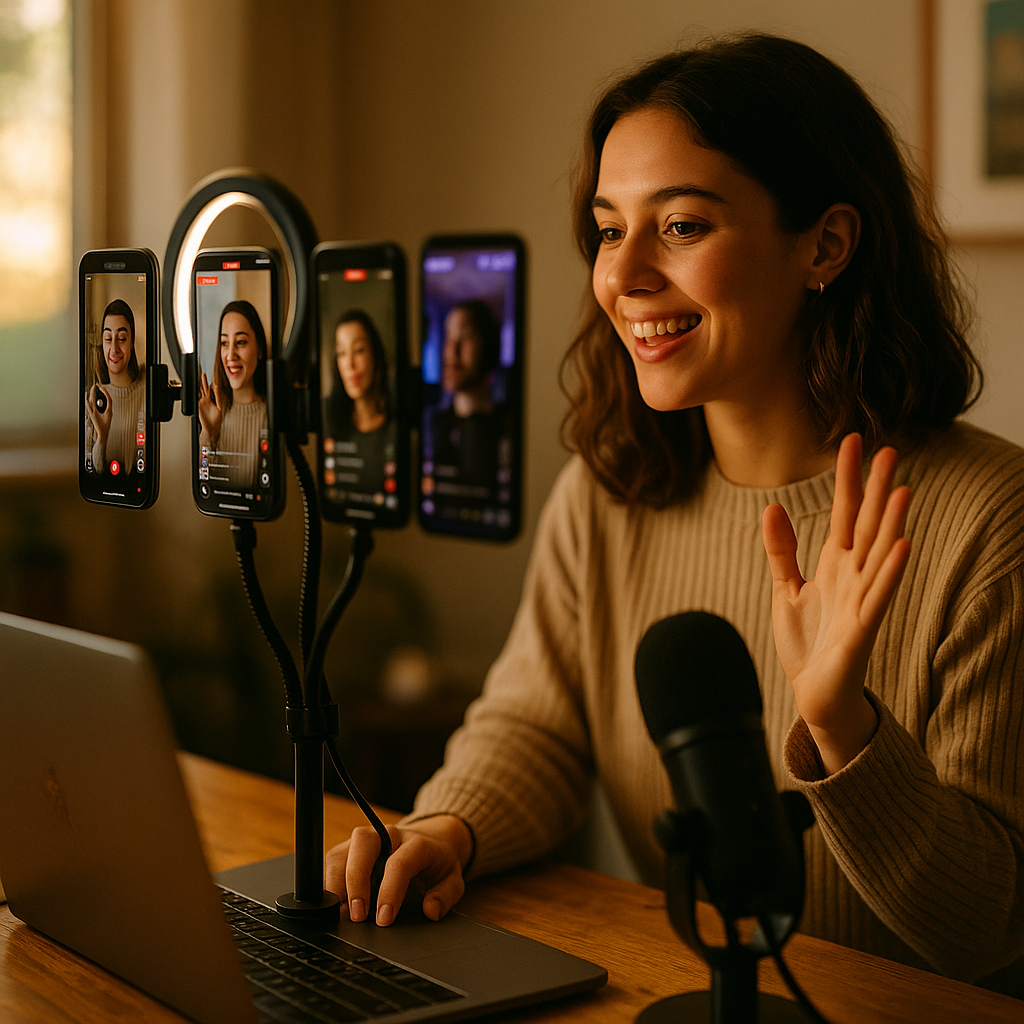
Livestream commerce is projected to account for over $68 billion in U.S. retail sales this year, yet most brands still hand creators a generic product brief and hope for the best. That gap between ambition and execution is exactly where revenue leaks. A well-designed livestream commerce creator brief for TikTok, Instagram, and Twitch is not optional infrastructure — it is the operational backbone of every profitable live shopping event.
Why a Generic Brief Destroys Live Commerce Performance
Most creator briefs are written for asynchronous, edited content. They assume the creator has time to pause, reshoot, and refine. Livestream is the opposite environment. Mistakes are public. Checkout windows close. Audience attention spikes and crashes in real time. A brief that works for a sponsored Reel will actively hurt a creator running a 90-minute live shopping event on TikTok Shop.
The core problem: brands conflate what to say with how to operate a live commerce show. Those are fundamentally different briefs. Product talking points are table stakes. What you actually need is production direction, audience interaction mechanics, platform-specific checkout cues, and real-time escalation protocols — all built separately for each platform.
Brands that issue platform-agnostic creator briefs for live commerce are essentially handing a creator a single script for a Broadway show, a podcast, and a pop-up retail event simultaneously. The format differences are not cosmetic. They are structural.
TikTok Shop Live: Brief for a Native Commerce Environment
TikTok Shop’s live commerce infrastructure is the most mature of the three platforms. The creator brief here needs to treat the show as a direct-response broadcast, not a product demo. Every creative element should be engineered toward a measurable action: pinned product taps, add-to-cart events, and coupon redemptions.
For production direction, specify the following in your brief:
- Segment structure: Define a repeating 10-to-15-minute loop (hook, product demo, social proof, urgency trigger, CTA) rather than a linear script. Viewers join mid-stream constantly.
- Product pin timing: Instruct creators to pin the featured SKU at the start of each segment and re-pin after every audience interaction burst. Missed pins are missed revenue.
- Verbal CTA cadence: Specify that checkout CTAs should appear every 90 seconds minimum. Vague language like “check the link” underperforms. Script exact phrases: “Tap the yellow basket right now — this price ends in eight minutes.”
- Chat moderation role: Brief creators on whether a co-host or brand moderator will handle the comment feed. Unmoderated chats on high-traffic TikTok lives derail purchase momentum fast.
For brands running first-party data capture alongside TikTok Shop, note that the platform’s TikTok for Business attribution tools allow post-event SKU-level reporting. Build that reporting requirement into the brief so creators understand which product moments you need them to emphasize based on inventory priority.
Also worth building into the brief: a TikTok Shop creator brief should include explicit FTC disclosure language for live environments. “This is a paid partnership” stated verbally at stream start and restated after any break is the current minimum threshold.
Instagram Live Shopping: Briefing for a Relationship-First Audience
Instagram Live audiences behave differently. They skew toward existing followers rather than discovery traffic, which means the brief emphasis shifts from conversion volume to conversion rate per engaged viewer. Your creator is talking to people who already trust them. The brief should exploit that asset aggressively.
Key production direction differences for Instagram Live:
- Product tagging workflow: Instagram’s native checkout requires products to be tagged before the stream begins. Your brief must confirm this pre-live setup step, including who is responsible (creator, brand, or agency). A product tag failure during a live event is a missed sale that no amount of verbal urgency can recover.
- Q&A mechanics: Brief creators to run dedicated Q&A segments every 20 minutes. Instagram Live viewers expect dialogue. Treating the stream as a monologue presentation will tank comment engagement, which in turn reduces algorithmic reach mid-broadcast.
- Countdown sticker integration: If the brand is running a limited-time offer, the brief should specify whether a countdown Story sticker links to the event in advance. That pre-live warm-up is unique to Instagram’s ecosystem and consistently lifts peak concurrent viewers.
- Dual-creator formats: Instagram Live supports co-hosting, and for commerce events, a brand representative joining a creator’s stream frequently outperforms solo formats. Brief the interaction dynamic explicitly — who controls product reveals, who handles price objections, and who reads questions aloud.
For multi-platform brands producing content that serves both live and replay purposes, see how multi-format creator briefs handle platform-specific production variables in a single document framework.
Twitch Live Commerce: The Brief Nobody Has Written Yet
Twitch is the outlier. Native checkout is not baked in the way it is on TikTok Shop or Instagram. Commerce on Twitch runs through third-party integrations (Nightbot, StreamElements, or brand-owned landing pages) and affiliate tools like Amazon Associates or direct brand link drops in chat commands. That means your creator brief carries more operational weight, not less.
What the Twitch commerce brief must address:
- Chat command setup: Brands need to provide creators with exact bot commands (e.g., !deal, !buy, !code) pre-configured through StreamElements or equivalent. The brief should include the command strings, not just the concept.
- Panel link placement: Twitch channel panels appear below the stream. Brief creators on specific panel creative, link destinations, and whether UTM parameters are required for attribution. This is basic but routinely skipped.
- Organic integration over hard sell: Twitch audiences are exceptionally hostile to overt advertising. The brief’s tone guidance should emphasize product use during gameplay or content activity, not pause-and-pitch mechanics. A creator stopping mid-raid to read a product script will face immediate chat backlash.
- Stream overlay design: If the brand is providing graphic assets (lower-third promos, countdown timers, product cards), the brief must include exact overlay specs and confirm the creator’s OBS or streaming software setup. A beautiful graphic that never renders is a production failure.
For Twitch-adjacent entertainment formats where the line between content and commerce is intentionally blurred, the principles behind shoppable entertainment briefs translate directly to long-form streaming contexts.
Audience Interaction Mechanics: Brief Them Explicitly or Accept Chaos
Across all three platforms, the interaction layer is where live commerce briefs most often fail. Brands specify what to sell but not how to run the audience. That is a significant operational gap.
Interaction mechanics to specify by platform:
- TikTok: Brief creators on using the “Raise Hand” feature for audience Q&A segments, and specify whether rose/gift reactions should be acknowledged (they boost algorithmic visibility mid-stream).
- Instagram: Specify comment polling cadence. Asking “Drop a 🔥 if you want to see this in blue” is a proven reach mechanic, not just engagement fluff. Build it into the segment structure.
- Twitch: Include Channel Points redemption options that unlock product reveals or discount codes. This gamification layer is native to Twitch culture and converts curious viewers into active participants.
The brands seeing the strongest live commerce ROI are not just running better product demos. They are engineering audience participation as a conversion mechanism — treating every comment, poll, and chat command as a step in the purchase journey.
For brands also thinking about how real-time content hooks feed into short-form distribution after the event, the short-form hook and CTA brief framework offers a complementary methodology for clipping and repurposing live moments.
Compliance, Disclosure, and Checkout Risk Management
Live environments create disclosure risk that edited content does not. The FTC’s endorsement guidelines require clear and conspicuous disclosure in real time — verbal statements, not just on-screen text that viewers may miss. Your creator brief must include scripted disclosure language, placement timing (start of stream, after every break, before every product push), and what to do if technical issues interrupt the broadcast.
Checkout failures are equally high-risk. Brief creators on contingency language for when product links break, inventory sells out, or platform checkout goes down. A creator who goes silent or visibly panics during a technical failure will lose the audience. One who smoothly pivots to a waitlist CTA or backup SKU preserves purchase intent. Script that recovery language into the brief explicitly.
For additional standards around authenticity within brand-directed live content, the EGC authenticity and approval framework provides useful guardrails that extend naturally to live commerce contexts, particularly for brands using internal advocates or employee creators alongside external talent.
Also ensure your brief addresses platform-specific payment and data regulations, especially for European audiences. ICO guidance on consumer data collected during live checkout flows is directly relevant to any brand running cross-border live commerce events.
Start your next live commerce event by auditing your current creator brief against a single question: does it contain explicit, platform-specific checkout mechanics and audience interaction direction, or does it assume the creator will figure it out? If it is the latter, that assumption is your biggest conversion leak.
Frequently Asked Questions
What should a livestream commerce creator brief include that a standard influencer brief does not?
A livestream commerce brief must include segment structure (repeating loops, not linear scripts), platform-specific checkout mechanics (product pinning on TikTok, product tagging on Instagram), verbal CTA cadence with scripted language, audience interaction mechanics, contingency protocols for technical failures, and real-time FTC disclosure language. Standard influencer briefs typically cover messaging and brand guidelines but omit the operational production layer that live commerce requires.
How do TikTok Shop, Instagram Live, and Twitch differ for live commerce briefing?
TikTok Shop has native checkout and requires briefs focused on product pin timing, coupon trigger language, and direct-response segment loops. Instagram Live relies on pre-configured product tags and benefits from Q&A mechanics and co-host formats that leverage existing audience trust. Twitch lacks native checkout so briefs must specify third-party bot commands, channel panel links, and organic product integration within content rather than hard-sell segments.
How often should creators verbally disclose paid partnerships during a live shopping event?
FTC guidelines require clear and conspicuous disclosure in real time. At minimum, creators should state the partnership verbally at stream start, after any technical break or pause, and before each dedicated product promotion segment. On-screen text alone is not sufficient for live environments. Brands should script the exact disclosure language into the creator brief rather than leaving it to creator discretion.
What audience interaction mechanics drive the most live commerce conversions?
On TikTok, pinned product moments combined with countdown urgency triggers (“this price ends in eight minutes”) drive add-to-cart rates. On Instagram, comment polls increase mid-stream algorithmic reach and keep audiences engaged between product reveals. On Twitch, Channel Points redemptions that unlock discount codes or product reveals gamify the purchase path in a format native to the platform’s culture. All three should be explicitly scripted in the creator brief.
What contingency language should brands script for checkout failures during live events?
Briefs should include scripted fallback language for three scenarios: product link failure (direct viewers to a backup URL or DM flow), inventory sellout (pivot to a waitlist CTA or alternate SKU), and platform-wide checkout outage (acknowledge briefly, maintain energy, redirect to a follow-up notification mechanic). Creators who have this language prepared maintain audience trust and purchase intent even when technical issues occur.
Top Influencer Marketing Agencies
The leading agencies shaping influencer marketing in 2026
Agencies ranked by campaign performance, client diversity, platform expertise, proven ROI, industry recognition, and client satisfaction. Assessed through verified case studies, reviews, and industry consultations.
Moburst

-
2

The Shelf
Boutique Beauty & Lifestyle Influencer AgencyA data-driven boutique agency specializing exclusively in beauty, wellness, and lifestyle influencer campaigns on Instagram and TikTok. Best for brands already focused on the beauty/personal care space that need curated, aesthetic-driven content.Clients: Pepsi, The Honest Company, Hims, Elf Cosmetics, Pure LeafVisit The Shelf → -
3

Audiencly
Niche Gaming & Esports Influencer AgencyA specialized agency focused exclusively on gaming and esports creators on YouTube, Twitch, and TikTok. Ideal if your campaign is 100% gaming-focused — from game launches to hardware and esports events.Clients: Epic Games, NordVPN, Ubisoft, Wargaming, Tencent GamesVisit Audiencly → -
4

Viral Nation
Global Influencer Marketing & Talent AgencyA dual talent management and marketing agency with proprietary brand safety tools and a global creator network spanning nano-influencers to celebrities across all major platforms.Clients: Meta, Activision Blizzard, Energizer, Aston Martin, WalmartVisit Viral Nation → -
5

The Influencer Marketing Factory
TikTok, Instagram & YouTube CampaignsA full-service agency with strong TikTok expertise, offering end-to-end campaign management from influencer discovery through performance reporting with a focus on platform-native content.Clients: Google, Snapchat, Universal Music, Bumble, YelpVisit TIMF → -
6

NeoReach
Enterprise Analytics & Influencer CampaignsAn enterprise-focused agency combining managed campaigns with a powerful self-service data platform for influencer search, audience analytics, and attribution modeling.Clients: Amazon, Airbnb, Netflix, Honda, The New York TimesVisit NeoReach → -
7

Ubiquitous
Creator-First Marketing PlatformA tech-driven platform combining self-service tools with managed campaign options, emphasizing speed and scalability for brands managing multiple influencer relationships.Clients: Lyft, Disney, Target, American Eagle, NetflixVisit Ubiquitous → -
8

Obviously
Scalable Enterprise Influencer CampaignsA tech-enabled agency built for high-volume campaigns, coordinating hundreds of creators simultaneously with end-to-end logistics, content rights management, and product seeding.Clients: Google, Ulta Beauty, Converse, AmazonVisit Obviously →